


Panang curry ingredients: What to put in for authentic flavor
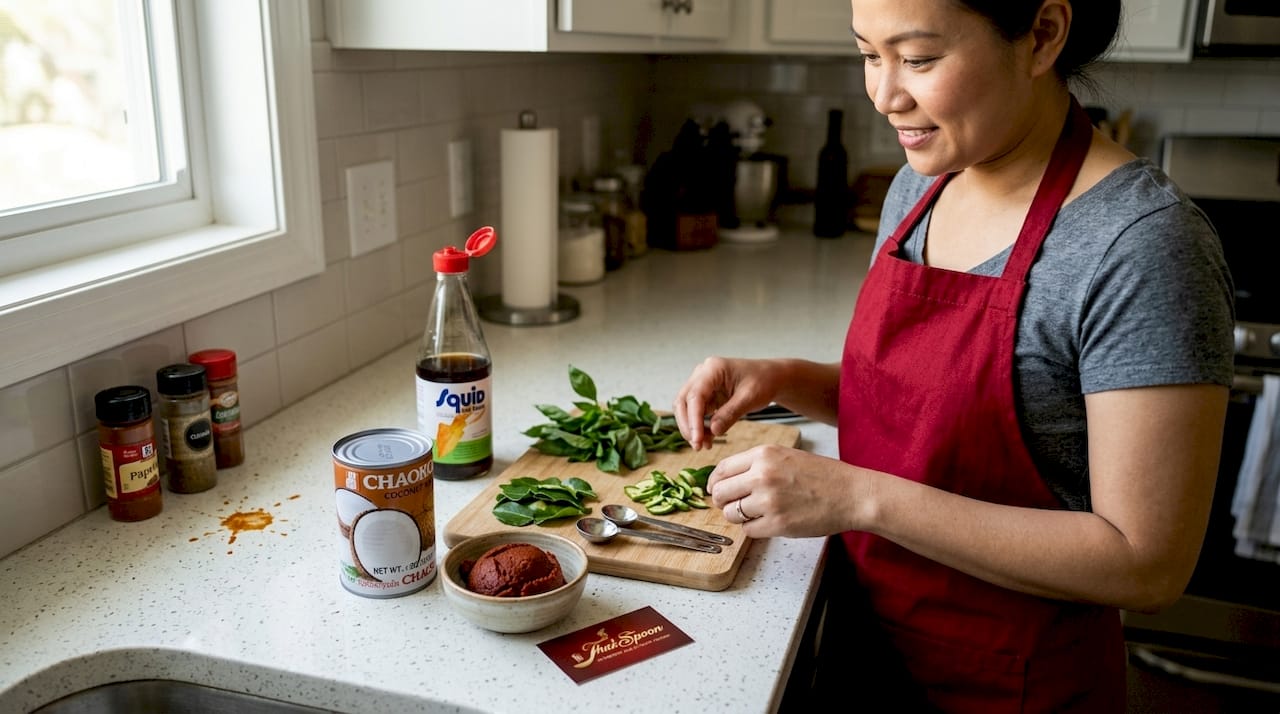
TL;DR:
Making authentic Panang curry requires precise ingredients and mindful adjustments to balance rich, spicy, and savory flavors.
Home cooks should focus on using full-fat coconut milk, authentic curry paste with peanuts, and proper seasoning, while tasting and modifying throughout cooking.
You’ve followed a recipe, used what looked like the right ingredients, and still ended up with something thin, flat, or just plain off. It happens to a lot of home cooks trying to make Panang curry for the first time. The truth is, Panang curry isn’t complicated, but it is precise. Every ingredient serves a specific purpose, and skipping even one can throw off the entire dish. This guide walks you through what goes in, why it matters, and exactly how to put it all together for a curry that actually tastes like the real thing.
Table of Contents
Key Takeaways
Point | Details |
Panang curry must-haves | A truly great Panang curry includes curry paste, coconut milk or cream, fish sauce, sugar, kaffir lime leaves, protein, and peanuts. |
Don’t skip the aromatics | Aromatics like shallot, lemongrass, galangal, and garlic are crucial for authentic depth and fragrance. |
Balance is everything | Fine-tune salty, sweet, and umami flavors—plus a nutty element—for that classic harmony. |
Spice and texture control | Adjust paste and seeds for spice level; simmer gently for thick, cohesive sauce instead of watery curry. |
Finish strong | Add veggies late for crunch and garnish with Thai basil and lime for a burst of freshness. |
Panang curry essentials: The core lineup
Now that you understand the importance of using authentic ingredients, let’s outline what truly belongs in your Panang curry.
The foundation of a great Panang curry isn’t a secret. Panang curry’s core components include Panang curry paste, full-fat coconut milk or coconut cream, a protein, kaffir lime leaves, fish sauce, and sweetness from palm sugar or coconut sugar to balance the flavors. These aren’t interchangeable suggestions. They are the structure of the dish.
Each ingredient brings something specific to the table:
Panang curry paste: This is your flavor foundation. It carries the chili heat, the earthy aromatics, and the complexity that makes Panang distinct from other Thai curries. Learn more about Panang curry paste to understand how it differs from red or green curry pastes.
Full-fat coconut milk or coconut cream: Fat carries flavor, and coconut cream gives Panang its rich, thick consistency. Low-fat versions will make your curry watery and thin.
Protein: Chicken thighs and beef are the most traditional choices, but pork, shrimp, and tofu all work well. Thicker cuts hold up better during simmering.
Kaffir lime leaves: These add a floral, citrusy aroma that brightens the whole dish. They’re used both in cooking and as a garnish.
Fish sauce: This is your salt and your umami. It adds depth that regular table salt simply cannot replicate.
Palm sugar or coconut sugar: Sweetness is essential. It rounds out the heat and balances the saltiness of the fish sauce.
Peanuts or peanut butter: These add a characteristic nuttiness and help thicken the sauce.
Optional finishing touches make a real difference too. Bell peppers add crunch and color. Thai basil brings a fresh, slightly sweet note right before serving. A squeeze of lime at the end lifts everything and adds brightness.
Here’s a quick comparison of the key ingredients and what happens if you leave them out:
Ingredient | Role in the dish | What happens without it |
Panang curry paste | Heat, depth, aromatics | Curry tastes flat and one-dimensional |
Full-fat coconut milk | Richness, creaminess | Sauce becomes thin and watery |
Kaffir lime leaves | Floral aroma, freshness | Loses signature Thai fragrance |
Fish sauce | Salt, umami depth | Tastes bland or overly sweet |
Palm sugar | Sweetness, balance | Flavor feels harsh or one-note |
Peanuts | Nuttiness, body | Missing characteristic Panang note |
Getting familiar with these classic Thai ingredients before you cook means you’ll understand what each one is doing, not just following instructions blindly.
What makes Panang curry paste unique?
While the core lineup covers the must-haves, what truly sets Panang curry apart is the paste at its heart. Let’s break down those signature flavors.
Unlike a basic chili paste, Panang curry paste is built on a layered base of aromatics. For authentic flavor depth, many recipes rely on peanuts (often in the paste itself or added separately) and aromatic components like shallot, garlic, lemongrass, and galangal or ginger. Each one serves a purpose, and together they create something you can’t replicate by simply mixing hot sauce into coconut milk.
Here’s what goes into a quality Panang paste and why it matters:
Dried red chilies: Provide the base heat. The type of chili determines the intensity and color.
Shallots and garlic: These create a savory, slightly sweet backbone. Roasting or frying them before blending intensifies their flavor.
Lemongrass: Adds a clean, citrusy note and a layer of freshness that runs through the entire curry.
Galangal or ginger: Galangal is the more traditional choice. It has a sharper, more piney flavor than ginger, and it’s what gives Panang its distinctly Thai character.
Kaffir lime zest: Used in the paste itself (separate from the whole leaves added during cooking), it contributes aroma at a deeper level.
Coriander root and cumin: These warm spices give the paste an earthy, grounding quality that anchors all the brighter flavors.
Peanuts: This is the ingredient that sets Panang apart from red curry paste. Ground peanuts inside the paste add nuttiness and a slightly thicker consistency from the very beginning.
Think of Panang paste like an aromatic Thai chili paste with a richer, more complex personality. It’s also worth understanding that there are creative ways of using Thai red curry paste if you’re out of Panang paste and need a substitute, though the flavor will be noticeably less nutty and thinner.
Pro Tip: If you’re buying premade Panang paste, look for brands that list peanuts as an ingredient. Many supermarket versions skip this step, which is exactly why the curry doesn’t taste quite right when you get it home.
The art of balancing flavors: Salty, sweet, and umami
With the right herbs and aromatics established, it’s time to focus on the magic of achieving Thai flavor balance in your sauce.
Panang curry’s core balance comes from three elements working together: fish sauce for salt and umami, palm or coconut sugar for sweetness, and peanuts for nutty richness. Take any one of these away, and the curry tips out of harmony. Add too much of one, and the same thing happens.
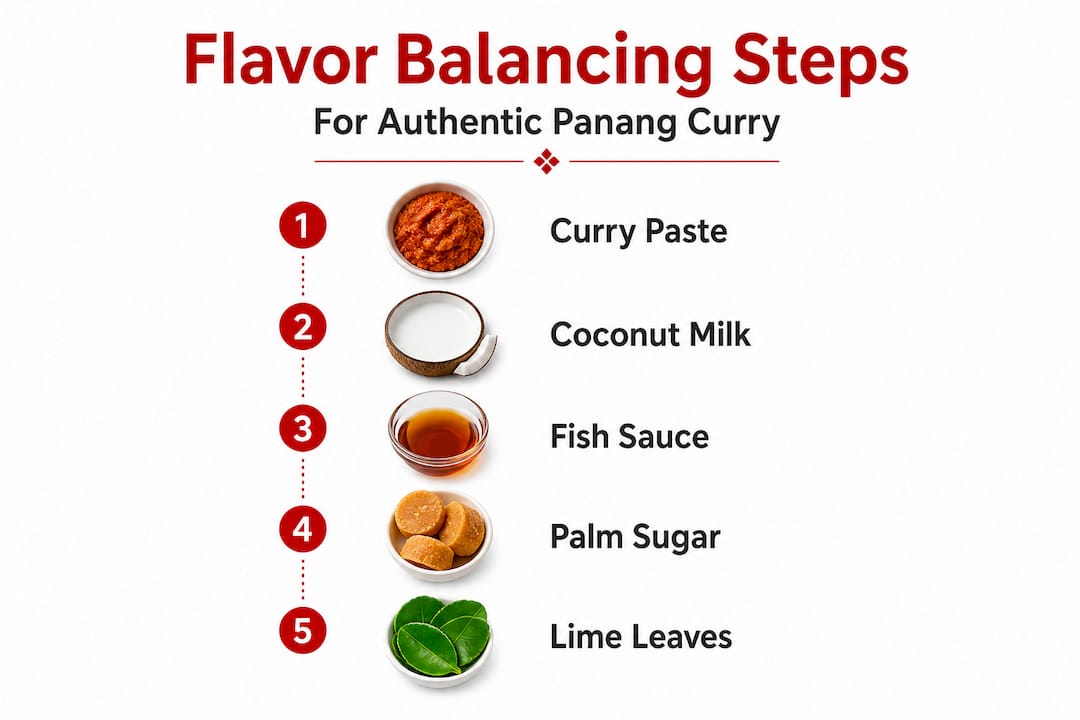
Understanding how to adjust these three elements is what separates a competent Panang curry from an outstanding one.
Element | Primary role | Secondary effect | Starting amount per 1 cup coconut milk |
Fish sauce | Salt and umami | Adds depth and savoriness | 1 to 2 tablespoons |
Palm sugar | Sweetness | Softens heat and bitterness | 1 tablespoon |
Peanut butter | Nuttiness and body | Thickens the sauce | 1 tablespoon |
Lime juice | Brightness and acidity | Balances richness | A squeeze at the end |
Here’s a practical approach to Thai flavor harmony during cooking:
Add your curry paste to the pan first and cook it in coconut cream until fragrant, about two minutes. This blooms the spices and builds the base.
Add the remaining coconut milk or cream and bring to a gentle simmer. Do not boil aggressively, as this can break the sauce and make it greasy.
Add your protein and cook through.
Season with fish sauce and palm sugar in small increments, tasting after each addition. You’re looking for a flavor that is savory, slightly sweet, and fragrant.
Stir in peanut butter last if you want extra nuttiness and body.
Finish with a small squeeze of lime juice right before serving to brighten everything up.
The key is patience. Don’t dump everything in at once and hope for the best. Build it layer by layer.
Building your curry: Protein, vegetables, and finishing touches
Now, with your sauce base humming, it’s time to choose the stars of your dish. Here’s how to assemble the perfect bowl from protein to garnish.
Traditional proteins in Panang curry are flexible. Chicken thighs are the most popular choice because they stay juicy even after simmering. Beef sliced thin across the grain is a close second, especially popular in Thai restaurants. Pork tenderloin, shrimp, or firm tofu all work beautifully when handled correctly. The key is to cut your protein into even pieces so everything cooks at the same rate.
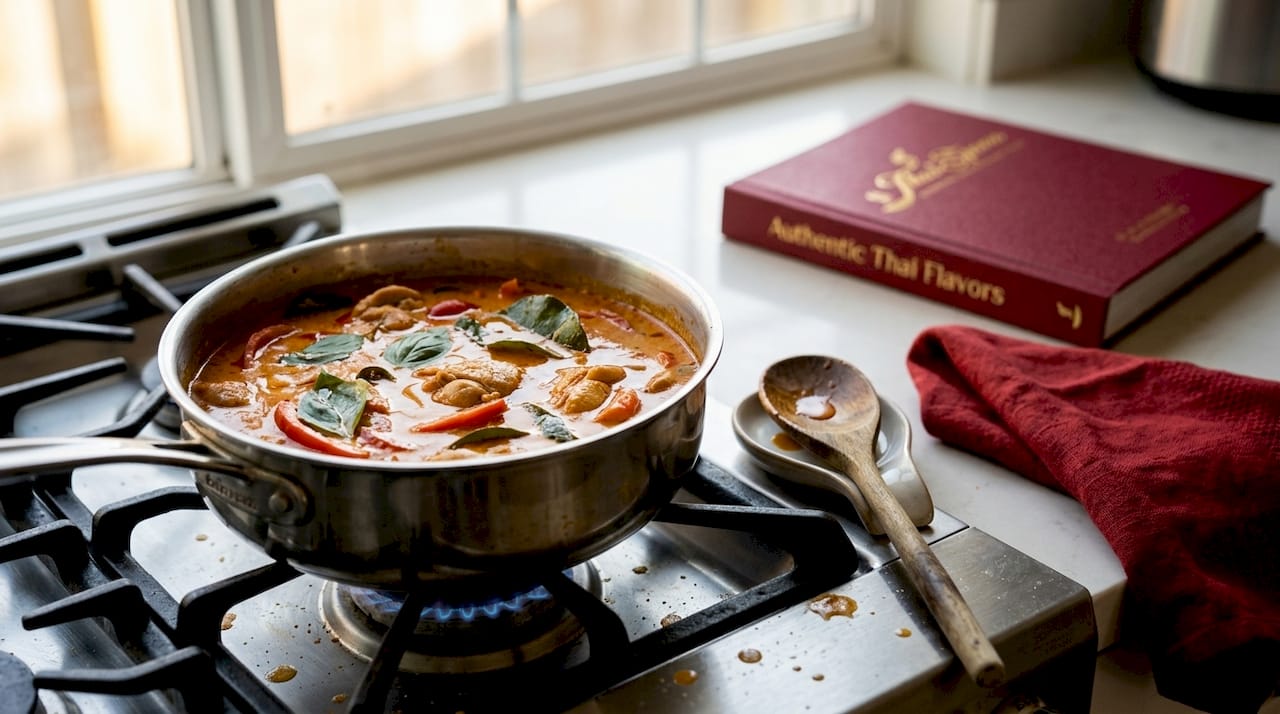
For vegetables, vegetable add-ins are optional and are usually added late in the cooking process so they stay crisp. Bell peppers are the most common choice. Red, yellow, or orange peppers add color and a mild sweetness that complements the curry paste without overpowering it. Snap peas, baby corn, and zucchini are also good options.
Here’s a simple build order:
Start with the paste: Fry it in coconut cream until it smells fragrant and slightly toasted.
Add the protein: Cook until mostly done before adding the rest of the liquid.
Add coconut milk and seasonings: Fish sauce, palm sugar, and peanut butter all go in now.
Add kaffir lime leaves: Tear them slightly to release more aroma before adding.
Add vegetables last: Bell peppers need only two to three minutes. Overcooking them kills the crunch and makes the curry look dull.
Finish with Thai basil: Stir in a small handful right before serving for a burst of fresh flavor.
“The final garnish matters more than most people think. A few whole kaffir lime leaves and a torn sprig of Thai basil on top signal that the dish was made with care—and they keep releasing aroma all the way to the table.”
Pro Tip: Tear your kaffir lime leaves in half and bruise them with your fingers before adding them to the curry. This releases more of their essential oils and significantly boosts the fragrance of the final dish. Don’t eat them whole since they’re meant to flavor the sauce, not be chewed.
You can explore the broader world of Thai curry types if you want to understand how Panang sits within Thai cuisine and how it differs from massaman, green, or yellow curries.
Common mistakes and how to control spice, thickness, and flavor
Even when you follow the formula, there are a few pitfalls. Here are the most common ones, plus how to fix them.
If your curry turns out too thick or too spicy, using peanut butter or reducing the coconut base helps with thickness, while cutting back on curry paste and removing chili seeds from the paste before cooking helps manage the heat. Both issues are easy to fix once you know what’s causing them.
Too spicy: Use less curry paste to start, and never add it all at once. Taste after every tablespoon. You can always add more but you can’t take it out. Also, removing the seeds from dried chilies before grinding your own paste dramatically reduces the heat level without losing the flavor.
Too thin and watery: This usually means you used light coconut milk or added too much of it. Switch to full-fat coconut cream. If your curry is already cooked and still thin, let it simmer uncovered for five to ten minutes to reduce. Stirring in a tablespoon of peanut butter also adds body quickly.
Tastes flat or one-dimensional: You probably need more fish sauce or a bit more sugar. Taste it side by side. If it lacks depth, add fish sauce a teaspoon at a time. If it tastes sharp or harsh, add sugar.
Greasy or broken sauce: This happens when the heat is too high. Panang curry should never boil hard after you add the coconut milk. Keep it at a gentle simmer the entire time.
Overcooked vegetables: This is the most common rookie mistake. Bell peppers go in during the last two to three minutes, not at the beginning.
For more detailed guidance on managing heat levels, you can read about Thai spice control and get a broader understanding of using Thai spices across different dishes.
Pro Tip: Keep a small bottle of fish sauce and a piece of palm sugar on the counter while you cook. You’ll want to adjust the balance at least two or three times during cooking, and having them within reach makes the process much smoother.
What most home cooks miss about authentic Panang curry
As you grow comfortable with the ingredients and steps, let’s zoom out. Here’s what no recipe card tells you about creating unforgettable Panang curry.
Most recipes give you a list and a method. What they rarely tell you is that Panang curry is a feel as much as a formula. A practical home-cook framework for Panang treats the dish as a sequence: paste, coconut milk base, fish sauce, palm sugar, kaffir lime leaves, protein, peanuts, then optional crisp vegetables and a fresh herb finish. That structure is solid. But the magic happens in the spaces between the steps.
The cooks who make truly memorable Panang curry aren’t following a stricter recipe. They’re tasting more. They’re adjusting more. They understand that the fish sauce in one brand is saltier than in another. They know that coconut cream from one can will be richer than another. They adjust in the moment instead of expecting every batch to taste identical.
Patience during simmering is also underrated. Rushing the curry by cranking the heat leads to a broken, greasy sauce. A low, steady simmer for ten to fifteen minutes lets the flavors meld and deepen in a way that fast cooking never achieves. You can actually taste the difference.
And here’s the perspective that changes everything: authentic doesn’t mean fixed. Thai home cooks adjust their curries based on season, ingredient quality, and personal preference all the time. The goal is true flavor balance between salty, sweet, rich, and fragrant. Once you understand that principle, you’re no longer just following a recipe. You’re actually cooking Thai food.
Explore authentic Thai cuisine in Las Vegas
Ready to taste a true Panang curry or let an expert do the cooking? Here’s how to take your Thai food journey further in Las Vegas.
Sometimes the best way to sharpen your home cooking is to taste the real thing made by people who’ve been doing it for years. Thai Spoon Las Vegas brings authentic Thai flavors to the northwest part of the city, far from the tourist crowds and close to the communities that appreciate genuine Thai cuisine.
[
Check out the Panang curry menu to see what goes into a professionally made version, or browse the full Las Vegas Thai menu for everything from Pad Thai to Yellow Curry. If you’re planning a bigger gathering, Thai Spoon also offers Thai catering services that bring those same authentic flavors to your event. Whether you want to dine in, order for pickup, or get inspired for your next home cook session, Thai Spoon is just about 20 minutes from the Strip.
Frequently asked questions
What protein works best in Panang curry?
Chicken is most traditional, but beef, pork, shrimp, or tofu also pair well with Panang curry’s rich, nutty sauce. Chicken thighs are especially recommended because they stay juicy during simmering.
How do I make Panang curry less spicy?
Start with less curry paste and adjust from there. Removing chili seeds from the paste before cooking also significantly reduces the heat level without losing flavor.
Can I make Panang curry vegan or vegetarian?
Yes. Substitute firm tofu or extra vegetables for the protein, and replace fish sauce with soy sauce or a vegan fish sauce alternative. The flavor profile will shift slightly but the curry will still be delicious.
What’s the difference between Panang curry and red curry?
Panang curry is thicker, creamier, and carries a pronounced nutty richness from peanuts, while red curry tends to be thinner, spicier, and less sweet. The two pastes also use slightly different spice ratios.
Can I freeze leftover Panang curry?
Yes. Panang curry freezes well for up to two months. Store it in an airtight container, leave out any fresh vegetable garnishes, and reheat gently on the stovetop over low heat to keep the sauce from breaking.
Recommended
Honestly, the part about choosing fresh coconut milk for a richer Panang flavor felt spot on. I had арганіз experience when a friend switched from canned to fresh coconut milk and the curry really lifted. There's some additional context here: https://girandieres.com/