





What Is Thai Sweet Chili? 20-30% Sugar for Balanced Flavor
- mail469793
- Feb 27
- 10 min read

Think Thai sweet chili sauce is as fiery as its name suggests? You’re not alone in this assumption, but you’d be mistaken. This staple condiment balances mild heat with pronounced sweetness, creating a versatile sauce that enhances rather than overwhelms. Understanding what makes this sauce unique transforms how you experience authentic Thai cuisine in northwest Las Vegas and at home.
Table of Contents
Key Takeaways
Point | Details |
Definition | Thai sweet chili sauce blends sugar, red chili, vinegar, and garlic for a mildly spicy, sweet condiment. |
Sugar Content | Contains 20-30% sugar, creating signature sweetness that dominates heat. |
Heat Level | Delivers only 500-2,500 Scoville Heat Units, far milder than most assume. |
Dietary Friendly | Naturally gluten-free and vegan, suitable for various dietary needs. |
Culinary Use | Works as dipping sauce, marinade, and cooking ingredient across Thai dishes. |
Introduction: Defining Thai Sweet Chili Sauce
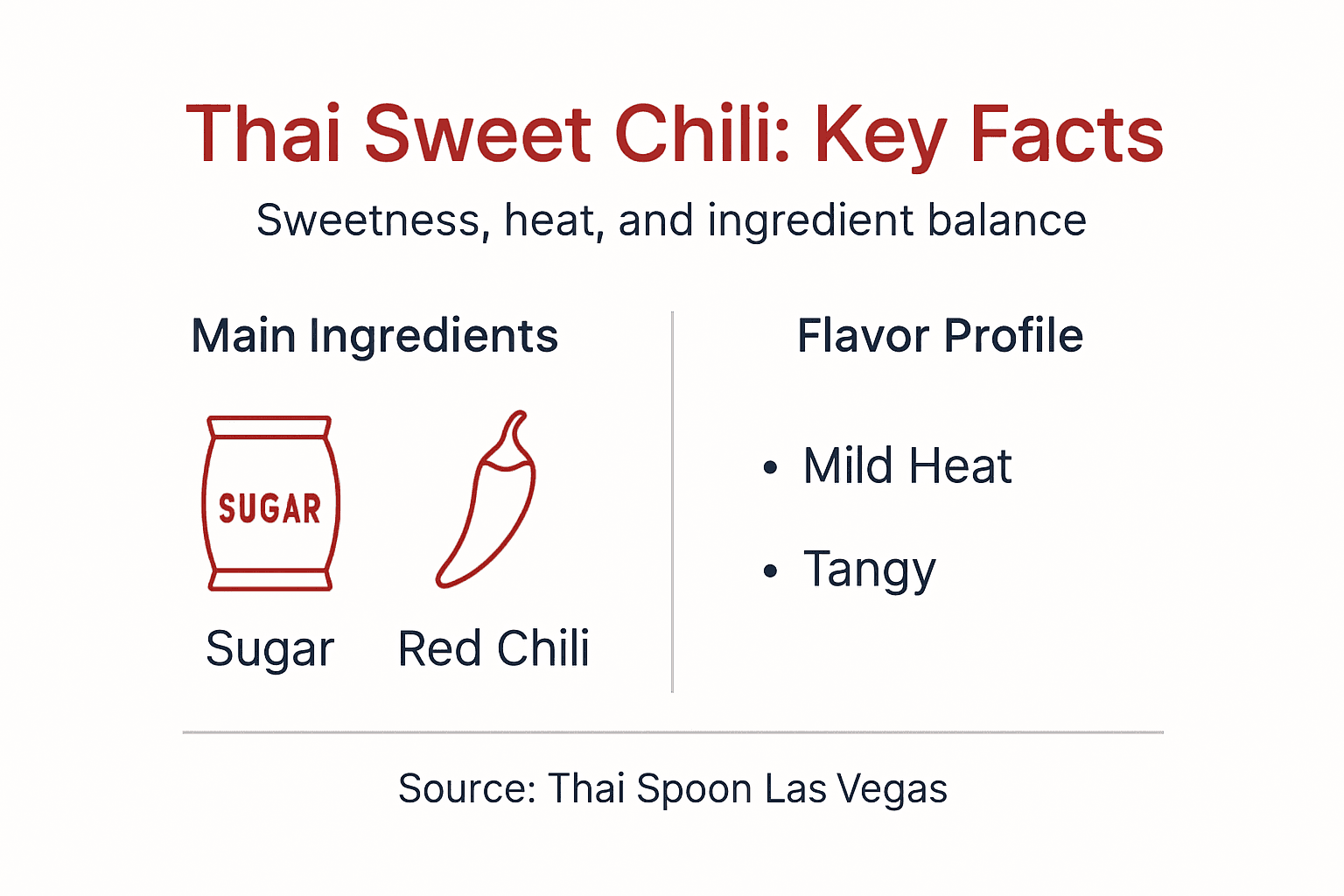
Thai sweet chili sauce serves as a fundamental condiment in authentic Thai cooking, bridging sweetness and heat in ways unfamiliar to Western palates. Authentic Thai sweet chili sauce traditionally combines sugar, red chili, vinegar, garlic, and water, creating a balance of sweet, mild heat, and tangy flavors essential for its distinct taste. You’ll find this sauce accompanying spring rolls, satay, and countless Thai appetizers at local restaurants.
The sauce’s composition tells its story. Sugar dominates at 20-30% by volume, explaining why sweetness hits your palate first. Red chilies provide mild warmth rather than scorching heat, while vinegar cuts through richness with bright acidity. Garlic rounds out the flavor with aromatic depth that ties everything together.
This combination makes the sauce incredibly versatile in Thai cuisine. It functions equally well as a dipping vehicle for fresh spring rolls or a glaze for grilled meats. The essential Thai ingredients list shows how this sauce fits into the broader framework of Thai flavor building, where balance matters more than singular intensity.
Core ingredients work in harmony:
Sugar creates the sweet foundation and syrupy texture
Red chili peppers deliver controlled heat and vibrant color
Vinegar provides tanginess and acts as natural preservative
Garlic contributes savory depth and aromatic complexity
Water adjusts consistency for proper coating and dipping
Authentic versions maintain specific ratios. Too much sugar and the sauce becomes cloying. Too little and the chili heat dominates unpleasantly. The best versions achieve what Thai cooks call balanced flavor, where no single element overpowers others. This philosophy extends throughout Thai cooking, making sweet chili sauce a perfect introduction to understanding Thai cuisine’s fundamental approach to taste.
Flavor Profile and Ingredients Breakdown
Each ingredient in Thai sweet chili sauce plays a calculated role in building its signature taste. Typical sugar content ranges from 20-30%, contributing to pronounced sweetness relative to heat level. This high proportion isn’t accidental but deliberate design that defines the sauce’s character.
Sugar acts as more than sweetener. It creates body and viscosity, allowing the sauce to coat food properly. Granulated sugar produces clean sweetness without molasses notes that would muddy the bright, fresh character. When heated during production, sugar also contributes subtle caramel undertones that add complexity without heaviness.
Red chili peppers bring measured warmth, typically registering 500-2,500 Scoville Heat Units. This places them well below jalapeños and significantly milder than many assume. The chilies chosen are often bird’s eye or similar Thai varieties that provide fruity notes alongside gentle heat. Fresh versus dried peppers create different flavor profiles, with fresh offering brighter taste.
Vinegar’s role extends beyond simple acidity. It balances the sugar’s sweetness, preventing cloying richness while adding sharpness that awakens your palate. Rice vinegar or distilled white vinegar work best, contributing clean tang without competing flavors. The acidity also helps preserve the sauce and keeps flavors vibrant over time.
Garlic introduces savory depth that prevents the sauce from tasting one dimensional. Finely minced fresh garlic releases oils and compounds that add pungency and aromatic qualities. This umami character makes the sauce satisfying rather than simply sweet, creating complexity that keeps you coming back for more.
The interaction between essential Thai ingredients demonstrates sophisticated balance:
Sweet notes hit first, preparing your palate
Mild heat builds gradually without overwhelming
Tangy vinegar cuts through and refreshes
Garlic provides savory backbone that grounds everything
Smooth texture allows even coating and distribution
Pro tip: Taste quality sweet chili sauce at room temperature to evaluate balance properly. If sugar dominates so heavily that you can’t detect other flavors, the sauce lacks sophistication. The best versions let you identify each component while tasting unified and complete.
Common Misconceptions About Thai Sweet Chili Sauce
Several persistent myths surround Thai sweet chili sauce, causing confusion about its proper use and characteristics. A common misconception is that Thai sweet chili sauce is always very hot; in reality, its heat is mild, balanced with sweetness and vinegar, making it versatile even for those sensitive to spice. Understanding these realities helps you use the sauce confidently.
The spiciness myth proves most widespread. People see “chili” in the name and expect scorching heat similar to hot sauce or chili oil. The truth surprises them. At 500-2,500 SHU, this sauce delivers less heat than fresh jalapeños. Children and heat-sensitive diners typically handle it without issue. The sweetness further tempers any warmth, creating approachable flavor.
Dietary concerns create another area of confusion. Authentic Thai sweet chili sauce is gluten-free and suitable for vegan diets as it contains no animal-derived ingredients, making it accessible to dietary-restricted consumers. No fish sauce, shrimp paste, or wheat-based thickeners appear in traditional recipes. This makes it safer for various dietary needs than many assume.
Many confuse Thai sweet chili sauce with Sriracha, treating them as interchangeable. They differ substantially in flavor, heat, and application. Sriracha brings fermented complexity and significant heat, while sweet chili sauce emphasizes bright, fresh flavors with gentle warmth. Substituting one for the other dramatically changes dish character.
Key misconceptions clarified:
Myth: Extremely spicy and challenging Reality: Mild heat suitable for most palates
Myth: Contains gluten or animal products Reality: Naturally vegan and gluten-free when authentic
Myth: Same as Sriracha or hot chili oil Reality: Distinctly sweeter with different flavor focus
Myth: Only for dipping spring rolls Reality: Versatile for cooking, marinating, and glazing
Myth: All commercial versions taste identical Reality: Quality and authenticity vary significantly between brands
The Essential Thai sauces guide helps distinguish between various condiments. Each serves specific purposes in Thai cuisine. Sweet chili sauce occupies its own niche, neither replacing nor being replaced by other options. Recognizing these differences lets you shop, cook, and order more confidently at local Thai restaurants.
Comparison with Other Chili Sauces
Understanding how Thai sweet chili sauce differs from other popular chili condiments clarifies when to use each. The distinctions aren’t subtle, affecting both flavor and culinary application significantly. Direct comparison reveals why experienced cooks keep multiple varieties on hand.
Feature | Thai Sweet Chili Sauce | Sriracha |
Sugar Content | 20-30% for pronounced sweetness | 5-10% with minimal sweetness |
Heat Level | 500-2,500 SHU, very mild | 1,000-2,500 SHU, moderate heat |
Vinegar Character | Bright, prominent tang | Subtle, background acidity |
Garlic Intensity | Moderate, aromatic | Strong, fermented punch |
Texture | Smooth with possible chili flakes | Thicker, paste-like consistency |
Primary Use | Dipping, glazing, light cooking | Bold seasoning, finishing sauce |
Thai Sweet Chili Sauce features higher sugar content at 20-30%, mild heat between 500-2,500 SHU, tangy vinegar and garlic flavor, and versatility for dipping and cooking. These characteristics make it approachable and multipurpose. Sriracha, by contrast, delivers fermented complexity with assertive heat that commands attention.
The texture differences matter practically. Sweet chili sauce’s thinner consistency allows it to coat foods evenly without overwhelming. You can drizzle it over salads or use it as marinade base. Sriracha’s thicker body makes it ideal for controlled application, adding concentrated flavor to specific bites.
Best uses for each sauce:
Thai Sweet Chili Sauce: Spring roll dipping, satay accompaniment, chicken or shrimp glaze, salad dressing base, light stir fry sauce
Sriracha: Bold flavor boost for pho or ramen, spicy mayo preparation, pizza topping, burger condiment, eggs and breakfast dishes
Hot Chili Oil: Sichuan dishes, dumpling dipping, noodle topping, adding heat without sweetness
Sambal Oelek: Fresh chili paste for cooking, customizable heat in recipes, Indonesian and Malaysian dishes
The essential Thai sauces each fill distinct roles. Thai sweet chili sauce’s approachability makes it excellent for introducing friends to Thai flavors. Its balanced profile won’t intimidate or overpower, yet it delivers authentic taste that enhances rather than masks food.
Culinary Uses and Practical Applications
Thai sweet chili sauce’s versatility extends far beyond simple dipping. Traditional and modern applications show how this condiment enhances diverse dishes through its unique flavor balance. Understanding these uses helps you maximize value from a single bottle.
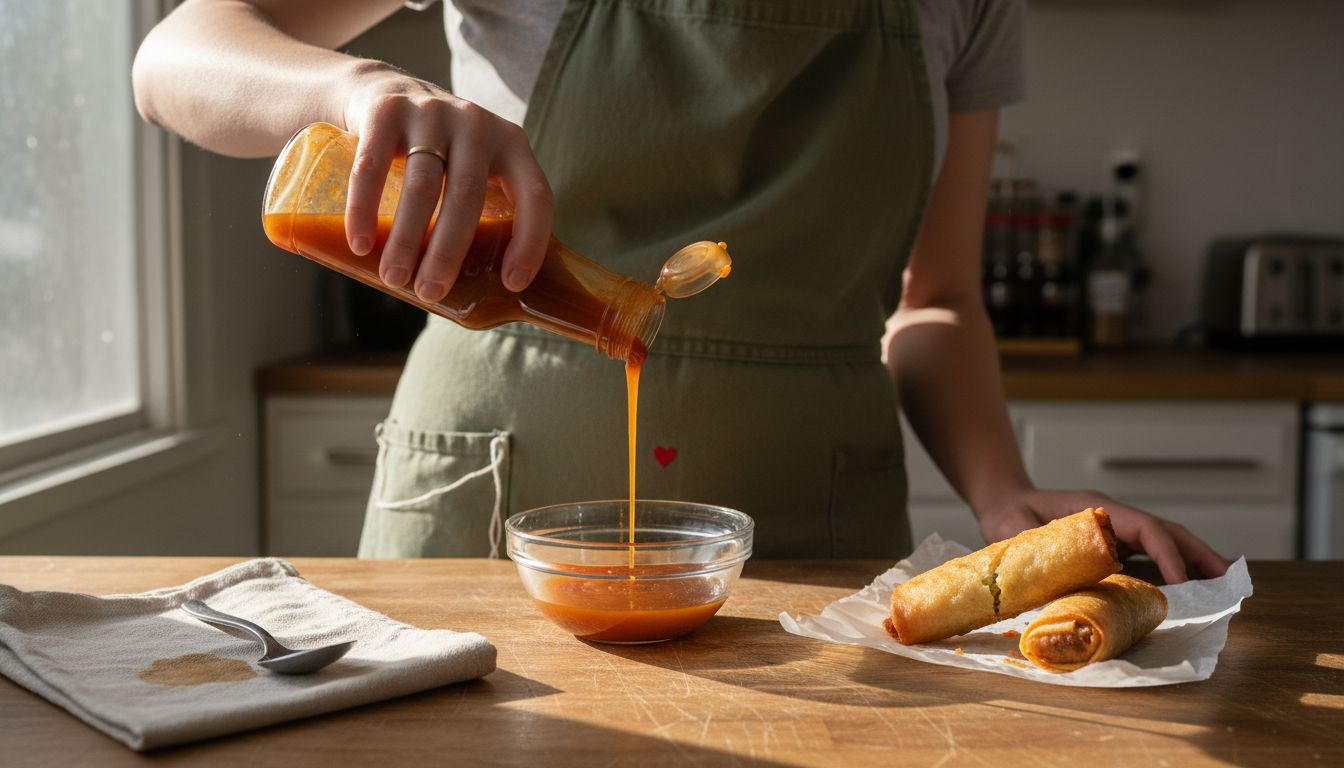
The most recognized application remains dipping. Fresh spring rolls gain dimension when paired with sweet chili sauce, where the sauce’s sweetness complements vegetable freshness while mild heat adds interest. Chicken satay skewers traditionally come with this sauce, cutting through rich peanut flavors with bright acidity. Fried items like fish cakes or tofu benefit from the sauce’s ability to add moisture and flavor contrast.
Marinating applications leverage the sauce’s sugar content and acidity. The sugar helps proteins caramelize beautifully when grilled or roasted. Vinegar tenderizes meat while infusing flavor. Mix sweet chili sauce with soy sauce, ginger, and lime juice for chicken or shrimp marinades that deliver restaurant-quality results at home.
Cooking with sweet chili sauce opens creative possibilities. Add it to stir fries during the final minutes, allowing it to coat ingredients and create glossy finish. Use it as pizza sauce alternative for Thai-inspired flatbreads. Whisk it into salad dressings for sweet, tangy vinaigrettes. Mix with mayonnaise for sandwich spreads or burger sauce.
Common authentic applications:
Dipping sauce for fresh or fried spring rolls
Accompaniment for grilled satay skewers
Glaze for roasted or grilled chicken wings
Marinade component for seafood or poultry
Stir fry finishing sauce for vegetables and proteins
Base for Asian-style salad dressings
Condiment for rice paper rolls and summer rolls
Pro tip: When cooking with sweet chili sauce, add it near the end to preserve bright flavors and prevent burning from high sugar content. Start with two tablespoons per pound of protein, tasting and adjusting as you go. The goal is enhancement, not domination of other flavors.
Exploring best Thai dishes using sweet chili sauce at local restaurants shows professional applications. Notice how chefs balance the sauce with other elements, creating harmony rather than competition. These observations inform your home cooking, helping you develop intuition for proper proportions. The Thai food pairing suggestions guide further demonstrates how sweet chili sauce fits into complete Thai meals.
Health, Dietary Considerations and Local Availability
Understanding sweet chili sauce’s dietary profile and finding quality local sources ensures you enjoy authentic versions that meet your needs. Health considerations and shopping guidance help you make informed choices whether cooking at home or dining out in northwest Las Vegas.
Authentic Thai sweet chili sauce is gluten-free and suitable for vegan diets as it contains no animal-derived ingredients, making it accessible to dietary-restricted consumers. Traditional recipes contain only plant-based ingredients, with no hidden animal products or wheat-based thickeners. This natural compatibility makes it valuable for households managing multiple dietary requirements.
Caloric density deserves consideration. The 20-30% sugar content means the sauce isn’t calorie-free. One tablespoon typically contains 40-60 calories, primarily from sugar. This matters less for dipping applications where you control portions, but becomes significant when using as marinade or cooking sauce. Balance enjoyment with awareness, especially if managing sugar intake.
Commercial products vary in quality and authenticity. Some brands add unnecessary preservatives, artificial colors, or excessive sodium. Read labels carefully, looking for recognizable ingredients matching traditional recipes. Better brands list sugar, chili, vinegar, garlic, and salt without long chemical names. Homemade versions offer freshest flavor and complete ingredient control, though quality commercial options save time.
Local availability in northwest Las Vegas provides convenient access:
Thai Spoon Las Vegas features dishes highlighting authentic sweet chili sauce applications
Asian grocery stores stock multiple brands at various price points
Mainstream supermarkets carry common brands in international aisles
Specialty food stores offer premium and imported versions
Online ordering brings restaurant-quality sauces directly home
Shopping tips for authenticity:
Choose brands with short, recognizable ingredient lists
Look for product origin from Thailand when possible
Avoid versions listing high fructose corn syrup as primary sweetener
Check for visible chili flakes or seeds indicating real peppers
Compare sugar content between brands to find preferred sweetness level
Exploring authentic Thai takeout options lets you sample professional applications before investing in home ingredients. Many restaurants provide small sauce containers, allowing comparison between brands and styles. This experiential learning helps develop preferences and understanding. The guide to finding authentic local Thai food points you toward establishments that prioritize quality ingredients and traditional preparations.
Explore Authentic Thai Flavors at Thai Spoon Las Vegas
Now that you understand what makes Thai sweet chili sauce special, experience it in dishes crafted by experts who balance flavors authentically. Thai Spoon Las Vegas brings traditional Thai cooking to northwest Las Vegas, featuring menu items that showcase this versatile condiment alongside other essential sauces. Whether you’re craving spring rolls with perfect dipping sauce or grilled dishes with sweet chili glaze, our kitchen delivers the balanced flavors you’ve learned about.

Deepen your Thai cooking knowledge with our comprehensive guides. The essential Thai ingredients list for home cooking helps you stock your pantry with authentic components. Our Thai cuisine cooking guide walks through techniques that transform simple ingredients into memorable meals. Discover the must-try Thai dishes in Las Vegas to expand your culinary horizons beyond sweet chili sauce.
Frequently Asked Questions About Thai Sweet Chili Sauce
What is the typical spiciness level of Thai sweet chili sauce?
Thai sweet chili sauce rates between 500-2,500 Scoville Heat Units, significantly milder than jalapeños at 2,500-8,000 SHU. The pronounced sweetness further tempers this gentle heat, making it approachable for most palates including children.
Can Thai sweet chili sauce be used for cooking or only as a dip?
This sauce works excellently in cooking applications including marinades, stir fry sauces, and glazes for grilled meats. Add it near the end of cooking to preserve bright flavors and prevent sugar from burning. Start with small amounts and adjust to taste.
Is Thai sweet chili sauce safe for gluten-free and vegan diets?
Authentic Thai sweet chili sauce contains only sugar, chili, vinegar, garlic, and water, making it naturally gluten-free and vegan. Always check commercial product labels to confirm no additives or thickeners have been introduced during manufacturing.
Where can I buy authentic Thai sweet chili sauce in northwest Las Vegas?
Asian grocery stores in the area stock multiple authentic brands, while mainstream supermarkets carry common options in international sections. Thai Spoon Las Vegas also features dishes prepared with quality sweet chili sauce, letting you taste authentic applications before purchasing for home use.
How does Thai sweet chili sauce differ from Sriracha in flavor and use?
Sweet chili sauce emphasizes sweetness with 20-30% sugar content and mild heat, ideal for dipping and glazing. Sriracha delivers fermented complexity with stronger heat and bold garlic, better suited for adding concentrated flavor to finished dishes. They serve different culinary purposes and aren’t interchangeable.
Recommended
Comments