


What to serve with tom kha gai: A complete guide
TL;DR:
Pairing light, acidic, and crunchy sides enhances the delicate, coconut-rich flavors of tom kha gai.
Jasmine or sticky rice serve as versatile, absorbent options, while salads like cucumber or green papaya add freshness.
Avoid creamy salads and heavy fried proteins to maintain balance and highlight the soup’s aromatic herbs and tang.
Tom kha gai is one of those soups that stops you mid-spoonful. The coconut milk broth, lemongrass, galangal (a ginger-like root with a sharper, more citrusy bite), and tender chicken create something deeply aromatic and rich. But knowing what to serve with tom kha gai is where many food lovers hit a wall. Pair it with the wrong dish and you either dull its delicate flavors or leave the table feeling like something was missing. This guide walks you through the best sides, salads, and finishing touches to turn a bowl of tom kha gai into a full, satisfying Thai meal.
Table of Contents
Gather your essentials: Ingredients and sides to serve with tom kha gai
Before you think about plating, you need the right cast of supporting dishes. Tom kha gai is already doing a lot of work, so the sides you choose should complement it rather than compete with it.
The two rice options worth knowing:
Jasmine rice balances the soup by absorbing the coconut and herb-forward broth, turning each bite into something complete rather than just slurping liquid. Sticky rice is the other strong option. It clumps together slightly, which makes it easier to dip into the broth. Both work well. The choice comes down to preference and how much of the meal experience you want anchored in texture.
Here is what you need on the table for a well-rounded pairing:
Jasmine rice or sticky rice for broth absorption and structural balance
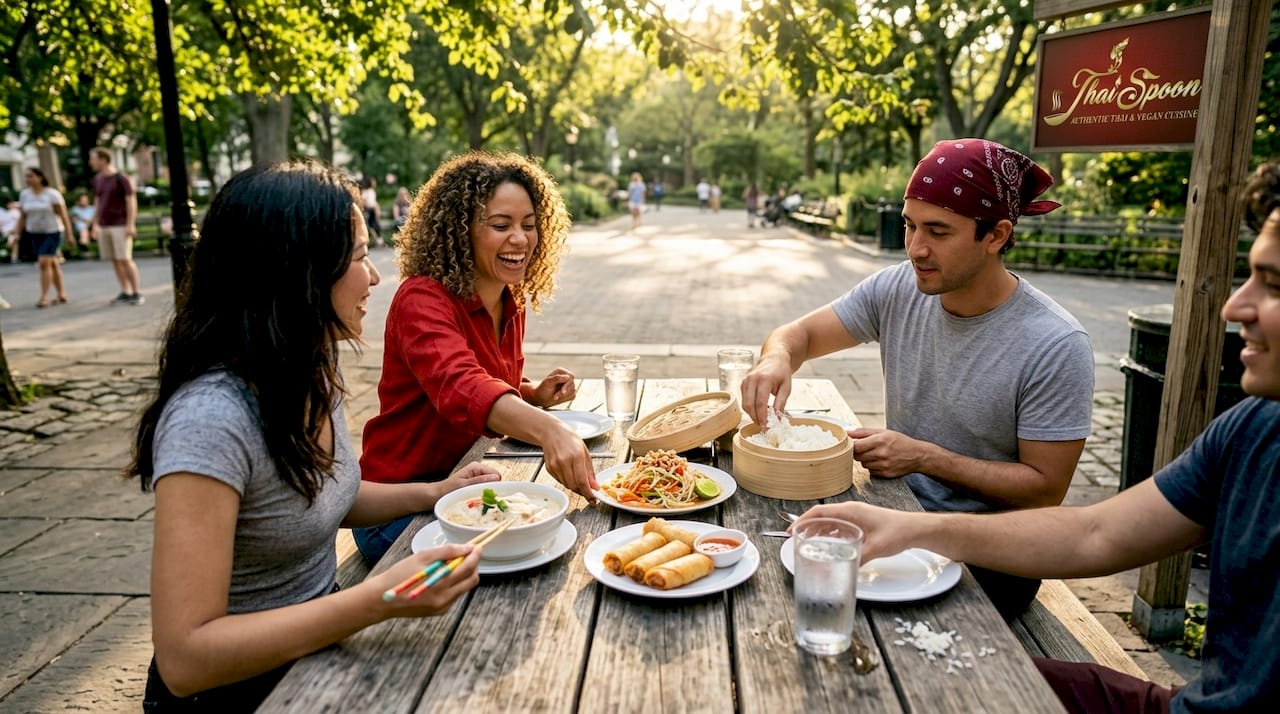
Crispy spring rolls (vegetable or tofu fillings work especially well) for texture contrast
Thai fish cakes (tod moo pla) for a savory, umami-forward bite alongside the soup
Green papaya or cucumber salad dressed with lime, fish sauce, and chili, not cream
Lime wedges placed directly on the table so everyone can adjust acidity in their own bowl
Fresh herbs like cilantro and Thai basil for garnishing
One thing to avoid: creamy dressings on any salad you serve alongside this soup. Tom kha gai is already built on coconut cream. Piling another creamy element on the table creates a meal with no contrast, no brightness, and nothing to cut through the richness.
Pro Tip: For serving jasmine rice with tom kha gai, rinse it twice before cooking and use a 1:1.5 ratio of rice to water. The result is slightly drier, which makes it better at absorbing broth without turning mushy.
Side dish | Flavor role | Texture role |
Jasmine rice | Neutral, absorbs broth | Soft, structural |
Sticky rice | Slightly nutty, earthy | Chewy, dense |
Spring rolls | Savory, light | Crispy, crunchy |
Green papaya salad | Tart, spicy, bright | Crunchy, fresh |
Thai fish cakes | Savory, umami-rich | Firm, chewy |
Cucumber salad | Cool, citrusy | Crisp, refreshing |
These complementary side dishes follow the same logic that governs great Thai meals generally: every element on the table serves a purpose, and none of them are redundant.
Step-by-step: How to create the perfect tom kha gai meal with complementary sides
Now that you know the essentials, let’s walk through assembling your meal in the right order. Sequence matters here because it shapes the texture and temperature experience from start to finish.
Ladle hot tom kha gai into individual bowls. Serve it immediately, while the broth is steaming. The aromatics in galangal and lemongrass fade quickly once the soup cools.
Place jasmine or sticky rice in a separate bowl beside the soup. Serving jasmine rice alongside tom kha gai, rather than directly in the broth, lets each person control how much broth the rice absorbs. Some people prefer each element distinct. Others want the rice fully saturated. Let the diner decide.
Plate the crispy spring rolls on a shared dish at the center of the table. These are meant to be grabbed between spoonfuls of soup, not eaten separately as a starter course. The crunch resets the palate after each rich, coconut-forward sip.
Serve the salad in a separate bowl with dressing on the side. A green papaya or cucumber salad needs to stay crisp. If you dress it too early, it wilts. Add the dressing right before sitting down.
Arrange Thai fish cakes on a small plate with a sweet chili dipping sauce. They pair cleanly with the savory notes already in the soup and add a firmer, meatier bite to the meal.
Set lime wedges and sliced fresh chili on the table. These are the seasoning tools for the meal. A squeeze of lime into the broth mid-bowl is one of the most underrated moves in Thai dining. It lifts everything.
Pro Tip: Keep a small dish of fish sauce and a pinch of sugar on the table. Thai cooks use this combination to fine-tune soups and salads at the table. It sounds unusual, but one drop of fish sauce into tom kha gai intensifies the umami without making it taste fishy.
Avoid common pitfalls: Pairing mistakes and how to fix them
With your meal assembled, it is worth pausing to review the pairings that seem logical but actually undercut the soup.
The biggest mistake is doubling down on creamy textures. Tom kha gai is built on a coconut cream base. Adding a creamy coleslaw, a tahini-dressed salad, or any mayo-heavy side dish next to it creates a table with no contrast. Everything starts tasting the same, and the delicate herbal notes in the soup get buried under fat.
The second common mistake is serving too many hot dishes at once. Tom kha gai benefits from having one cool element on the table, something that creates a thermal and textural contrast. A cold cucumber salad or a room-temperature green papaya salad fills that role perfectly.
Here is a quick breakdown of what to avoid and what to use instead:
Avoid: Creamy coleslaw or Caesar-style salads. Use instead: Cucumber salad with lime and mint.
Avoid: Fried heavy proteins like battered shrimp. Use instead: Lightly pan-fried Thai fish cakes.
Avoid: Garlic bread or crusty bread. Use instead: Jasmine rice or sticky rice.
Avoid: Spicy noodle dishes as a side. Use instead: Plain rice noodles if you want noodles at all.
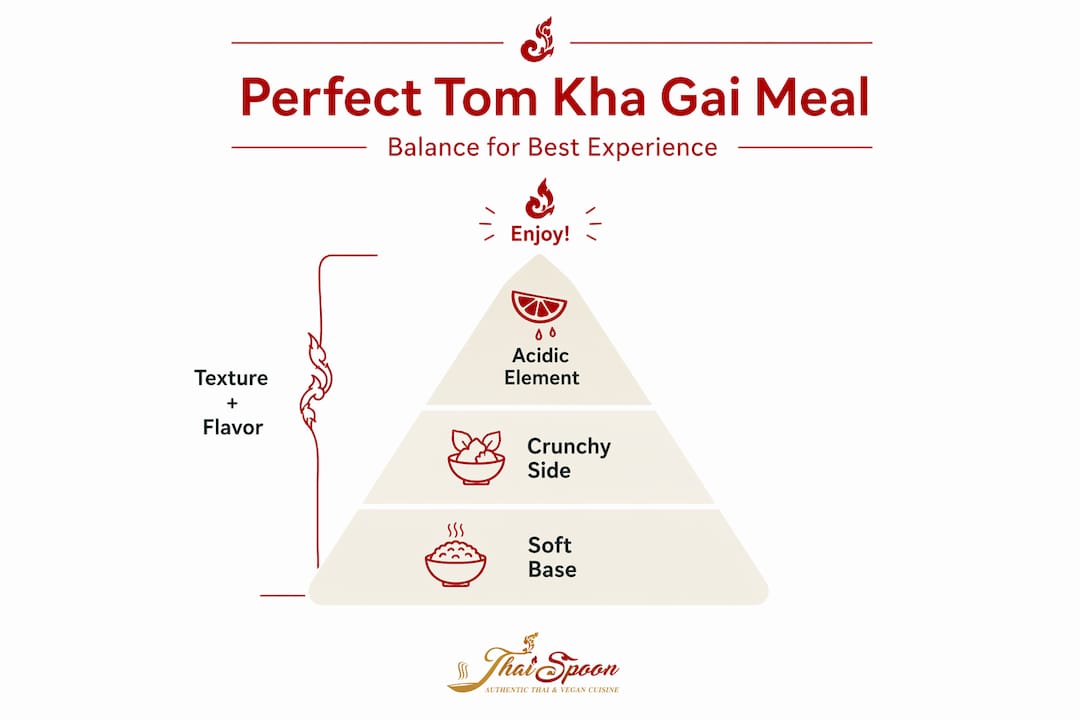
A well-balanced tom kha gai meal should have one bright acidic element, one crunchy element, and one soft structural element. Everything else is optional. These Thai food pairing tips apply across most Thai soup dishes and will sharpen your instincts for the cuisine overall.
Pro Tip: If you are building a plate for guests, mentally run through three checks before serving: Is there something crunchy? Is there something acidic? Is there something soft? If all three are present, the meal is balanced.
Refreshing salad choices to brighten your tom kha gai experience
Beyond avoiding pitfalls, the right salad is one of the most powerful things you can bring to a tom kha gai meal. Not every salad works. The ones that do share three qualities: acidity, crunch, and flavors that do not overlap with the soup.
Green papaya salad complements tom kha gai with its lime-chili tang and peanut nuttiness, while cucumber and mango salads refresh the palate with citrus and sweetness. These are not arbitrary choices. Each salad brings something the soup cannot provide for itself.
Salad option | Key flavors | Why it works with tom kha gai |
Green papaya salad | Tart, spicy, nutty | Bold contrast to coconut cream |
Cucumber-lime-mint | Cool, fresh, citrusy | Palate cleanser between bites |
Mango chili-lime | Sweet, spicy, tangy | Sweet counterpoint to savory broth |
Thai herb salad | Herbaceous, bright | Mirrors the soup’s aromatic herbs |
A cucumber-lime-mint salad is the easiest to make and the most universally welcome. Slice cucumbers thin, squeeze half a lime over them, toss in fresh mint and a pinch of salt, and you are done. No cooking required. It sits beautifully next to a hot bowl of soup.
Mango chili-lime salad works especially well if you are finishing the meal with mango sticky rice as dessert. It creates a flavor thread of mango running through the meal from salad to dessert, which makes the whole dining experience feel intentional.
Complete your meal: Thai dessert and finishing touches
Once your savory courses are set, the final touches and dessert selection determine whether the meal feels complete or just finished.
Mango sticky rice is the natural conclusion to a tom kha gai meal. Mango sticky rice combines coconut milk, mango, and chewy sticky rice, and after a bowl of coconut-forward soup, the dessert feels like a continuation rather than a pivot. The sweetness resolves the savory flavors and leaves the table satisfied rather than stuffed.
For garnishes and finishing touches during the meal itself:
Fresh cilantro sprinkled over the soup just before serving lifts the aroma dramatically
Thai basil leaves added at the table add a slight anise note that deepens the herbal profile
Lime wedges let each person dial up the brightness in their own bowl
Chili crisp or fresh sliced Thai chili for anyone who wants more heat without altering the soup’s broth
One small move that most people skip: warming your bowls before ladling the soup. Hot soup in a cold bowl cools down within minutes. A quick rinse with hot water before serving keeps the temperature where it belongs throughout the meal.
Why balancing texture and flavor is key to the perfect tom kha gai meal
Here is something that separates a good Thai meal from a memorable one: it is never about the individual dishes. It is about how they interact.
Tom kha gai is one of the most texturally uniform soups in Thai cuisine. Everything in the bowl is soft. The chicken is tender, the mushrooms are yielding, the broth is silky. That is what makes it so comforting. But it is also exactly why the sides you choose matter more with this soup than with almost any other Thai dish.
Many diners treat rice as a “broth sponge” to balance creamy soup while alternating with crunchy bites for palate cleansing. This instinct is correct, but most people stop there. The deeper principle is that every creamy, soft, or rich element on the table needs a counterpart. That counterpart does not have to be dramatic. A handful of crispy spring rolls or a small bowl of cucumber salad is enough. But it has to be there.
The aromatics in tom kha gai, particularly the lemongrass and kaffir lime leaves, are also surprisingly fragile in terms of how they register on the palate. Eat something heavily seasoned or fatty right before a spoonful of the soup, and you will miss those flavors entirely. Eat something bright and acidic, a lime-dressed salad or a piece of spring roll, and those aromatics come back into focus. This is why Thai food pairing suggestions from experienced Thai cooks always emphasize palate-cleansing elements rather than bold flavors.
The deliberate interplay of soft and crunchy, rich and bright, warm and cool is what makes an authentic Thai dining experience worth remembering. It is not accidental. It is built into the cuisine’s logic.
Explore authentic Thai meals at Thai Spoon Las Vegas
If this guide has you ready to experience tom kha gai the way it is meant to be served, Thai Spoon Las Vegas is the spot for northwest Las Vegas food lovers who want the real thing without driving to the Strip.
[
Our authentic Thai menu features the dishes that pair beautifully with tom kha gai, from crispy spring rolls to mango sticky rice, all made with traditional flavors and fresh ingredients. Planning something bigger? Our Thai catering services bring the full Thai dining experience to your event. Check out our menu details for current offerings, hours, and easy online ordering for pickup or delivery. We are about 20 minutes from the Strip and built for the community, not the tourists.
Frequently asked questions
What is the best rice to serve with tom kha gai?
Jasmine rice is the top choice because it absorbs the broth well and complements the coconut and herbal flavors without overpowering the soup.
Can I serve creamy salads with tom kha gai?
It is best to avoid them. Tom kha gai is already built on coconut cream, and heavy creamy dressings add redundant richness that dulls the soup’s aromatics. Stick to light citrus or vinaigrette-based dressings.
What crunchy sides pair well with tom kha gai?
Crispy spring rolls with vegetable or tofu fillings are the ideal choice, offering a light contrasting crunch that resets the palate between spoonfuls of creamy broth.
Is mango sticky rice a good dessert after tom kha gai?
Absolutely. Mango sticky rice echoes the coconut milk flavors in the soup and provides a sweet, satisfying conclusion that feels like a natural extension of the meal rather than a shift in direction.
Recommended
Comments