


Thai spice blends: ingredients, uses, and expert tips
TL;DR:
Authentic Thai spice blends are complex, balancing heat, aroma, earthiness, and brightness.
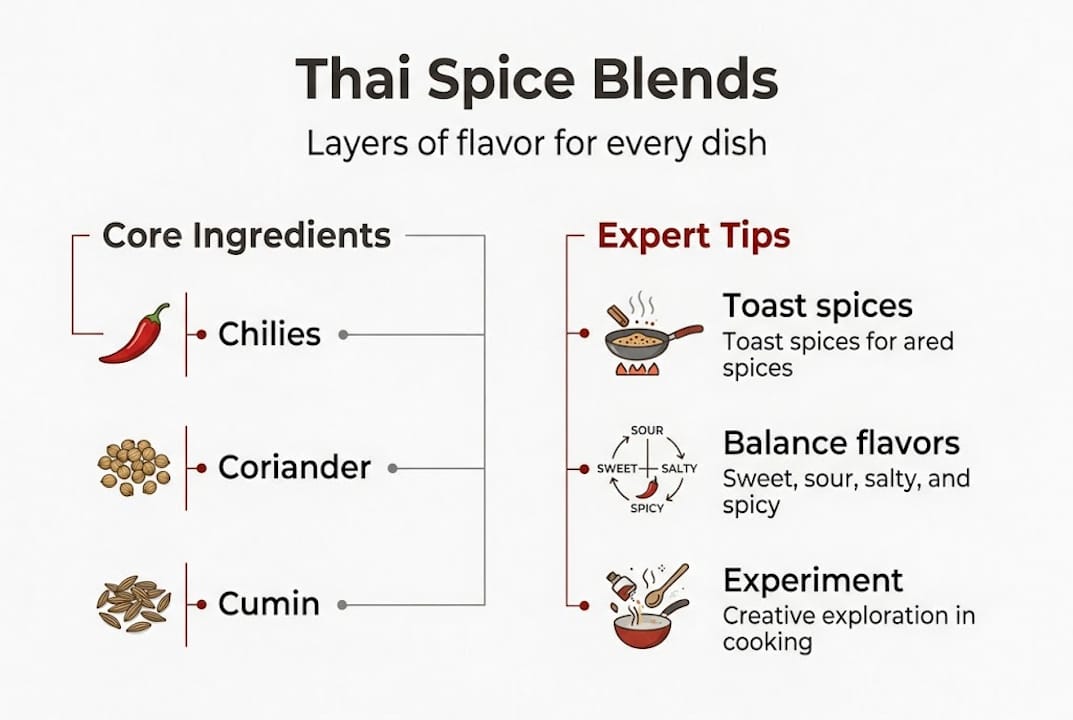
Key ingredients include dried chilies, coriander, cumin, garlic, lemongrass, and galangal.
Mastering these blends enhances flavor, confidence, and health benefits in home cooking.
Most people assume Thai food is just about heat. Toss in some chilies, crank up the fire, and call it a day. But that oversimplification misses everything that makes Thai cuisine so deeply satisfying. Authentic Thai spice blends are carefully constructed flavor systems, balancing heat, sweetness, earthiness, and aroma in ways that take years to understand. For home cooks in northwest Las Vegas looking to recreate those restaurant-quality flavors, knowing what actually goes into these blends, and why, changes everything about how you cook.
Table of Contents
Key Takeaways
Point | Details |
Complex, layered flavors | Authentic Thai spice blends go beyond heat, creating aromatic, balanced tastes. |
Essential ingredients | Dried chilies, coriander, cumin, garlic, and lemongrass are core to Thai blends. |
Recipe transformations | Thai spice blends elevate common dishes by infusing them with signature flavors. |
Health and wellness | Many Thai spices offer anti-inflammatory and digestive benefits for home cooking. |
Local culinary resources | Las Vegas residents can explore authentic flavors through expert restaurants and catering. |
What makes a Thai spice blend unique?
The first thing to understand is that Thai spice blends are not one-dimensional. They are not simply “spicy.” They are layered constructions where every ingredient plays a specific role. Heat is just one thread in a much larger tapestry.
The role of spice in Thai cuisine is about creating harmony. A well-built blend balances four key sensory pillars: heat, aroma, earthiness, and brightness. Remove any one of them and the dish falls flat. This is why a store-bought chili powder rarely captures the spirit of a proper Thai curry paste.
Core spices define the aromatic and spicy profile of Thai cuisine, and that profile shifts depending on the region. Northern Thai blends lean more earthy and herbal. Southern Thai blends tend to run hotter and more coconut-forward. Central Thai cooking, which is what most Las Vegas restaurants serve, strikes a balance between all of these.
Here are the defining characteristics that separate Thai spice blends from other Asian seasoning traditions:
Aromatic depth: Ingredients like lemongrass and galangal create a citrusy, floral undertone that other cuisines rarely use
Layered heat: Dried and fresh chilies are often combined to deliver heat that builds gradually rather than hits immediately
Earthiness: Coriander and cumin anchor the blend with warmth and body
Umami backbone: Fermented shrimp paste or fish sauce is frequently incorporated into paste-based blends
Brightness: Kaffir lime leaves and fresh herbs lift the entire flavor profile
Pro Tip: When building your own Thai spice blend at home, always toast your dried spices in a dry pan before grinding. Thirty seconds of heat unlocks essential oils that stay locked inside untoasted seeds.
The Thai spices guide makes it clear that no two regional blends are identical, which means there is real room for creativity once you grasp the fundamentals.
Common ingredients found in Thai spice blends
Now that we know the characteristics, let’s look at the specific ingredients that define authentic Thai spice blends and what each one actually contributes.
Signature spices and herbs are foundational to authentic Thai cooking. Understanding their individual roles helps you troubleshoot a dish that tastes off and helps you build blends with intention rather than guesswork.
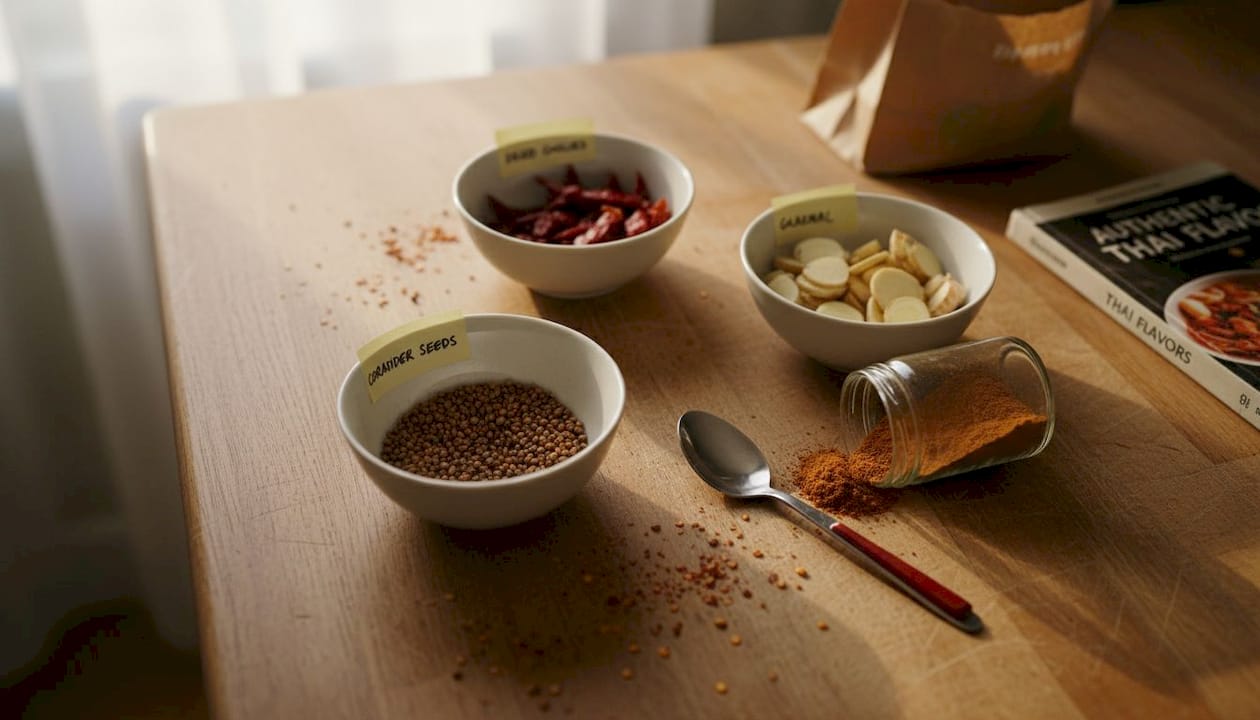
Here is a breakdown of the core ingredients:
Ingredient | Flavor role | Common form |
Dried chilies | Heat and color | Whole or ground |
Coriander seeds | Earthy, citrusy warmth | Ground or whole |
Cumin | Deep, smoky earthiness | Ground |
Garlic | Pungent base note | Fresh or powder |
Lemongrass | Bright, citrusy aroma | Fresh, dried, or paste |
Galangal | Sharp, piney, gingery | Fresh or dried powder |
Kaffir lime | Floral, bitter brightness | Leaves or zest |
Shallots | Sweet, mild onion base | Fresh or fried |
Each of these essential Thai ingredients works differently depending on how and when you add it. Garlic added at the start of cooking mellows and sweetens. Added near the end, it stays sharp and pungent. Lemongrass must be bruised or finely minced for its oils to release properly.
A few practical notes for home blenders:
Galangal is not ginger. They look similar but taste completely different. Ginger is warmer and sweeter. Galangal has a piney, almost medicinal sharpness. Swapping one for the other changes the entire character of a blend.
Dried chilies vary widely in heat level. Thai bird’s eye chilies are significantly hotter than guajillo or ancho chilies. Know your source.
Fresh herbs in Thai food like Thai basil and cilantro are usually added after cooking, not blended into the spice base.
Variations for home use are worth exploring. You can adjust coriander-to-cumin ratios to shift between a more citrusy or more earthy profile. Adding a pinch of white pepper adds a subtle heat that complements rather than competes with chilies.
How Thai spice blends enhance recipes
With the ingredient list in mind, it’s vital to understand how these spice blends actually impact your cooking in practice.
Spice blends infuse traditional Thai dishes with distinctive flavors and aromas that plain seasoning simply cannot replicate. The difference between a dish made with an authentic blend and one made with generic seasoning is not subtle. It is the difference between tasting Thailand and tasting something vaguely Asian.
Here is a comparison of dishes with and without proper spice blends:
Dish | With authentic blend | Without authentic blend |
Yellow curry | Rich, floral, layered warmth | Flat, one-note, overly sweet |
Tom kha soup | Bright, creamy, aromatic | Heavy and bland |
Chicken satay | Smoky, sweet, complex | Tastes like plain grilled chicken |
Stir-fry | Bold, savory, fragrant | Salty without depth |
For home cooks, here is how to build flavors systematically when using Thai spices:
Start with aromatics. Fry your garlic, shallots, and lemongrass in oil first to build a fragrant base.
Add your dry spices. Toast them briefly in the oil before adding liquid. This activates fat-soluble flavor compounds.
Layer wet aromatics. Fresh galangal, chili paste, or curry paste goes in next and cooks down to deepen flavor.
Add protein or vegetables. Once the spice base is fragrant and slightly darkened, add your main ingredients.
Finish with fresh herbs. Thai basil, cilantro, or kaffir lime leaves go in at the very end to preserve brightness.
Pro Tip: If your curry or stir-fry tastes flat, it usually means the spice base was not cooked long enough. Give it another two to three minutes before adding liquid. This is where real flavor builds.
Understanding spice levels in Thai food also helps you adjust dishes for different guests without compromising the blend’s integrity.
Health benefits and wellness impacts of Thai spices
Spice blends are not just about flavor. There are also real health and wellness benefits worth knowing before you cook.
Many Thai spices have known health benefits, including anti-inflammatory and digestive properties that make regular consumption genuinely good for you. This is not marketing language. It is nutritional reality backed by years of research.
Here are the standout herbs for wellness commonly found in Thai blends:
Turmeric: Contains curcumin, a compound studied extensively for its anti-inflammatory effects
Ginger and galangal: Both support digestion and reduce nausea; galangal has shown antimicrobial properties
Garlic: Supports cardiovascular health and immune function
Lemongrass: Contains antioxidants and has been linked to reduced anxiety and improved sleep
Coriander: Aids blood sugar regulation and supports gut health
“Using fresh, high-quality spices at the right stage of cooking preserves the most beneficial compounds. Heat degrades some nutrients, so adding delicate herbs like cilantro at the end of cooking makes a difference both for flavor and for health.”
A few cautions worth knowing: processed spice blends from grocery stores often contain preservatives, excess sodium, and fillers that reduce both flavor and health value. Building your own blends from whole spices gives you control over quality and potency.
Also, the health benefits of Thai spices are not a substitute for a balanced diet. They are a smart, flavorful addition to one. The goal is not to treat illness with curry paste. It is to cook food that happens to support your wellbeing naturally.
Why mastering Thai spice blends matters for home chefs
Here is something most cooking resources will not tell you: the gap between cooking Thai food and cooking good Thai food is almost never about technique. It is almost always about the spice blend.
Home cooks in Las Vegas who try to recreate dishes from restaurants like Thai Spoon often get the technique right but wonder why the flavors fall short. Nine times out of ten, it is because the blend was incomplete, stale, or assembled in the wrong order. Authentic flavor comes from knowing which spices activate which others, and how cooking order changes everything.
We also believe experimentation matters more than rigid recipes. The most skilled home cooks we have seen treat their spice shelf like a creative tool rather than a checklist. They taste as they go. They adjust coriander when a blend feels too sharp. They add an extra kaffir lime leaf when brightness is missing. Following the authentic Thai flavors guide is a great starting point, but your palate should be the final authority.
The real reward of mastering Thai spice blends is not just better food. It is confidence. Once you understand why each spice is there, you stop being a recipe follower and start being a cook.
Explore authentic Thai flavors in Las Vegas
If you want to taste what a truly well-crafted Thai spice blend produces before you start building your own, there is no better shortcut than eating the real thing.
At Thai Spoon Las Vegas, every dish on the Thai Spoon menu is built around authentic spice blends developed from traditional recipes. From our Yellow Curry to our Pad Thai, the flavors you experience reflect the exact balance of aromatics this article describes. We also offer Thai catering services for events where you want to bring that restaurant-quality flavor to a larger group. Come in, order online, or bring us your next event. Let the food do the teaching.
Frequently asked questions
What are the most essential spices in a classic Thai blend?
Dried chilies, coriander, cumin, garlic, lemongrass, and galangal are typically the backbone of Thai spice blends. Signature spices form the foundation that everything else builds on.
Can I substitute spices in homemade Thai blends?
Some substitutions work fine, but the most important aromatics like lemongrass and galangal are hard to replace without shifting the dish’s character. Variations and substitutions can impact authenticity significantly, so experiment carefully.
How can I adjust spice levels for milder dishes?
Reduce the quantity of dried chilies or swap to a milder variety, but compensate with extra aromatics to avoid losing depth. Spice levels can be tailored without sacrificing the overall complexity of the dish.
Are Thai spice blends healthy?
Yes, many core Thai spices offer real anti-inflammatory and digestive benefits. Thai spices offer wellness advantages that make them a smart addition to everyday cooking, especially when using fresh, whole ingredients.
Which local dishes feature authentic Thai spice blends?
Curries, soups, satay, and stir-fries all rely heavily on spice blends for their signature flavor. Many classic dishes use carefully constructed blends rather than individual seasonings added separately.
Recommended
Comments