


Cook with Thai Basil: A Complete Guide for Home Cooks
TL;DR:
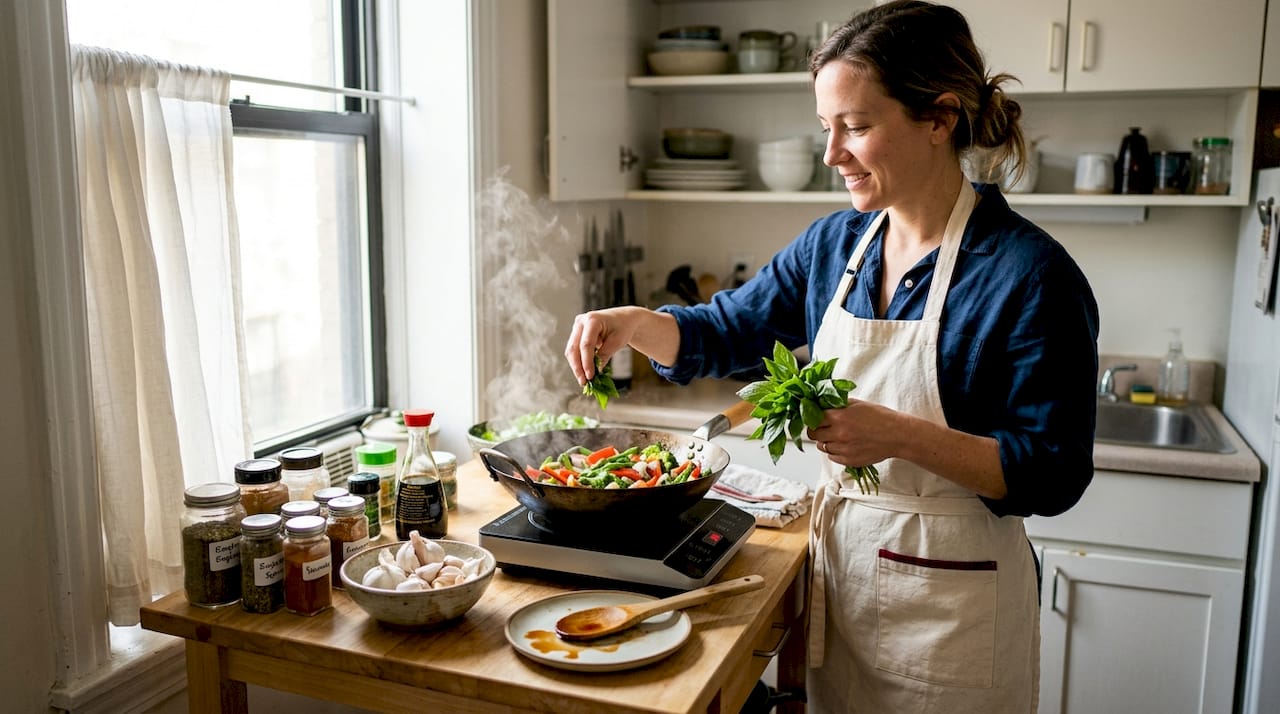
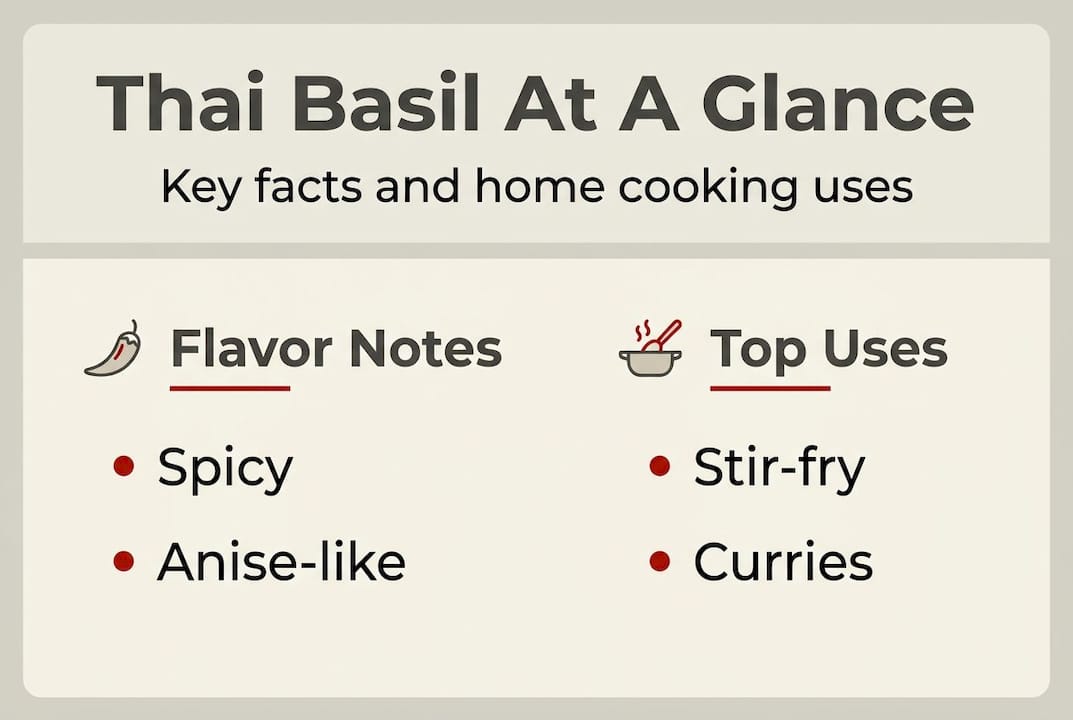
Thai basil has a bold, spicy, anise-like flavor that withstands high heat in cooking.
Proper storage extends its freshness and enhances its culinary versatility beyond traditional Thai dishes.
Creative uses include pestos, infused oils, cocktails, salads, and desserts for added aroma and flavor.
You bought a gorgeous bunch of Thai basil at the market, used a few leaves for a stir-fry, and now the rest sits in your fridge slowly wilting. Sound familiar? Thai basil is one of those ingredients that smells incredible, tastes even better, and somehow always ends up underused. The good news is that this herb is far more versatile than most home cooks realize. This guide walks you through everything: what makes Thai basil special, how to stock your kitchen for it, step-by-step recipes for classic and creative dishes, and smart ways to keep every leaf from going to waste.
Table of Contents
Understanding Thai basil: Flavor, common uses, and sourcing tips
How to cook with Thai basil: Step-by-step recipes for classic and creative dishes
Beyond the basics: Creative ways to use Thai basil in modern kitchens
Our culinary perspective: Unlocking Thai basil’s true potential
Discover authentic Thai basil dishes at Thai Spoon Las Vegas
Key Takeaways
Point | Details |
Unique Thai basil flavor | Thai basil offers spicy, anise-like notes that distinguish it from other basil varieties. |
Essential ingredients for success | Stock Thai pantry staples like fish sauce and chilies to cook authentic basil dishes. |
Classic and creative recipes | Pad kra pao and noodle stir-fries are classics, but basil shines in salads and cocktails too. |
Expert cooking tips | Add Thai basil at the end of cooking for fresh aroma and avoid overcooking the leaves. |
Understanding Thai basil: Flavor, common uses, and sourcing tips
Thai basil is not just a tropical version of the Italian sweet basil sitting on your windowsill. The two herbs look similar but taste completely different. Thai basil has sturdy, slightly glossy leaves, purple stems, and a flavor that is bold and assertive. Its signature flavor profile is spicy, sweet, and slightly anise-like, meaning it holds up beautifully under heat in a way that sweet basil simply cannot.
Italian basil wilts and loses its fragrance the moment it hits a hot pan. Thai basil, on the other hand, keeps its character even when stir-fried at high temperatures. That resilience is exactly why it is a cornerstone of dishes like pad kra pao and Thai green curry. Understanding Thai herbs and their flavor roles helps you use them with intention rather than guesswork.
Here is what makes Thai basil stand out from other fresh herbs:
Flavor: Peppery, slightly clove-like, with a sweet anise finish
Aroma: Stronger and more complex than sweet basil, even after cooking
Texture: Sturdier leaves that do not bruise or wilt as quickly
Color: Deep green leaves with distinctive purple stems and flowers
Heat tolerance: Stays flavorful when stir-fried or added to hot soups
You can find Thai basil at most Asian grocery stores, international markets, and increasingly at mainstream supermarkets in the produce section. Farmers markets in the spring and summer are another great source. When buying, look for firm, dark green leaves with no yellowing or black spots.
Pro Tip: To keep Thai basil fresh for up to a week, trim the stems and place them in a glass of water like cut flowers. Cover the leaves loosely with a plastic bag and leave it on your counter away from direct sunlight. For longer storage, wrap dry leaves in a damp paper towel and refrigerate in a sealed bag.
Essential ingredients and tools for Thai basil recipes
Successful Thai home cooking, as any experienced cook will tell you, depends on a handful of flavorful pantry items. Before you start cooking with Thai basil, make sure your kitchen is stocked with the right supporting cast.
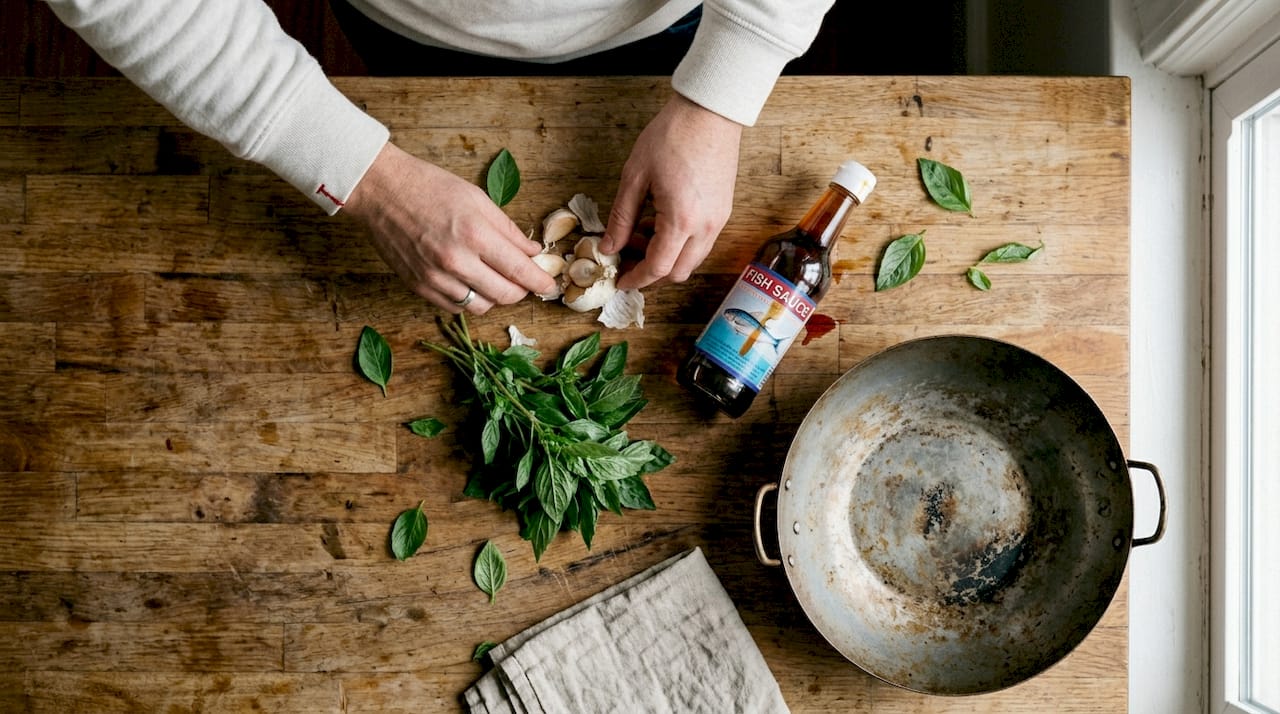
The following table shows the key ingredients, their role in Thai basil dishes, and easy substitutions when needed:
Ingredient | Role in dish | Substitution |
Fish sauce | Adds umami and saltiness | Soy sauce or tamari (vegan) |
Oyster sauce | Adds depth and sweetness | Hoisin sauce or mushroom sauce |
Fresh garlic | Aromatic base | Garlic paste (use less) |
Thai chilies | Heat and brightness | Serrano or red pepper flakes |
Neutral oil | High-heat cooking | Avocado or vegetable oil |
Soy sauce | Balances saltiness | Coconut aminos (lower sodium) |
Beyond the pantry, a few key tools make a real difference:
Wok: The sloped sides and high heat capacity are ideal for stir-frying Thai basil dishes evenly and quickly
Chef knife: A sharp knife makes slicing chilies and garlic fast and safe
Mortar and pestle: Perfect for smashing garlic and chilies into a rough paste that releases more flavor than chopping alone
Splatter screen: Thai basil releases moisture when it hits a hot pan, and a splatter screen keeps your stovetop clean
If you do not own a wok, a large cast iron skillet or stainless steel pan works as a solid alternative. The goal is high heat and enough surface area to cook ingredients quickly without steaming them. For dietary needs, swapping fish sauce for tamari makes most Thai basil recipes vegan-friendly without sacrificing too much depth. Exploring essential Thai ingredients before you shop saves time and prevents mid-recipe scrambles.
How to cook with Thai basil: Step-by-step recipes for classic and creative dishes
Pad kra pao, or Thai basil chicken, is a beloved staple that highlights the herb’s unique flavor. It is fast, satisfying, and one of the best entry points for home cooks new to Thai cooking. Here is a simple version:
Heat 2 tablespoons of neutral oil in a wok over high heat until shimmering.
Add 4 minced garlic cloves and 3 to 5 sliced Thai chilies. Stir-fry for 30 seconds.
Add 1 pound of ground chicken. Break it apart and cook until no longer pink, about 3 to 4 minutes.
Add 1 tablespoon fish sauce, 1 tablespoon oyster sauce, and 1 teaspoon soy sauce. Stir to combine.
Remove the pan from heat, then immediately add 1 cup of fresh Thai basil leaves. Toss until just wilted.
Serve over jasmine rice with a fried egg on top.
Pro Tip: Always add Thai basil off the heat or right at the end of cooking. Adding it too early destroys the volatile oils that give the herb its signature aroma. A few seconds of residual heat is all it needs.
Here is a quick comparison of a classic versus a creative Thai basil recipe approach:
Recipe type | Cooking time | Skill level | Key flavor profile |
Pad kra pao (classic) | 15 minutes | Beginner | Savory, spicy, herbal |
Thai basil noodle stir-fry | 20 minutes | Beginner | Umami, bright, aromatic |
Thai basil pesto pasta | 25 minutes | Intermediate | Nutty, fresh, complex |
Thai basil coconut soup | 30 minutes | Intermediate | Creamy, fragrant, bold |
A note on common mistakes: The biggest error home cooks make is overcooking Thai basil. Blackened, limp leaves taste bitter and lose all their fragrance. Keep the heat high, move fast, and add the basil last. Thai basil is also a key ingredient in many must-try Thai dishes, so learning to handle it well opens the door to a wide range of authentic recipes.
For a quick noodle stir-fry, cook rice noodles according to package directions, then toss them in the same wok with garlic, chilies, your choice of protein, a splash of fish sauce and oyster sauce, and a generous handful of Thai basil at the very end. Browse top Thai dinner recipes for more inspiration on building full meals around this herb.
Beyond the basics: Creative ways to use Thai basil in modern kitchens
Once you have pad kra pao down, it is time to think bigger. Thai basil adds fresh aroma and flavor complexity to salads, soups, and even desserts, making it one of the most versatile herbs you can keep on hand.
Here are some creative ways to put Thai basil to work beyond the wok:
Thai basil pesto: Blend Thai basil with toasted cashews, garlic, lime juice, fish sauce, and olive oil. Use it on pasta, grilled chicken, or as a sandwich spread.
Infused oil: Gently warm neutral oil with Thai basil leaves, then strain and bottle it. Drizzle over pizza, roasted vegetables, or grilled fish.
Cocktails: Muddle a few leaves into a gin and tonic or a lemonade for a herbal, slightly spicy twist that surprises every guest.
Thai basil salad: Toss raw leaves with sliced cucumber, shallots, lime juice, fish sauce, and crushed peanuts for a refreshing side dish.
Coconut milk soup: Stir a handful of leaves into a simmering pot of coconut milk, lemongrass, and mushrooms just before serving.
Fruit desserts: Layer Thai basil leaves with mango sorbet or fresh pineapple for a bold, unexpected dessert.
Local Thai restaurants in Las Vegas use Thai basil in ways that go well beyond the expected. At Thai Spoon Las Vegas, the herb appears across multiple dishes, and watching how a professional kitchen handles it teaches you a lot about timing and balance. Exploring authentic Thai dishes at a trusted local restaurant is one of the fastest ways to train your palate and get inspired for your next home cooking session.
The fusion angle is also worth pursuing. Thai basil pesto on sourdough toast, Thai basil mojitos at a backyard party, or a Thai basil vinaigrette on a grain bowl are all approachable ideas that bring something genuinely new to familiar formats.
Our culinary perspective: Unlocking Thai basil’s true potential
Here is the honest truth: most home cooks treat Thai basil like a garnish when it should be the star. They sprinkle a few leaves on top of a finished dish and call it a day. That approach barely scratches the surface of what this herb can do.
The cooks who get the most out of Thai basil are the ones who treat it like a seasoning, not a decoration. They add it in generous handfuls. They build dishes specifically around its flavor rather than adding it as an afterthought. They experiment with it in non-Thai contexts, which is where some of the most interesting results happen.
We also think there is real value in eating out intentionally. Trying flavorful Thai dinner ideas at a restaurant you trust gives you a flavor benchmark to cook toward at home. You stop guessing what the dish is supposed to taste like and start cooking with confidence. Thai basil rewards curiosity and boldness. Give it both.
Discover authentic Thai basil dishes at Thai Spoon Las Vegas
If all this talk of Thai basil has you craving the real thing, we have you covered. At Thai Spoon Las Vegas, we cook with fresh Thai basil across a range of dishes that showcase exactly what this herb can do in the hands of experienced cooks.
Browse our full Thai Spoon menu to see what is available for dine-in, pickup, or delivery. We also offer catering services for events where you want authentic Thai flavors without the cooking. Check out our service details to learn more about everything we offer, from large-party reservations to gift cards. Whether you are a home cook looking for inspiration or just hungry for something great, we are about 20 minutes from the Strip and worth every mile.
Frequently asked questions
Can I substitute Thai basil with sweet basil in Thai recipes?
You can use sweet basil in a pinch, but the result will taste noticeably different since Thai basil’s spicy, anise-like flavor is much more assertive and heat-resistant than sweet basil’s delicate profile.
What are the most popular Thai dishes that feature Thai basil?
Pad kra pao, or Thai basil chicken, tops the list, along with noodle stir-fries and green curry, all of which rely on the herb for their signature bold aroma.
How do I keep Thai basil fresh after purchase?
Trim the stems and stand them in a glass of water on the counter, or wrap dry leaves in a damp paper towel and store in a sealed bag in the refrigerator for up to one week.
Are there creative ways to use Thai basil outside traditional Thai dishes?
Absolutely. Thai basil adds complexity to salads, soups, and desserts, and it works beautifully in pestos, infused oils, and cocktails when you want a fresh, herbal kick with a hint of spice.
Recommended
Comments