


How to Cook Authentic Thai Rice at Home in Las Vegas
TL;DR:
Authentic Thai rice requires choosing Thai-sourced jasmine or glutinous varieties for proper flavor and texture.
Proper rinsing, soaking, and cooking techniques are essential to achieving perfect rice at home.
Using day-old rice and high heat improves fried rice texture and flavor, replicating restaurant-quality results.
Getting Thai rice right at home is harder than it looks. Most Las Vegas cooks end up with gummy jasmine rice or sticky rice that clumps into a dense, flavorless brick. The problem is almost never effort. It’s the wrong rice variety, skipped prep steps, or heat that’s too aggressive. This guide walks you through everything: picking the right rice, rinsing and soaking correctly, mastering stovetop and rice cooker methods, steaming sticky rice the traditional way, and nailing fried rice texture. Follow these steps and your home kitchen can produce results that rival any Thai restaurant in the valley.
Table of Contents
Key Takeaways
Point | Details |
Authentic rice starts with ingredients | Using Thai-sourced jasmine and glutinous rice is essential for flavor and texture. |
Rinsing and soaking are crucial | Correct prep removes excess starch and prevents gumminess or disintegration. |
Cooking method matters | Stovetop low-slow or steaming techniques produce separated, fluffy grains. |
Day-old rice for fried perfection | Utilize leftover jasmine rice and high heat for restaurant-quality fried rice. |
Small details unlock big results | Precise water ratios and careful heat control make Thai rice dishes stand out. |
Choosing the right Thai rice for authenticity
With the promise of authentic flavor ahead, it’s crucial to begin with the right ingredients. Not all rice is created equal, and in Thai cooking, the variety you choose determines everything about the final dish.
Thai cuisine relies on two main rice types: Thai jasmine rice (also called hom mali, meaning “fragrant rice” in Thai) and Thai glutinous rice (sticky rice, or khao niao). Jasmine rice is long-grain, slightly floral, and fluffy when cooked correctly. Sticky rice is short-grain, opaque, and chewy. They are not interchangeable. Using the wrong one for a dish is like using bread flour in a delicate cake.
Origin matters more than most home cooks realize. Rice grown in Thailand’s central plains absorbs specific minerals and grows in a climate that produces a distinct aroma. When you buy choosing authentic Thai rice from Thai-sourced brands, you get that signature fragrance that generic American long-grain rice simply cannot replicate. Prioritize Thai-sourced jasmine and glutinous rice for the closest result to what you’d eat in Bangkok or at a quality Thai restaurant.
Another factor worth knowing: new crop vs. aged rice. New crop hom mali (harvested within the past year) has higher moisture content and cooks up softer and more aromatic. Aged rice is drier and absorbs more water. If your bag doesn’t specify, assume it’s aged and reduce water slightly.
For sticky rice, only Thai glutinous varieties work. Other glutinous rice from Japan or China has different starch structures and won’t steam into the chewy, slightly translucent texture that pairs with Thai grilled meats or mango. Check the label for “Thai glutinous rice” or “sweet rice” from a Thai brand. You can find these at Asian grocery stores near Chinatown Plaza on Spring Mountain Road, which is a solid resource for essential Thai ingredients in Las Vegas.
Quick checklist for buying authentic Thai rice:
Look for “hom mali” or “jasmine” on the label from a Thai brand
Check the harvest year if listed (newer is more aromatic)
For sticky rice, confirm “Thai glutinous” or “sweet rice” from Thailand
Avoid generic supermarket “long grain white rice” as a substitute
Store in an airtight container away from heat and light
Feature | Thai jasmine (hom mali) | Thai glutinous (sticky) |
Grain type | Long-grain | Short-grain |
Texture when cooked | Fluffy, slightly sticky | Chewy, dense |
Aroma | Floral, fragrant | Mild |
Best used for | Curries, soups, stir-fries | Grilled meats, desserts |
Soaking required | No | Yes, overnight |
Prepping Thai rice: Rinsing, soaking, and key tools
Once you’ve chosen your rice, prepping it the right way sets the stage for flawless cooking. This step is where most home cooks cut corners and pay for it later.
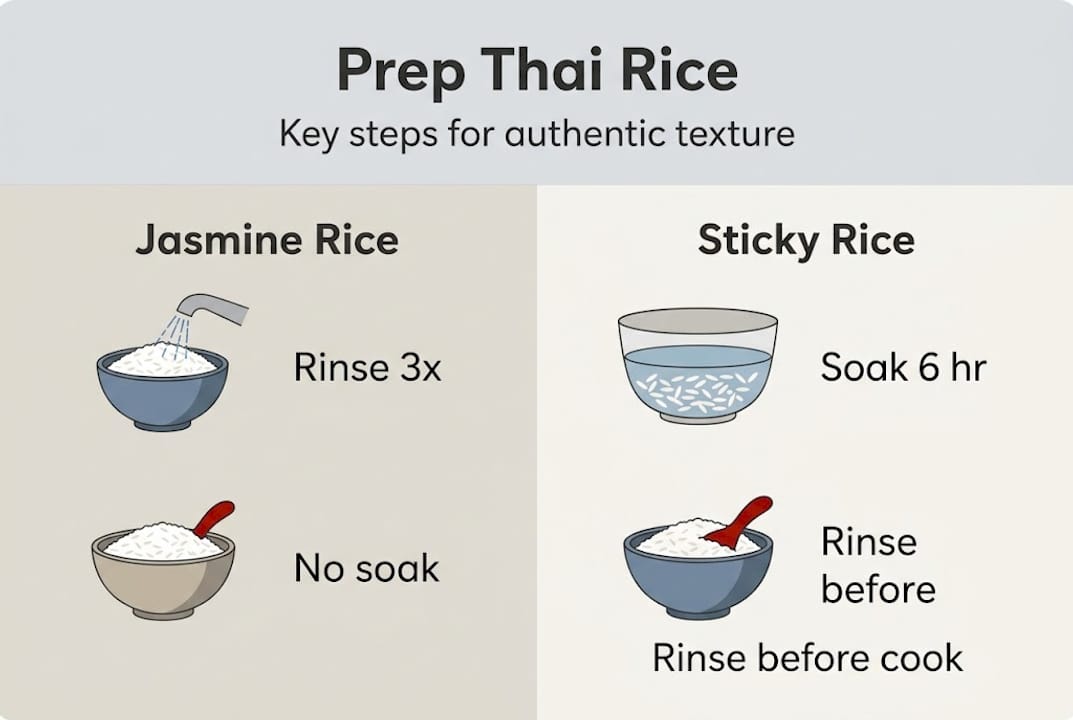
Rinsing jasmine rice removes excess surface starch that causes gumminess. Rinse 3-4 times until water runs nearly clear before cooking. Place the rice in a bowl, cover with cold water, swirl gently with your hand, and pour off the cloudy water. Repeat. You’re not scrubbing it, just releasing loose starch. Jasmine rice does not need soaking, only rinsing.
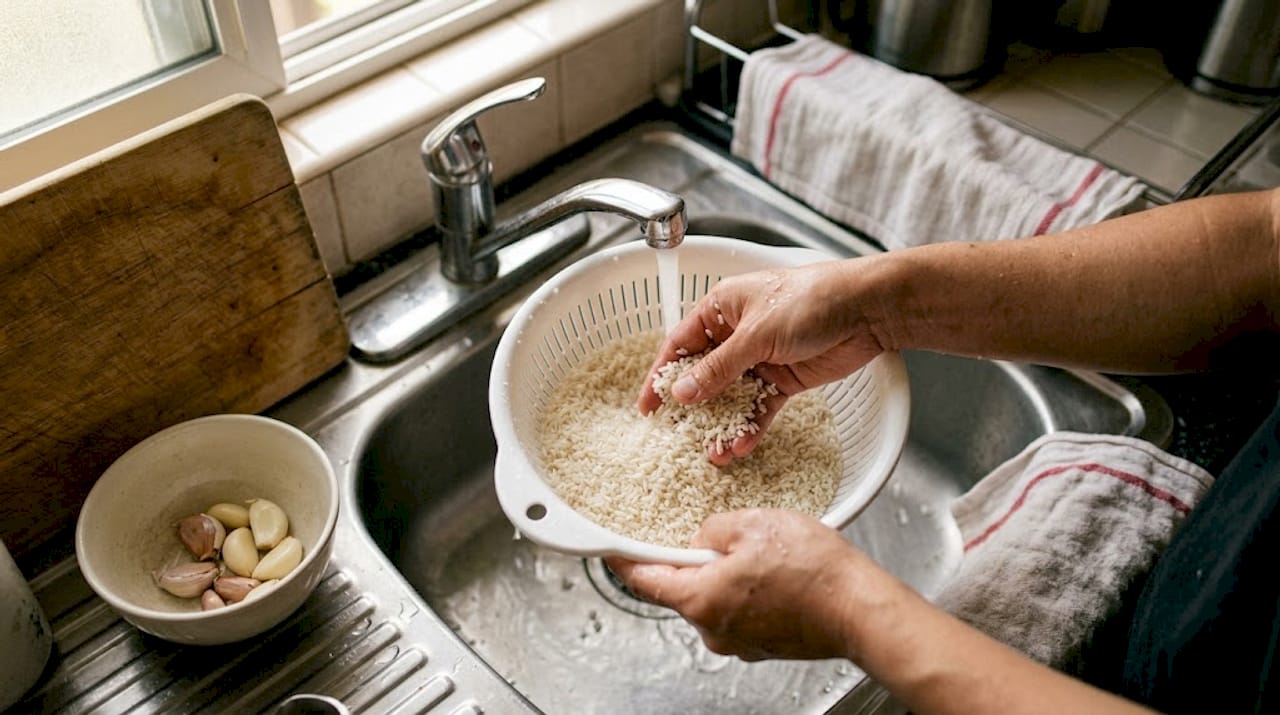
Sticky rice is a different story. Soaking and rinsing are crucial to the final result. The rice must soak in cold water for a minimum of 4 hours, but overnight (8 to 12 hours) is ideal. This softens the grain so it steams evenly all the way through. After soaking, rinse it 2-3 times to remove starch. Understanding Thai sticky rice at a deeper level helps you see why this step cannot be skipped.
Pro Tip: Use filtered water for both rinsing and cooking. Las Vegas tap water is heavily treated and can carry a slight mineral taste that affects delicate rice flavors. A basic pitcher filter makes a noticeable difference.
Essential tools for Thai rice at home:
A heavy-bottomed pot with a tight-fitting lid (for stovetop jasmine rice)
A rice cooker with a fuzzy logic setting (for consistent results)
A bamboo steaming basket or cheesecloth-lined colander (for sticky rice)
A fine mesh strainer (for rinsing)
A wooden rice paddle or fork (for fluffing, never a spoon)
Rice type | Rinsing | Soaking time | Water ratio |
Jasmine | 3-4 times | None | 1 cup to 1.25 cups water |
Sticky | 2-3 times after soak | 8-12 hours | No water; steamed |
For sticky rice at home, a cheesecloth is one of the most useful tools you can own. It holds the rice in a neat bundle inside a steamer basket and makes the halfway flip much easier.
Cooking Thai jasmine rice: Stovetop and rice cooker methods
With rice prepped, now it’s time to master the cooking process for the most popular Thai rice. Both methods work well, but each requires attention to detail.
Stovetop method (step-by-step):
Combine rinsed rice and water using a 1:1.25 ratio (1 cup rice to 1.25 cups water) in a heavy-bottomed pot
Bring to a boil over medium heat, uncovered
Once boiling, stir once, reduce heat to the lowest setting, and cover tightly
Cook for 18 to 20 minutes without lifting the lid
Remove from heat and let rest, covered, for 10 minutes
Fluff gently with a rice paddle using a folding motion
Warning: Never cook jasmine rice over high heat after the initial boil. High heat scorches the bottom layer and leaves the top undercooked. Low, slow stovetop cooking prevents burning and ensures every grain cooks evenly. Resting and fluffing are not optional steps.
Rice cooker method (step-by-step):
Add rinsed rice to the cooker bowl
Fill to the jasmine rice line (or use the 1:1.25 ratio)
Select the white rice or jasmine setting if available
Allow the full cycle to complete, including the keep-warm phase
Let rest for 5 minutes after the cycle ends, then fluff
Pro Tip: Add a small piece of pandan leaf (a long, fragrant tropical leaf used widely in Thai cooking) to the water before cooking. It deepens the floral aroma of the jasmine rice without changing the flavor profile.
The role of rice in Thai cuisine goes beyond being a side dish. It’s the neutral base that balances bold curry and spice. Getting the texture right means every bite of your meal works together. If you want to go deeper on technique, exploring Thai cooking techniques gives you a broader framework for understanding why these steps matter.
Making Thai sticky rice: Traditional steaming and practical home hacks
For those wanting to explore traditional sticky rice or alternate methods, here’s how to do it right. Sticky rice is not cooked in water. It’s steamed, and that distinction changes everything.
Traditional steaming method:
After overnight soaking and rinsing, drain the sticky rice completely
Line a bamboo steamer basket with cheesecloth and add the rice in a flat layer
Bring a pot of water to a boil and set the basket above (not touching) the water
Cover and steam for 15 minutes
Flip the rice parcel using the cheesecloth as a sling
Steam for another 10 to 15 minutes until translucent and chewy
Sticky rice requires soaking, rinsing, and a mid-flip during steaming to ensure even texture throughout. The flip is not optional. Without it, the bottom layer overcooks while the top stays raw.
Steaming prevents disintegration; boiling breaks down the starch structure and turns the rice into paste. Only use Thai glutinous rice for this method. This is explained further in our guide on explained sticky rice for home cooks.
Home hack alternatives for Las Vegas kitchens:
Method | Equipment needed | Result quality |
Traditional bamboo basket | Bamboo steamer, cheesecloth | Excellent |
Colander hack | Metal colander, large pot, cheesecloth | Very good |
Splatter guard hack | Splatter screen, pot, foil cover | Good |
Instant Pot steam | Instant Pot, trivet, cheesecloth | Good |
Pro Tip: After steaming, transfer the sticky rice to a bamboo basket or covered bowl. It stays warm and chewy for up to an hour. Cover with a damp cloth to prevent drying. For more serving ideas, check out sticky rice recipes that pair well with Thai grilled chicken or mango desserts.
Perfecting fried rice: Avoiding mushiness and achieving restaurant-quality texture
With both plain and sticky rice mastered, elevate your home cooking with perfect fried rice texture. This is where most home cooks go wrong, and the fix is simpler than you’d expect.
The single most important rule: use day-old rice. Day-old cold jasmine rice avoids mushiness and allows high wok heat to separate each grain cleanly. Freshly cooked rice has too much surface moisture. It steams in the wok instead of frying, and you end up with a clumped mess.
Key tips for restaurant-quality Thai fried rice:
Cook jasmine rice the day before and refrigerate uncovered for at least 8 hours
Break up any clumps with your hands before adding to the wok
Use a carbon steel wok or the largest, heaviest pan you own
Get the pan screaming hot before adding oil
Work in small batches to maintain heat
Add rice before eggs to coat grains in oil first
Pro Tip: Batch cook rice on Sunday and portion it into flat layers on sheet trays before refrigerating. This dries the surface faster and gives you fried rice-ready rice for the whole week.
Low heat yields a bigger margin for error versus high heat, which scorches quickly. But for fried rice specifically, high heat is non-negotiable. The goal is wok hei (the slightly smoky, charred flavor from intense heat) which you can only achieve at temperatures a home stove struggles to reach. Maximize your burner by preheating the wok for at least 3 minutes before cooking.
For inspiration on what to make, browse essential Thai rice dishes or read about authentic Thai fried rice to understand the flavor profile you’re chasing.
Our take: Why Las Vegas kitchens struggle and how to unlock real Thai rice flavor
After years of serving Las Vegas locals and watching the home cooking conversation evolve, we’ve noticed a pattern. Most people who struggle with Thai rice at home are making two mistakes: using generic supermarket rice and skipping the rinse because it feels unnecessary.
Generic long-grain white rice lacks the aromatic compounds that make hom mali worth eating. No technique fixes that. The importance of rice in Thai food is not about carbs on a plate. It’s about a carefully balanced base that carries the flavors of every dish it accompanies.
The shortcuts that actually work? A rice cooker for jasmine rice and a simple colander setup for sticky rice. You don’t need expensive equipment. You need the right rice, proper prep, and patience during cooking. What doesn’t work is rushing the soak, cranking the heat, or lifting the lid mid-cook. Those habits are hard to break but worth fixing. Moisture control and attentive cooking are what separate forgettable rice from the kind that makes your whole meal taste better.
Upgrade your Thai rice experience with Thai Spoon
Mastering Thai rice at home is deeply satisfying, and now you have the tools to do it well. But sometimes you want the full restaurant experience without the prep work.
At Thai Spoon Las Vegas, our menu features dishes built around perfectly cooked jasmine and fried rice, from our Steak Fried Rice to aromatic curry plates. Every dish reflects the same attention to rice quality and cooking technique covered in this guide. Planning a gathering or event? Our Thai catering services bring authentic Thai flavors to your table, with options for large parties and custom menus. Whether you’re cooking at home or letting us handle it, great Thai food starts with great rice.
Frequently asked questions
How do I prevent Thai jasmine rice from turning gummy?
Rinsing and slow cooking prevent gummy rice. Rinse the rice 3-4 times until the water runs nearly clear, use a 1:1.25 water ratio, and cook over the lowest heat setting without stirring.
Can I substitute Thai sticky rice with any other glutinous rice?
For authentic results, use Thai glutinous rice only. Other varieties from Japan or China have different starch structures and won’t produce the correct chewy texture.
What is the best way to cook Thai sticky rice without a traditional steamer?
Set a cheesecloth-lined metal colander over a pot of boiling water, add your soaked rice, cover with foil, and flip the rice parcel halfway through the 25 to 30 minute steam time.
Why do Thai restaurants use day-old rice for fried rice?
Day-old rice and high heat are the two pillars of great fried rice. Refrigerating rice overnight dries the surface, allowing each grain to fry separately instead of steaming into a clump.
Do I need to soak Thai jasmine rice overnight?
No. Jasmine rice needs only rinsing before cooking. Overnight soaking is reserved for sticky rice texture, where extended hydration is what creates the signature chewiness.
Recommended

Comments