


Must-Try Thai Foods in Bangkok: Savor Local Flavor
TL;DR:
Know your food goals and observe local eating patterns to find authentic Bangkok dishes.
Iconic Thai dishes include pad thai, som tam, tom yum, boat noodles, and mango sticky rice.
Explore late-night stalls, local neighborhoods, and beyond tourist spots for genuine flavors.
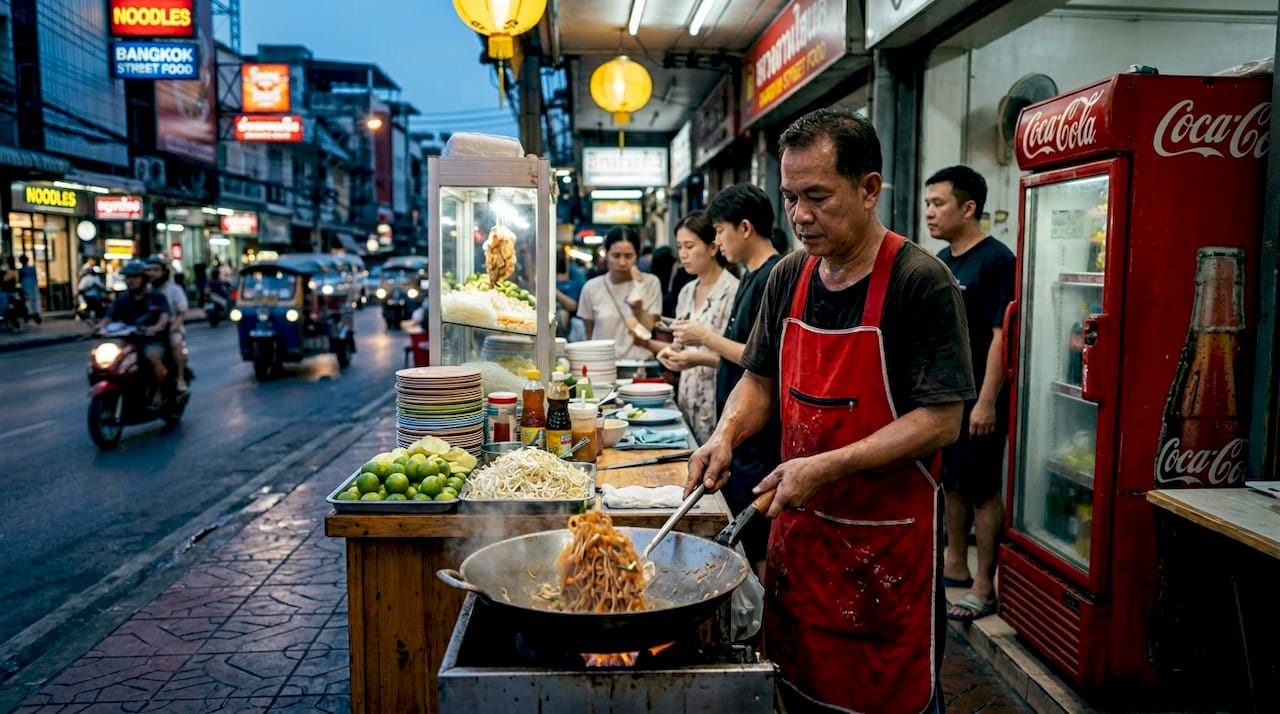
Bangkok is one of the world’s great eating cities, and that reputation is entirely earned. From smoky woks at 2 a.m. to flower-garnished desserts sold on the sidewalk, the sheer volume of food choices can stop a first-time visitor cold. The problem is not finding food. The problem is knowing which dishes deserve your limited stomach space and which stalls are actually worth the line. This guide cuts through the noise with a clear strategy: iconic dishes, expert-backed ordering advice, and the local patterns that separate a memorable meal from a mediocre tourist experience.
Table of Contents
Key Takeaways
Point | Details |
Don’t miss the classics | Pad thai, som tam, tom yum, and mango sticky rice are Bangkok essentials recommended by chefs. |
Eat like a local | Ordering soup or dry, specifying noodle types, and following locals leads to authentic flavors. |
Explore beyond tourist picks | Add Isan and Chinese-influenced dishes and late-night eats to discover Bangkok’s real food culture. |
Finish sweet | Thai desserts like mango sticky rice and coconut sweets are a must on any food adventure. |
How to choose the best Thai food in Bangkok
Before you eat a single bite, set a food goal. Are you chasing the internationally famous classics like pad thai and tom yum? Do you want to explore regional dishes from Thailand’s northeast, known as Isan? Or are you hunting for the kind of hidden stall that locals visit three times a week? Knowing your answer shapes every decision you make on the street.
Most visitors make the mistake of eating whatever appears first. Bangkok’s tourist zones are full of stalls that have mastered the art of looking authentic while serving watered-down flavors. The better approach is to observe. Watch where office workers eat at noon. Notice which stalls have no English menus. Look for the plastic stools and mismatched bowls that signal a cook focused on the food, not the presentation.
Here is a simple framework for building your Bangkok eating strategy:
Set your dish category first. Decide between noodles, rice dishes, grilled proteins, or soups before you approach a stall.
Learn the soup vs. dry distinction. Many dishes, especially noodles, come in both wet (with broth) and dry (with a thick sauce) versions. Knowing which you prefer saves confusion.
Go by noodle type. Sen lek (thin rice noodles), sen yai (wide flat noodles), and ba mee (egg noodles) each carry flavor differently. Your noodle choice changes the whole dish.
Eat late. Some of Bangkok’s best stalls open after 9 p.m. and run until dawn. Late-night eating is a local tradition, not a last resort.
A practical methodology for ordering Thai food in Bangkok is to treat each dish as a style: choose soup vs. dry noodles, and pay close attention to the noodle type and broth when ordering. That single habit eliminates most ordering confusion at busy stalls.
“The best Bangkok meals happen when you stop reading menus and start watching what the person next to you ordered.”
National Geographic’s chef-compiled guide reinforces this approach, gathering favorite street-food spots from top chefs alongside specific ordering and late-night guidance that goes well beyond the usual tourist list.
Pro Tip: If a stall has a laminated English menu with photos, it is probably fine. If you want extraordinary, find the stall with a handwritten Thai sign and a crowd of regulars. Use Google Translate’s camera function to read it. For deeper context on local Thai dining tips and authentic Thai flavors, both resources will sharpen your palate before you even land.
Street-food legends: Iconic Thai dishes (and where to try them)
Once you have a strategy, it is time to eat. These are the dishes that belong on every serious food lover’s Bangkok list, along with what makes each one worth seeking out.
Bangkok’s must-try street foods include pad thai, som tam (green papaya salad), tom yum soup, boat noodles (kuy teow reua), and mango sticky rice. Each one represents a different corner of Thai flavor.
Pad thai. Stir-fried rice noodles with egg, dried shrimp, bean sprouts, and your choice of protein. The best versions have a smoky wok breath called wok hei and a balance of sweet, sour, and savory.
Som tam. A pounded salad of green papaya, chilies, fish sauce, lime, and peanuts. It is bright, spicy, and addictive. The Isan version adds fermented crab and is significantly more intense.
Tom yum. A hot and sour soup with lemongrass, galangal, kaffir lime leaves, and usually shrimp or mushrooms. The clear version (tom yum goong nam sai) is lighter; the creamy version (nam khon) is richer.
Boat noodles (kuy teow reua). Small, intensely flavored bowls of noodle soup originally sold from canal boats. The broth is dark, complex, and often contains pork blood for depth.
Mango sticky rice. Sweet glutinous rice soaked in coconut cream, served with ripe mango. Simple, seasonal, and one of the most satisfying things you can eat standing on a sidewalk.
Dish | Best time to eat | Flavor profile | Difficulty to find |
Pad thai | Lunch or dinner | Sweet, savory, tangy | Very easy |
Som tam | Lunch | Spicy, sour, funky | Easy |
Tom yum | Dinner | Hot, sour, aromatic | Easy |
Boat noodles | Morning or lunch | Rich, dark, complex | Moderate |
Mango sticky rice | Afternoon | Sweet, creamy | Easy (seasonal) |
For specific stalls, BKKScene’s street food guide highlights Jeh O Chula for tom yum, a legendary late-night spot near Chulalongkorn University that draws lines past midnight, and Raan Jay Fai for its crab omelet, a Michelin-starred street stall where the cook still stands over a charcoal fire wearing ski goggles to protect her eyes from the heat.
Pro Tip: Visit Raan Jay Fai early. Tickets are distributed in the morning and the stall sells out fast. Arrive by 8 a.m. to secure your spot, even if your meal is not until evening. For more on what makes Thai street food iconic, the context behind each dish adds real depth to the experience.
Noodle adventures in Yaowarat: Bangkok’s Chinatown gems
Yaowarat Road is Bangkok’s Chinatown, and it is the city’s undisputed noodle capital. The street lights up after dark with vendors, the air smells of roasting duck and frying garlic, and the sidewalks fill with locals who have been eating here for generations. If noodles are your priority, this neighborhood deserves a full evening.
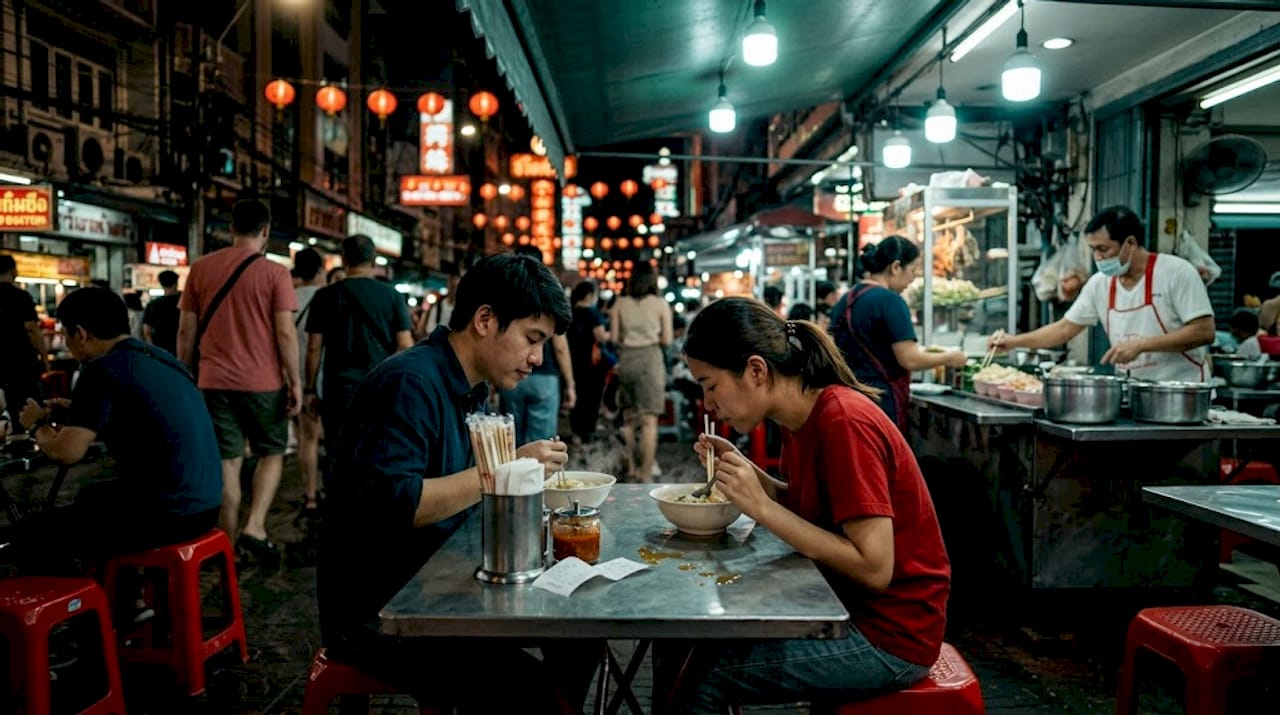
Lim Lao Ngow Fishball Noodle is one of the most celebrated open-air stalls in Yaowarat, known for its “bouncing” fish balls made fresh daily and a menu that keeps things focused and honest. The fish balls have a springy, firm texture that signals fresh fish rather than filler. You can order them in soup or dry, with your choice of noodle type.
Here is how to order noodles in Yaowarat like a local:
Choose your format. Soup (nam) or dry (haeng). Dry noodles come with a small cup of broth on the side for sipping.
Pick your noodle. Sen lek (thin), sen yai (wide), or ba mee (egg). Each holds sauce and broth differently.
Select your protein. Fish balls, pork balls, braised pork, or mixed.
Customize at the table. Four condiments sit on every table: sugar, fish sauce, dried chili flakes, and vinegar with chilies. Add them in small amounts and taste as you go.
Noodle type | Texture | Best with |
Sen lek | Thin, slippery | Light broths, fish balls |
Sen yai | Wide, chewy | Thick sauces, braised meats |
Ba mee | Springy, egg-rich | Dry preparations, roast pork |
The chef-endorsed ordering approach of treating each noodle dish as a style choice, not just a menu item, is especially useful in Yaowarat where stalls may offer six or more combinations. Knowing your preferences before you reach the counter speeds up the process and earns you respect from the cook.
Pro Tip: At busy Yaowarat stalls, point to what the person next to you is eating if you cannot communicate your order. Cooks appreciate decisiveness, and you will almost certainly get something excellent. For a deeper look at Thai noodle soup varieties and understanding Thai soup bases, both guides help you decode the menu before you arrive. If tom yum is on your radar, more on tom yum soup covers the flavor building blocks in detail.
Beyond the basics: Local specialties and authentic finds
Pad thai is delicious. But it is also one of the most tourism-adapted dishes in Bangkok. The versions served near major landmarks are often sweeter and milder than what locals actually eat. Stepping even one block off the tourist path reveals a completely different food culture.
Pairing iconic dishes with local ordering patterns significantly improves your chances of an authentic experience. That means looking beyond the internationally famous dishes and toward Isan and Chinese-Thai influenced foods that locals eat daily.
Some of the most rewarding dishes to seek out include:
Khao man gai. Poached chicken served over rice cooked in chicken broth, with a ginger-chili dipping sauce. It is the Thai equivalent of comfort food and costs almost nothing.
Pad kra pao. Stir-fried meat (usually pork or chicken) with holy basil, chilies, and a fried egg on top. Locals eat this for lunch and late-night equally. The basil should be slightly charred.
Larb. A minced meat salad from Isan seasoned with toasted rice powder, lime, fish sauce, and fresh herbs. It is sharp, herbal, and completely unlike anything in a tourist zone.
Jok. Thai rice porridge, often eaten for breakfast. Topped with ginger, green onion, and a soft egg, it is gentle, warming, and deeply local.
“The stalls with the longest lines at 11 p.m. are almost never the ones featured in travel magazines. They are the ones that locals have been returning to for twenty years.”
Pro Tip: Look for stalls near hospitals, universities, and office buildings. These locations serve working people who eat there every day, which means the food has to be consistently good and fairly priced. Why locals love these dishes gives a broader picture of what drives authentic Thai food culture.
Sweet endings: Essential Thai desserts to try
A Bangkok meal without dessert is an incomplete experience. Thai sweets are not heavy or overly sugary. They are built on coconut, pandan, glutinous rice, and fresh fruit, and they are designed to refresh rather than overwhelm.
Mango sticky rice tops every dessert list for good reason. The combination of warm, coconut-soaked glutinous rice and cold ripe mango is one of those rare pairings that makes complete sense on first bite. The best versions use Nam Dok Mai mangoes, which are small, intensely sweet, and available from roughly March through June.
Beyond mango sticky rice, these desserts are worth tracking down:
Coconut ice cream. Served in a coconut shell with toppings like roasted peanuts, sticky rice, and corn. It sounds odd but tastes extraordinary. Found at markets and street carts throughout the city.
Khanom buang. Crispy crepes folded over a filling of sweetened coconut cream and shredded coconut. They are made to order and eaten immediately while still warm and crunchy.
Tub tim grob. Water chestnuts coated in tapioca flour and served in sweetened coconut milk with crushed ice. It is cooling, lightly sweet, and visually striking with its bright red color.
Khanom krok. Small coconut-rice pancakes cooked in a dimpled pan, crispy on the outside and custardy inside. Best eaten hot, straight from the pan.
Pro Tip: The best mango sticky rice in Bangkok is rarely at a restaurant. Look for a cart near a fresh market, ideally one run by someone who also sells the mangoes. The freshness of the fruit makes an enormous difference. For more inspiration on exploring Thai desserts and Thai dessert options, both are worth reading before your trip.
Get brave: Why chasing real flavor beats tourist standbys
Here is the honest truth: the most famous Thai dishes are famous for a reason, but they are also the most likely to disappoint in tourist-heavy areas. Pad thai near Khao San Road and pad thai at a local lunch stall in Thonburi are practically different dishes.
The real Bangkok food adventure begins when you stop following a list and start following people. Watch where the motorcycle taxi drivers eat at midnight. Notice the office worker who orders the same bowl every Tuesday. These patterns reveal the food that actually sustains the city, and it is almost always better than what any travel guide recommends by name.
Pairing iconic dishes with local ordering patterns is not just a strategy for avoiding tourist traps. It is a philosophy. It means treating every meal as an opportunity to understand how Thai people actually eat, not just what they cook for visitors.
The late-night food culture in Bangkok is particularly revealing. Dishes like pad kra pao and boat noodles taste completely different at 1 a.m. when the cooks are feeding neighbors rather than tourists. Go late. Go often. Discover local favorites and you will leave Bangkok with food memories that no tour package can replicate.
Taste Thailand at home: Your next culinary step
Bangkok’s flavors do not have to stay in Bangkok. Whether you are planning your trip, just returned, or simply craving something real, Thai Spoon Las Vegas brings the same commitment to authentic Thai cooking to the northwest Las Vegas area.
From our Thai menu featuring pad thai, yellow curry, and steak fried rice to vegan and gluten-free options, the dishes are built for people who know what genuine Thai food tastes like. Check out the full Thai Spoon menu details for lunch specials and happy hour offerings. Planning a larger event? Our Thai catering services bring the Bangkok experience to your table, wherever that table happens to be.
Frequently asked questions
What are the must-try Thai street foods in Bangkok?
Pad thai, som tam, tom yum, boat noodles, and mango sticky rice are the classics that chef guides consistently recommend as starting points for any Bangkok food visit.
Where can I find authentic noodle dishes in Bangkok’s Chinatown?
Lim Lao Ngow Fishball Noodle in Yaowarat is praised for its original open-air setup and freshly made fish balls with a signature bouncy texture.
How do I order Thai noodle soups like a local?
Choose soup or dry style first, then specify your noodle type and broth preference. That two-step decision covers most of what a cook needs to make your bowl correctly.
Are there Thai desserts I shouldn’t miss in Bangkok?
Mango sticky rice, coconut ice cream, and khanom buang are local favorites found throughout the city. Mango sticky rice in particular is considered a Bangkok essential by food-focused travelers and chefs alike.
What is the best way to find less touristy Thai food in Bangkok?
Follow locals to smaller stalls and order dishes with Isan or Chinese-Thai influence. These ordering patterns consistently lead to more authentic, flavorful experiences than sticking to the internationally marketed classics.
Recommended
Comments