


Discover the real taste of Pad Thai: a flavor guide
TL;DR:
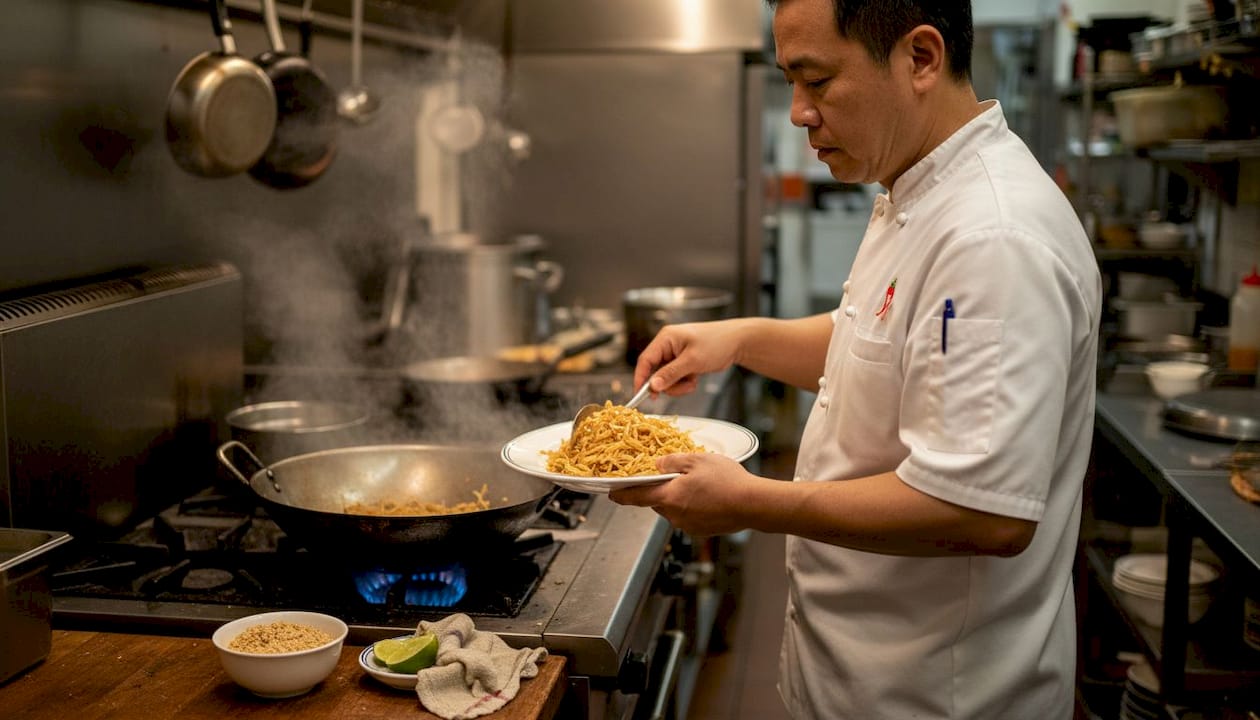
Authentic Pad Thai is a balanced mix of sweet, sour, salty, and umami flavors, not one dominant taste.
The dish’s texture relies on chewy noodles, crispy toppings, and fresh garnishes, with wok hei signifying proper high-heat cooking.
Western versions often oversimplify or substitute ingredients, making proper tamarind and sauce knowledge essential for true flavor.
Most people assume Pad Thai is either a sweet noodle dish or a fiery one. That assumption misses the point entirely. Authentic Pad Thai is neither extreme. It’s a carefully layered combination of sweet, sour, salty, and savory flavors that work together in a way that feels almost effortless on the palate. If you’ve only had the takeout version from a generic spot near the Strip, you may not have tasted what Pad Thai is actually supposed to be. This guide breaks down the real flavor profile, the textures that matter, and how to find a bowl worth eating right here in Las Vegas.
Table of Contents
Key Takeaways
Point | Details |
Balanced flavor symphony | Pad Thai harmonizes sweet, sour, salty, and umami notes for a unique and layered taste. |
Texture is essential | Chewy noodles, crunchy peanuts, and fresh sprouts create Pad Thai’s famous mouthfeel. |
Customization is key | Personalize your Pad Thai with lime, chili, and peanuts for the perfect bite. |
Authenticity matters | Look for tamarind and wok hei for genuine flavor—not just sticky sweetness. |
Understanding the flavor profile of authentic Pad Thai
Pad Thai isn’t just one flavor. It’s four flavors working in harmony, and understanding each one changes how you experience the dish.
The balanced symphony of sweet, sour, salty, and umami is what separates authentic Pad Thai from imitations. Palm sugar delivers a gentle, caramel-like sweetness. Tamarind paste brings a fruity, tangy sourness that cuts right through the richness. Fish sauce adds the salty, umami depth that makes the dish savory and satisfying. Peanuts contribute a nutty crunch, bean sprouts add freshness, and optional chilies introduce mild heat.
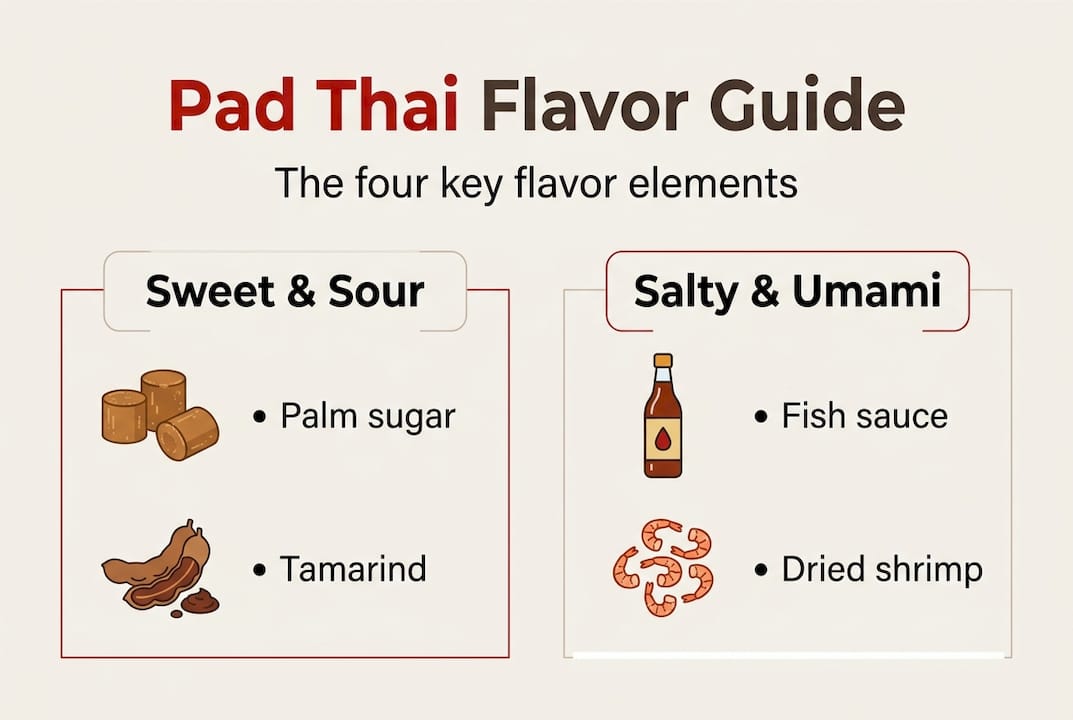
Think of it this way: each ingredient has a job. None of them dominate. That’s the whole point.
Experts who study Pad Thai flavor ratios put the breakdown at approximately 35% sweet, 30% sour, 25% umami and salty, and 10% heat. These aren’t arbitrary numbers. They reflect the precise balance achieved through high-heat wok cooking, where the sauce reduces and coats the noodles in layers.
“The flavor progression in authentic Pad Thai is intentional: sweetness hits first, sourness cuts through the middle, and umami lingers on the finish.”
Here’s what each element actually tastes like when done right:
Sweet: Soft, rounded, never cloying. Think brown sugar but more complex.
Sour: Bright and fruity, not sharp like vinegar. Tamarind gives it depth.
Salty/Umami: Savory and lingering. Fish sauce is the backbone.
Heat: Subtle and optional. Chilies add warmth, not fire.
Nutty/Fresh: Peanuts and sprouts add contrast and lightness.
For a deeper look at what goes into the dish, the Pad Thai ingredients guide covers the core components in detail. Understanding Thai flavor balance also helps explain why no single ingredient is meant to stand alone.
Flavor element | Authentic source | Approximate share |
Sweet | Palm sugar | ~35% |
Sour | Tamarind paste | ~30% |
Salty/Umami | Fish sauce | ~25% |
Heat | Fresh or dried chilies | ~10% |
Pro Tip: Squeeze fresh lime over your Pad Thai right before eating. It brightens the sour note and makes the entire flavor profile pop without changing the dish’s balance.
For expert Pad Thai insights from a culinary perspective, the technique behind the sauce matters just as much as the ingredients themselves.
The textures that define real Pad Thai
Flavor gets all the attention, but texture is what makes Pad Thai memorable. A bowl that tastes right but feels wrong is still a disappointment.
The key textural elements in authentic Pad Thai include chewy thin rice noodles (called sen lek), crispy tofu, soft scrambled egg, glossy sauce coating, and crunchy bean sprouts. Each one plays a different role. The noodles absorb the sauce without going limp. The egg softens the bite. The tofu and peanuts add crispiness. The sprouts keep it light.
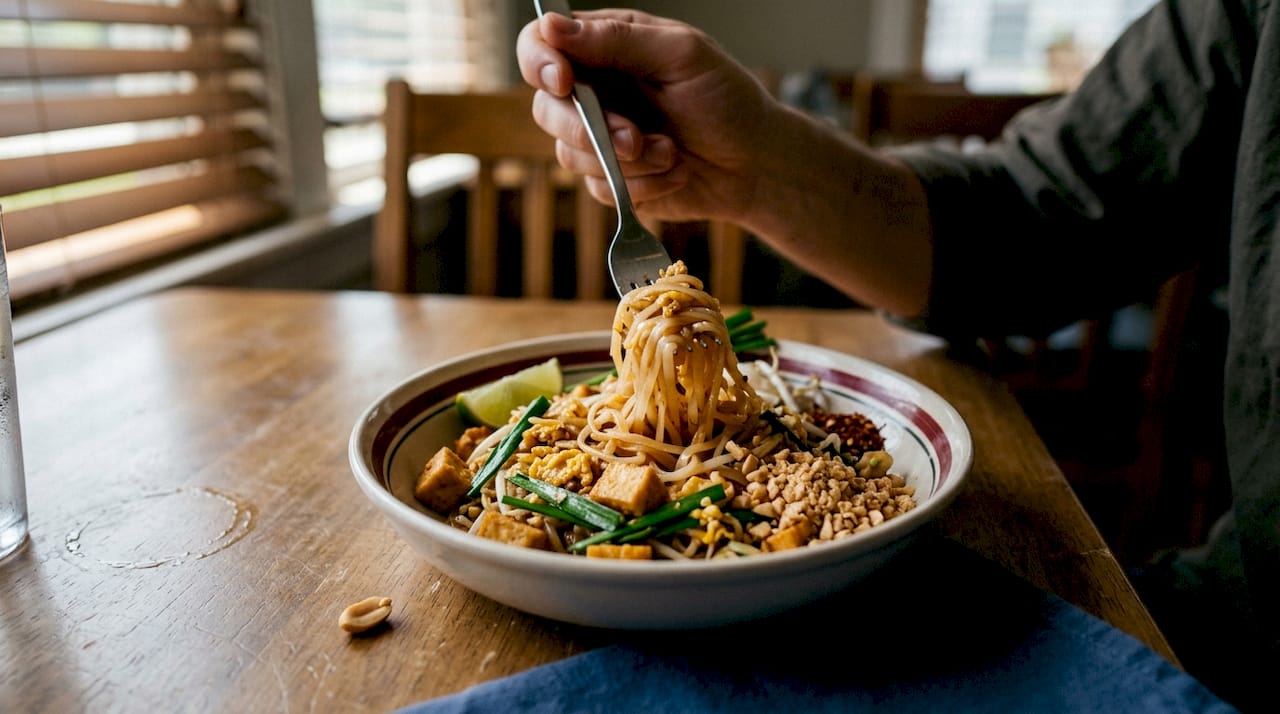
This is why texture in Thai cuisine is treated as seriously as flavor. It’s not an afterthought.
Texture element | Source ingredient | Role in the dish |
Chewy | Sen lek rice noodles | Base and sauce carrier |
Crispy | Tofu, peanuts, chives | Contrast and crunch |
Soft | Scrambled egg, shrimp | Richness and body |
Glossy | Sauce coating | Moisture without sogginess |
Light/Fresh | Bean sprouts, lime | Balance and brightness |
Common mistakes that ruin the texture:
Soggy noodles: Usually caused by over-soaking or too much sauce.
Heavy, wet sauce: Should coat, not pool. Authentic Pad Thai is relatively dry.
Overcooked egg: Rubbery egg breaks the soft contrast the dish needs.
Missing crunch: Skipping peanuts or sprouts flattens the whole experience.
Pro Tip: Look for “wok hei” when you order Pad Thai. This is the faint smoky aroma that comes from cooking at extremely high heat. It’s a sign the noodles were cooked properly and quickly, not steamed or simmered. If your Pad Thai smells slightly smoky and charred in the best possible way, that’s the real thing.
For more on types of Thai noodles and how they affect the dish, it’s worth knowing why sen lek is the standard choice. Expert noodle technique also explains how soaking time and wok temperature affect the final result.
Authentic versus Western Pad Thai: What’s different?
Once you know what authentic Pad Thai tastes and feels like, the differences in Western versions become obvious fast.
Western adaptations are often sweeter and use ketchup or vinegar instead of tamarind and palm sugar. The result is a dish that’s simpler and less complex. The tangy, savory depth disappears. What’s left is a sweet noodle dish that happens to have peanuts on top.
Here’s how to spot the difference:
Check the color. Authentic Pad Thai is light amber or golden. Ketchup-based versions are orange-red.
Taste the tang. Real tamarind is fruity and complex. Vinegar is sharp and one-dimensional.
Feel the noodles. Authentic versions are drier and chewier. Western ones tend to be wetter and softer.
Look at the garnishes. Fresh lime, raw sprouts, and chili flakes on the side signal authenticity.
Notice the sweetness. If it’s the first and only thing you taste, something’s off.
“Authentic Pad Thai makes you pause after the first bite. Western versions are easy to eat quickly because there’s less going on.”
Feature | Authentic Pad Thai | Western Pad Thai |
Sauce base | Tamarind, palm sugar, fish sauce | Ketchup, vinegar, soy sauce |
Sweetness level | Balanced, subtle | Dominant |
Tanginess | Fruity, layered | Sharp or absent |
Texture | Dry, chewy, varied | Wet, soft, uniform |
Color | Light amber/golden | Orange-red |
Understanding essential Thai ingredients helps explain why substitutions change the dish so dramatically. For a broader view, the guide to authentic Thai flavors puts Pad Thai in context with the rest of Thai cuisine. And if you want practical advice on how to eat it, the Pad Thai eating tips page covers the full experience. For reference on authentic Pad Thai taste, the ingredient ratios tell the whole story.
Regional and restaurant nuances: Tasting Pad Thai in Las Vegas
Pad Thai isn’t a single, fixed dish. It shifts depending on where in Thailand the recipe comes from, and that variation shows up in Las Vegas restaurants too.
Bangkok-style Pad Thai is the version most people know: balanced, moderately sweet, with clean tamarind tang and a mild heat option. Southern Thai versions, like those from Phuket, lean spicier and sometimes carry subtle curry notes. Both rely on wok hei, that smoky char from high-heat cooking, as a marker of quality.
In Las Vegas, the picture is mixed. The Strip-adjacent restaurants often serve Western-adapted versions because tourists expect familiar flavors. But move away from the tourist corridor and you find spots that take the dish seriously.
What makes a Las Vegas Pad Thai worth ordering:
Uses tamarind paste, not ketchup
Offers fresh lime and chili condiments on the side
Noodles are chewy and dry, not wet or clumped
Wok hei is present: you can smell it
Garnishes include raw bean sprouts and green onions
According to regional Pad Thai flavor research, roughly 60% of Thai restaurants in American cities offer some form of adapted Pad Thai, while fewer than a third use fully traditional ingredients. That gap is exactly why knowing what to ask for matters.
Pro Tip: When you sit down, ask your server whether the Pad Thai uses tamarind or ketchup as the sauce base. Most authentic spots will answer without hesitation. If they’re unsure, that tells you something.
For a broader look at Pad Thai regional types, the differences between Bangkok and Southern Thai styles go deeper than just spice level. And if you’re exploring beyond Pad Thai, the best Thai dishes list is a solid starting point.
Why most people misunderstand Pad Thai’s flavors—and what you should really look for
Here’s the honest take: most people have never actually tasted Pad Thai. They’ve tasted a version of it.
The dish gets labeled as “just sweet noodles” because that’s what most American takeout versions deliver. But that label does a disservice to what the dish is actually capable of. Real Pad Thai is a study in restraint. No single flavor wins. The wok technique, the fresh garnishes, the quality of the tamarind—all of it matters.
We’ve seen diners at Thai Spoon Las Vegas take their first bite of a properly made Pad Thai and go quiet for a moment. That pause is the “aha” moment. It’s when they realize the dish they thought they knew is something else entirely.
“If it’s only sweet, it’s not Pad Thai. It’s noodles with sugar.”
Many Las Vegas spots miss the subtlety, not out of laziness, but because they’re catering to what customers expect. The fix is simple: ask for the authentic Thai sauces and use the condiment tray to build your own balance.
Pro Tip: Use the table condiments (chili flakes, fish sauce, sugar, vinegar) to adjust your bowl after the first bite. Start with the dish as served, then add a pinch of chili or a dash of fish sauce to find your personal balance. That’s how it’s done in Thailand.
Ready to experience authentic Pad Thai in Las Vegas?
If reading through the flavor layers, the wok technique, and the tamarind-versus-ketchup debate has made you hungry, that’s the point. Understanding what Pad Thai should taste like makes eating it a completely different experience.
At Thai Spoon Las Vegas, we make Pad Thai the way it’s meant to be made: tamarind-based, wok-fired, and balanced. Our full Thai menu includes everything from classic Pad Thai to Yellow Curry and Steak Fried Rice, with vegan and gluten-free options throughout. Planning a group meal or event? Our Las Vegas Thai specialties and catering options make it easy to bring authentic Thai flavors to any occasion. Come in, order online, or call ahead. The real thing is closer than you think.
Frequently asked questions
Is Pad Thai supposed to taste sweet or sour?
Authentic Pad Thai balances sweet, sour, salty, and umami in equal measure, using tamarind for tang and palm sugar for rounded sweetness. Neither flavor is supposed to dominate the other.
What makes authentic Pad Thai different from takeout versions?
Authentic Pad Thai relies on tamarind, palm sugar, and fish sauce for its layered complexity, while takeout versions use ketchup or vinegar and lean heavily sweet, losing the tangy-savory balance that defines the real dish.
How spicy is Pad Thai normally?
Pad Thai is typically mild, with heat treated as an optional add-on through chili flakes or condiments rather than a built-in intensity. You control the spice level at the table.
What is wok hei and why does it matter in Pad Thai?
Wok hei is the smoky char from high-heat wok cooking that gives Pad Thai its depth and complexity. Without it, the dish tastes flat, regardless of how good the sauce is.
Recommended
Comments