




Thai Meal Customs – Traditions That Enhance Dining
- mail469793
- Jan 26
- 11 min read
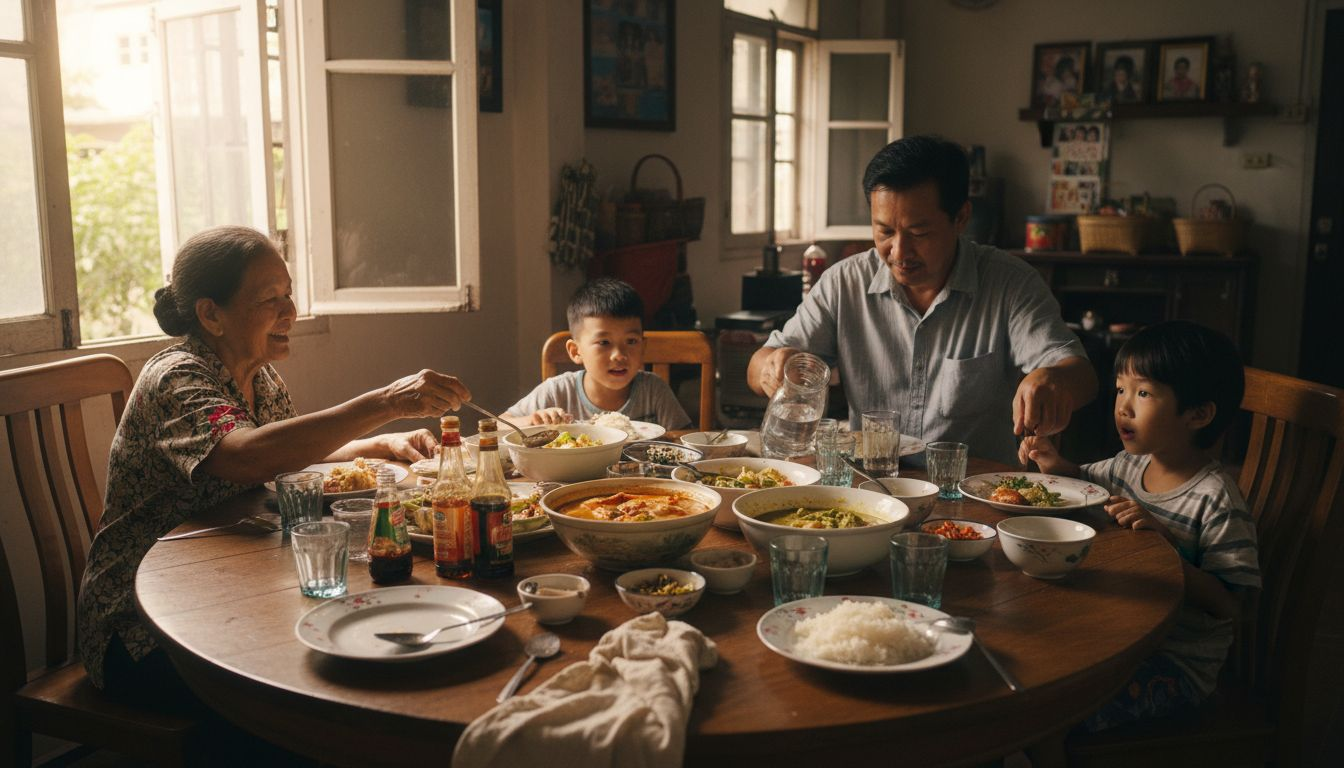
Looking for a dining experience that goes beyond the usual routine? Thai meal customs create an entirely different atmosphere in northwest Las Vegas, where food is about community, respect, and vibrant flavors. The balance of sweet, salty, sour, and spicy elements found in every authentic Thai dish invites you into a tradition shaped by centuries of cultural influences. Whether you eat out or cook at home, this article reveals how you can enjoy Thai cuisine’s distinctive customs and delicious variety right at your own table.
Table of Contents
Key Takeaways
Point | Details |
Cultural Significance | Thai meal customs prioritize sharing and community, transforming dining into a social and cultural event. |
Flavor Balance | Meals are crafted to balance sweet, salty, sour, and spicy flavors, creating a harmonious dining experience. |
Utensil Use | The use of a spoon and fork instead of knives reflects practicality and tradition in Thai dining. |
Respect and Etiquette | Offering food to others before serving oneself underscores respect and hospitality, deepening social connections. |
What Makes Thai Meal Customs Unique
Thai meal customs stand apart from other dining traditions because they treat eating as a complete cultural experience, not just a way to fill your stomach. The foundation rests on balancing sweet, salty, sour, and spicy flavors in nearly every dish, creating layers of taste that interact rather than compete. This approach demands skill and intuition from cooks, making each meal feel thoughtfully crafted rather than formulaic.
What you’ll notice immediately when dining on Thai food is the emphasis on freshness. Thai meal customs prioritize fresh herbs and aromatic spices that appear on the table or woven throughout dishes. These aren’t just flavor boosters either. Many of these ingredients carry medicinal properties, blending culinary enjoyment with wellness benefits. Your body experiences both satisfaction and nourishment simultaneously.
The communal nature of Thai dining transforms meals into social events. Dishes arrive on shared plates at the center of the table, encouraging everyone to sample everything together. This flowing, rhythmic sharing pattern strengthens bonds between diners and reflects deeper cultural values about community and togetherness. When you sit down at Thai Spoon Las Vegas with friends or family, you’re participating in a tradition that goes back centuries.
Regional diversity within Thailand adds another layer of uniqueness. Thai cuisine’s rich combination reflects historical influences from neighboring countries like China, Cambodia, and India, yet each region developed distinct styles. Northern Thai dishes differ markedly from Southern preparations, and Central Thai standards differ again. This means there’s always something new to discover, whether you order during lunch at our happy hour menu or plan a dinner gathering.
The aesthetic presentation matters deeply in Thai meal customs. Dishes receive careful attention to color, texture, and arrangement. Food isn’t simply placed on a plate but composed with intention. This visual element prepares your mind and appetite before you even take the first bite, making the entire experience more memorable.
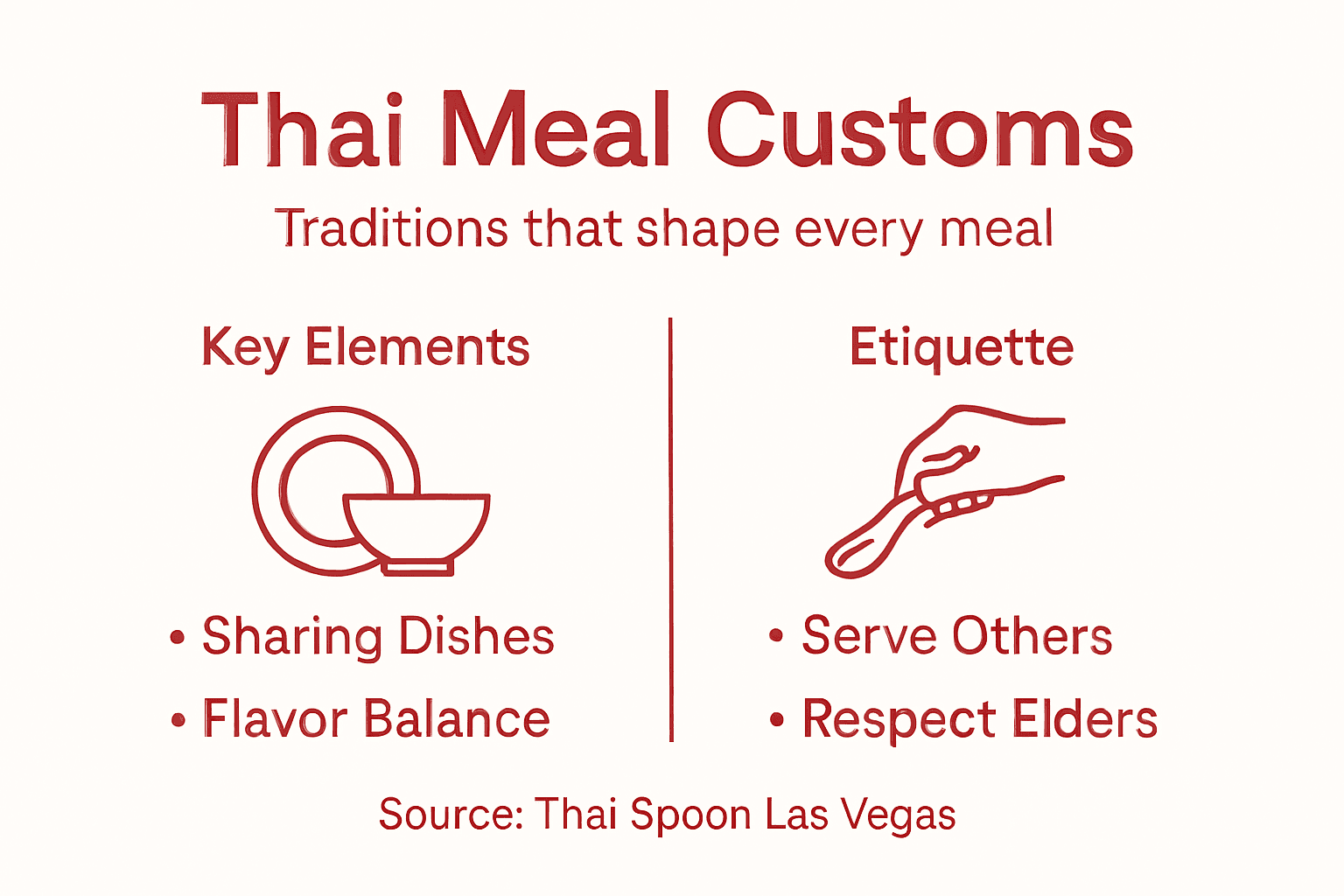
Here’s a summary of how Thai meal customs differ from Western dining traditions:
Aspect | Thai Meal Customs | Western Dining Traditions |
Meal Structure | Shared dishes, communal eating | Individual plates per person |
Utensil Use | Spoon and fork as main tools | Knife and fork (sometimes spoon) |
Flavor Philosophy | Balanced sweet, salty, sour, spicy | Often single flavor focus |
Presentation Style | Artistic arrangement, focus on color | Practical plating |
Social Interaction | Encouraged sharing and conversation | Conversation varies, less sharing |
Respect & Etiquette | Serving others first, hierarchy | Etiquette varies, less hierarchy |
Pro tip: When ordering from Thai Spoon Las Vegas, request dishes from different regions or ask about chef’s specials to experience the full range of Thailand’s diverse meal customs firsthand.
Core Elements of a Thai Dining Experience
A Thai dining experience centers on one fundamental principle: sharing. Multiple dishes arrive at your table simultaneously, and everyone eats from the same plates positioned in the middle. This setup isn’t just convenient. It reflects deep cultural values about community, belonging, and togetherness. When you order at Thai Spoon Las Vegas, you’re participating in a dining model that creates natural conversation and connection around the table.
Rice serves as the anchor of every Thai meal. It appears alongside curries, stir-fries, soups, and dips, functioning as both a staple and a flavor moderator. The rice lets you pace your eating, cool your palate between spicy dishes, and stretch the meal’s enjoyment. You’ll notice diners build small portions on their plates, mixing rice with different elements to create custom flavor combinations.
Flavor balance defines the entire eating experience. Balancing sweet, salty, sour, and spicy elements happens simultaneously across multiple dishes on your table. One plate might be intensely spicy while another offers subtle sweetness. Together, they create equilibrium. Complementary flavors and textures arrive intentionally ordered, meaning the chef has thought through how each dish enhances the others.
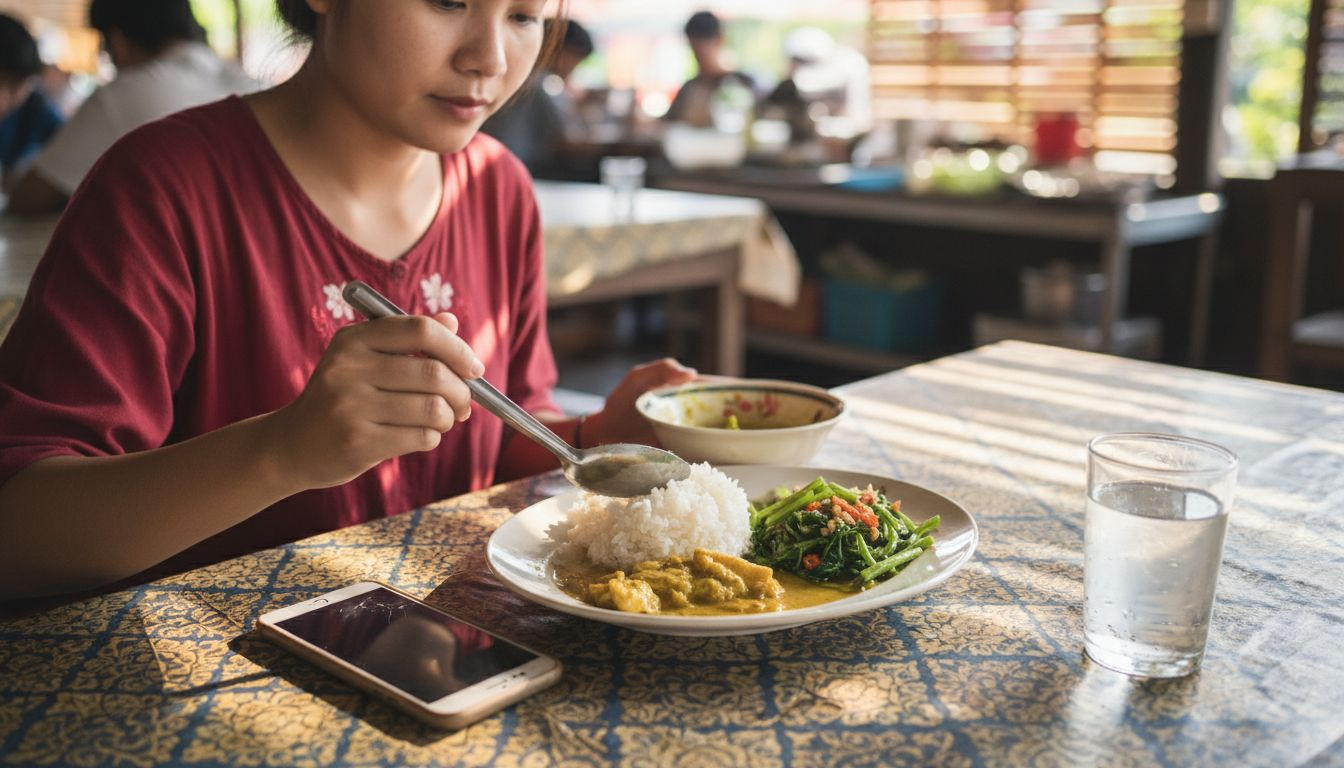
Eating utensils reflect Thai practicality and tradition. You’ll use a fork and spoon together rather than a knife, with the spoon doing most of the work. This collaborative utensil approach feels natural once you try it, allowing you to navigate rice and sauce combinations smoothly. The fork gently breaks apart food, while the spoon scoops everything together.
Presentation and dining etiquette matter deeply. Thai dining emphasizes respect and hospitality through careful food arrangement and courteous behavior. The relaxed, social atmosphere encourages lingering and conversation rather than rushing through. Herbal drinks often accompany meals, aiding digestion and adding another layer to the sensory experience.
Pro tip: Order three to four dishes for two people at Thai Spoon Las Vegas, choosing varied flavor profiles and spice levels, then share and sample everything to experience the full balance Thai dining traditions offer.
Shared Dishes and Communal Eating Rituals
Shared dishes form the backbone of Thai meal customs. Rather than each person ordering individual plates, Thai dining places multiple dishes at the center of the table where everyone helps themselves. This arrangement creates an entirely different eating dynamic from what northwest Las Vegas residents might expect from Western dining. You don’t own your meal. You participate in it alongside everyone at the table.
This communal approach goes far deeper than convenience. Sharing dishes and communal eating foster social connection and equality among diners. The shared table becomes a symbol of inclusiveness and collective well-being. When you gather at Thai Spoon Las Vegas with friends, family, or colleagues, the act of sharing food strengthens those relationships in ways that individual plates simply cannot.
There’s a specific ritual to how dishes get shared. In Thai culture, serving others before oneself shows respect and strengthens social ties within the group. You’ll notice experienced Thai diners instinctively offering food to others first, then taking their own portions. This isn’t mere politeness. It reflects deep values about interdependence and collective enjoyment that guide every aspect of Thai society.
The careful etiquette around serving reveals social hierarchies and respect within your group. Elders or honored guests often receive attention to their preferences. Younger diners or newcomers watch and follow the lead of others. This structure exists without formal rules. Everyone naturally understands their place through observation and cultural understanding.
The interactive nature transforms eating into conversation and connection. Dishes arrive in waves, encouraging people to pause, discuss flavors, and share observations. Someone might reach across to try a bite of another’s plate. Compliments flow easily. Arguments about whose dish tastes better become moments of laughter. The meal extends far beyond nutrition.
Pro tip: When dining at Thai Spoon Las Vegas, arrive with an open mindset about sharing and encourage table companions to sample from all dishes rather than claiming favorites, allowing everyone to experience the full range of flavors together.
Proper Use of Utensils in Thai Cuisine
When you sit down at Thai Spoon Las Vegas, you won’t find chopsticks at every table. Thai dining relies primarily on a fork and spoon combination that might feel unfamiliar if you’re used to Western silverware or Asian chopsticks. This isn’t arbitrary. The fork and spoon pairing reflects centuries of Thai dining tradition and etiquette that shapes how the meal unfolds.
The spoon does most of the work in Thai dining. You hold it in your dominant hand (typically the right) and use it to scoop food toward your mouth. The spoon becomes your primary utensil, handling everything from rice to curry to soup. It’s graceful, practical, and requires a certain finesse that transforms eating into something more deliberate than simply refueling your body.
The fork plays a supporting role. Held in your non-dominant hand, the fork gently pushes food onto the spoon rather than piercing or stabbing. You’re not cutting or breaking apart large pieces. The fork simply guides and assists. This collaborative relationship between utensils creates a rhythm to eating that feels almost choreographed once you understand it.
Chopsticks appear only in specific situations. Use them for noodle dishes or meals with strong Chinese influence, but not for everyday Thai fare. Eating with chopsticks during a traditional Thai meal signals a misunderstanding of proper customs. Similarly, using only a fork or eating with your hands violates dining etiquette. These aren’t rigid rules enforced by dining police. They’re expressions of respect that contribute to an orderly and pleasant table environment.
The proper fork and spoon technique takes practice. Your first meal might feel awkward. By your third or fourth visit, muscle memory kicks in. You’ll find yourself moving through curries and stir-fries with the same comfort that chopstick users feel. What seemed foreign becomes natural. This transformation mirrors how Thai meal customs work overall. What initially appears complex reveals itself as elegantly simple once you understand the underlying logic.
Pro tip: Watch how staff at Thai Spoon Las Vegas use their utensils during your visit, or ask your server to demonstrate the proper fork and spoon technique before your meal arrives.
Balancing Flavors and Choosing Dishes
Thai meal customs revolve around one principle that separates this cuisine from virtually every other dining tradition. Balance. Not the kind of balance where everything tastes the same, but the kind where opposing forces create harmony. Sweet plays against salty. Sour challenges spicy. Heat mingles with cool. Every dish on your table participates in this larger symphony.
Understanding how Thai cooks balance flavors using lime, fish sauce, sugar, and chili reveals the architecture of Thai cuisine. Lime provides sourness and brightness. Fish sauce delivers depth and umami saltiness. Sugar offers sweetness that rounds out sharp edges. Chili brings heat and complexity. These four elements appear in countless combinations, adjusted by experienced cooks who taste constantly, tweaking ratios until equilibrium emerges. This isn’t guesswork. It’s precision disguised as intuition.
Discover the main flavor elements found in Thai cuisine and their culinary roles:
Flavor Element | Taste Profile | Key Role in Cuisine |
Lime | Sour, refreshing | Adds brightness and acidity |
Fish Sauce | Salty, umami | Provides depth and richness |
Sugar | Sweet, balancing | Rounds sharp flavors |
Chili | Spicy, bold | Introduces heat and complexity |
When you order at Thai Spoon Las Vegas, dish selection matters tremendously. You’re not picking individual meals. You’re composing a balanced experience for your entire table. Choose dishes with contrasting textures and temperatures. Pair something creamy with something crispy. Balance a soup against a stir-fry. Select one intensely spicy dish alongside something milder. This thoughtful composition transforms an ordinary meal into something memorable.
Texture variety elevates the dining experience beyond flavor alone. A smooth curry contrasts beautifully against crunchy vegetables or crispy noodles. Tender meat plays against firm vegetables. Temperature variations matter too. Warm rice against cool salad elements. Hot curry sauce touching fresh herbs. These contrasts wake up your palate and prevent monotony.
Dish ordering follows a natural rhythm rather than rigid rules. Start with something lighter to awaken your appetite. Move toward richer, spicier options as your palate adjusts. Many experienced diners order multiple dishes simultaneously, allowing everyone to navigate flavors in their preferred sequence. The shared table means you control your own experience while participating in the collective one.
Pro tip: When ordering at Thai Spoon Las Vegas, ask your server to recommend complementary dishes that contrast in heat level, texture, and richness so your table experiences the full spectrum of Thai flavor balance.
Respect, Hospitality, and Dining Etiquette
Thai meal customs rest on a foundation that Western dining often overlooks: deep respect for those around you. This respect manifests through specific actions and behaviors that might seem subtle to outsiders but carry profound meaning within Thai culture. Every gesture at the table communicates something about your character and your regard for others.
Waiting for elders or honored guests to begin eating represents a core principle. You don’t dive into your meal the moment food arrives. You watch, you observe, you wait. This simple pause acknowledges hierarchy and demonstrates respect. At Thai Spoon Las Vegas, this courtesy creates natural pauses in the meal where conversation flows and connections deepen. It transforms eating from an individual activity into a collective ritual.
Offering dishes to others before serving yourself follows the same logic. When a plate passes near you, the instinct is to take what you want. Thai etiquette reverses this impulse. You serve others first, ensuring they have access to their preferences. Only then do you take your portion. This practice reflects broader Thai values of hierarchy, respect, and social harmony. The message is clear: your comfort matters less than theirs.
Hospitality extends beyond ceremony into genuine attentiveness. Thai hosts notice when someone’s glass empties. They anticipate needs before guests voice them. They adjust dishes within reach so everyone can access everything easily. At Thai Spoon Las Vegas, staff embody this philosophy, staying present without hovering, responsive without being intrusive.
Polite language and gestures during meals reinforce respect continuously. Soft voices, graceful hand movements, and genuine compliments about the food become part of the dining experience. These aren’t forced formalities. They emerge naturally when you understand that dining is seen as a social and cultural event where manners reinforce bonds and demonstrate gratitude.
The beauty lies in how effortlessly these customs strengthen group harmony. When everyone prioritizes others’ comfort, everyone feels valued. The meal becomes an experience of mutual care rather than individual consumption.
Pro tip: At Thai Spoon Las Vegas, wait for the eldest or most honored person at your table to begin eating, actively offer dishes to companions before serving yourself, and use gentle gestures when passing plates to demonstrate genuine respect and hospitality.
Experience the Heart of Thai Meal Customs at Thai Spoon Las Vegas
The article highlights how Thai meal customs revolve around sharing, respectful dining etiquette, and balancing bold flavors to create a truly memorable cultural experience. If you have ever found traditional dining too isolated or felt that meals lack the vibrant connection that comes from communal sharing and carefully balanced tastes then Thai Spoon Las Vegas offers exactly what you need. Our authentic dishes like Pad Thai, Yellow Curry, and Steak Fried Rice bring the layers of sweet, salty, sour, and spicy flavors right to your table. We honor Thai traditions by encouraging shared plates and thoughtful presentation to foster that deep connection among friends and family.
Ready to embrace the full Thai dining experience with your loved ones or colleagues? Discover how respectful hospitality and communal eating transform every meal into a social celebration by visiting Thai Spoon Las Vegas. Explore our menu tailored for every taste including vegan and gluten-free options. Take advantage of our easy online ordering for pickup or delivery or join us for lunch or happy hour to savor authentic dishes crafted with care. Don’t miss the chance to enjoy genuine Thai culture through food right in northwest Las Vegas today.
Frequently Asked Questions
What are the core elements of Thai meal customs?
Thai meal customs focus on communal eating, where multiple dishes are shared at the center of the table. Rice serves as a staple, and there is an emphasis on balancing flavors—sweet, salty, sour, and spicy. The dining etiquette promotes respect and hospitality, encouraging diners to serve others before themselves.
How do flavors balance in Thai cuisine?
Thai cuisine achieves flavor balance through the combination of key elements such as lime for sourness, fish sauce for saltiness, sugar for sweetness, and chili for heat. Each dish contributes to an overall harmony of tastes, allowing for both contrasting and complementary flavors on the table.
What is the proper etiquette for sharing dishes in Thai dining?
In Thai dining, it is important to serve others before taking food for yourself, reflecting respect and communal values. The shared table encourages diners to sample a variety of dishes and engage in conversation, promoting social connection throughout the meal.
What utensils are used in traditional Thai dining?
In traditional Thai dining, the primary utensils are a spoon and fork. The spoon is used predominantly for scooping food, while the fork serves to assist in guiding food onto the spoon. Chopsticks are typically reserved for noodle dishes or meals influenced by other Asian cuisines.
Recommended
Comments