


What Are Thai Seasonings: a Home Cook's Guide
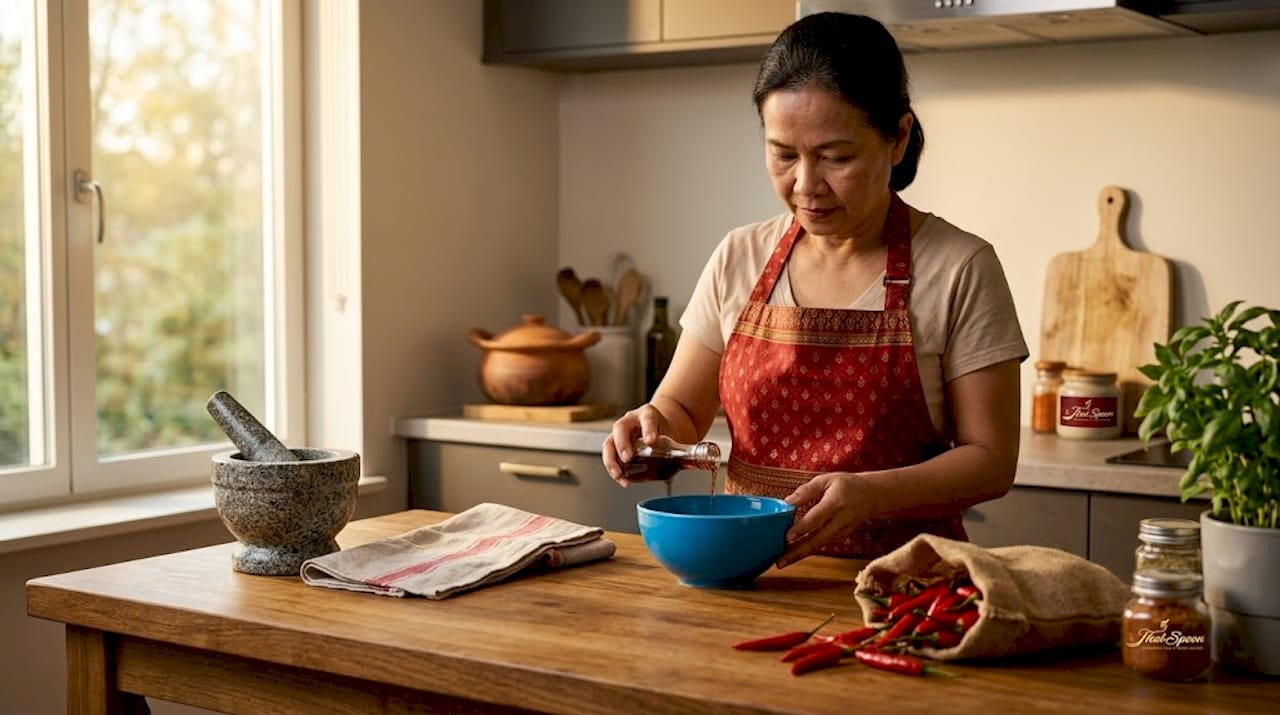
TL;DR:
Thai seasoning relies on fresh aromatics, fermented sauces, and a balanced combination of salty, sour, sweet, and spicy flavors.
It emphasizes fresh ingredients like lemongrass, galangal, and kaffir lime leaves, with paste preparations that are pounded fresh rather than dried spice blends.
Thai seasoning is one of the most misunderstood topics in home cooking. Most people assume that what are thai seasonings comes down to a jar of dried powder from the spice aisle. The reality is far more interesting. Thai cuisine’s seasoning is built on fresh aromatics, fermented sauces, and a precise balance of four flavor profiles that work together in every single dish. If you have ever tasted a Thai curry and wondered why your homemade version fell flat, the answer almost always lives in the seasonings.
Table of Contents
Key takeaways
Point | Details |
Four flavors define Thai food | Salty, sour, sweet, and spicy must all be present and balanced in authentic Thai dishes. |
Fish sauce is non-negotiable | Fish sauce replaces table salt in most Thai cooking and adds an umami depth that nothing else replicates. |
Fresh aromatics do the heavy lifting | Lemongrass, galangal, kaffir lime leaves, and coriander root create the fragrance that defines Thai cuisine. |
Curry pastes are wet, not dry | Authentic Thai seasoning blends are pounded fresh mixtures, not dry spice powders from a store shelf. |
Taste and adjust constantly | Brand variations in fish sauce and tamarind mean you must taste throughout cooking to get the balance right. |
What are Thai seasonings, really
Walk into a Thai kitchen and the first thing you notice is what is not there. You will not see a rack of dried spice jars front and center. What you will see is a bunch of lemongrass leaning against the counter, a knob of galangal on the cutting board, a bottle of fish sauce by the stove, and a block of palm sugar wrapped in plastic. That is your Thai seasoning kit.
Thai cuisine organizes every dish around four flavor pillars. Fish sauce provides the salty foundation, replacing table salt in more than 90% of Thai recipes while delivering a fermented, umami-rich depth that plain salt simply cannot match. Tamarind paste and fresh lime juice handle the sour dimension, though they are used very differently (more on that shortly). Palm sugar contributes sweetness with a subtle caramel undertone that white sugar cannot replicate. Fresh bird’s eye chilies bring the heat, clean and sharp rather than smoky.
Here is how these four flavors actually function in a dish:
Salty (fish sauce): Builds the savory backbone and ties all other flavors together.
Sour (tamarind or lime): Cuts through richness and brightens the overall profile.
Sweet (palm sugar): Softens sharp edges without making the dish taste like dessert.
Spicy (bird’s eye chilies): Adds heat and wakes up the palate so other flavors register more vividly.
No single flavor should dominate. The goal is harmony, where you taste all four simultaneously. That is what separates genuinely authentic Thai flavor from the flat, one-note versions so common in mass-market Thai food.
Pro Tip: When your Thai dish tastes “off” but you cannot identify why, check whether one of the four flavors is missing entirely. A dull curry often just needs a squeeze of lime or a few more drops of fish sauce, not more chili.
Fresh aromatics that make Thai food smell like Thailand
This is where Thai seasoning truly separates itself from any other cuisine. The fragrance you associate with Thai food does not come from a dry spice blend. It comes from volatile aromatic oils locked inside fresh plants, and those oils are remarkably fragile.
Lemongrass is the most recognizable. Its citrusy, grassy scent comes from compounds that begin breaking down the moment you bruise or slice the stalk. For soups like tom kha, you add whole bruised stalks. For curry pastes, you slice it thin and pound it.
Galangal is the ingredient most often confused with ginger, but galangal has a piney, almost medicinal flavor that ginger does not share. Substituting ginger in a Thai curry paste changes the entire character of the dish. They are not interchangeable in any authentic recipe, regardless of what some Western cookbooks suggest.
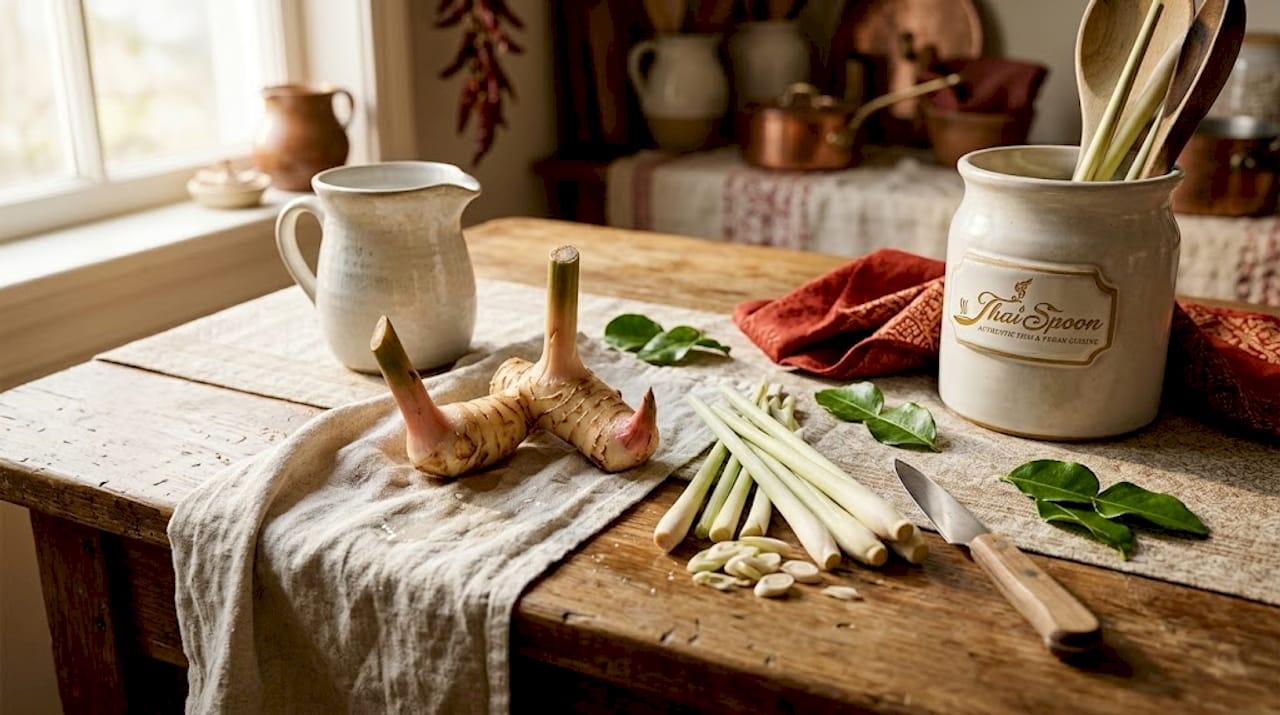
Kaffir lime leaves contribute a floral, citrusy aroma that is unlike any other ingredient in the world. Tearing the leaves just before use releases the volatile oils at the right moment, which is why experienced Thai cooks do not pre-chop them hours ahead.
Coriander root is one of the best-kept secrets of Thai cooking. Roots pounded into curry pastes add an earthy, nutty depth that coriander leaves alone cannot provide. Most Western recipes ignore the root entirely because it is harder to find, which is exactly why homemade Thai food often tastes thinner than restaurant versions.
Beyond these four, Thai cooking also uses:
Holy basil: The preferred basil for stir-fries like pad krapow. It wilts fast and has a peppery, slightly clove-like flavor that sweet Italian basil does not replicate.
Thai sweet basil: Used in curries and soups, with a softer anise note.
Makrut lime zest: Finely grated and added to some curry pastes for extra citrus punch.
Pro Tip: If you cannot find fresh kaffir lime leaves, frozen ones work far better than dried. The freezing process preserves most of the volatile oils, while drying destroys them completely.
Curry pastes vs. dry Thai spice blends
Here is the distinction that confuses most home cooks shopping for common Thai seasonings at a grocery store. A Thai spice blend in a jar is a dry, pre-ground product. A Thai curry paste is a wet, freshly pounded mixture of living ingredients. They are not the same product doing the same job.
Authentic Thai curry pastes contain:
Fresh or dried chilies (red, green, or dried for different paste types)
Garlic and shallots
Lemongrass
Galangal
Kaffir lime zest
Coriander root
Fermented shrimp paste (kapi)
The preparation method matters as much as the ingredients. Mortar and pestle pounding releases aromatic oils and creates a paste texture that a blender simply cannot replicate. The friction and pressure break down cell walls differently, producing a paste that fries properly in hot oil without turning into a watery slurry.
Here is how to build a curry paste using a mortar and pestle:
Start with the driest, hardest ingredients first: dried chilies and galangal.
Pound until broken down, then add lemongrass and coriander root.
Add shallots and garlic once the fibrous ingredients are smooth.
Finish with shrimp paste, which binds everything together.
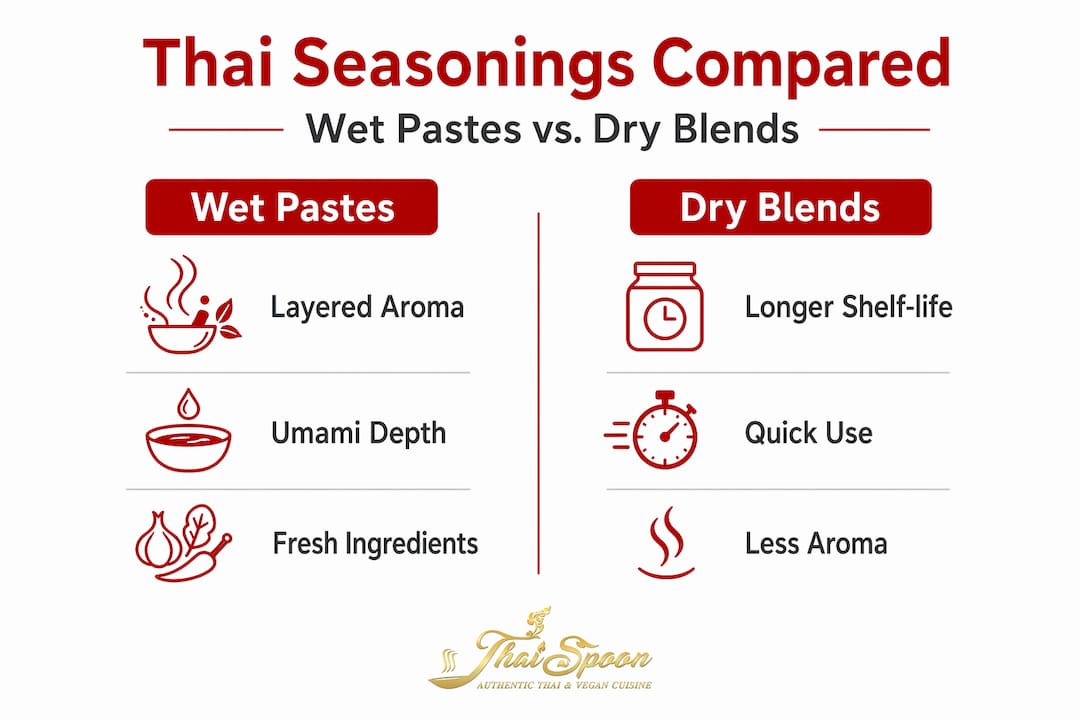
Wet pastes deliver layered aroma and umami that a dry spice blend simply cannot match. That said, quality store-bought curry pastes are a perfectly reasonable shortcut. Use them as a base, but always fry the paste in oil before adding liquid. This step activates the aromatics and is non-negotiable for authentic flavor.
Practical tips for balancing Thai seasonings at home
Understanding what is in a Thai spice blend or paste is only half the equation. Knowing how to use these ingredients in real time is what separates a good cook from a great one.
The most important skill is tasting and adjusting throughout the entire cooking process:
Start with less fish sauce than you think you need. You can always add more, but you cannot remove it. Start with half the called-for amount and build up.
Add tamarind during cooking, lime at the end. Tamarind holds up to heat while lime juice dulls and turns bitter if it cooks too long. This is why Pad Thai gets lime wedges on the side.
Use palm sugar, not white sugar. The caramel notes in palm sugar round out the saltiness of fish sauce in a way that white sugar does not. If you cannot find palm sugar, brown sugar is a closer substitute than white.
Do not oversweeten your curry. Sugar’s only role is to balance salt and nothing more. If your curry tastes sweet, you have used too much.
When it comes to substitutions, galangal is the one ingredient worth tracking down rather than swapping. For lemongrass, frozen prepared lemongrass paste works reasonably well in cooked dishes. For coriander root, you can use a larger amount of coriander stems, which carry more flavor than the leaves.
Pro Tip: Brand variations in fish sauce and tamarind paste mean salt levels and tartness can vary dramatically. Always taste your paste or sauce before adding it to a dish, and adjust other components accordingly.
For storage, curry pastes keep in the refrigerator for about a week in an airtight container. Freeze them in ice cube trays for longer storage. Dried spice blends last six months to a year in a cool, dark pantry but lose fragrance quickly once opened.
Comparing popular Thai seasoning ingredients
Not all Thai seasonings play the same role. This side-by-side comparison helps clarify when and how to use each one.
Seasoning | Flavor profile | Primary use | Fresh or dried |
Fish sauce | Salty, umami, fermented | Salting agent in curries, stir-fries, sauces | Liquid (bottled) |
Tamarind paste | Sour, fruity, deep | Sauces, curries, Pad Thai during cooking | Processed (block or concentrate) |
Lime juice | Bright, sharp, citrusy | Finishing acid for soups, salads, noodles | Fresh |
Palm sugar | Sweet, caramel, mild | Balancing saltiness in curries and stir-fries | Solid block or granules |
Lemongrass | Citrusy, grassy, floral | Pastes, soups, marinades | Fresh or frozen |
Galangal | Piney, medicinal, earthy | Pastes, soups (tom kha) | Fresh or dried slices |
Kaffir lime leaves | Floral, citrusy, intense | Soups, curries, paste component | Fresh or frozen |
Red curry paste | Complex, spicy, aromatic | Base for red curries, sauces, marinades | Wet paste |
Green curry paste | Herbaceous, sharp, hot | Base for green curries, fresh applications | Wet paste |
One regional note worth knowing: Southern Thai food uses more turmeric, dried spices, and coconut milk than Northern Thai cooking, which leans on fermented ingredients and bitter vegetables. When you see what is in a Thai spice blend from a commercial brand, it often reflects Southern or central Thai flavor profiles because those are most familiar to international audiences. Knowing this helps you understand why a store-bought blend may taste different from a dish made in Chiang Mai.
My take on mastering Thai seasoning at home
I will tell you what shifted my Thai cooking more than anything else: I stopped thinking of seasoning as something I added at the end and started treating it as the architecture of the dish.
For a long time, I cooked the way most home cooks do. I added fish sauce and lime at the finish, adjusted for taste, and called it done. The food was fine. But when I started frying my curry paste properly in oil until the fat split, pounding fresh aromatics instead of blending them, and tasting the sauce before it ever hit the wok, the food changed completely.
What I have learned after spending years with Thai cooking is that the balance of flavors is not a formula you follow once. It is a judgment call you make fresh every time, because every batch of fish sauce, every tamarind block, and every lime is slightly different. The best Thai cooks I have watched do not measure. They taste, frown, adjust, and taste again. That is the real technique.
If you want to explore Thai spices in practice, start with one dish and cook it five times in a row. You will learn more from repetition than from any single recipe.
— Thai
Taste authentic Thai seasoning at Thai Spoon Las Vegas
Reading about Thai seasonings is one thing. Tasting them executed properly is another.
At Thaispoonlasvegas, every dish on the menu is built around the same fresh aromatics, fermented sauces, and flavor-balancing principles covered in this guide. From Pad Thai with its tamarind-driven sauce and bright lime finish, to Yellow Curry layered with lemongrass and galangal, you can taste the difference that authentic seasoning makes in every bite.
[
Whether you are looking to experience the real flavor of Thai cuisine or you want to cater your next event with food that actually impresses, Thaispoonlasvegas has you covered. Browse the full menu to see what authentic Thai seasoning looks like across dozens of dishes, or learn more about our catering services for events where you want the food to be remembered. We are located in northwest Las Vegas, about 20 minutes from the Strip, and we offer pickup and delivery for those nights when the kitchen can wait.
FAQ
What are the four main flavor profiles in Thai seasoning?
Authentic Thai seasoning balances salty (fish sauce), sour (tamarind or lime), sweet (palm sugar), and spicy (bird’s eye chilies) in every dish. No single flavor dominates; the goal is harmony across all four.
What is in a Thai spice blend or curry paste?
Authentic Thai curry pastes are wet, pounded mixtures containing garlic, shallots, lemongrass, galangal, kaffir lime zest, coriander root, fresh or dried chilies, and fermented shrimp paste. Dry Thai spice blends are a different product and do not replicate the same layered flavor.
Can I substitute ginger for galangal in Thai recipes?
No. Galangal has a piney, medicinal flavor that ginger does not share, and swapping one for the other changes the character of the dish significantly. Frozen galangal is a much better option than using ginger as a substitute.
Why does my homemade Thai food taste flat compared to restaurant food?
The most common reasons are skipping the step of frying curry paste in oil before adding liquid, using lime juice during cooking instead of at the end, and omitting coriander root from pastes. Each of these affects both fragrance and depth of flavor.
What is the difference between tamarind paste and lime juice in Thai cooking?
Tamarind paste is used during cooking because it holds up to heat and contributes a deep, fruity tartness. Lime juice is added at the end as a bright, fresh finisher, since cooking it dulls the flavor and can introduce bitterness.
Recommended
Comments