


Discover Laos style food: authentic flavors explained
Lao cuisine stands apart in Southeast Asia with its unapologetic boldness and intense flavor combinations. While many confuse it with Thai or Vietnamese food, Lao cooking uses distinctive fermented ingredients, relies heavily on sticky rice, and creates lighter yet more pronounced taste profiles. You’ll discover how this underappreciated culinary tradition balances five core flavors while maintaining deep cultural roots in every communal meal.
Table of Contents
What Defines Laos Style Food: Core Ingredients And Flavor Profile
Signature Dishes And Street Food Of Laos: Tasting Authentic Flavors
The Cultural Significance Of Lao Cuisine: Communal Dining And Traditions
Regional Variations And Nuances That Shape Lao Cuisine Today
Experience Authentic Southeast Asian Flavors With Thai Spoon Las Vegas
Key takeaways
Point | Details |
Sticky rice and bold balance | Lao cuisine centers on sticky rice as the foundation, with dishes balancing sweet, sour, salty, bitter, and spicy elements. |
Fermented fish sauce is essential | Padaek, a whole fermented fish sauce, delivers the unique umami depth that defines authentic Lao flavors. |
Signature dishes reflect culture | Laap, tam mak hoong, and ping kai showcase bold spices, fresh herbs, and communal eating traditions. |
Food strengthens social bonds | Meals are shared experiences that reinforce community ties and celebrate cultural identity across generations. |
Regional diversity shapes flavors | Northern, central, and southern regions use distinct ingredients and preparation methods, creating varied taste profiles. |
What defines Laos style food: core ingredients and flavor profile
Authentic Lao cuisine emphasizes fresh ingredients and bold flavor balance through distinctive components rarely found together in neighboring countries. The foundation starts with sticky rice, known locally as Khao Niew, which serves as both utensil and staple carbohydrate. Unlike jasmine rice common in Thai cooking, sticky rice creates an interactive eating experience where diners form small balls by hand to scoop up other dishes.
Fresh aromatics dominate the herb profile. Lemongrass, galangal, kaffir lime leaves, and culantro appear in nearly every savory preparation. These herbs aren’t just garnishes but fundamental flavor builders that create the bright, citrusy notes balancing heavier fermented elements.
The game changer is padaek, a fermentation technique using whole fish that produces intensely savory, funky undertones. This isn’t the clear fish sauce you might know from Thai cooking. Padaek contains chunky fish pieces and delivers a pungent aroma alongside deep umami complexity. Many Lao dishes depend on this ingredient for their signature taste.
Compared to Thai cuisine’s coconut milk richness, Lao food uses fermented ingredients and sticky rice to create lighter but more assertive flavors. The five taste elements appear in every well balanced dish:
Spicy: Generous fresh chilies and dried chili flakes create intense heat levels
Sour: Lime juice and tamarind provide sharp acidity
Salty: Fish sauce and padaek deliver savory depth
Sweet: Palm sugar or fruit balance the aggressive flavors
Bitter: Wild greens and certain herbs add complexity
This balance skews toward pronounced spiciness and sourness, making Lao food bolder than most Southeast Asian cuisines. The reduced use of coconut milk means flavors hit more directly without creamy buffers. Each bite delivers clear, distinct tastes rather than blended smoothness.
For a deeper look at rice varieties, check out what is Thai sticky rice. Understanding sticky rice preparation helps you appreciate its central role in Lao meals. The Laos food guide offers additional context on ingredient sourcing and regional variations.
Signature dishes and street food of Laos: tasting authentic flavors
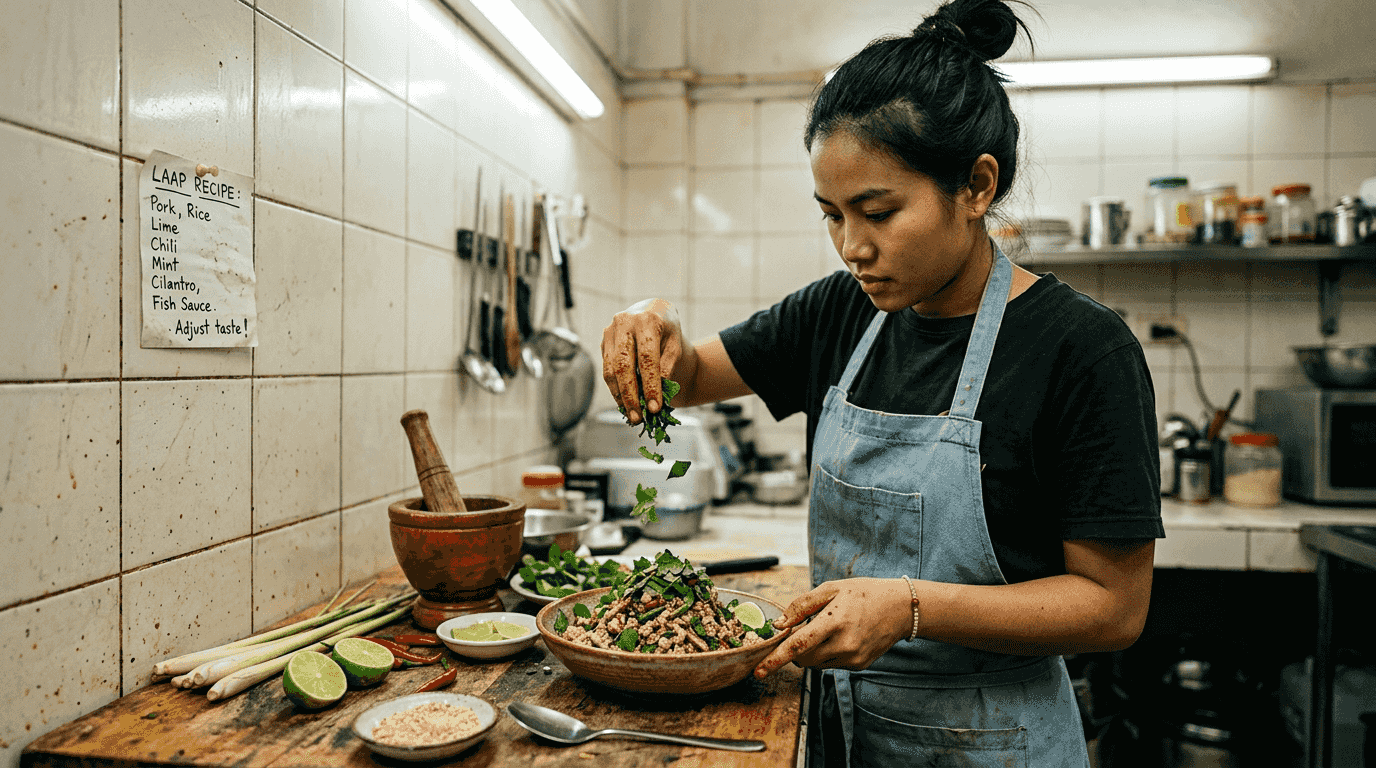
Laap stands as the national dish, representing Lao culinary identity in a single bowl. This minced meat salad combines ground protein (typically beef, pork, duck, or fish) with toasted sticky rice powder, fresh mint, cilantro, shallots, lime juice, fish sauce, and aggressive chili heat. The toasted rice powder adds a distinctive nutty crunch and acts as a textural binder. Laap appears at celebrations, casual meals, and street stalls throughout the country.
Tam mak hoong, the Lao papaya salad with fermented fish, takes the Thai som tam concept to more intense territory. While Thai versions use clear fish sauce, tam mak hoong incorporates padaek and sometimes fermented crab paste. The result is a funkier, more pungent salad that balances shredded green papaya’s crunch with cherry tomatoes, long beans, peanuts, and palm sugar. The fermented elements create a flavor depth that lingers long after the spice heat fades.
Ping kai delivers grilled satisfaction as marinated chicken skewers cooked over charcoal. The marinade blends lemongrass, garlic, coriander root, fish sauce, and white pepper. Street vendors serve ping kai with sticky rice and jeow bong, a spicy chili paste made from dried chilies, garlic, galangal, and shrimp paste. The charred exterior and herb infused interior make this a go to street food choice.
Kao piak sen offers comfort in a bowl as rice noodle soup found at street stalls. Thick, slippery rice noodles swim in a clear or slightly cloudy broth flavored with chicken or pork. Fresh herbs, lime wedges, and chili condiments let you customize each spoonful. This dish shows Lao cuisine’s softer side while maintaining the fresh herb emphasis.
Street food culture in Laos reflects daily life and economic accessibility. Vendors prepare complex dishes quickly, delivering restaurant quality flavors at fraction prices. Key street offerings include:
Sai oua: Lao sausage packed with lemongrass, kaffir lime leaves, chilies, and galangal
Mok pa: Fish steamed in banana leaves with herbs and coconut cream
Khao jee: Grilled sticky rice cakes stuffed with various fillings
Ping sin: Grilled beef skewers with tamarind dipping sauce
These quick bites demonstrate how Lao cooks achieve layered flavors through simple techniques and quality ingredients. The Thai street food guide shares similar preparation philosophies you’ll recognize. For authentic vendor style experiences, explore Laos street food flavors and their regional variations.
The cultural significance of Lao cuisine: communal dining and traditions
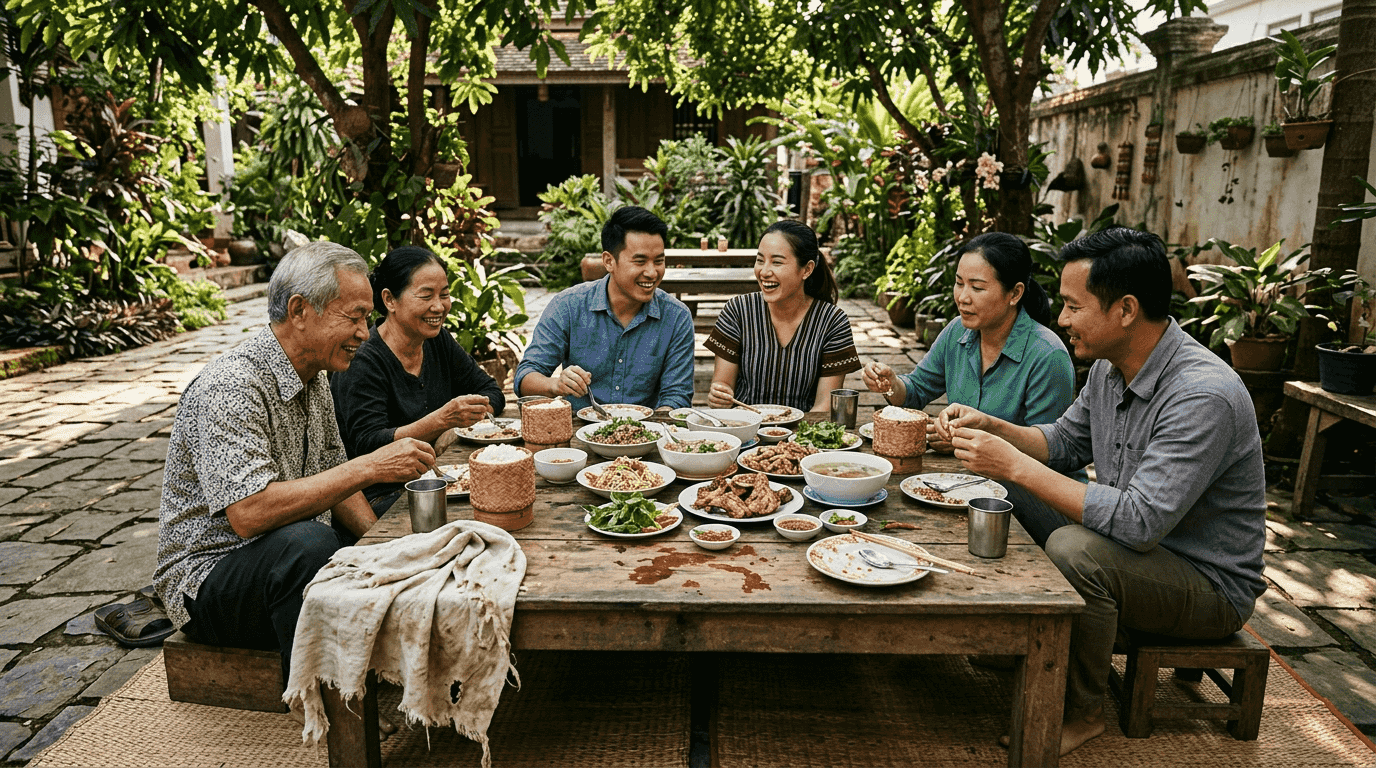
Food serves as a cornerstone of community gatherings in Lao culture, transforming every meal into a social event. Families and friends gather around low tables or mats, placing shared dishes at the center for everyone to access. Sticky rice sits in small woven baskets called tip khao, and diners form rice balls to pick up other foods. This hands on approach creates intimacy and equality, no one person controls the meal flow.
The communal style extends beyond mechanics to philosophy. Lao cuisine’s communal dining fosters sharing among family and friends, with no individual plates or portions. Everyone samples everything, discussing flavors and adjusting seasonings with communal condiment bowls. This practice reinforces social bonds and ensures no one eats alone or feels excluded.
Lao cuisine’s communal style makes every meal a shared celebration of culture.
Larb carries special symbolic weight. The dish symbolizes prosperity in celebrations like weddings and Pi Mai Lao (Lao New Year). Serving larb signals abundance and good fortune, making it mandatory at significant life events. The labor intensive preparation, chopping herbs and toasting rice by hand, demonstrates care and respect for guests. When larb appears, you know the occasion matters.
Regional variations reflect geography and local resources:
Northern regions: Mountain herbs like dill and Mekong River fish dominate preparations
Central areas: Thai culinary influences soften fermentation intensity slightly
Southern territories: Unique ingredient combinations remain less documented internationally
Across all regions: Sticky rice and communal eating persist as universal constants
Fermented ingredients like padaek and fermented vegetables create shared taste memories that bind communities. These intense flavors might challenge outsiders initially, but they represent generations of preservation knowledge and culinary identity. Dipping sauces, especially jeow varieties made from roasted chilies, tomatoes, and herbs, encourage experimentation and personal preference within the communal framework.
Food preparation itself becomes a group activity. Extended families gather to make large batches of sausages, ferment fish sauce, or prepare festival dishes. This collective labor strengthens intergenerational knowledge transfer and maintains traditional techniques. Young people learn not just recipes but the cultural context and stories behind each dish.
Discover similar communal dining concepts through Thai cuisine must try dishes, which share the family style service philosophy. The cultural significance of larb continues to gain international recognition, with UNESCO heritage status under consideration in 2026.
Regional variations and nuances that shape Lao cuisine today
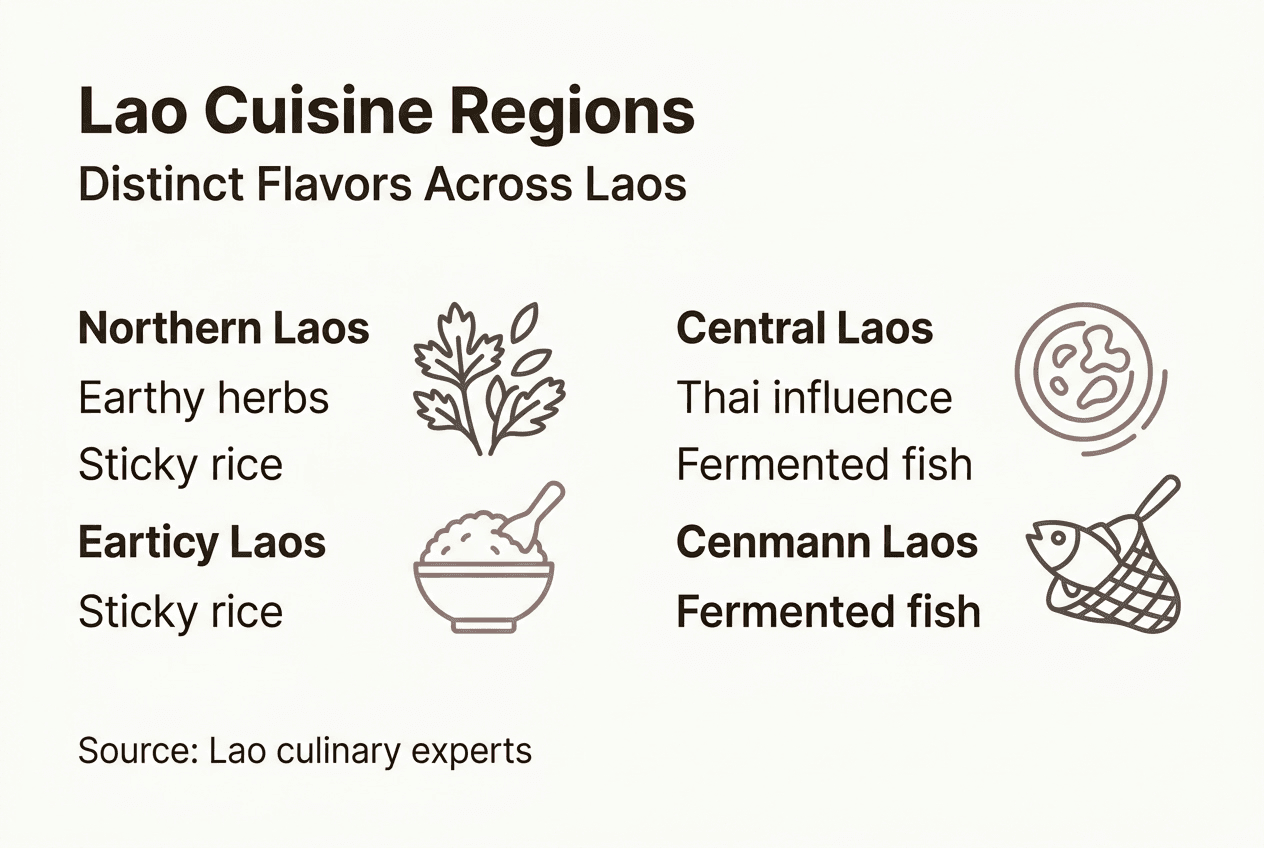
Northern Laos emphasizes earthy, herbaceous flavors through mountain herbs unavailable in lowland areas. Dishes here use more dill, saw tooth coriander, and wild greens foraged from forests. The cooler climate produces different produce varieties, and the Mekong River provides abundant freshwater fish. Spice levels tend toward moderate, letting subtle herb flavors emerge. Buffalo meat appears more frequently in northern larb preparations.
Central Laos shows Thai culinary influences due to proximity and cultural exchange. The capital Vientiane sits near the Thai border, creating cross pollination of techniques and ingredients. Central Lao dishes might use slightly less pungent fermented sauces and incorporate more palm sugar for balanced sweetness. The region serves as a flavor bridge between northern earthiness and southern intensity.
Southern Laos remains less internationally documented but reportedly features distinct ingredients and preparations. The warmer climate supports different vegetable varieties, and proximity to Cambodia influences certain dishes. Fish from the southern Mekong sections and tributaries offer unique species unavailable upstream. Fermentation techniques may vary based on temperature and humidity conditions.
Pro Tip: When trying Lao food, notice how regional preparations shift the balance of flavor and spice intensity by asking servers about ingredient origins or preparation styles specific to different areas.
Region | Flavor Characteristics | Typical Herbs | Fermentation Use |
Northern | Earthy, herbaceous, moderate heat | Dill, wild greens, saw tooth coriander | Strong padaek presence |
Central | Balanced, slight Thai influence | Standard Southeast Asian herbs | Moderate, less pungent |
Southern | Intense, warm climate ingredients | Local varieties, Cambodian influence | Regional variations |
Sticky rice preparation remains consistent across regions, though serving vessels and accompanying dishes vary. Northern regions might pair sticky rice with more soups and steamed preparations, while central areas lean toward grilled items and salads. The fundamental communal dining structure persists regardless of geographic location.
Understanding regional differences helps you appreciate Lao cuisine’s complexity beyond stereotypes. A dish called “larb” might taste significantly different depending on where it originates. These variations aren’t inconsistencies but reflections of local resources, climate conditions, and historical influences. Explore essential Thai ingredients to understand how neighboring cuisines share certain components while maintaining distinct identities.
Experience authentic Southeast Asian flavors with Thai Spoon Las Vegas
After exploring Lao cuisine’s bold flavors and cultural depth, you can taste these authentic Southeast Asian traditions right here in Las Vegas. Thai Spoon brings the same emphasis on fresh herbs, balanced flavors, and communal dining experiences that define Lao cooking to the northwest valley.
Our kitchen focuses on traditional preparation methods and ingredient sourcing that honor regional Southeast Asian culinary heritage. From sticky rice staples to herb forward salads and grilled specialties, you’ll find dishes reflecting the techniques and flavor profiles discussed throughout this guide. Whether you’re planning a family gathering or want to explore new tastes, Thai catering services deliver these bold flavors to your Las Vegas events.
Explore our complete offerings through the menu page or dive into specific dishes on our full menu. Each item connects to the rich traditions of Southeast Asian cooking, bringing authentic experiences to your table.
Frequently asked questions
What are the main ingredients in Laos style food?
Lao cuisine relies on sticky rice as the staple carbohydrate, fresh herbs like lemongrass and kaffir lime leaves, and fermented fish sauce called padaek. The flavor profile balances five core tastes using lime juice for sourness, chilies for heat, palm sugar for sweetness, fish sauce for saltiness, and bitter greens for complexity. These ingredients combine to create the bold, distinctive flavors that separate Lao cooking from neighboring cuisines.
What is padaek and why is it important in Lao cuisine?
Padaek is fermented fish sauce containing whole fish pieces that delivers intense umami and funky depth to dishes. Unlike clear Thai fish sauce, padaek has a chunky texture and pungent aroma that defines authentic Lao flavors. This ingredient appears in signature dishes like tam mak hoong and certain larb preparations, creating the savory complexity that makes Lao food memorable.
How does Lao cuisine differ from Thai or Vietnamese food?
Lao cooking uses less coconut milk than Thai cuisine, creating lighter but more assertive flavor profiles. The cuisine relies heavily on sticky rice rather than jasmine rice and incorporates more fermented fish sauces for umami depth. Lao food tends toward higher spice levels and more pronounced sourness, with communal dining practices where everyone shares from central dishes using hand formed sticky rice balls.
What role does food play in Lao celebrations?
Food strengthens social bonds and honors tradition by serving as the centerpiece of all significant gatherings. Larb symbolizes prosperity and community at weddings, New Year celebrations, and other major events, with its presence signaling abundance and good fortune. The communal preparation and sharing of meals reinforces intergenerational knowledge transfer while maintaining cultural identity through taste memories and traditional techniques.
Recommended
Comments