


Explaining Thai Share Plates: A Cultural Dining Guide
TL;DR:
Thai share plates are communal dishes served simultaneously at the center of the table to promote connection and group harmony. These formats, like Khantok and moo kratha, emphasize social bonding through shared eating and cooking experiences. Understanding these traditions enhances appreciation for Thai culture and creates a richer, more interactive dining experience.
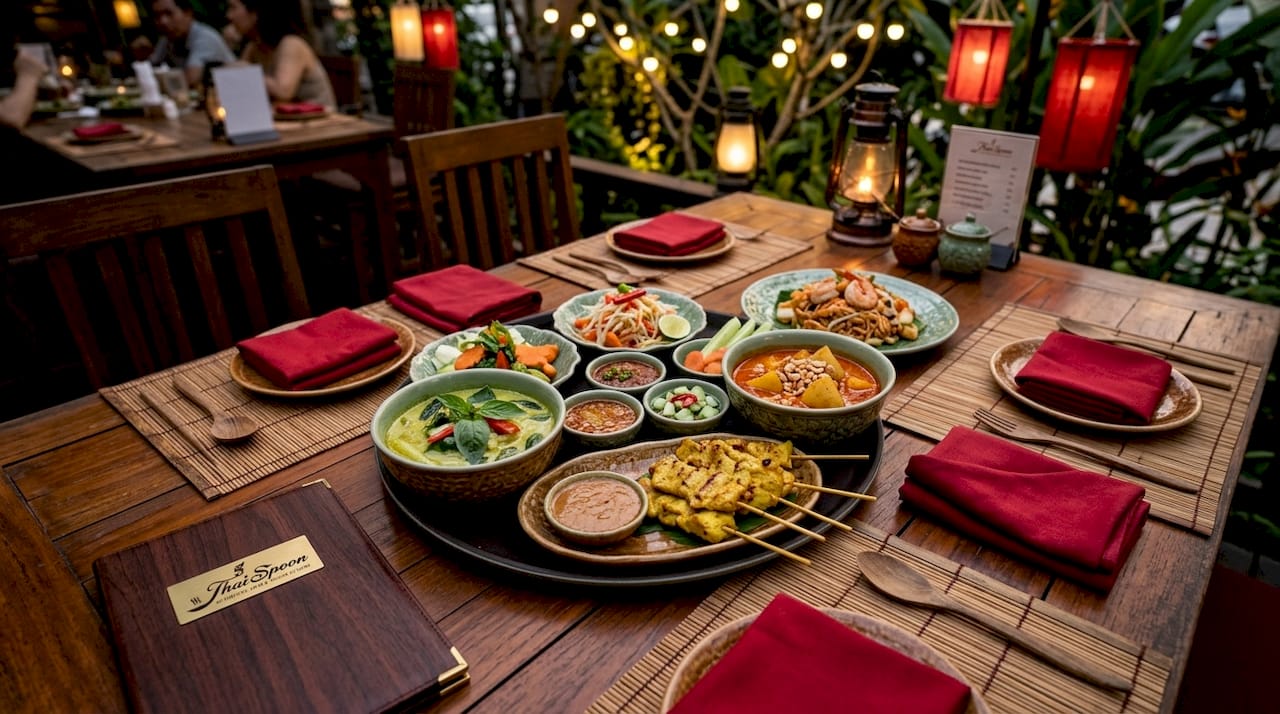
Thai share plates are communal dishes placed at the center of the table for everyone to eat from simultaneously, reflecting a dining philosophy where food is inseparable from connection. Unlike Western meals where each person orders their own plate, Thai communal dining treats the table as a shared canvas. Formats like Khantok in Northern Thailand and moo kratha across the country have turned this philosophy into structured, celebrated traditions. Understanding how Thai sharing dishes work, what they contain, and why they matter transforms a meal into a genuinely richer experience.
What are traditional Thai share plates and how do they work?
Thai share plates, known more formally as communal or family-style Thai dining, follow a specific logic: all dishes arrive at the table together rather than in sequence. Each person receives a personal bowl of rice and then reaches across to serve themselves from shared bowls of curry, stir-fry, soup, and salads. The meal is not divided into starters, mains, and desserts. Every dish is present at once, and diners mix and match flavors throughout the meal.
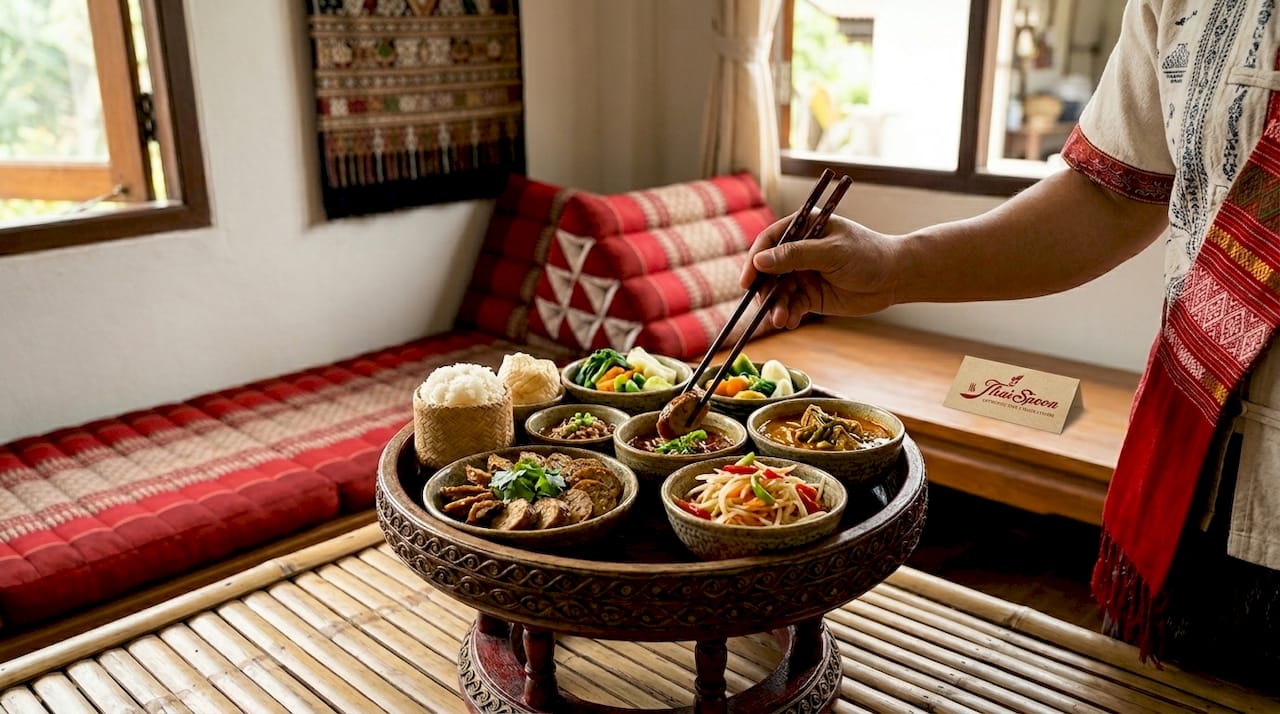
The Khantok tray is the most iconic physical expression of this format. It is a circular wooden or rattan tray elevated on a pedestal base, traditionally used in Northern Thailand’s Lanna culture. Diners sit on floor mats around it, and the raised tray puts every dish within equal reach of everyone seated. The design is not decorative. It is a practical solution to communal eating that has been refined over centuries.
Etiquette around Thai sharing dishes is intuitive but worth knowing before you sit down:
Serve yourself small portions at a time rather than piling your bowl high at once
Use the serving spoon provided with each dish, not your personal utensils
Sticky rice, a staple in Northern Thai meals, is shaped into small balls with your fingers and used to scoop up other dishes
Dipping sauces like Nam Prik Num and Nam Prik Ong are placed at the center for everyone to access freely
Pouring soup or curry directly over your rice is completely acceptable and encouraged
Pro Tip: When eating from a Khantok tray, start with the mildest dish first to calibrate your palate before moving to the spicier curries and sauces. This lets you taste each flavor clearly rather than overwhelming your senses early.
The family-style Thai dining format also means portion sizes per dish are smaller than a Western entrée. A table of four typically orders five to seven dishes, creating variety without waste. This structure rewards curiosity and makes it easy to try something unfamiliar without committing to a full plate of it.
Why sharing food is central to Thai culture
Sharing plates in Thailand serve a deeper psychological function, fostering community and connection through food in ways that individual plated meals simply cannot replicate. Thai culture places enormous value on the concept of sanuk, meaning fun and enjoyment shared with others. A meal eaten alone is considered incomplete. A meal shared is considered whole.
Hospitality in Thai culture is expressed through abundance. When a host orders more dishes than the table can finish, it signals generosity rather than poor planning. The act of placing food in front of guests, encouraging them to eat more, and ensuring no one’s bowl sits empty is a form of care that words alone cannot convey.
“Shared dining encourages conversation and social bonding, going beyond convenience to build relationships.” — Psychology of Shared Plates in Thai Dining
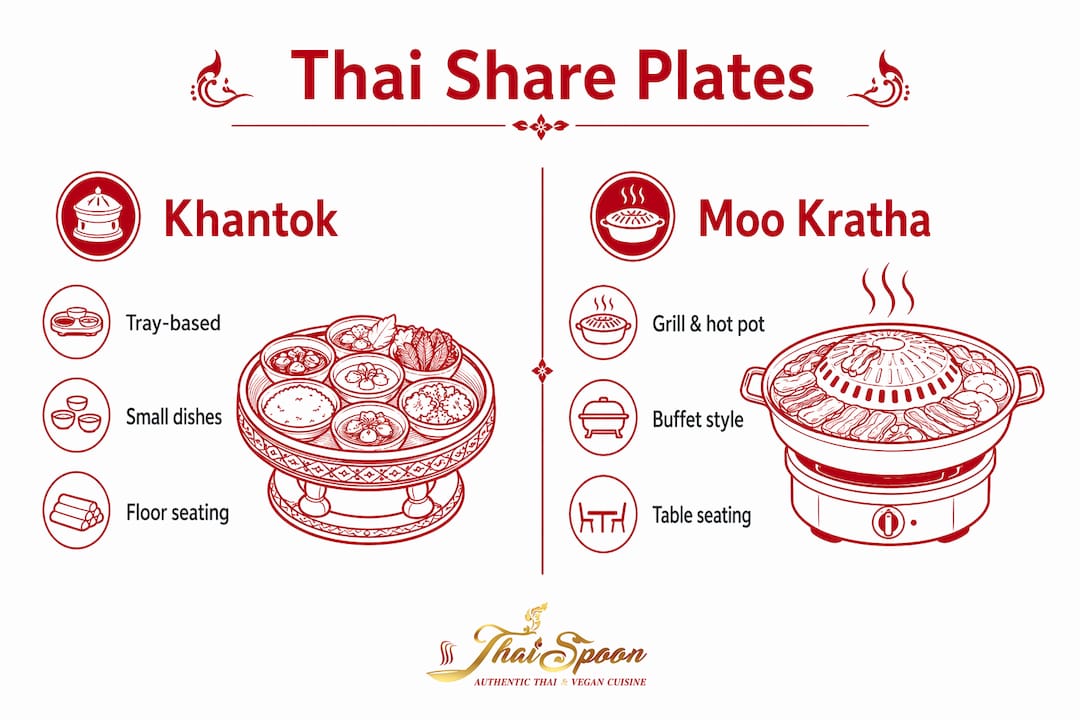
Moo kratha takes this social function even further. This format involves a shared charcoal grill and hot pot placed at the center of the table, where diners cook their own meat and vegetables together. The shared grilling experience is culturally designed to reduce social friction, encouraging togetherness and laughter in a way that a plated restaurant meal rarely achieves. You are not just eating together. You are cooking together, which deepens the interaction significantly.
There is also a practical social benefit. Moo kratha’s uniform per-head pricing removes the awkwardness of splitting a bill where one person ordered more than another. Everyone pays the same, everyone shares the same grill, and the social math becomes simple. This is not accidental. It reflects how Thai dining traditions are engineered for group harmony from the ground up.
Understanding Thai meal customs helps you appreciate why these formats have persisted for generations. They are not just eating styles. They are social technologies built to bring people closer.
Common Thai share plate varieties and popular dishes
The two most recognized formats for traditional Thai share meals are Khantok and moo kratha, but they represent very different ends of the sharing spectrum.
Khantok is a Northern Thai feast rooted in Lanna culture. A Khantok meal typically includes several small dishes arranged on the elevated circular tray, accompanied by garnishes and zesty dipping sauces, with glutinous rice formed into balls eaten by hand. The dishes lean toward milder curries and fresh herbs compared to Central Thai cooking.
Moo kratha is a buffet-style social dining format where diners grill marinated meats and cook vegetables in a shared broth simultaneously. It is louder, more interactive, and typically priced at 199 to 299 baht per head in Thailand, making it an accessible group meal for families and friend groups alike.
Format | Style | Key dishes | Social dynamic |
Khantok | Tray-based, floor-seated | Sai Oua sausage, Nam Prik Num, sticky rice, Larb, mild curries | Ceremonial, structured |
Moo kratha | Grill and hot pot at table | Marinated pork, beef, seafood, vegetables, dipping sauces | Interactive, casual, high energy |
Central Thai family style | Dishes served at table center | Pad Thai, Tom Yum, green curry, jasmine rice | Relaxed, everyday |
Popular dishes in Thai share plates include Larb, a minced meat salad with toasted rice powder and fresh herbs; Sai Oua, a Northern Thai sausage fragrant with lemongrass and kaffir lime leaves; and Nam Prik sauces that range from fiery to mellow. Northern Thai dishes tend to emphasize fresh herbs and milder curries, while Central Thai sharing spreads lean on bold, aromatic soups and stir-fries.
What makes the best Thai share plate options work is balance across four dimensions: spicy, sour, salty, and sweet. A well-ordered table will have at least one dish representing each flavor profile, so every bite combination feels intentional rather than accidental.
How Thai share plates compare to other communal dining traditions
Thai sharing meal styles differ from Western course-by-course meals by serving all dishes at once to promote communal tasting and interaction. This is the single most important structural difference to understand.
Tradition | Serving style | Flavor approach | Social emphasis |
Thai | All dishes simultaneously | Balance of four flavor profiles | Communal interaction, variety |
Chinese | Rotating lazy Susan, family style | Regional variety, shared proteins | Group harmony, respect for elders |
Mediterranean (mezze) | Sequential small plates | Olive oil, herbs, grains | Leisurely pacing, conversation |
Western (American) | Individual plates, sequential courses | Single protein focus per person | Personal choice, individual experience |
Chinese family-style dining shares the most structural DNA with Thai communal eating. Both place dishes at the center and expect everyone to serve themselves. The key difference is that Thai meals place equal weight on every dish simultaneously, while Chinese banquet dining often follows an informal hierarchy where certain dishes signal prestige or are served to honored guests first.
Mediterranean mezze comes closest in spirit to Thai sharing, with its emphasis on variety and small portions. But mezze typically arrives in waves, while Thai sharing plates land all at once. That simultaneity is what allows Thai diners to combine and contrast flavors in a personalized way throughout the meal, creating a tasting experience that is genuinely different from any other global tradition.
Practical tips for ordering and enjoying Thai share plates
Ordering well is the skill that separates a good Thai sharing experience from a great one. The goal is variety across flavor, texture, and cooking method, not simply ordering the most dishes.
Match dish count to diner count. A table of two needs three to four dishes plus rice. A table of four needs five to seven. Going beyond this creates waste and makes the table feel chaotic rather than abundant.
Anchor with a soup. Tom Yum or Tom Kha provides a liquid counterpoint to drier stir-fries and curries. It also cleanses the palate between bites of richer dishes.
Include one vegetable dish. Fresh stir-fried greens like morning glory or Thai basil eggplant balance heavier meat dishes and add color to the spread.
Order one unfamiliar dish per visit. Thai cuisine sharing experience rewards curiosity. Ordering at least one dish you have never tried before is the fastest way to expand your palate.
Ask about heat levels upfront. Many Thai restaurants adjust spice on request. Knowing which dishes are inherently mild, like Massaman curry, versus inherently fiery, like Larb, helps you build a balanced table.
Pro Tip: When dining with a group that has mixed spice tolerances, order one very spicy dish and one very mild dish rather than asking everything to be medium. This preserves the authentic flavor of each dish while giving everyone a safe option.
Reviewing Thai restaurant etiquette before your first communal Thai meal is worth the five minutes it takes. Small gestures, like waiting for everyone to be served before eating and placing serving spoons back in their dishes after use, signal respect and make the meal more enjoyable for the whole table.
For presentation ideas when hosting a Thai sharing meal at home, Thai food presentation tips cover how to arrange dishes for maximum visual impact and accessibility.
Key takeaways
Thai share plates are a structured communal dining tradition where all dishes arrive simultaneously, designed to maximize flavor variety, social interaction, and group harmony.
Point | Details |
All dishes arrive at once | Thai communal dining serves every dish simultaneously, unlike Western sequential courses. |
Khantok and moo kratha are distinct formats | Khantok is ceremonial and tray-based; moo kratha is interactive grill-and-hot-pot dining. |
Sharing is a cultural expression | Placing food before guests signals hospitality and care, not just convenience. |
Balance four flavor profiles | Order dishes that cover spicy, sour, salty, and sweet to create a complete Thai table. |
Portion strategy matters | Order one more dish than the number of diners for the right balance of variety and sufficiency. |
What I’ve learned from years at the Thai sharing table
The detail most first-time diners miss is that a Thai sharing table is not a buffet. It is a conversation. Every dish placed at the center is a statement about what the host values, what flavors they want you to experience, and how much they care about your enjoyment. When I watch someone at a Khantok meal reach across and place a piece of Sai Oua sausage in a guest’s bowl without being asked, that is not just politeness. That is the entire philosophy of Thai dining expressed in a single gesture.
Moo kratha taught me something different. The act of cooking together removes the performance anxiety that sometimes comes with formal dining. Nobody is being served. Everyone is participating. I have seen strangers become friends over a shared grill in the time it takes to cook a plate of marinated pork. That is not something a plated entrée can do.
The mistake I see curious diners make most often is over-ordering out of excitement and then feeling overwhelmed. Start with fewer dishes than you think you need. You can always order more. The Thai sharing experience is designed to be relaxed and iterative, not a race to try everything at once. Slow down, pay attention to what you are tasting, and let the table do what it was designed to do.
— Thai
Experience authentic Thai sharing at Thai Spoon Las Vegas
Thai Spoon Las Vegas brings the communal spirit of Thai sharing dishes to the northwest Las Vegas area, with a menu built around the flavors and variety that make group dining genuinely satisfying.
[
Whether you are planning a casual dinner with friends or a larger gathering, Thai Spoon’s full menu includes the curries, stir-fries, and rice dishes that form the backbone of a great Thai sharing spread. For events and larger groups, Thai Spoon’s catering services bring authentic Thai communal meals directly to your venue, with options that reflect the variety and balance central to the Thai cuisine sharing experience. Located about 20 minutes from the Strip, Thai Spoon offers the real thing without the tourist markup. Explore the party catering options to see how Thai sharing formats translate to events of any size.
FAQ
What are Thai share plates exactly?
Thai share plates are communal dishes placed at the center of the table for all diners to eat from simultaneously. They reflect a Thai dining philosophy where food, conversation, and connection are treated as inseparable.
What is the difference between Khantok and moo kratha?
Khantok is a ceremonial Northern Thai tray-based feast with pre-cooked dishes arranged on an elevated circular tray. Moo kratha is an interactive buffet format where diners cook marinated meats and vegetables on a shared charcoal grill and hot pot at the table.
How many dishes should you order for a Thai sharing meal?
Order one more dish than the number of people at the table, plus rice. A table of four typically orders five to seven dishes to achieve the right balance of variety and portion size.
Is it rude to serve yourself first at a Thai sharing table?
Waiting for everyone to be seated and for the host to signal the start of the meal is standard Thai dining etiquette. Serving elders or guests before yourself is considered respectful, particularly in more formal settings.
What dishes are best for a first Thai sharing experience?
A balanced first table includes a mild curry like Massaman or Yellow Curry, a stir-fried vegetable dish, a protein like grilled chicken or Larb, a soup like Tom Kha, and jasmine or sticky rice. This combination covers all four Thai flavor profiles without overwhelming unfamiliar palates.
Recommended
Comments