
TL;DR:
Thai plated service involves individually portioned Thai dishes delivered to each guest at their seat, enhancing elegance and control. It requires precise staffing, synchronized timing, and a higher budget but benefits formal events with a structured program and visual presentation. This style transforms Thai cuisine into an intentional, visually impactful experience that fosters appreciation and conversation.
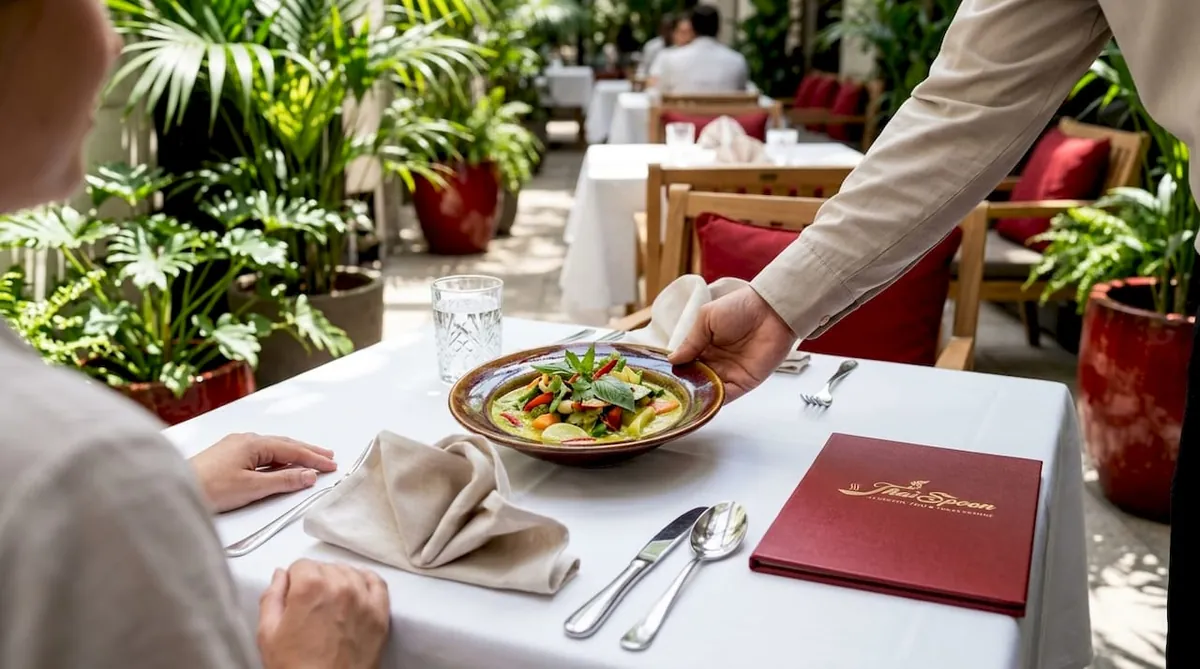
Thai plated service is defined as a formal dining style where individually portioned Thai dishes are prepared, plated, and delivered directly to each guest at their seat. Unlike buffet lines or communal sharing bowls, every plate arrives as a finished presentation. This approach blends the culinary artistry of Thai cuisine with the precision of structured Western service formats. You will find it at upscale Thai restaurants, wedding receptions, corporate galas, and catered events where the host wants to control both the atmosphere and the meal’s pace. Understanding this style helps you decide whether it fits your next dinner or event.
What is Thai plated service and how does it work?
Thai plated service is the practice of individually portioning and serving each dish directly to a seated guest rather than setting food on a communal table or buffet station. The kitchen prepares each plate to order or in synchronized batches, and servers deliver courses in a defined sequence: typically an appetizer, a main course, and dessert. Every guest receives the same composed plate at roughly the same time, which creates a unified dining rhythm across the table.
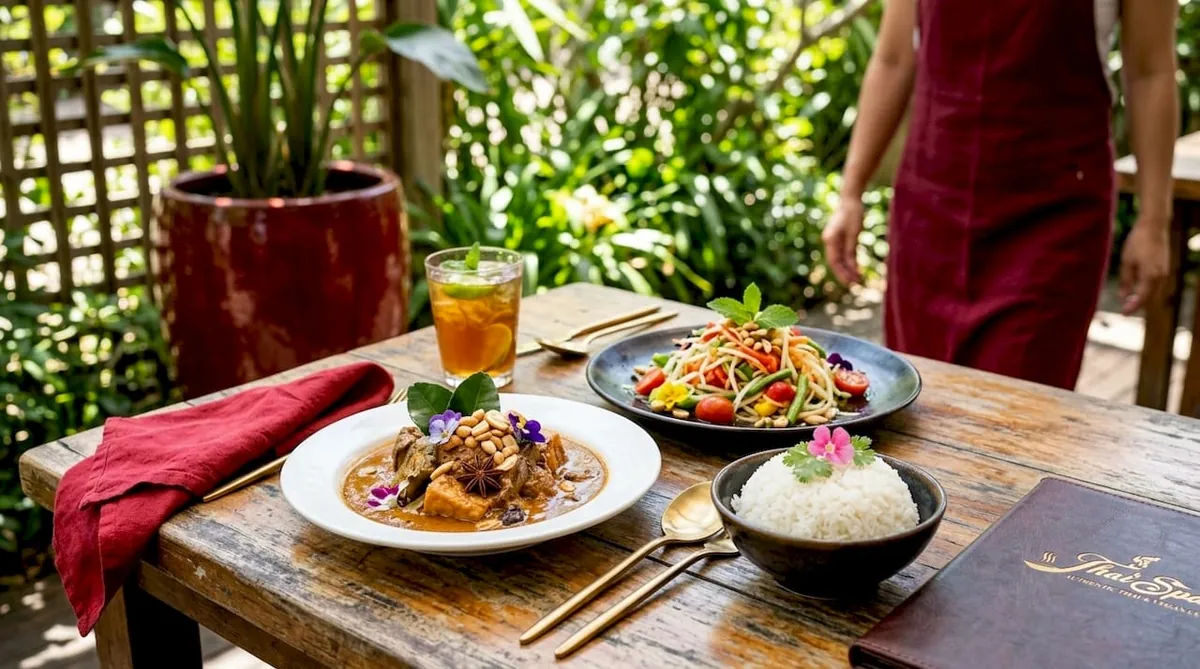
This format is not native to traditional Thai home dining, where family-style sharing is the cultural norm. Thai plated service is an adaptation that applies Thai flavors and culinary techniques to a formal Western service structure. The result is a dining experience that feels both culturally rich and elegantly controlled. Some restaurants and caterers use this approach for formal events when clients want Thai food presented with the same formality as a fine-dining French or Japanese meal.
The structured course timing is what separates plated service from every other format. Guests stay seated, servers manage the pace, and the kitchen coordinates output so every table receives its course simultaneously. That synchronization is what makes the experience feel polished.
How Thai plated service differs from buffet and family-style dining
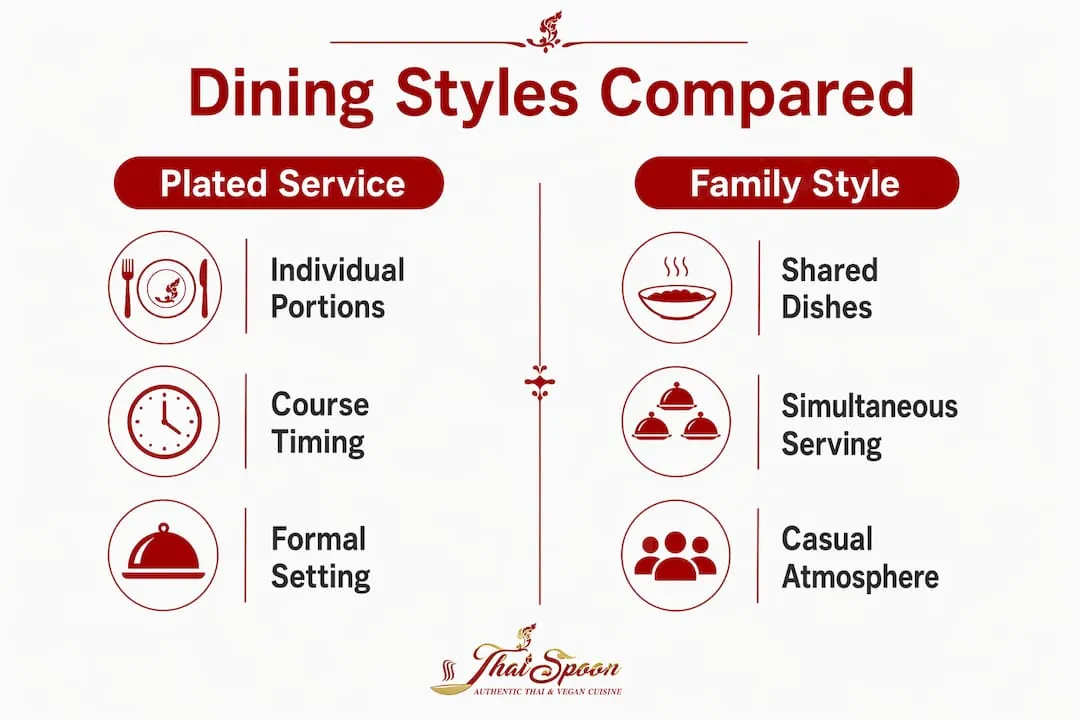
Traditional Thai dining culture centers on family-style service, where multiple dishes arrive at the table together and everyone shares. Buffet and family-style formats are more casual, encouraging mingling, flexible food choices, and self-pacing. Plated service removes that flexibility in exchange for elegance and control.
Here is how the three formats compare across the dimensions that matter most for dining and event planning:
Category | Plated service | Buffet | Family style |
Serving method | Server delivers to each seat | Guests serve themselves | Dishes placed on table for sharing |
Formality level | High | Low to moderate | Moderate |
Guest movement | None required | Frequent | Minimal |
Portion control | Precise per guest | Variable | Shared and variable |
Event flow control | Excellent | Difficult | Moderate |
Typical cost per person | Higher | Lower | Moderate |
The practical difference shows up most clearly at events with a program. Plated service reduces guest movement, which makes it ideal for occasions with speeches, live performances, or award presentations. A buffet requires guests to leave their seats, which fragments attention and disrupts the event timeline. Family-style Thai dining is warmer and more interactive, but it can create uneven portions and a less predictable pace.
The key advantages of plated service over the alternatives include:
Portion accuracy: Every guest receives a consistent amount, which simplifies dietary accommodation and cost forecasting.
Visual impact: Each plate arrives as a composed presentation rather than a serving bowl passed around the table.
Timeline precision: Hosts and event planners can schedule speeches or entertainment between courses with confidence.
Reduced food waste: Pre-portioned plates eliminate the over-serving common at buffets.
For a deeper look at how Thai catering formats compare, the guide on Thai party platters covers buffet and plated setups side by side for events.
How plating and presentation shape the Thai dining experience
Plating is not decoration. In Thai cuisine, visual balance of colors, textures, and garnishes directly shapes how a diner perceives flavor before the first bite. A properly plated Thai dish uses the deep orange of a Yellow Curry against white jasmine rice, the bright green of Thai basil, and a carved chili garnish to signal freshness, heat, and complexity all at once. The eye primes the palate.
Thai culinary tradition has always valued presentation. Royal Thai cuisine, developed in the palace kitchens of Bangkok, elevated vegetable carving and garnish work into a fine art. Modern Thai plated service draws from that tradition, using molded rice shapes, edible flower garnishes, and deliberate sauce placement to honor the food’s origin. A dish like Pad Thai served in a plated format arrives with the noodles neatly centered, a lime wedge placed at a precise angle, and crushed peanuts scattered rather than piled.
Proper Thai tableware amplifies this effect. Wide, shallow ceramic plates allow sauces to pool intentionally. Dark plateware makes the vibrant colors of Thai herbs and proteins stand out. The choice of bowl versus plate signals whether a dish is broth-based or dry, guiding the diner’s expectations before the server says a word.
Pro Tip: When hosting a Thai plated dinner at home, use white or dark ceramic plates rather than patterned ones. The neutral background lets the natural colors of Thai ingredients, turmeric yellows, basil greens, and chili reds, do the visual work.
Operational considerations for hosting a Thai plated service event
Hosting a Thai plated service event requires more planning than a buffet, and the logistics are specific. Getting them right is what separates a smooth, memorable evening from a frustrating one.
Staff your event correctly. Plated service requires roughly 1 server per 10 to 12 guests to maintain timely and consistent course delivery. For a 60-person dinner, that means a minimum of five dedicated servers plus a kitchen coordinator. Understaffing is the single most common reason plated events lose their elegance. Slow course delivery breaks the rhythm and frustrates guests.
Plan your course timing in advance. Each course needs a defined window: typically 20 to 30 minutes for appetizers, 35 to 45 minutes for the main course, and 15 to 20 minutes for dessert. Build buffer time around speeches or entertainment. The Thai meal flow guide from Thai Spoon explains how Thai courses are traditionally structured, which is useful context for adapting that flow to a plated format.
Coordinate kitchen output with service. Synchronizing kitchen production and service delivery is the most complex operational challenge in plated service. The kitchen must finish all plates for a table simultaneously so servers can deliver them at once. A single delayed plate holds up the entire table’s course. Professional caterers use a “call and fire” system where the event coordinator signals the kitchen when to begin plating each course.
Budget accurately for the format. Plated service events typically cost $90 to $150 per person due to increased labor, individual plating time, and the higher skill level required from kitchen staff. That is a meaningful premium over a buffet, but it reflects what you are buying: a controlled, elegant experience rather than a self-serve meal.
Confirm dietary needs before the event. Because each plate is individually prepared, plated service is actually the easiest format for accommodating dietary restrictions. Vegan, gluten-free, and allergy-specific plates can be prepared and labeled in the kitchen before service begins, then delivered to the correct guest without disruption.
For menu ideas that translate well to a plated Thai format, the lunch catering menu ideas page at Thai Spoon offers a useful starting point.
When and why to choose Thai plated service for your event
Event hosts choose plated service when formality, elegance, and timeline control matter more than casual interaction. The format fits specific occasions well and works less effectively in others.
Thai plated service is the right choice when:
The event has a formal program. Weddings, corporate galas, award dinners, and fundraisers all benefit from the predictable pacing that plated service provides.
Guest count is defined and fixed. Plated service requires accurate headcounts because every plate is prepared individually. It does not handle last-minute additions gracefully.
Presentation is part of the message. If you want guests to associate your event with quality and care, a composed Thai plate arriving at the table communicates that immediately.
You are serving Thai cuisine to guests unfamiliar with it. A plated format introduces Thai flavors in a guided, approachable way. Guests do not need to navigate a buffet of unfamiliar dishes. The chef makes the selection for them.
Buffet or family-style Thai dining is the better choice for casual gatherings, large groups where interaction is the priority, or events where the food is meant to be background rather than centerpiece. Neither format is superior in every context. The decision comes down to what experience you want your guests to have.
Key takeaways
Thai plated service delivers the most controlled, elegant, and visually impactful Thai dining experience available, but it requires precise staffing, kitchen coordination, and a higher per-person budget to execute correctly.
Point | Details |
Core definition | Each guest receives an individually portioned, composed Thai dish served at their seat. |
Staffing requirement | Plan for 1 server per 10 to 12 guests to maintain course timing and elegance. |
Cost premium | Expect $90 to $150 per person, reflecting higher labor and preparation demands. |
Best event fit | Weddings, galas, and formal dinners where timeline control and presentation matter. |
Presentation matters | Plateware choice, garnish placement, and color balance shape flavor perception before the first bite. |
Why plated service changed how I think about Thai food
Most people assume Thai food is inherently casual. The shared bowls, the communal rice pot, the extra plates of herbs on the side. That image is accurate for home cooking and street food, and I love that version of Thai dining. But it created a blind spot for me for years.
The first time I experienced a properly executed Thai plated service, the dish was a single portion of Massaman curry. The beef was centered on a wide ceramic plate, the sauce ladled in a deliberate arc, a single kaffir lime leaf placed at the edge. I had eaten Massaman curry dozens of times. That plate made me taste it differently. The presentation forced me to slow down and pay attention in a way that a shared pot never had.
What I have learned from watching guests at Thai dinners is that plated service does something specific: it makes Thai food feel intentional. Guests who might otherwise rush through a buffet line spend more time with each dish. They notice the garnish. They ask questions about the ingredients. The format creates a conversation between the kitchen and the diner that family-style service rarely achieves.
The honest challenge is execution. An understaffed plated event is worse than a well-run buffet. If courses arrive late or cold, the elegance collapses. My advice to anyone hosting a Thai plated dinner is to overstaff by one server and build 10 extra minutes into every course interval. The event will feel unhurried, and that unhurried quality is exactly what you are paying for.
— Thai
Bring authentic Thai food to your formal event with Thai Spoon
If you are planning a formal event and want authentic Thai cuisine to build your plated menu around, Thai Spoon can prepare the food.
Thai Spoon offers catering trays for pickup or delivery, plus dine-in reservations for groups up to 40, with authentic Thai dishes including Pad Thai, Yellow Curry, and Steak Fried Rice. Your own servers or event team handle the plating and course timing. Browse the full menu to explore dishes that translate beautifully to a plated format, and contact the team to discuss your order.
FAQ
What is Thai plated service in simple terms?
Thai plated service means each guest receives their own individually prepared and presented Thai dish delivered directly to their seat, rather than serving themselves from a buffet or shared platter.
How is plated service different from family-style Thai dining?
Family-style Thai dining places shared dishes at the center of the table for everyone to serve themselves, while plated service delivers a composed, portioned plate to each individual guest with no sharing required.
How many servers do you need for a Thai plated service event?
Plated service requires approximately 1 server per 10 to 12 guests to deliver courses on time and maintain the formal pace that defines this service style.
Is Thai plated service more expensive than a buffet?
Plated service typically costs $90 to $150 per person compared to lower buffet rates, because it requires more kitchen labor, individual plating time, and a higher server-to-guest ratio.
What types of events suit Thai plated service best?
Weddings, corporate galas, award dinners, and formal fundraisers are the strongest fits because plated service supports a structured event program and delivers a high-impact first impression through presentation.