





How to make steak fried rice: authentic Thai recipe
- mail469793
- Mar 15
- 8 min read
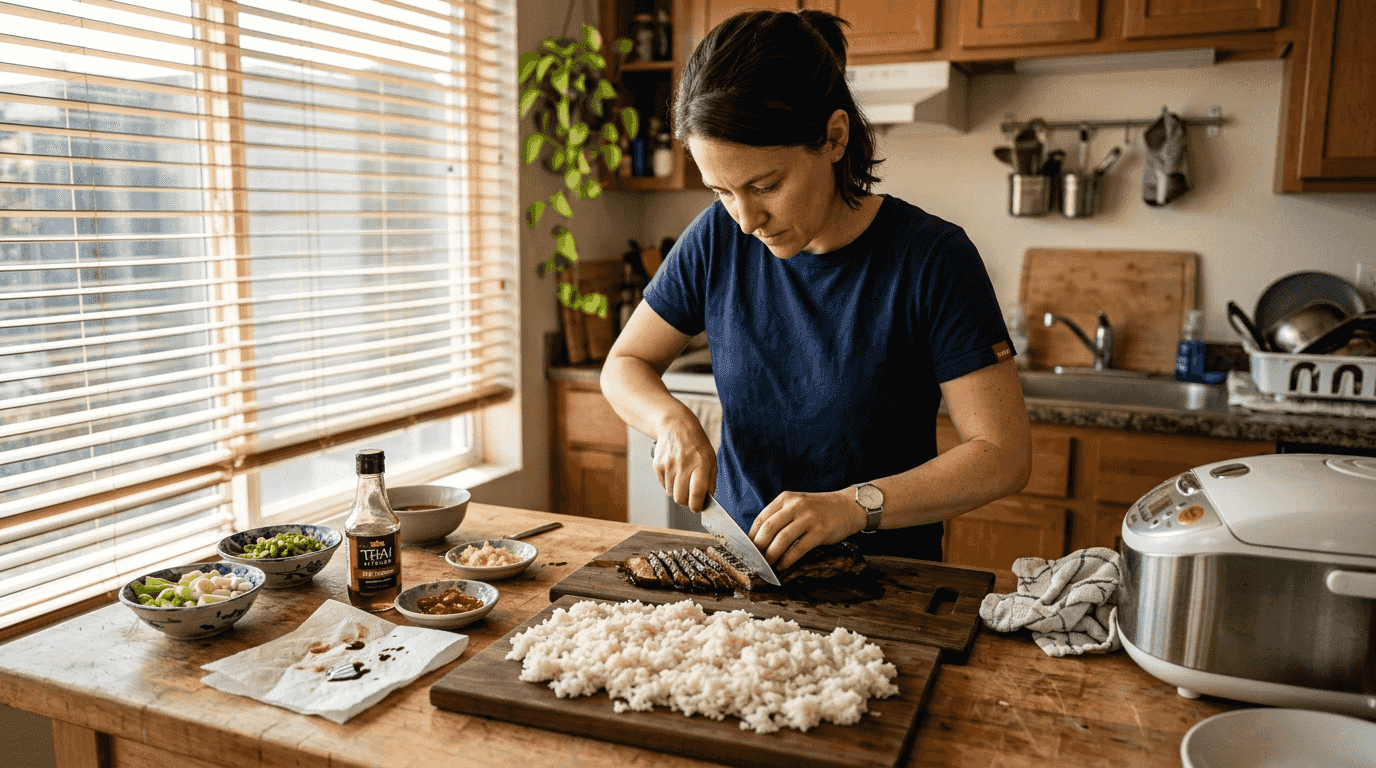
Making tender, flavorful Thai steak fried rice at home can feel impossible when the beef turns tough and the rice becomes mushy. You want that perfect balance of caramelized meat, fluffy grains, and bold Thai flavors, but something always goes wrong. This comprehensive guide reveals the exact techniques professional Thai cooks use, from velveting beef to achieving wok hei with day-old jasmine rice. You’ll learn the marinating secrets, sauce ratios, and high-heat methods that transform simple ingredients into restaurant-quality steak fried rice your family will request again and again.
Table of Contents
Key takeaways
Point | Details |
Marinate and velvet beef | Baking soda tenderizes meat while soy and oyster sauce add depth before cooking. |
Use day-old jasmine rice | Fresh rice contains too much moisture and creates mushy texture instead of separate grains. |
Cook over high heat quickly | Searing beef for under 90 seconds caramelizes the outside while keeping the inside tender. |
Balance traditional sauces | Combine soy sauce, oyster sauce, and sugar in proper ratios for authentic Thai flavor. |
Prep everything first | Fast stir-frying requires all ingredients chopped and ready before heating the wok. |
Understanding essential ingredients and tools
Creating authentic Thai steak fried rice starts with selecting the right components. Day-old jasmine rice is crucial to avoid mushy texture because it has lost excess moisture overnight, allowing grains to separate beautifully during stir-frying. Fresh rice contains too much water and clumps together when heated, destroying the characteristic fluffy texture you want. Cook jasmine rice a day ahead and refrigerate it uncovered so air can dry the surface.
For the beef, economical cuts like sizzle steak, minute steak, or thinly sliced sirloin work perfectly. You don’t need expensive ribeye when proper marinating techniques will tenderize tougher cuts. Slice beef against the grain into thin strips about 1/4 inch thick, which shortens muscle fibers and creates tender bites. The marinade combines baking soda (for velveting), soy sauce, oyster sauce, and a touch of oil to coat and flavor the meat.
Essential tools include a carbon steel wok or large cast-iron skillet that can withstand intense heat. A metal spatula with a thin edge helps you scrape and toss ingredients quickly. Have small bowls ready to hold prepped garlic, shallots, eggs, vegetables, and sauces within arm’s reach of your cooking station.
Understanding these essential Thai ingredients list home cooking components sets you up for success. The table below outlines the core ingredients and their specific roles:
Ingredient | Purpose | Notes |
Day-old jasmine rice | Provides proper texture and prevents clumping | Must be refrigerated overnight |
Sizzle or minute steak | Economical protein that responds well to velveting | Slice thinly against the grain |
Baking soda | Tenderizes beef through alkaline reaction | Use 1/4 teaspoon per pound |
Oyster sauce | Adds umami depth and slight sweetness | Essential for authentic flavor |
Thai basil | Provides distinctive anise-like aroma | Add at the very end |
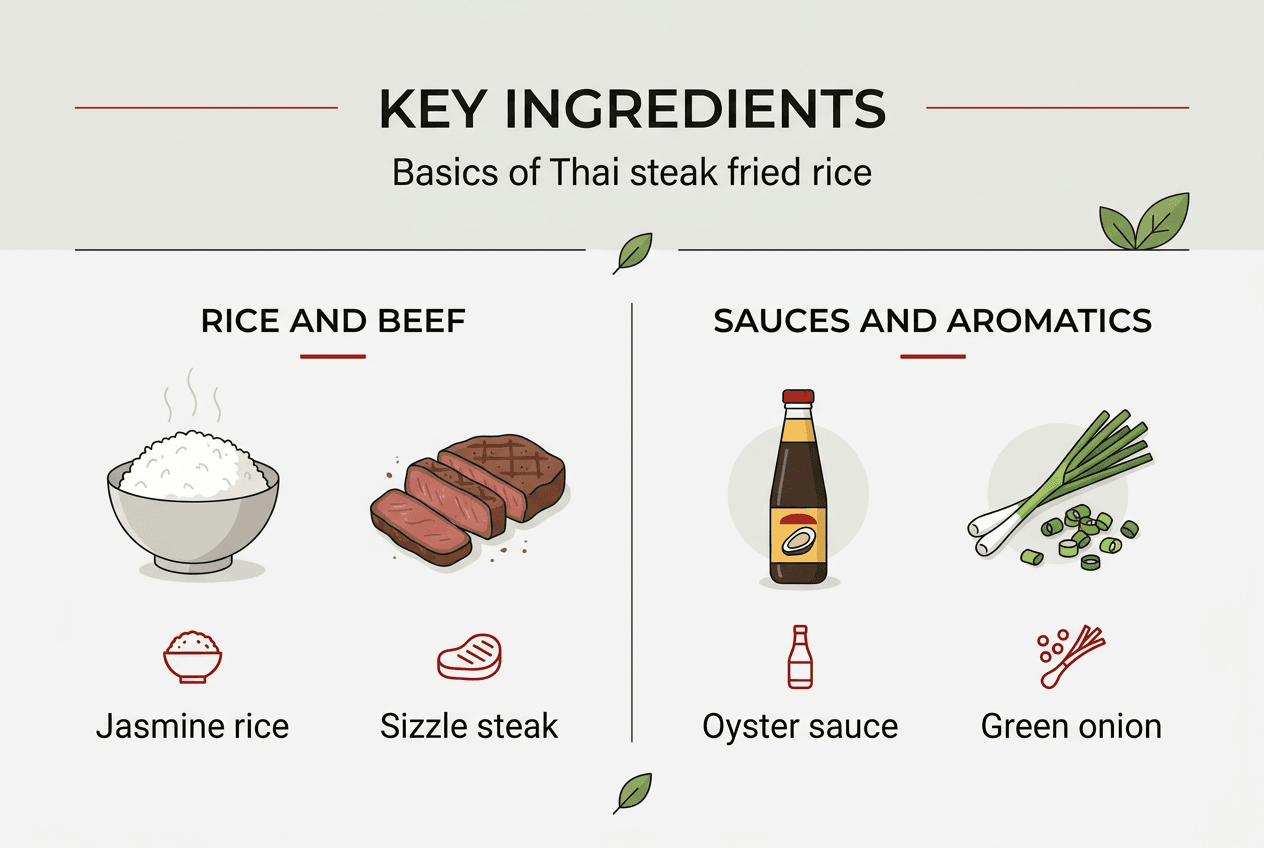
Pro Tip: Measure and arrange all ingredients in small bowls before you start cooking, because once that wok heats up, you’ll have less than five minutes to complete the entire dish.
Step-by-step instructions for perfect steak fried rice
Executing Thai steak fried rice requires precision timing and proper technique. Marinating and velveting beef prevents toughness during fast high-heat cooking, transforming even budget cuts into tender morsels. Follow these steps for consistent results:
Marinate the beef: Combine sliced steak with 1/4 teaspoon baking soda, 1 tablespoon soy sauce, 1 tablespoon oyster sauce, and 1 teaspoon oil in a bowl. Mix thoroughly and let sit for 15 to 30 minutes at room temperature. The baking soda raises the meat’s pH, which breaks down proteins and allows the beef to retain moisture during cooking.
Prepare the rice: Break up cold day-old jasmine rice with your hands, separating any clumps into individual grains. This step prevents chunks from forming in the wok and ensures even heating. Choosing Thai rice correctly makes a measurable difference in final texture.
Mix the sauce: Whisk together 2 tablespoons oyster sauce, 1 tablespoon soy sauce, 1 teaspoon sugar, and 1/2 teaspoon white pepper in a small bowl. Having this ready prevents scrambling to measure while ingredients cook.
Heat the wok: Place your wok over the highest heat setting and let it heat until a drop of water evaporates instantly on contact. Add 2 tablespoons of neutral oil and swirl to coat the surface.
Sear the beef: Add marinated beef in a single layer and let it sit undisturbed for 45 seconds to develop a caramelized crust. Flip and cook for another 30 seconds, then remove to a plate. The total cooking time should not exceed 90 seconds to keep the meat tender.
Scramble the eggs: Add another tablespoon of oil to the wok, pour in 2 beaten eggs, and scramble quickly until just set. Push to the side of the wok.
Stir-fry aromatics and rice: Toss in minced garlic and diced shallots, stirring for 10 seconds until fragrant. Add the rice immediately and press it against the hot wok surface to create slight charring. This technique develops wok hei, the smoky flavor that defines restaurant-quality fried rice.
Combine and season: Pour the prepared sauce over the rice and toss vigorously for 60 seconds. Return the beef to the wok along with any vegetables like diced tomatoes, onions, or Chinese broccoli. Stir everything together for another 30 seconds.
Finish with Thai basil: Turn off the heat and fold in a generous handful of fresh Thai basil leaves. The residual heat will release the herb’s distinctive aroma without cooking it to bitterness.
Pro Tip: If your stove doesn’t get extremely hot, cook the beef in two batches to avoid overcrowding, which drops the wok temperature and causes steaming instead of searing.
Mastering these Thai steak fried rice techniques transforms your home cooking from ordinary to extraordinary.
Common mistakes and troubleshooting tips
Even experienced cooks make errors that compromise texture and flavor. Recognizing these pitfalls helps you avoid frustration and wasted ingredients. Fresh rice results in mushy fried rice texture; day-old rice is key because moisture content directly affects how grains separate and crisp.
The most frequent mistakes include:
Using fresh rice: Newly cooked rice contains too much moisture and turns gummy when stir-fried. Always use rice that has been refrigerated overnight with the container lid slightly ajar to allow steam to escape.
Overcooking the beef: Leaving meat in the wok for more than 90 seconds creates tough, chewy pieces. High heat and brief contact time are essential for tender results.
Skipping mise en place: Attempting to chop vegetables or measure sauces while cooking leads to burnt garlic and unevenly cooked ingredients. Have everything ready before you turn on the burner.
Crowding the wok: Adding too much food at once lowers the temperature and causes ingredients to steam rather than sear. Cook in batches if your wok is smaller than 14 inches.
Adding too much sauce: Excess liquid makes the rice soggy and masks the individual flavors. Start with less sauce than you think you need, taste, and adjust incrementally.
Understanding Thai cooking techniques explained helps you diagnose problems quickly. When your fried rice turns out wrong, the solution usually involves heat management or ingredient preparation.
Pro Tip: If your rice seems too dry after adding sauce, sprinkle 1 tablespoon of water around the edge of the wok where it will instantly vaporize and create steam to rehydrate the grains without making them soggy.
Some cooks prefer to omit soy sauce entirely for a more authentic Thai style, relying solely on oyster sauce and fish sauce for seasoning. This creates a lighter-colored dish with cleaner flavors that highlight the beef and basil. Adjust chili peppers according to your heat tolerance, adding fresh bird’s eye chilies during the aromatics stage or serving dried chili flakes on the side.
“The secret to perfect fried rice isn’t expensive ingredients or fancy equipment. It’s understanding how heat, timing, and preparation work together to transform simple components into something extraordinary.”
Serving suggestions and authentic flavor enhancements
Presentation and accompaniments elevate steak fried rice from a simple meal to an authentic Thai dining experience. Serve Khao Pad with fresh cucumber slices, lime wedges, and optional prik nam pla for added depth, which provides cooling contrast and acidic brightness that cuts through the rich, savory flavors.
Traditional serving methods include:
Fried egg topping: Place a runny fried egg with crispy edges on top of each portion. The yolk acts as a sauce when broken, adding richness and creating visual appeal.
Fresh garnishes: Arrange cucumber slices, tomato wedges, and lime quarters around the plate. These provide textural contrast and allow diners to customize acidity and freshness.
Prik nam pla: This classic Thai condiment combines fish sauce, lime juice, sliced chilies, and garlic. A small dish on the side lets everyone adjust heat and tang to personal preference.
Thai basil uses: Reserve a few whole leaves for garnish in addition to the basil folded into the rice. The visual pop of green and aromatic punch enhance the eating experience.
Complementary side dishes create a complete Thai meal. Consider pairing your steak fried rice with:
Side Dish | Flavor Profile | Why It Works |
Tom Yum soup | Hot, sour, aromatic | Provides liquid contrast to dry rice |
Fresh spring rolls | Light, herbaceous, cool | Balances the rich, fried main dish |
Som Tam (papaya salad) | Spicy, tangy, crunchy | Adds refreshing acidity and texture |
Thai cucumber salad | Sweet, sour, mild | Cools the palate between bites |
Exploring types of Thai rice dishes reveals how fried rice fits into the broader spectrum of Thai cuisine. Each preparation method serves a specific purpose and pairs with different proteins and vegetables.
For casual family dinners, serve the fried rice family-style in a large platter with garnishes arranged around the edges. For more formal presentations, pack the rice into a small bowl, invert onto individual plates, and arrange the fried egg, cucumber, and lime artfully alongside. A sprinkle of fried shallots or garlic chips adds textural interest and authentic restaurant flair.
Discover authentic Thai flavors in Las Vegas
While mastering homemade steak fried rice brings satisfaction, sometimes you want to experience the dish prepared by experts who’ve perfected these techniques over years. Thai Spoon Las Vegas serves authentic Thai steak fried rice alongside classic dishes that showcase traditional flavors and modern culinary skill.
Explore the Thai Spoon menu page to discover how professional Thai chefs balance flavors and textures in every dish. Whether you’re looking for inspiration for your next home cooking project or want to enjoy restaurant-quality Thai food without the effort, learn about our menu options for dine-in, takeout, and delivery. Planning a gathering? Consider Thai catering services to bring authentic Thai cuisine to your next event, letting you enjoy the flavors you love while spending time with guests instead of standing over a hot wok.
How to make steak fried rice: common questions
How do I keep the steak tender when stir-frying?
Marinate beef with baking soda for 15 to 30 minutes before cooking to break down proteins and retain moisture. Cook over extremely high heat for no more than 90 seconds total, searing quickly to caramelize the outside while keeping the inside tender.
What type of rice is best for Thai fried rice?
Day-old jasmine rice refrigerated overnight provides the ideal texture because it has lost excess moisture that would otherwise create mushy results. Fresh rice contains too much water and clumps together instead of separating into individual grains during stir-frying.
Can I omit soy sauce for a more authentic Thai flavor?
Yes, traditional Thai fried rice often uses only oyster sauce and fish sauce for seasoning, creating a lighter-colored dish with cleaner flavors. This approach highlights the beef and Thai basil rather than the darker, saltier notes soy sauce provides.
How long should I marinate the beef?
Marinate beef for a minimum of 15 minutes and up to 2 hours at room temperature for optimal tenderness. The baking soda needs at least 15 minutes to raise the meat’s pH and break down proteins, but longer marinating intensifies flavor without compromising texture.
What side dishes go well with Thai steak fried rice?
Tom Yum soup, fresh spring rolls, som tam papaya salad, and Thai cucumber salad all complement steak fried rice beautifully. These dishes provide contrasting temperatures, textures, and flavor profiles that balance the rich, savory main course and create a complete Thai dining experience.
Recommended
Comments