


Spice Levels in Thai Food – What They Really Mean

Most American diners in northwest Las Vegas underestimate how dramatically authentic Thai spice levels outperform the typical hot wings experience, with bird’s eye chilies reaching up to 100,000 Scoville heat units. Understanding this heat spectrum matters if you truly want to enjoy Thai food without getting overwhelmed or missing out on bold flavor profiles. This article gives local food enthusiasts the inside scoop on spice scales, pepper types, and how to confidently order dishes tailored to your taste.
Table of Contents
Key Takeaways
Point | Details |
Understanding Spice Levels | Thai cuisine’s spice levels offer a nuanced balance of flavor rather than just heat intensity, accommodating all palates. |
Communicating Preferences | Diners should clearly communicate their spice tolerance to restaurant staff for an enjoyable dining experience. |
Exploring Chili Varieties | Familiarizing oneself with different Thai chili peppers can enhance appreciation of the intricate flavor profiles in dishes. |
Avoiding Common Mistakes | Requesting maximum spice without understanding dish-specific heat profiles can lead to an overwhelming experience; instead, seek recommendations from servers. |
What Spice Levels Mean in Thai Cuisine
In Thai cuisine, spice levels are far more complex than simply measuring heat intensity. Authentic Thai dishes approach spice as a nuanced balance, designed to create harmonious flavor experiences rather than overwhelming diners with pure capsaicin intensity. Unlike American perceptions of spiciness as a challenge or competition, Thai chefs view spice as an integral component of culinary artistry.
Traditionally, Thai restaurants offer a customizable spice scale ranging from zero to five, allowing diners to adjust heat levels according to their personal preferences. This flexible approach enables both spice enthusiasts and heat-sensitive individuals to enjoy authentic Thai flavors. The zero level represents no spice at all, while the maximum five represents the intense heat typical of local Thai palates. This graduated system ensures that every diner can find their perfect balance.
Understanding these spice levels requires recognizing that heat is not just about pain or endurance, but about enhancing overall taste. Chili peppers are carefully selected and proportioned to complement other ingredients, creating depth and complexity in each dish. For northwest Las Vegas diners, this means communicating clearly with restaurant staff about your preferred spice tolerance can transform your dining experience from potentially overwhelming to genuinely enjoyable.
Pro tip: When ordering Thai food, always ask the server to recommend a spice level that matches your personal heat tolerance, and don’t be afraid to start mild and work your way up.
Common Thai Peppers and Their Heat
Thai cuisine boasts a remarkable diversity of chili peppers, each bringing unique characteristics to the table. Thai peppers represent an intricate spectrum of heat and flavor, ranging from mild to intensely hot, with varieties that can transform a dish’s entire sensory profile. The most famous among these is the bird’s eye chili (prik khi nu), which packs a formidable punch between 50,000 to 100,000 Scoville heat units.
The heat levels of Thai chilies are dramatically different from typical American pepper varieties. These peppers produce a heat intensity 10 to 20 times stronger than jalapeños, with each variety delivering a distinct heat experience. For instance, bird’s eye chilies create a quick, sharp burn that rapidly intensifies and then fades, while other varieties like prik yuak offer a more subdued, lingering warmth. This nuanced approach allows Thai chefs to layer heat precisely, creating complex flavor profiles that go far beyond simple spiciness.
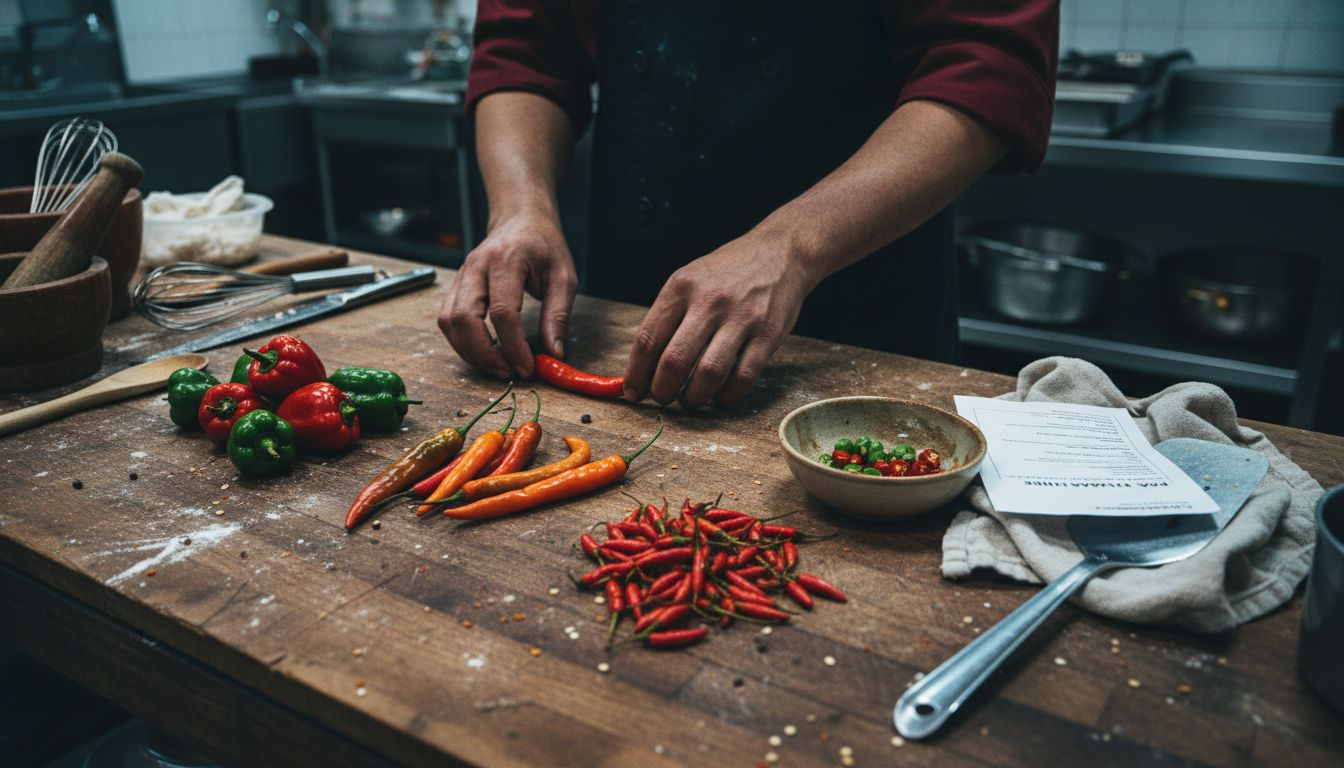
Beyond heat, these peppers contribute essential aromatic qualities to dishes. Varieties such as prik chee fah and prik yuak offer more than just capsaicin intensity—they bring subtle flavor notes that enhance the overall culinary experience. For northwest Las Vegas diners curious about Thai cuisine, understanding these pepper varieties can dramatically improve appreciation of the intricate balance between heat, flavor, and cultural cooking techniques.
Here’s how common Thai chili peppers compare:
Pepper Variety | Scoville Heat Units | Flavor Notes |
Bird’s Eye (Prik Khi Nu) | 50,000–100,000 | Sharp, intense, citrusy |
Prik Chee Fah | 5,000–30,000 | Mild, slightly sweet |
Prik Yuak | Under 1,000 | Very mild, grassy taste |
Pro tip: When exploring Thai peppers, start with milder varieties and gradually work your way up the heat scale to build your tolerance and appreciate the subtle flavor differences.
How Spice Levels Are Determined
Thai restaurants approach spice level determination as a complex culinary art, far beyond simply adding more or fewer chilies to a dish. The primary factor in establishing heat intensity is the specific chili variety used, with the benchmark being the notorious bird’s eye chili, which ranges from 50,000 to 100,000 Scoville heat units. However, the total perceived spiciness involves multiple intricate variables that skilled chefs carefully balance.
The heat measurement typically follows a graduated scale from zero to five, though individual restaurants may have slight variations. Spice levels are not just about chili quantity, but involve a nuanced interplay of ingredients and preparation techniques. Cooling ingredients like coconut milk, lime, and sugar play crucial roles in moderating the pepper’s intense burn, allowing chefs to create complex flavor profiles that go beyond simple heat intensity. Fresh versus dried peppers, pepper ripeness, and even the cultural background of anticipated diners can subtly influence the final spice level.
For northwest Las Vegas diners, understanding this intricate system means recognizing that spice is a carefully orchestrated experience. Each dish represents a delicate balance between heat, flavor, and individual preference. Communicating directly with restaurant staff becomes key—they can help navigate the nuanced spice scale, ensuring your meal matches your exact heat tolerance while preserving the authentic Thai culinary experience.
Pro tip: Always ask your server about the specific characteristics of a dish’s spice level, and don’t hesitate to request adjustments to match your personal heat preference.
Mild, Medium, and Thai Hot Explained
Spice levels in Thai cuisine represent a nuanced spectrum of heat intensity, far more complex than typical American restaurant classifications. The standard heat range breaks down into three primary categories: mild (up to 5,000 Scoville Heat Units), medium (5,000 to 30,000 SHU), and hot (starting at 30,000 SHU). What sets Thai cuisine apart is the dramatic difference between these levels, particularly when comparing American and authentic Thai spice measurements.
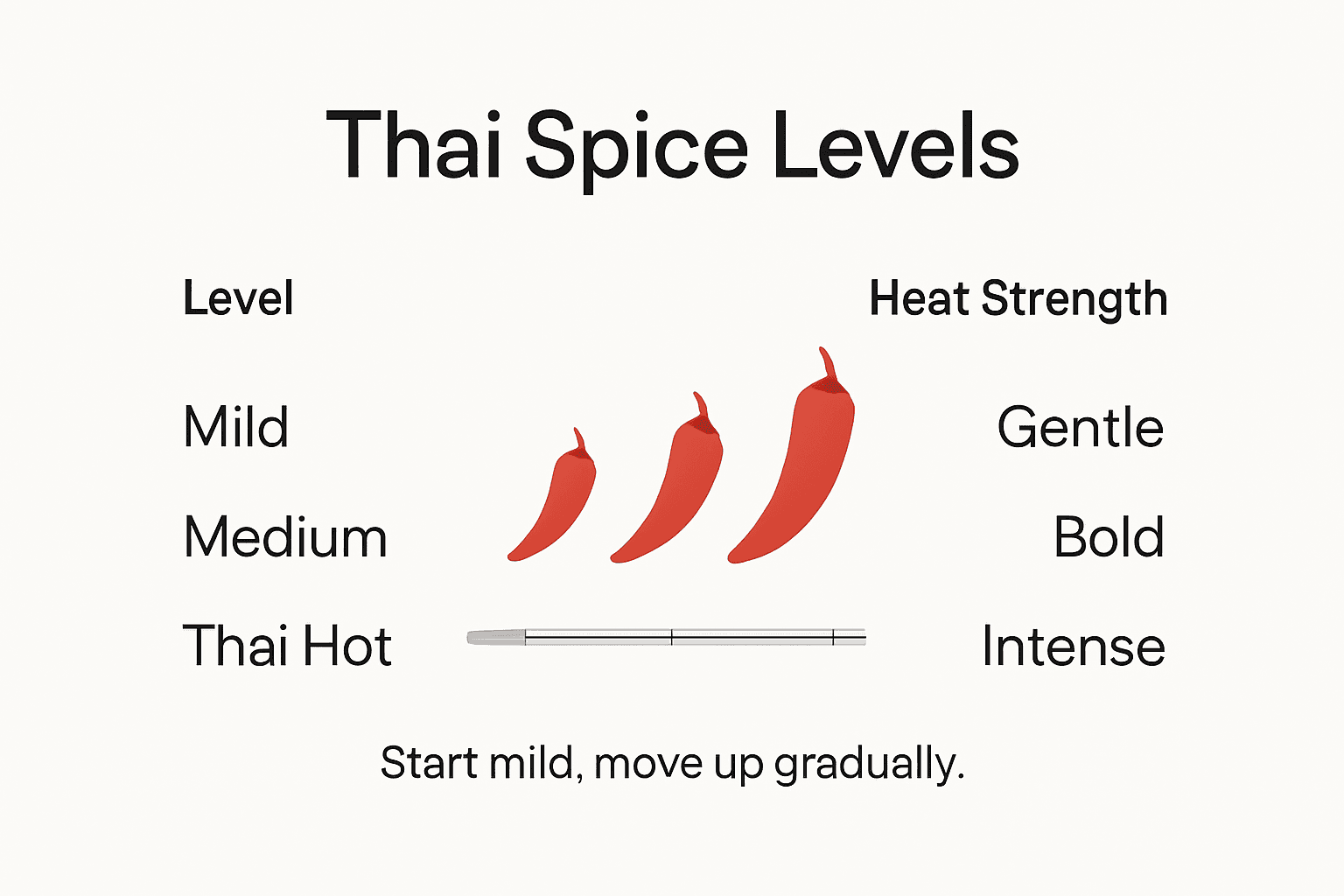
In the world of northwest Las Vegas Thai dining, ‘mild’ represents a gentle introduction to spice—typically featuring subtle warmth that enhances rather than overwhelms flavor. ‘Medium’ starts to introduce more noticeable heat, creating a pleasant tingle that builds gradually across the palate. The real challenge comes with ‘Thai hot,’ a category that dramatically surpasses typical American spice expectations. This level is reserved for true chili enthusiasts, representing heat intensities often exceeding 50,000 SHU, where the spice becomes a central, transformative element of the dining experience.
This table shows how Thai spice levels differ from typical American expectations:
Thai Spice Level | Typical SHU Range | American Equivalent |
Mild | Up to 5,000 | Similar to mild salsa |
Medium | 5,000–30,000 | Hot jalapeño or cayenne |
Thai Hot | 30,000+ | Exceeds U.S. hot wings |
Understanding these levels requires more than simply measuring Scoville units. Each category represents a carefully crafted balance of flavor, heat intensity, and culinary tradition. The progression from mild to Thai hot is not just about increasing capsaicin levels, but about experiencing a sophisticated flavor journey that respects the complexity of Thai cooking techniques. For diners unfamiliar with these nuances, communication with restaurant staff becomes crucial in navigating this intricate spice landscape.
Pro tip: When exploring Thai spice levels, start at mild and gradually increase, allowing your palate to adapt and appreciate the subtle flavor transformations between each heat category.
Ordering Thai Food to Match Your Taste
Mastering the art of ordering Thai food requires clear communication and strategic language, especially when navigating the intricate world of spice levels and flavor preferences. For northwest Las Vegas diners, this means developing a confident approach to expressing exactly what you want. The key is using precise descriptive phrases that help restaurant staff customize your dish perfectly.
Communication starts with understanding the spectrum of spice options. Instead of feeling intimidated, approach ordering as a collaborative experience. Phrases like ‘not spicy,’ ‘a little spicy,’ or ‘very spicy’ provide clear guidance to servers. Beyond heat levels, you can also specify preferred proteins, request sauce modifications, or ask about ingredient substitutions. Thai restaurants typically appreciate diners who are specific about their taste preferences, viewing it as an opportunity to create a personalized dining experience.
For those new to Thai cuisine, starting with familiar dishes and gradually exploring more complex flavor profiles can be an effective strategy. Consider asking servers for recommendations based on your current comfort level with spice and flavor intensity. Some northwest Las Vegas Thai restaurants even offer sampler plates or lunch specials that allow you to explore different taste experiences without committing to a full meal. The goal is to transform ordering from a potentially overwhelming experience into an enjoyable culinary adventure.
Pro tip: Always start your order by mentioning your spice tolerance, and don’t hesitate to ask for a dish to be adjusted to your preferred heat level.
Avoiding Common Spice Level Mistakes
Thai food novices often fall into predictable traps when navigating spice levels, particularly in northwest Las Vegas restaurants where authentic flavors can be overwhelming. The most critical error is assuming all spicy dishes are created equal, which can lead to unexpected and potentially unpleasant dining experiences. Understanding that heat is a nuanced component of flavor—not just a challenge to endure—becomes essential for enjoying Thai cuisine.
One fundamental mistake is approaching spice levels as a linear progression, when in reality, each dish has its own unique heat profile. Diners frequently make the error of requesting maximum spice without understanding how different chilies and preparation methods create distinct flavor experiences. Some peppers deliver an immediate, sharp burn, while others provide a slower, more complex heat that builds gradually. This means blindly requesting the highest spice level can result in a meal that overwhelms rather than enhances your culinary experience.
Communication becomes the most powerful tool in avoiding spice-related disappointment. Many northwest Las Vegas Thai restaurant patrons hesitate to discuss their specific heat preferences, leading to dishes that are either too mild or uncomfortably intense. The most successful approach involves asking servers detailed questions about a dish’s specific heat characteristics, requesting sample tastings if possible, and being willing to adjust your order based on professional recommendations. Remember that authentic Thai cuisine is about balanced flavor, not simply enduring maximum capsaicin intensity.
Pro tip: Always ask your server to describe the specific heat characteristics of a dish, and don’t be afraid to request a milder version that still maintains the authentic flavor profile.
Discover Your Perfect Thai Spice Experience at Thai Spoon Las Vegas
Unlock the true meaning of spice levels with the expertise and authentic flavors found at Thai Spoon Las Vegas. Whether you are new to Thai cuisine or a seasoned spice enthusiast, we understand the challenge of finding the perfect heat that complements your taste preferences without overwhelming your palate. Our menu offers customizable spice options, allowing you to enjoy dishes like Pad Thai, Yellow Curry, or Steak Fried Rice exactly the way you want them—mild, medium, or authentically Thai hot.
Ready to enjoy a balanced and flavorful dining experience crafted just for you? Visit Thai Spoon Las Vegas today and explore our convenient online ordering for pickup or delivery. Don’t forget to ask our friendly staff for spice level recommendations tailored to your heat tolerance. Experience authentic northwest Las Vegas Thai food made with care and passion, where every bite respects the delicate art of spice. Start your flavorful journey now and savor Thai cuisine the right way.
Frequently Asked Questions
What do spice levels in Thai cuisine mean?
Spice levels in Thai cuisine reflect a nuanced balance of heat and flavor, typically ranging from zero (no spice) to five (intense heat). This system allows diners to customize their heat tolerance while enhancing the dish’s overall taste experience.
How can I determine my preferred spice level when ordering Thai food?
When ordering Thai food, clearly communicate your heat tolerance to the server using terms like ‘not spicy,’ ‘a little spicy,’ or ‘very spicy.’ It’s often best to start mild and increase gradually to find your perfect balance.
What are some common types of Thai chili peppers and their heat levels?
Common Thai chili peppers include bird’s eye chili (50,000–100,000 Scoville heat units), prik chee fah (5,000–30,000 SHU), and prik yuak (under 1,000 SHU). Each adds distinct characteristics to dishes beyond just heat.
Why is it important to ask about spice levels when ordering Thai food?
Asking about spice levels is crucial because heat varies by dish and restaurant. Understanding the specific characteristics of a dish’s spice level can help ensure a satisfying and enjoyable dining experience.
Recommended
Comments