


Thai Food Presentation Tips: Impress Guests Locally
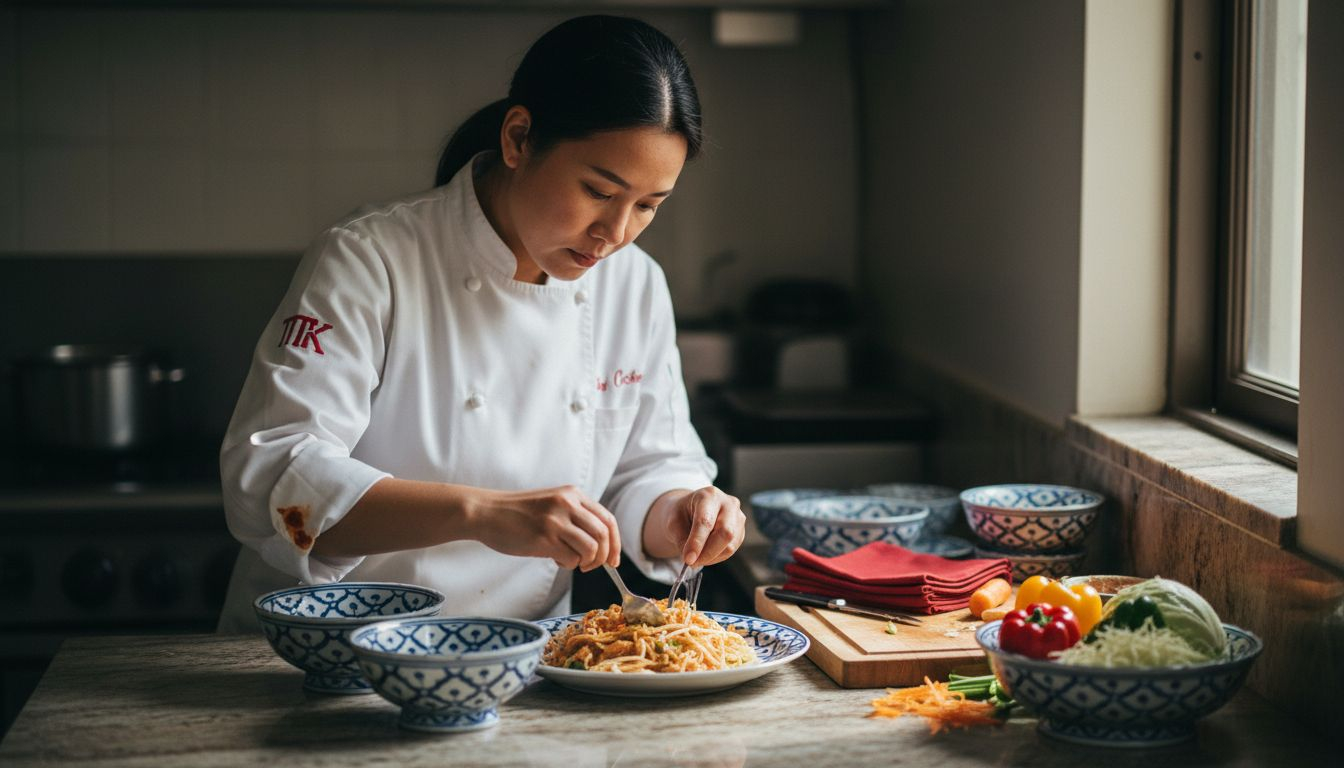
Every Las Vegas gathering deserves cuisine that not only tastes incredible but also tells a story through its visual presentation. Authentic Thai food offers much more than vibrant flavors—it’s a rich cultural experience where every plate becomes a form of expression, blending tradition and artistry. Whether planning a casual dinner or a special event, you’ll discover practical tips and creative inspiration for creating unforgettable, visually stunning Thai presentations that will captivate your guests.
Table of Contents
Key Takeaways
Point | Details |
Cultural Significance | Thai food presentation communicates deep cultural narratives through visual design, reflecting tradition and social connections. |
Balance and Harmony | Emphasize color contrast, symmetry, and strategic placement to enhance the aesthetic and flavor experience in Thai dishes. |
Modern Fusion | Embrace contemporary techniques while maintaining traditional flavor profiles to create visually stunning and innovative presentations. |
Presentation Principles | Avoid overcrowding plates and aim for intentional color harmony to ensure dishes are visually appealing and narratively expressive. |
Defining Thai Food Presentation Traditions
Thai food presentation is far more than aesthetic arrangement - it’s a profound cultural narrative that communicates complex social and emotional messages through culinary design. Cultural symbolism in Thai cuisine reveals how every dish serves as a visual storytelling medium, reflecting centuries of tradition and social connection.
Traditional Thai food presentation embodies several critical principles that distinguish it from other culinary styles:
Balance of Colors: Dishes typically feature vibrant color combinations representing different flavor profiles and nutritional elements
Symmetry and Harmony: Plate arrangements emphasize visual equilibrium and aesthetic precision
Symbolic Placement: Each ingredient’s position carries potential cultural or spiritual significance
Historically, Thai food presentation evolved from royal court traditions where elaborate meal displays demonstrated social status and artistic sophistication. Global perceptions of Thai cuisine highlight how these presentation techniques communicate not just flavor, but cultural identity and historical depth.
The aesthetic principles underlying Thai food presentation go beyond mere visual appeal. They represent a holistic approach where food becomes a form of non-verbal communication, expressing respect, hospitality, and cultural heritage through meticulously crafted visual experiences.
Pro tip: When presenting Thai dishes, focus on creating color contrast and maintaining elegant, balanced plate compositions that honor traditional presentation principles.
Classic Plating Versus Modern Fusion Styles
Thai cuisine stands at a fascinating culinary crossroads, where traditional presentation techniques beautifully intersect with contemporary global influences. Thai fusion cuisine trends represent a dynamic evolution that respects historical roots while embracing innovative culinary expressions.
Classic Thai plating emphasizes several key characteristics:
Symmetrical Arrangement: Traditional plates feature precisely balanced geometric designs
Color Harmony: Dishes prioritize vibrant color palettes representing different flavor profiles
Ingredient Placement: Each component is strategically positioned to create visual and gustatory balance
Modern fusion styles, in contrast, challenge these rigid conventions by introducing more experimental approaches. Contemporary plating techniques now embrace free-form designs, unconventional layering, and dramatic architectural presentations that transform traditional Thai dishes into artistic statements.
Fusion plating represents a culinary dialogue between tradition and innovation, where respect for heritage meets creative expression.
The emergence of fusion styles doesn’t diminish traditional techniques but instead celebrates Thai cuisine’s remarkable adaptability. Chefs are now reimagining classic dishes through contemporary lens, creating visually stunning plates that maintain authentic flavor profiles while appealing to modern aesthetic sensibilities.
Here’s a focused comparison of traditional versus modern Thai plating styles:
Aspect | Classic Thai Plating | Modern Fusion Plating |
Visual Structure | Geometric symmetry | Free-form, abstract designs |
Color Approach | Harmonious, natural palettes | Bold, dramatic contrasts |
Ingredient Focus | Culturally symbolic, precise placement | Experimental, unexpected pairings |
Artistic Goal | Elegance and balance | Architectural, striking presentation |
Pro tip: When experimenting with fusion plating, maintain at least 50% of the original dish’s traditional flavor profile and visual essence.
Best Ingredients For Visual Appeal
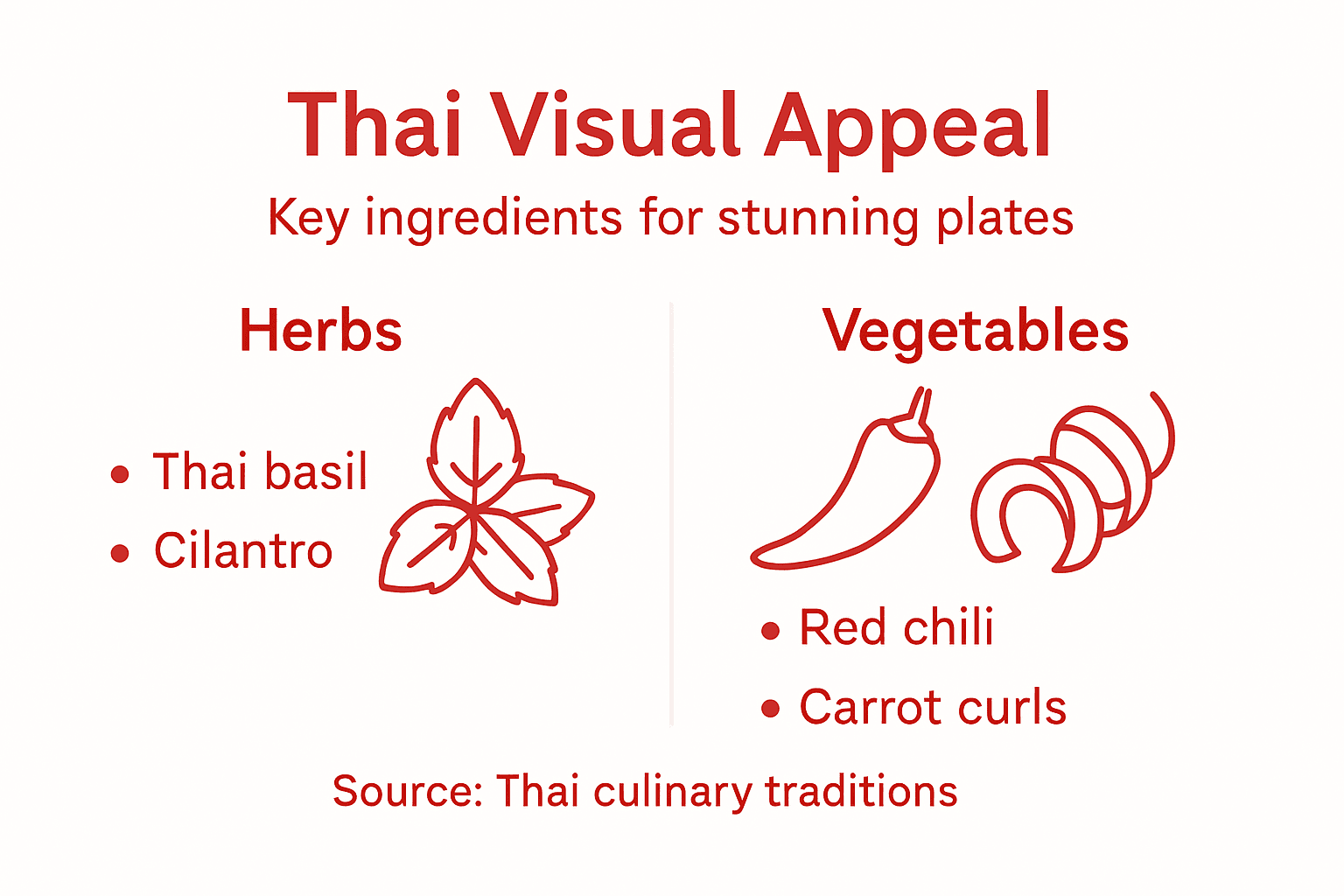
Thai culinary art transforms ingredients into visual masterpieces, with each element carefully selected to create stunning presentations. Thai culinary arts reveal how specific ingredients can dramatically elevate a dish’s aesthetic appeal beyond mere flavor.
The most visually impactful ingredients in Thai cuisine include:
Vibrant Herbs: Cilantro, Thai basil, and kaffir lime leaves create stunning green accents
Colorful Vegetables: Red chili peppers, purple Thai eggplants, and yellow turmeric add dramatic color contrasts
Edible Flowers: Orchids, chrysanthemums, and marigolds provide delicate, artistic garnishes
Textural Elements: Crispy fried shallots, toasted coconut flakes, and roasted peanuts introduce fascinating visual dimensions
Understanding color theory plays a crucial role in ingredient selection. Complementary colors like deep purple Thai eggplants against bright green herbs create visual tension that makes dishes pop. Chefs strategically use ingredients not just for taste, but as painterly elements that transform plates into edible art.
Visual appeal in Thai cuisine is about creating a sensory experience that engages the eyes before the first bite is taken.
Traditional Thai presentation emphasizes intricate details - from precisely carved vegetable garnishes to carefully positioned protein elements. Modern interpretations continue this legacy, using ingredients as both flavor carriers and visual storytellers.
Use this quick ingredient reference for visually striking Thai presentations:
Ingredient Type | Common Examples | Visual Effect |
Herbs | Thai basil, cilantro | Fresh green highlights |
Vegetables | Thai eggplant, chili | Vibrant color contrast |
Edible Flowers | Orchid, marigold | Delicate decorative touch |
Texture Elements | Fried shallots, peanuts | Added depth and crunch |
Pro tip: Select ingredients with contrasting colors and textures to create visually stunning Thai dish presentations that will captivate your guests.
Using Color And Garnish Effectively
Thai culinary art transforms plate presentation into a vibrant visual symphony, where color and garnish become powerful storytelling elements. Thai cuisine’s color techniques reveal how strategic ingredient placement can stimulate appetite and create sensory excitement.
Mastering color and garnish in Thai dishes involves several key strategies:
Color Wheel Principles: Combine complementary colors like deep greens, bright reds, and golden yellows
Texture Contrast: Mix crisp elements like fried shallots with soft, delicate herbs
Height and Dimension: Use vertical garnishing techniques to add architectural interest
Cultural Symbolism: Select garnishes that represent traditional meanings and regional influences
Professional Thai chefs understand that garnishing is an art form requiring precision and creativity. Each herb, flower, or carved vegetable serves a dual purpose - enhancing visual appeal while contributing subtle flavor nuances.
Garnishing in Thai cuisine is not decoration, but a fundamental expression of culinary philosophy.
Traditional techniques like intricate vegetable carving and strategic herb placement transform ordinary dishes into extraordinary visual experiences. Culinary arts highlight how even simple ingredients can become powerful aesthetic tools when applied with intention and skill.
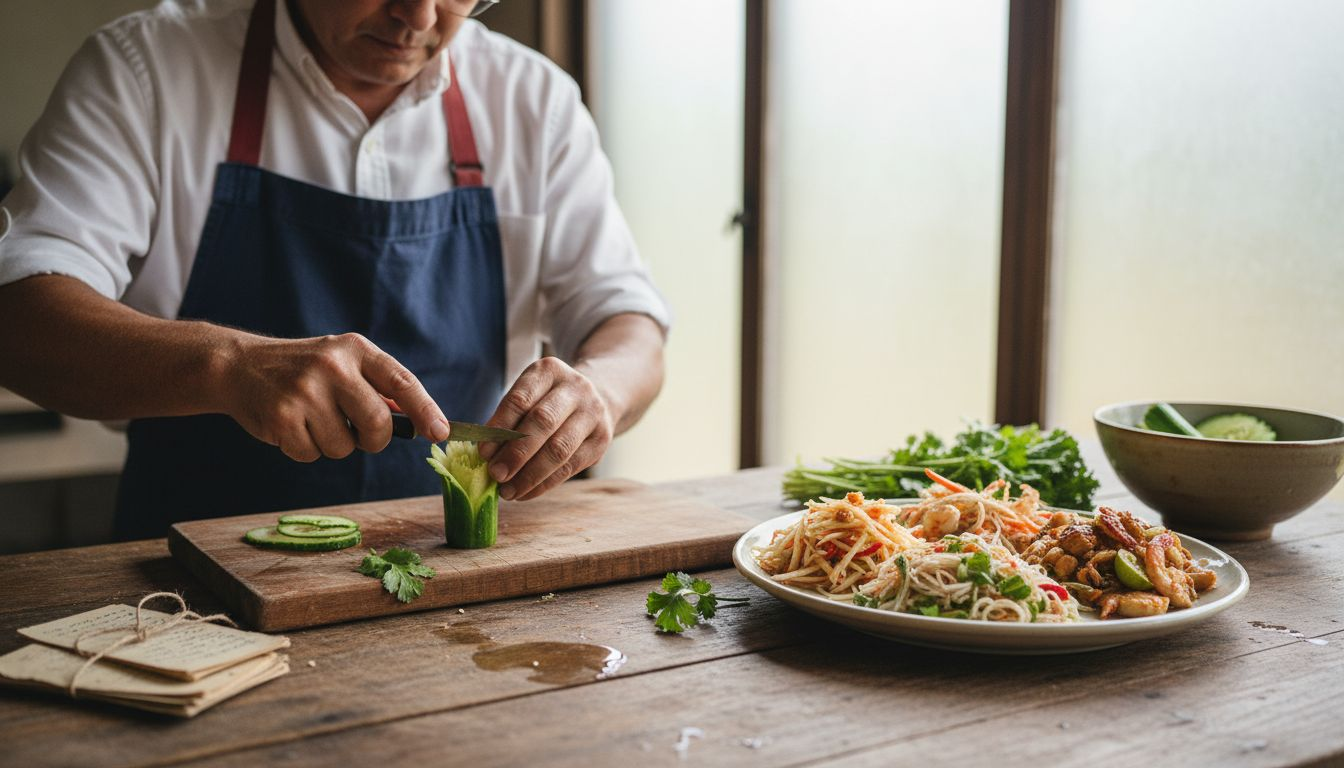
Pro tip: Practice creating three-dimensional plate landscapes by layering garnishes at different heights and using contrasting colors to create visual depth.
Serving Etiquette For Las Vegas Events
Hospitality in Thai cuisine transcends mere food service - it’s an art form that requires thoughtful preparation and cultural understanding. Thai party planning techniques can transform any Las Vegas gathering into an authentic and memorable experience.
Key serving etiquette principles for Thai-themed events include:
Communal Dining Style: Encourage shared plates and family-style serving
Temperature Considerations: Serve hot dishes immediately, cold dishes strategically
Utensil Awareness: Provide both traditional (chopsticks, spoons) and Western utensils
Beverage Pairing: Offer traditional Thai drinks like Thai iced tea alongside meal service
Respectful Portion Sizing: Avoid oversized individual portions, focus on balanced sharing
In the Las Vegas event landscape, blending traditional Thai serving customs with local expectations requires a nuanced approach. Understanding that your guests might have varying familiarity with Thai dining traditions helps create a more inclusive and enjoyable experience.
Authentic Thai serving is about creating connection, not just delivering food.
Successful Thai-themed events in Las Vegas demand attention to cultural details while remaining accessible to diverse audiences. This means balancing traditional serving practices with contemporary presentation styles that appeal to local tastes and expectations.
Pro tip: Train serving staff on basic Thai dining customs and have descriptive menu cards explaining dish origins and recommended eating techniques.
Common Presentation Mistakes To Avoid
Perfecting Thai food presentation requires understanding not just what to do, but critically, what to avoid. Thai food presentation errors can dramatically undermine the culinary experience, turning an potentially stunning dish into a visual disappointment.
The most common presentation mistakes in Thai cuisine include:
Plate Overcrowding: Jamming too many elements together, losing visual clarity
Color Imbalance: Using random colors without intentional harmony
Inconsistent Garnishing: Adding garnishes without strategic purpose
Ignoring Negative Space: Failing to leverage empty plate areas for visual impact
Mismatched Portion Sizes: Creating uneven or disproportionate dish elements
Professional chefs understand that each plate tells a story. Plating technique mistakes often stem from rushing the process or neglecting the subtle art of visual composition.
In Thai cuisine, presentation is not just about appearance - it’s a dialogue between food, culture, and aesthetic sensibility.
Maintaining authenticity while creating visually appealing dishes requires patience, practice, and a deep understanding of Thai culinary traditions. Each element on the plate should serve a purpose, whether aesthetic, flavor-enhancing, or culturally significant.
Pro tip: Always plate dishes on white plates to provide a neutral background that allows the vibrant colors and intricate details of Thai cuisine to truly shine.
Elevate Your Thai Food Presentation Experience with Authentic Local Flavors
Mastering Thai food presentation takes dedication to balance, color harmony, and cultural storytelling as this article emphasizes. If you want to impress your guests with authentic Thai dishes that embody these traditional and modern plating principles without the hassle of preparation and plating at home, Thai Spoon Las Vegas offers an exceptional solution. Our menu features vibrant dishes like Pad Thai, Yellow Curry, and Steak Fried Rice, all thoughtfully prepared to reflect the elegance and visual appeal central to Thai culinary arts.
Discover the perfect way to bring the beauty of Thai cuisine to your next gathering or everyday meal by ordering from Thai Spoon Las Vegas. Whether you prefer pick-up, delivery, or need catering for a large party, we provide fresh, expertly crafted dishes that uphold the visual and flavor standards highlighted in the article. Explore our special lunch and happy hour menus for tasty deals or book a large party reservation to share an unforgettable Thai food presentation experience with your community today.
Frequently Asked Questions
What are the key principles of traditional Thai food presentation?
Traditional Thai food presentation emphasizes a balance of colors, symmetry and harmony in arrangements, and symbolic placement of ingredients. Each dish not only looks appealing but also conveys cultural significance.
How can I achieve a modern fusion style in Thai food plating?
To create a modern fusion style, consider using free-form designs and bold color contrasts while maintaining at least 50% of the original dish’s traditional flavor and visual elements. This allows for creative expression while honoring heritage.
What ingredients can enhance the visual appeal of Thai dishes?
Ingredients that elevate visual appeal include vibrant herbs like cilantro and Thai basil, colorful vegetables such as red chili peppers and purple Thai eggplants, edible flowers for garnishing, and textural elements like crispy shallots and toasted coconut flakes.
What common mistakes should I avoid when presenting Thai food?
Common presentation mistakes include overcrowding plates, poor color balance, inconsistent garnishing, neglecting negative space, and mismatched portion sizes. Paying attention to these details can dramatically enhance the overall presentation of your dishes.
Recommended
Comments