


The Real Role of Reviews in Thai Restaurants

TL;DR:
Reviews provide nuanced insights into authentic Thai cuisine, highlighting regional dishes, spice levels, and traditional ingredients.
Focusing on recency, detailed descriptions, and reviewer credibility helps diners accurately assess a restaurant’s current quality and authenticity.
You already check reviews before choosing a Thai restaurant. Most diners do. But if you’re relying on a star rating alone, you’re missing the most important information buried inside those reviews. The role of reviews in Thai restaurants goes far beyond a 4.2-star average. Reviews tell you whether the curry paste is made in-house, whether the heat level is adjustable, and whether the chef actually knows the difference between northern and central Thai cooking. That gap between what ratings show and what review text reveals is exactly what this article unpacks.
Table of Contents
Key takeaways
Point | Details |
Ratings alone mislead | Star averages can’t signal authentic Thai cooking. Review text reveals far more. |
Recency matters most | Recent reviews reflect current kitchen quality better than a high overall average built over years. |
Authenticity has specific signals | Look for mentions of regional dishes, spice customization, and traditional ingredients. |
Fake reviews exist and backfire | Coordinated review attacks have provoked community support, proving savvy diners can spot manipulation. |
Cross-platform checking wins | Comparing reviews across multiple platforms and word-of-mouth reduces your risk of being misled. |
How reviews shape trust and dining decisions
The customer feedback in Thai restaurants, or any restaurant category, carries real psychological weight. Positive reviews increase trust and push diners toward making a reservation, but negative reviews hit harder. The same study found that a single strongly worded negative review can override several positive ones, which explains why restaurants obsess over reputation management even when their average score looks fine.
There’s also the depth of engagement to consider. Diners spend over 13 minutes reading through review pages before making a booking decision. That’s not skimming. That’s genuinely consuming content, comparing experiences, and building a mental picture of what a meal will feel like. Reviews have become the primary pre-visit research tool for most people choosing a restaurant.
What do diners actually trust? Here are the review attributes that most consistently drive confidence:
Recency: A review from two months ago tells you more about tonight’s experience than one from three years ago.
Specificity: Reviews that name dishes, describe textures, and mention portion sizes carry more weight than “food was great.”
Credibility: Reviewers with an established history of detailed, varied reviews read as more trustworthy than accounts with one single post.
Balanced tone: Consumers prefer a blend of positive and moderate critiques over a wall of perfect five-star responses. An all-perfect record often raises suspicion rather than confidence.
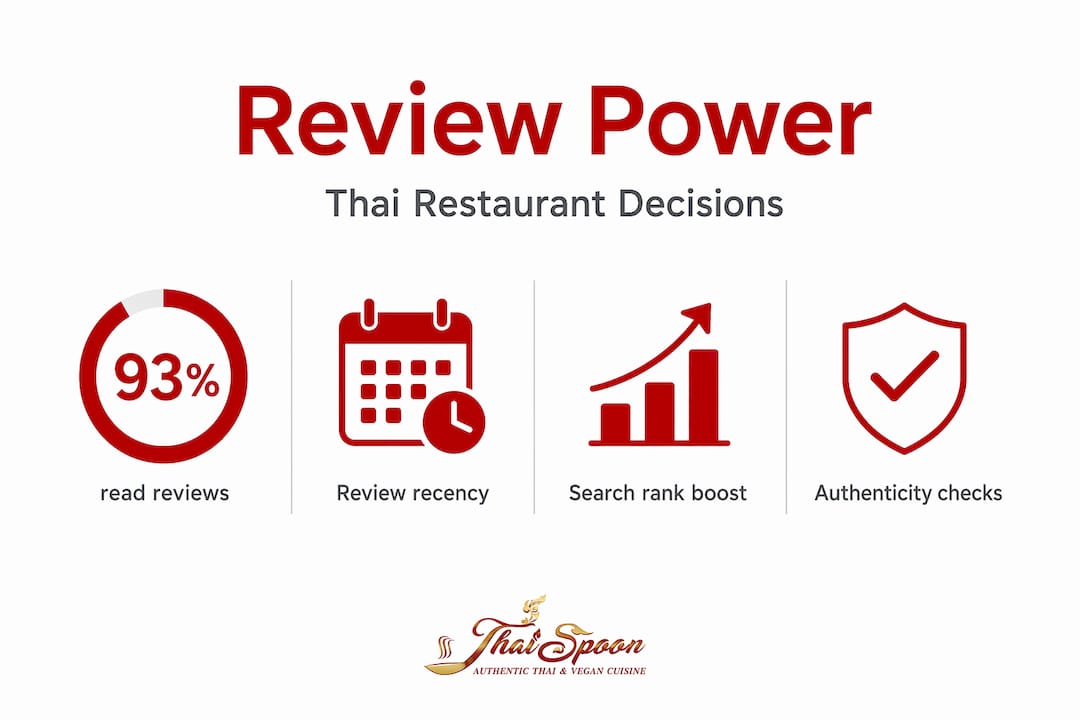
And the numbers back this up. 93% of consumers say they read reviews for local businesses. More telling: those same consumers expect real consequences for fake reviews. Trust in the review system depends on its perceived integrity, and diners know when something feels off.
Pro Tip: Sort reviews from newest to oldest before reading anything else. If the tone shifts noticeably after a certain date, a change in chef, ownership, or kitchen standards likely happened around that time.
Reading for authenticity beyond star ratings
Here’s the thing most review-reading guides skip: a Thai restaurant can have a four-star average and serve food that has never been anywhere near Thailand in spirit or technique. The importance of restaurant reviews lies not in the number at the top of the page but in the language inside each review.
Authentic reviews contain specific details about food, service, and atmosphere that ratings-only systems simply cannot capture. The question for foodies is knowing what to look for. When a reviewer describes the coconut milk as rich and not overly sweet, the basil as fresh Thai holy basil rather than Italian, or the pad see ew noodles as properly wok-charred, that’s a signal. That level of detail comes from someone who has eaten real Thai food before and noticed the difference.
For Thai cuisine specifically, narratives about dishes and regional styles carry significantly more diagnostic weight than averages. Consider these authenticity signals when reading review text:
Regional dish mentions: References to khao soi, larb, or som tum suggest the kitchen reaches beyond the standard tourist menu.
Spice customization: Diners noting that heat levels were adjusted on request signals a kitchen that respects traditional preparation rather than pre-made sauces.
Traditional ingredients: Mentions of galangal, makrut lime leaves, or fish sauce used properly point toward genuine technique.
Honest critique: Reviews noting that a dish was slightly sweeter than expected, or that the green curry was more mild than traditional, often come from diners with real reference points.
Reviewer history matters too. Check whether the person has reviewed other Thai or Southeast Asian restaurants. If they have a track record of thoughtful food writing across cuisines, their opinion on your target restaurant carries more context. For a deeper sense of what authentic Thai flavors actually taste like, the guide to authentic Thai flavors at Thaispoonlasvegas is a useful reference point before you even start reviewing reviews.
Pro Tip: Treat review reading like tasting a dish. One sentence tells you almost nothing. Read five or six recent reviews together and patterns will emerge quickly about what the kitchen does well and where it cuts corners.

How review volume, recency, and algorithms affect visibility
The impact of reviews on Thai dining reaches well beyond the dining table. Reviews directly influence which restaurants you even see when you search. Google Maps ranking is heavily shaped by review count, recency, and sentiment. A restaurant with 300 reviews and strong recent activity will consistently outrank one with 800 older reviews and no fresh engagement.
This creates a meaningful dynamic for diners. The restaurant appearing at the top of your search is not necessarily the best. It’s the most actively reviewed. Those are different things. Understanding how digital reputation shapes bookings helps you see the algorithm for what it is: a visibility engine, not a quality filter.
The table below breaks down how review dynamics affect what diners see and experience:
Review factor | Positive effect | Risk if ignored |
High recent review volume | Boosts local search ranking and map visibility | Outdated volume hides quality decline |
Positive sentiment in text | Increases click-through and booking intent | Generic positivity may signal coached reviews |
Specific detail in reviews | Builds trust with new diners researching options | Absence of detail suggests low authenticity |
Reviewer credibility history | Raises perceived genuineness of feedback | Single-review accounts suggest possible manipulation |
Mixed ratings (3-4 stars included) | Creates balanced, believable reputation profile | All-five-star profiles trigger skepticism |
Review manipulation is real and documented. In one striking case, a one-star review attack on a chicken rice shop in Udon Thani backfired badly. The coordinated attack raised community awareness, triggered investigation, and ultimately drove more customers to the restaurant out of solidarity. It’s a case study in how fake reviews can collapse under scrutiny and produce the opposite effect. Savvy diners notice patterns: a cluster of one-star reviews posted in the same week with no detail is a red flag worth investigating.
A practical guide to evaluating Thai restaurant reviews
Knowing that reviews matter is one thing. Knowing how to read them efficiently is what actually changes your dining outcomes. Here’s a straightforward process for evaluating Thai restaurant customer ratings before you commit to a reservation or an order.
Start with recency filters. Sort reviews by newest first. Check whether the most recent dozen reviews align with the overall score. If recent reviews are significantly lower, something has changed.
Read for food-specific language. Look for dish names, preparation details, and spice references. “Pad Thai was delicious” tells you almost nothing. “Pad Thai had good wok char and the tamarind balance was right” tells you the diner knows the dish.
Check the rating distribution. A restaurant with 400 five-star reviews and 50 one-star reviews with nothing in between is statistically unusual. Authentic businesses collect reviews across all levels naturally.
Cross-reference across platforms. A restaurant that looks great on one platform but poorly reviewed on another is worth investigating. Use at least two sources before deciding.
Look for reviewer profiles. Accounts with review history across multiple restaurants carry more weight than new accounts with a single review. Reviewer credibility patterns are a reliable authenticity signal.
Use word-of-mouth as a tie-breaker. When reviews are mixed or confusing, a personal recommendation from someone whose taste you trust is still the most reliable signal.
Pro Tip: Search for the restaurant name plus the word “photos” on Google. Diner-submitted food photos often reveal more about actual dish quality and portion size than the review text itself.
For a cross-reference on what the best Thai dishes should look and taste like, that knowledge gives you a benchmark before you interpret what reviewers are describing.
My take on reviews and Thai dining authenticity
I’ve read hundreds of Thai restaurant reviews over the years, and the pattern I keep seeing is this: the most helpful ones are never the most polished ones. The reviewer who writes three paragraphs about the massaman curry, notes that the potatoes held their texture, and mentions the fish sauce was used with restraint, probably ate real Thai food growing up or has spent time in Thailand. That review is worth more than ten five-star posts saying “best Thai food in the city.”
What I’ve learned is that review recency is more diagnostic than overall score. A restaurant with a 4.1 average built from reviews over five years can be a completely different place today. The cook may have changed. The ownership may have shifted. The kitchen shortcuts may have started. Recent reviews, even a handful of them, tell a more honest story about what you’ll actually eat tonight.
The fake review problem is real, but I find that most diners dramatically overestimate how hard it is to spot. Clusters of similar-sounding reviews posted within a narrow time window, no review history from the accounts, and language that sounds more like marketing copy than personal experience. These patterns appear more often than you’d expect, and once you know what to look for, they become obvious. The responsibility isn’t only on platforms to police this. Readers play a role too.
The diners who get the most out of reviews are the ones who treat them like research, not validation. They’re not looking for permission to choose a restaurant they already want to try. They’re genuinely trying to understand what the kitchen is capable of and whether the experience matches what authentic Thai food should deliver.
— Thai
Taste the real thing at Thaispoonlasvegas
All this review research matters most when it leads you to a meal worth having. At Thaispoonlasvegas, the customer feedback speaks in exactly the detail this article describes: diners mentioning specific dishes, spice levels, and the kind of cooking that reflects genuine Thai technique rather than a simplified version of it.
[
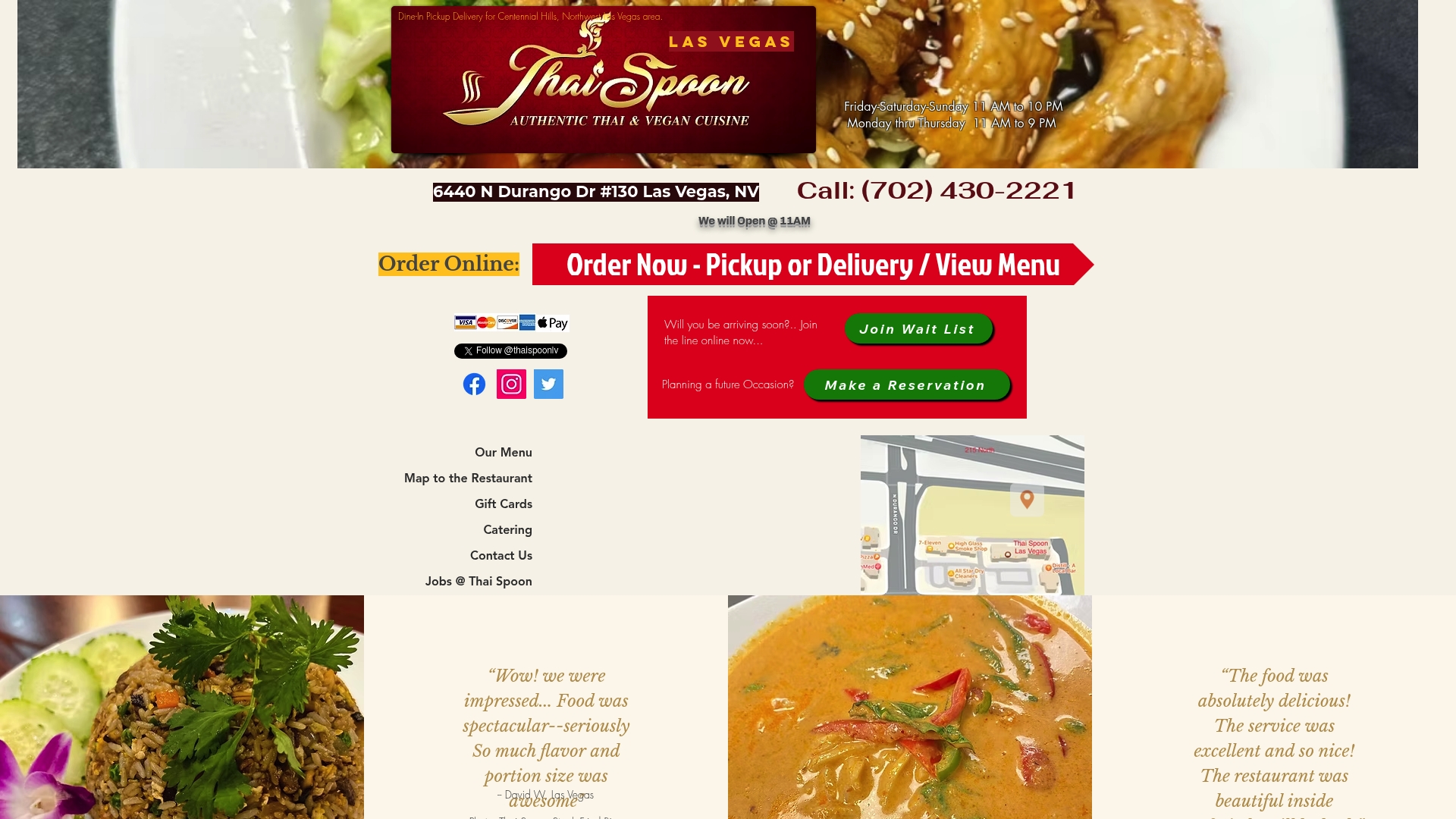
Located in northwest Las Vegas, away from the tourist noise of the Strip, Thaispoonlasvegas serves dishes including Pad Thai, Yellow Curry, and Steak Fried Rice, with real options for vegan and gluten-free diners. Browse the full menu to see what the kitchen actually offers, and check out the menu and services page for details on lunch specials, happy hour, and large-party reservations. If you’re planning an event and want authentic Thai catering, the catering services page covers everything you need to know.
FAQ
How do reviews influence Thai restaurant choices?
Reviews shape diner confidence by providing social proof about food quality, authenticity, and service. Positive reviews increase trust and reservation likelihood, while negative ones carry disproportionate psychological weight.
Why aren’t star ratings enough for Thai restaurants?
Star ratings average all experiences into one number and erase context about dish quality, spice authenticity, and regional accuracy. Detailed review text reveals far more about whether a Thai kitchen is genuinely authentic.
What makes a Thai restaurant review credible?
Credibility comes from specific dish descriptions, honest critique, reviewer history across other restaurants, and review recency. Accounts with only one review or language that sounds coached are worth treating skeptically.
How do reviews affect a Thai restaurant’s visibility online?
Local search rankings on Google Maps weight recent review activity and sentiment heavily, meaning a restaurant with consistent fresh reviews will appear higher in searches even against competitors with larger overall review counts.
How can I spot fake reviews for Thai restaurants?
Look for clusters of reviews posted within a short window, similar generic language across multiple posts, and reviewer accounts with no history beyond that single review. Documented cases of coordinated review attacks show these patterns are recognizable once you know to look for them.
Recommended

Comments