


Tom yum paste: Ingredients, flavor, and cooking tips

TL;DR:
Tom yum paste is a concentrated, herbal blend that recreates the complex flavors of authentic Thai tom yum soup, including citrus, spice, and sourness. Its ingredients—such as lemongrass, galangal, kaffir lime, and dried chilies—work together to produce a vibrant, multidimensional profile that varies across brands. Proper use involves tasting and adjusting it carefully, as its potent flavor can enhance a variety of dishes beyond just soup.
Tom yum paste sits in a jar on grocery store shelves next to dozens of other Thai pastes, and most home cooks walk right past it without a second look. That’s a real shame. This concentrated blend is the engine behind one of Thailand’s most beloved dishes, and it carries a flavor complexity that standard chili pastes simply cannot replicate. If you’ve ever tasted a bowl of tom yum soup and wondered what gave it that bold, layered quality, the answer starts right here.
Table of Contents
Key Takeaways
Point | Details |
Signature aromatics | Tom yum paste is defined by lemongrass, galangal, kaffir lime, and dried chilies. |
Flavor balance | It achieves a unique hot-sour-herbal profile using tamarind, lime, and savory seasonings. |
Brand differences matter | Commercial and homemade pastes can vary in intensity and additional ingredients. |
Best kitchen uses | Tom yum paste excels in soups, marinades, noodle dishes, and stir-fries. |
Understanding tom yum paste: The essentials
Tom yum paste is not chili paste with a different label. It’s an entirely different product built around a specific culinary goal: recreating the hot, sour, and herbal character of authentic tom yum soup in a concentrated, shelf-stable form. Where a basic chili paste delivers heat and maybe some garlic, tom yum paste layers in aromatic herbs, souring agents, and savory depth all at once.
The flavor profile is genuinely distinctive. You get citrusy brightness from lemongrass, earthy spice from galangal, floral bitterness from kaffir lime, and a tart tang from tamarind or lime juice, all balanced against the heat of dried chilies. That combination is what makes tom yum soup taste so alive and multidimensional. No single ingredient creates it. It’s the interplay of all of them together.
It’s worth noting that not every jar of tom yum paste delivers the same result. As with many Thai condiments, brands vary significantly in how they build sourness, whether through tamarind, lime juice, or a combination of both, and they differ on whether they include shrimp paste, dried shrimp, MSG, or preservatives. That variability matters when you’re cooking.
Here’s what a well-made tom yum paste typically delivers:
Hot and spicy heat from dried red chilies
Sour and tangy brightness from tamarind and/or lime
Herbal freshness from lemongrass and kaffir lime
Earthy, warming depth from galangal
Savory umami from fish sauce, shrimp paste, or both
Rounded sweetness that balances the sharper flavors
If you’re planning meals around it, the best sides for tom yum can also help you think about how to pair and present dishes built on this paste.
Breakdown of tom yum paste ingredients
With the essentials outlined, let’s compare ingredient lists in detail. The gap between commercial and homemade tom yum paste is smaller than you might expect in terms of core aromatics, but the differences in secondary ingredients are meaningful.
Commercial vs. homemade: Side-by-side comparison
Ingredient | Commercial paste | Homemade paste |
Lemongrass | Yes, dried or processed | Yes, fresh |
Galangal | Yes, dried or processed | Yes, fresh or dried |
Kaffir lime | Peel and/or leaves | Fresh leaves |
Dried red chilies | Yes | Yes |
Tamarind | Often as paste or juice | Tamarind paste |
Garlic | Yes | Yes |
Shallot | Yes | Yes |
Fish sauce | Often | Often |
Shrimp paste | Varies by brand | Optional |
Sugar | Yes | Yes |
Salt | Yes | Minimal |
MSG | Some brands | No |
Preservatives | Yes | No |
Lime juice | Some brands | Sometimes |
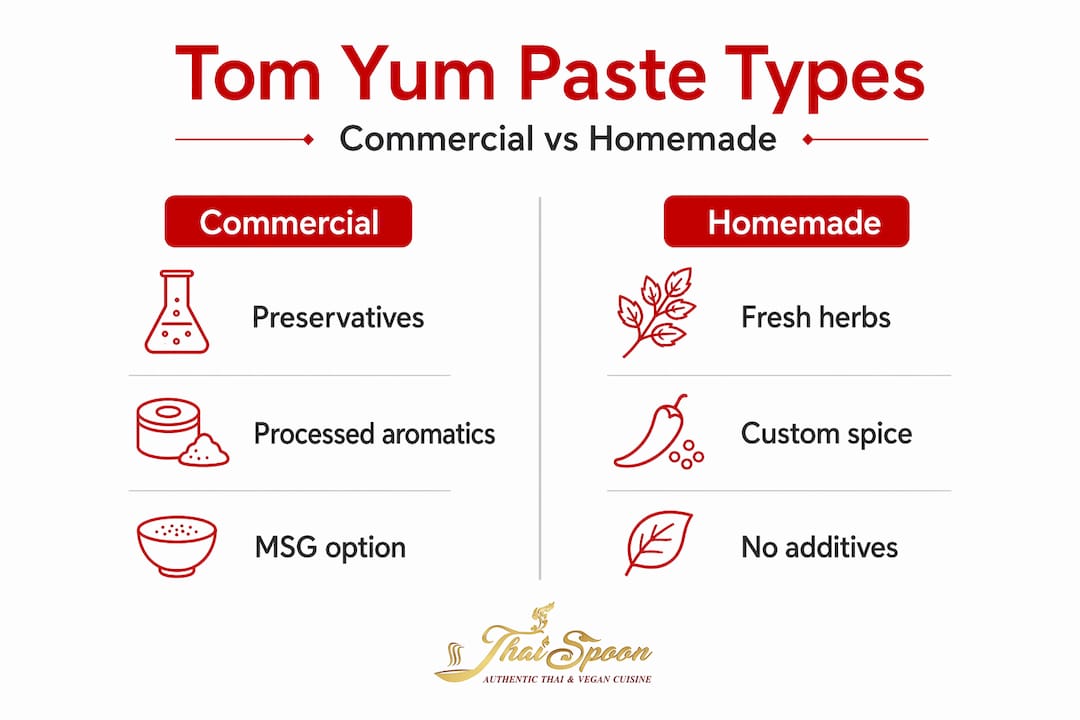
Commercial tom yum paste from well-known brands commonly features a full set of aromatics including lemongrass, galangal, kaffir lime peel or leaves, and garlic, plus souring and savory elements like tamarind and fish sauce, though exact formulations vary widely by brand.
Some commercial versions, particularly those marketed for lighter or cleaner labels, keep the ingredient list shorter while still hitting all the essential notes: lemongrass, dried red chilies, tamarind juice, lime juice, garlic, sugar, salt, shallot, kaffir lime, and galangal form a solid baseline.
Homemade versions follow a very similar aromatic foundation. A well-developed homemade tom yum paste recipe typically includes lemongrass, galangal, kaffir lime leaves, dried chilies, shallot, garlic, and tamarind paste, with fish sauce and sugar for seasoning balance.
The biggest practical difference is texture and freshness. Homemade paste uses whole or roughly chopped fresh ingredients blended into a coarse paste, which gives it a more vibrant aroma. Commercial paste is more refined in texture and engineered for longer shelf life, which sometimes means a slightly muted herb character. For a full breakdown of how these flavor layers interact in finished dishes, the tom yum sauce flavor guide goes into excellent detail.
If you’re stocking your kitchen to cook Thai food regularly, understanding which of these ingredients are essential versus optional is part of building a confident pantry. The essential Thai ingredients list is a great starting point for that.
What each ingredient brings to tom yum paste
Now, let’s see how each core ingredient shapes tom yum paste’s flavor. Knowing the function of each component makes you a more intuitive cook, because you can adjust and compensate when something is missing or when a particular brand leans too heavy in one direction.
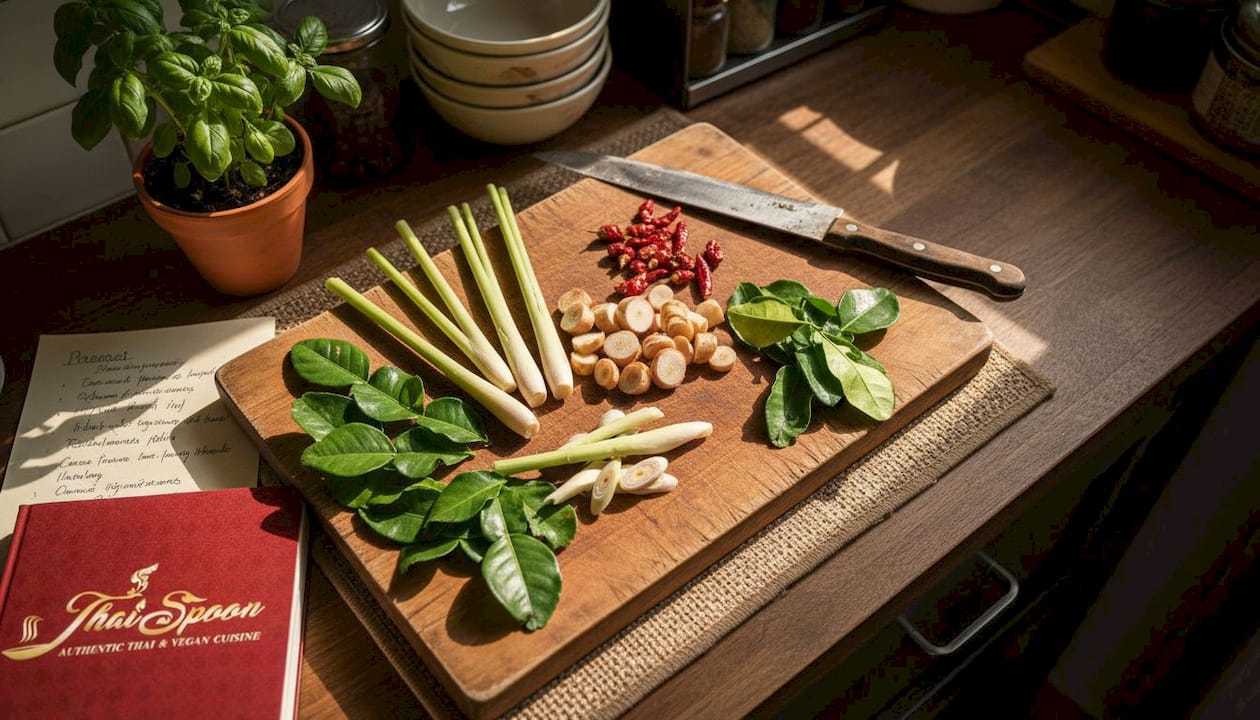
Ingredient | Primary role | Flavor note |
Lemongrass | Aroma and freshness | Citrusy, bright, slightly floral |
Galangal | Spice and depth | Piney, peppery, earthy |
Kaffir lime leaves/zest | Citrus and bitterness | Sharp, aromatic, slightly bitter |
Dried red chilies | Heat | Smoky, deep, spicy |
Tamarind | Sour balance | Tangy, fruity, sweet-sour |
Shallot | Savory base | Mild, sweet, oniony |
Garlic | Savory depth | Pungent, rich |
Fish sauce | Umami and salt | Briny, funky, savory |
Shrimp paste | Umami layer | Fermented, intensely savory |
Sugar | Balance | Sweetness that softens edges |
Lemongrass is the first thing you smell when you open a fresh jar of good tom yum paste. It contributes a clean citrus fragrance that signals the soup’s Thai identity immediately. Without it, the paste tastes flat and directionless.
Galangal is where people often get confused. It looks like ginger and is in the same botanical family, but it tastes completely different. Galangal carries a piney, slightly medicinal quality that reads as warmth rather than sharpness. It adds depth that ginger simply cannot replicate, which is why substituting one for the other is a common but costly mistake.
Kaffir lime contributes an intense, perfumed citrus note. The leaves are more aromatic than the zest, but both carry a slightly bitter edge that cuts through the richness of the broth. It’s an assertive ingredient, and a little goes a long way in a finished paste.
Dried chilies are not just heat delivery. When dried and toasted, they develop a deeper, slightly smoky character that fresh chilies don’t produce. That’s why tom yum paste has a more complex heat than something built purely from fresh peppers.
Tamarind handles the sourness in a way lime juice alone can’t. It has a fruity, slightly sweet tartness that lingers on the palate rather than cutting sharply and fading. Some brands use both tamarind and lime juice, and when balanced well, the two sour components create a more nuanced tang.
Fish sauce and shrimp paste are the umami backbone. They add salinity and fermented depth that makes everything else taste more complete. Recipes built on key aromatics like these depend on this layer for their savory foundation.
Pro Tip: If your tom yum paste smells overwhelmingly of shrimp paste when you open the jar, don’t panic. That fermented aroma mellows significantly during cooking and blends into the background, where it does its best work.
For more context on how these flavors interact in the bigger picture of Thai cooking, the complete tom yum guide is worth reading alongside this breakdown.
How to use tom yum paste: Practical kitchen tips
With ingredient roles clear, here’s how to best use tom yum paste in your cooking. The most important thing to understand is concentration. Tom yum paste is intensely flavored by design, and treating it like a mild seasoning will lead to over-salted, overpowered dishes quickly.
Step-by-step approach for soup:
Start with 1 tablespoon of paste per 2 cups of broth or water for a mild result.
Bring your liquid to a simmer before adding the paste to help it dissolve evenly.
Stir in the paste and taste the base before adding any proteins or vegetables.
Adjust with a small amount of fish sauce for salt, lime juice for brightness, or sugar if the sour note is too sharp.
Add fresh aromatics like lemongrass stalks, kaffir lime leaves, or galangal slices on top of the paste base to reinforce the herbal character.
Finish with fresh mushrooms, shrimp, or tofu, and taste again before serving.
Because tom yum paste is a concentrated blend engineered to deliver its full hot-spicy, sour-herbal profile in a small volume, brands vary in how intensely they’re seasoned. Some pastes are aggressively salty, others lean spicier, and a few are noticeably milder overall.
Always taste your paste on a small spoon before you start cooking. That 30-second test tells you more about how to adjust the dish than any recipe note ever could.
Beyond soup, tom yum paste works in several other cooking applications. As a marinade, mix 1 to 2 tablespoons with coconut milk and a splash of lime juice, then use it on chicken, shrimp, or firm tofu before grilling or roasting. As a stir-fry base, a teaspoon tossed into hot oil before adding vegetables creates an aromatic coating that transforms simple ingredients.
For noodle dishes, tom yum noodle recipes use the paste as a broth base rather than a sauce, but thinner rice noodles absorb the flavor in ways that make every bite taste deliberate. As a salad dressing base, whisk a small amount with rice vinegar, oil, and a touch of honey for a punchy Thai-style dressing that works on slaws and grain bowls.
Pro Tip: If you’re new to a particular brand of tom yum paste, check the ingredients for MSG and shrimp content before serving guests with dietary restrictions. For more context on how this paste compares to related Thai condiments, the Thai chili paste guide draws clear distinctions between paste types.
The surprising versatility and pitfalls of tom yum paste
Here’s an honest perspective: most home cooks in Western kitchens treat tom yum paste like a one-trick ingredient. They buy a jar, make soup once, and then let it sit in the back of the fridge until it expires. That’s a genuine waste of a genuinely powerful ingredient.
The paste’s aromatic profile, citrusy, spicy, sour, and herbal, adapts well to contexts far outside soup. We’ve seen home cooks use it as a base for spicy Thai dishes that never touch a bowl of broth. It works as a flavor layer in fried rice, as a spread under protein before roasting, and as a punchy addition to compound butters.
The real pitfall, though, is not underusing it. It’s the opposite: adding too much too fast and losing the balance that makes the paste great in the first place. Tom yum paste’s power comes from the tension between its sour, spicy, and herbal notes. When you overload a dish with it, that tension collapses into one overwhelming, murky flavor. The herb character disappears first, then the sourness turns harsh, and you’re left with something that tastes like seasoned chili heat rather than Thai aromatics.
The second pitfall is assuming all tom yum pastes perform the same way. They don’t. Brand formulations differ dramatically in salt level, spice intensity, and souring approach. Using the same measurement from one brand to the next without tasting first is a reliable way to ruin a dish. Respect the paste. Taste it first. Add in stages. That discipline is what separates competent Thai home cooking from truly satisfying results.
Experience authentic tom yum and Thai flavors
Knowing exactly what goes into tom yum paste is one thing. Tasting it executed by people who have been working with these ingredients for years is another experience entirely.
[
At Thai Spoon Las Vegas, the kitchen builds flavor from the ground up, using authentic ingredients and time-tested methods to produce dishes that reflect how Thai food is actually meant to taste. Whether you’re curious about how tom yum comes together in a real kitchen or you want to explore the full range of what Thai cuisine offers, the Thai Spoon menu is a great place to start. Planning a larger event or a catered meal? Thai catering in Las Vegas brings that same quality to gatherings of any size, right here in the northwest Las Vegas community.
Frequently asked questions
Is tom yum paste spicy or sour?
Tom yum paste is both spicy and sour, achieved through dried chilies for heat and souring agents like tamarind and lime for tanginess, with the balance varying by brand.
Can I use tom yum paste for dishes other than soup?
Yes, tom yum paste works well in marinades, stir-fries, noodle dishes, and dressings because its concentrated hot-spicy and herbal profile adapts easily to many cooking methods.
What’s the difference between commercial and homemade tom yum paste?
Commercial pastes typically include preservatives and may contain MSG for shelf stability, while homemade versions prioritize fresh herbs and allow for more direct control over salt and spice levels.
Does tom yum paste contain fish sauce or shrimp paste?
Most versions do include fish sauce or shrimp paste for umami depth, but formulations vary by brand, and some producers offer vegetarian alternatives without these ingredients.
Recommended
Comments