


What Is a Thai Banquet? Traditions, Menus and Tips
TL;DR:
A Thai banquet can be a traditional Khantok dinner emphasizing communal floor seating or a modern, seated event served family-style with set menus. Both formats highlight sharing and balance in flavors but differ in setup, etiquette, and cultural depth. Planning involves choosing the experience type, confirming guest counts, selecting appropriate dishes, and coordinating entertainment and seating arrangements to ensure a memorable celebration.
If you’ve been asked to plan a Thai banquet and aren’t quite sure what that means, you’re not alone. The phrase “what is a Thai banquet” captures two genuinely different dining experiences: the ancient Northern Thai communal meal known as a Khantok dinner, and the modern event-style banquet that Thai restaurants and caterers offer today. Both formats share the spirit of generous, shared food, but they differ in setup, etiquette, and cultural depth. This guide breaks down both versions so you can decide what fits your event and plan it with confidence.
Table of Contents
Key takeaways
Point | Details |
Two distinct formats exist | A Thai banquet can mean a traditional Khantok dinner or a modern event-catering banquet. |
Khantok is rooted in Lanna culture | This Northern Thai format features floor seating, shared trays, sticky rice, and cultural performances. |
Modern banquets follow event pricing | Expect per-person pricing and minimum guest counts at most restaurant and catering venues. |
Flavor balance defines the menu | Thai banquet dishes combine sweet, sour, salty, hot, and bitter notes across multiple shared plates. |
Planning decisions matter early | Choosing your format upfront shapes every other decision, from seating to menu to entertainment. |
What is a Thai banquet, exactly?
The word “banquet” in Western contexts usually means a formal, multi-course sit-down dinner. A Thai banquet, particularly in its traditional form, is something quite different. The formal term most closely associated with the authentic Thai banquet experience is the Khantok dinner, and it comes from the Lanna Kingdom of Northern Thailand, centered in Chiang Mai.
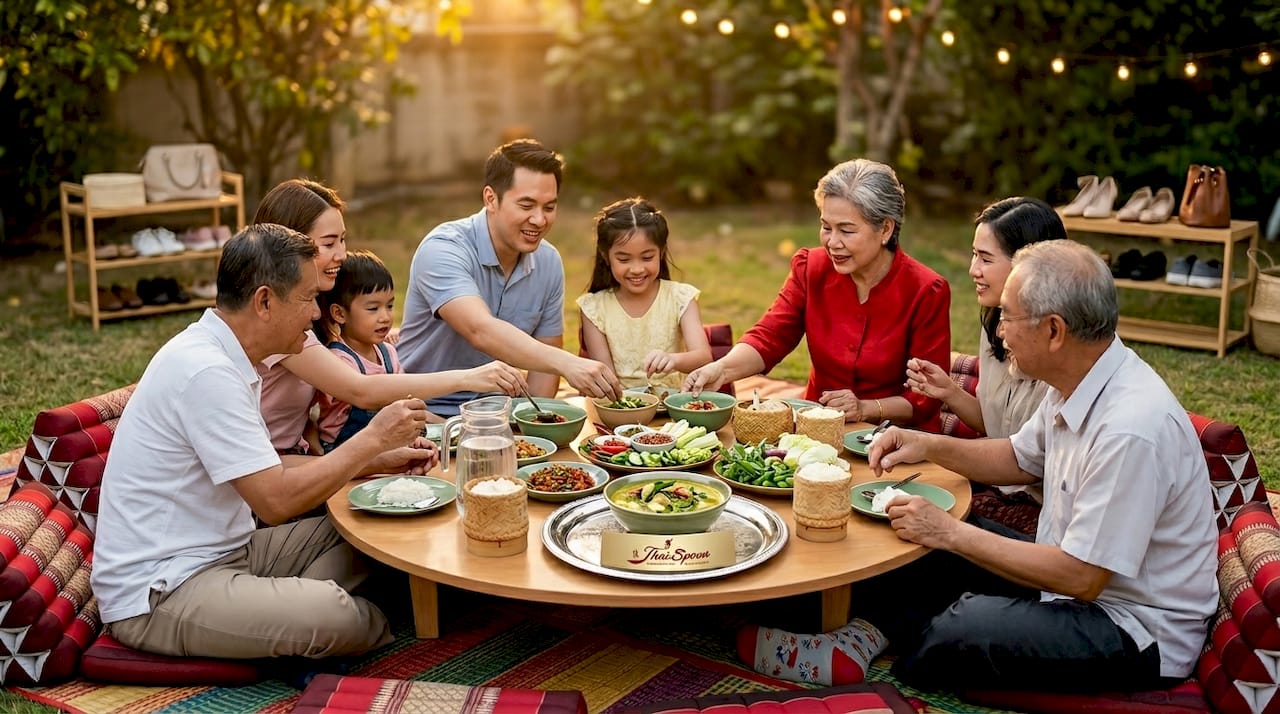
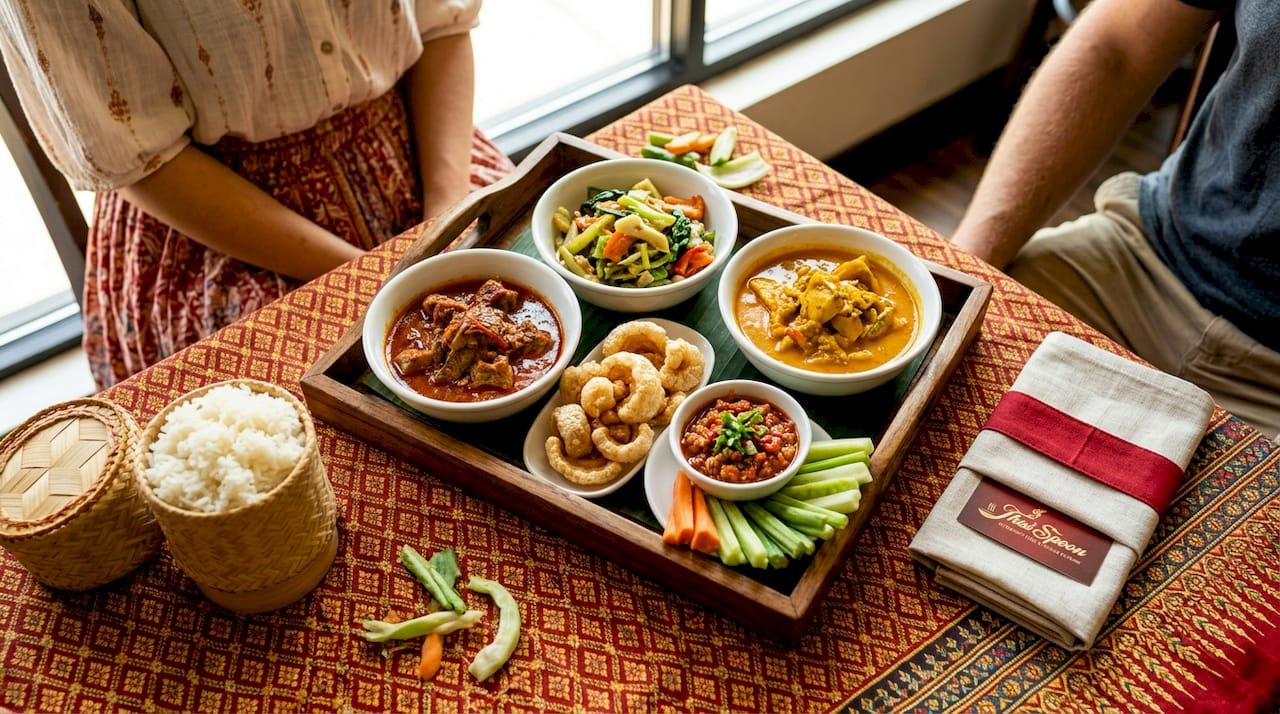
According to food historians, Khantok refers to the small, circular pedestal tray that acts as the dining table itself. Diners sit on the floor around this tray, sharing small dishes arranged in bowls with dipping sauces at the center. The tray’s circular, elevated design is not just aesthetic. It physically pulls everyone close, encourages sharing, and creates an intimacy that a standard banquet table simply cannot replicate.
When Thai restaurants or catering companies today advertise a “Thai banquet,” they’re often referencing a modern adaptation: a group dining package with set per-person pricing and shared dishes served family style. The cultural origin may be Khantok, but the execution has been adapted for event halls, corporate dinners, and private parties. Knowing which version you want is the first decision you need to make.
The traditional Khantok dinner experience
The Khantok dinner is more than a meal. It’s a deliberate cultural experience that reflects the Lanna spirit, which values slow, communal engagement over speed and individual service.
Setting and seating customs
Guests remove their shoes before entering the dining space and sit on cushions or woven mats on the floor. Low seating on carpeted floors is customary, and it signals respect for the ritual nature of the meal. If you’ve never sat cross-legged for an extended dinner, that’s worth knowing before you commit to a full Khantok experience for a group with mobility considerations.
The Khantok tray sits at the center of each small group of diners. Bowls of curries, stir-fried vegetables, pork rinds, dipping sauces, and other small dishes are arranged on it. No one has their own plate of food. Everything is communal.
Eating with sticky rice
One of the most tactile and memorable parts of a Khantok dinner is how the sticky rice is eaten. Diners form small rice balls by hand and use them to scoop up or dip into the surrounding dishes. It sounds casual, but there’s real etiquette involved. You use your right hand, you keep movements deliberate, and you don’t overload your rice ball. Getting this right shows cultural awareness and genuine respect for the tradition.
Music, dance, and dining pace
A proper Khantok dinner includes traditional Northern Thai dance and classical music performances, typically live. Meals are synchronized with the entertainment rather than delivered in continuous waves. The pacing is intentional. You eat, you watch, you return to conversation, you eat again. This rhythm is what separates a Khantok dinner from simply eating Thai food on the floor.
Pro Tip: If you’re hosting a Khantok-style event for a group, confirm that all guests can comfortably sit on floor cushions for one to two hours. Having a small number of low chairs available for guests who need them avoids any awkward situations on the night.
Key customs to observe during a Khantok dinner:
Remove footwear before entering the dining area
Sit with legs to the side or cross-legged, never pointing feet toward the food tray or other guests
Use your right hand to handle sticky rice
Allow elders or guests of honor to begin eating first
Eat slowly and engage in conversation between courses
Modern Thai banquets in event settings
Today, Thai banquet catering has adapted significantly for Western event contexts. Restaurants and catering companies package Thai group dining as banquet menus with flat per-person pricing and minimum party size requirements. A 2026 hotel banquet menu, for example, offered set pricing at around $55 per person with a minimum of four guests.
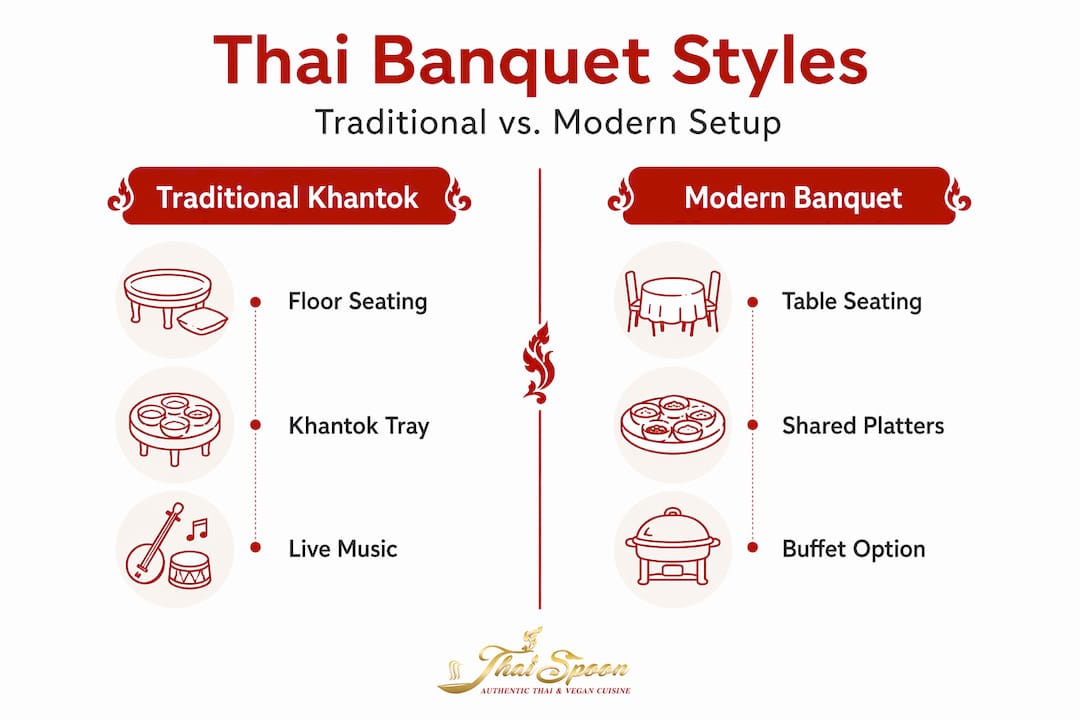
How the format differs from Khantok
Feature | Traditional Khantok | Modern Thai Banquet |
Seating | Floor cushions and woven mats | Tables and chairs |
Service style | Communal tray shared by small groups | Shared dishes or plated courses per table |
Cultural elements | Live dance and classical music | Optional, often recorded music |
Eating method | Sticky rice formed by hand | Utensils, often with rice served separately |
Pricing | Experience-based, often venue-specific | Per-person set menu with minimum guest count |
Pacing | Slow, synchronized with entertainment | Managed by event schedule or restaurant service |
Modern Thai banquet menus are designed for practicality without losing the spirit of communal sharing. Dishes still arrive at the table together or in waves, guests serve themselves, and the range of flavors covers the full Thai spectrum. The group dining setup eliminates the guesswork of individual ordering and is far better suited for celebrating birthdays, corporate events, or family reunions.
Pro Tip: When booking a modern Thai banquet, ask whether the per-person price includes dessert and beverages, or if those are separate. Many venues build in a specific number of dishes per table, and groups sometimes order assuming coverage that isn’t there.
Typical dishes on a Thai banquet menu
Whether you’re planning a Khantok-style event or a modern catered dinner, the food at the heart of a Thai banquet follows the same foundational logic: balance. Thai banquet menus typically feature a balance of sweet, hot, sour, salty, and bitter flavors spread across multiple small shared dishes.
You’ll typically find some combination of:
Curries: Yellow curry, green curry, and Massaman curry are crowd favorites, each with distinct heat levels
Stir-fried dishes: Pad Thai, basil chicken (Pad Krapow), and fried rice provide familiar anchors on the menu
Salads: Green papaya salad (Som Tum) and larb bring acidity and freshness to balance richer dishes
Soups: Tom Kha Gai (coconut galangal soup) and Tom Yum Goong (spicy shrimp soup) are classic starters
Appetizers: Spring rolls, satay skewers, and fish cakes serve as sharing starters
Sticky rice or jasmine rice: The base that ties everything together
Presentation matters at a Thai banquet. Dishes arrive in bowls rather than on individual plates, placed in the center for everyone to access. The visual abundance of multiple dishes on the table is part of the experience. It signals generosity, which is core to Thai hospitality.
For groups with dietary restrictions, most Thai banquet menus can accommodate vegan and gluten-free requests with advance notice. Dishes built on coconut milk, fresh vegetables, and rice noodles adapt well. The key is communicating those needs when you book, not on the night.
How to plan and host a Thai banquet
Planning a Thai banquet well comes down to making decisions in the right order. Start with format, then build everything else around it.
Choose your format first. Decide whether you want an authentic Khantok experience with floor seating and performances, or a modern banquet-style dinner at a restaurant or via catering. This decision shapes your venue, your seating plan, and your entertainment needs. Clarifying which type of experience you want before planning seating and menu aligns expectations from the start.
Lock in your guest count early. Most Thai banquet catering packages have minimum group sizes that affect pricing and dish quantity. Get a confirmed headcount before reaching out to venues or caterers.
Sort out your seating plan. For Khantok-style events, map out floor seating areas and confirm accessibility for all guests. For event-style banquets, coordinate with the venue on table arrangement and group placement. Large-party Thai restaurant reservations benefit from confirmed layouts sent in advance.
Select your menu with range in mind. Pick dishes that cover heat levels from mild to spicy so every guest has options. Include at least one vegetarian option per course. Work through a structured Thai catering checklist to avoid missing critical details.
Plan your cultural elements. If you’re incorporating traditional Thai music or dance, coordinate timing carefully. Event-style Thai banquets require synchronized food service with entertainment, which means planned timing rather than continuous service. Discuss this sequence with your caterer well before the event date.
Brief your guests on etiquette. First-time guests often feel uncertain about how to eat at a Thai banquet, especially in Khantok settings. A short, friendly note in your invitation about floor seating, communal dishes, and the tradition of sharing goes a long way toward making everyone comfortable.
Pro Tip: Order one to two extra dishes beyond what the per-person formula suggests. Thai banquets work best when the table looks abundant. Running low on one dish while others sit untouched creates awkward moments that a small buffer prevents.
My honest take on Thai banquets
I’ve seen a lot of event planners treat a Thai banquet as a simple upgrade from a standard catered dinner. It isn’t. When it’s done right, it changes how people interact with each other.
What strikes me most about Khantok dining specifically is how the format forces connection. You can’t eat without leaning in. You can’t serve yourself without noticing what your neighbor is choosing. That shared tray makes strangers feel like family faster than almost any other dining format I know.
Modern Thai banquets don’t quite replicate that physical closeness, but the best ones carry the same spirit through generous portions, layered flavors, and dishes that demand conversation. “What’s in this?” and “Have you tried that?” are sentences that don’t happen at a plated dinner for one.
What I’ve noticed most first-time hosts overlook is pacing. Thai food is meant to be eaten slowly and returned to repeatedly. When hosts rush the table to stay on schedule, the food gets cold, the experience flattens, and guests leave full but somehow unsatisfied. Build extra time into your event. The meal should breathe.
My other strong opinion: skip the fusion compromises. If you’re paying for authentic Thai catering, ask for authentic dishes. The Americanized versions of Thai dishes might feel safer for mixed groups, but they miss the point entirely. Trust the cuisine. Guests who’ve never had real Tom Yum Goong or properly sour Som Tum always appreciate being introduced to the real thing.
— Thai
Bring authentic Thai catering to your next event
If you’re ready to plan a Thai banquet in Las Vegas, Thaispoonlasvegas makes it straightforward. Whether you’re hosting a birthday dinner, a corporate gathering, or a large family celebration, the team at Thai Spoon Las Vegas offers Thai catering services built for groups of all sizes.
[
From Pad Thai and Yellow Curry to Steak Fried Rice and vegan-friendly dishes, the full banquet menu covers the range you need to satisfy a crowd. Located in northwest Las Vegas and just 20 minutes from the Strip, Thai Spoon serves both pickup and delivery for events, with customized catering packages designed around your headcount and preferences. Reach out before your event to discuss menu selection, dietary accommodations, and group pricing. Authentic Thai food for your gathering is closer and more affordable than most people expect.
FAQ
What does “Khantok” mean in Thai dining?
Khantok refers to the small circular pedestal tray used as a communal dining table in Northern Thai Lanna tradition, where guests sit on the floor and share dishes placed on the tray.
What dishes are typically served at a Thai banquet?
A Thai banquet menu usually includes curries, Pad Thai, fried rice, papaya salad, soups like Tom Yum, spring rolls, satay, and sticky rice, served in shared portions across the table.
How much does a Thai banquet cost per person?
Pricing varies by venue and menu, but modern Thai banquet packages commonly start around $40 to $60 per person with minimum guest size requirements, typically four guests or more.
Do Thai banquets require guests to sit on the floor?
Only traditional Khantok-style Thai banquets involve floor seating on cushions or mats. Modern event-style Thai banquets use standard tables and chairs, making them accessible to all guests.
How do you accommodate dietary restrictions at a Thai banquet?
Most Thai banquet menus can be adjusted for vegan, vegetarian, and gluten-free guests when requests are communicated to the caterer or restaurant at the time of booking, not on the event day.
Recommended
Comments