


What Is a Thai Chef's Table: a Diner's Guide
TL;DR:
A true Thai chef’s table offers an immersive experience with kitchen proximity, personalized multi-course menus, and direct chef interaction. It emphasizes real-time narration, theatrical service, and understanding Thai cooking techniques, unlike simply premium seating. Planning ahead, confirming seating and chef involvement, and engaging actively enhance the authentic and educational nature of this memorable dining format.
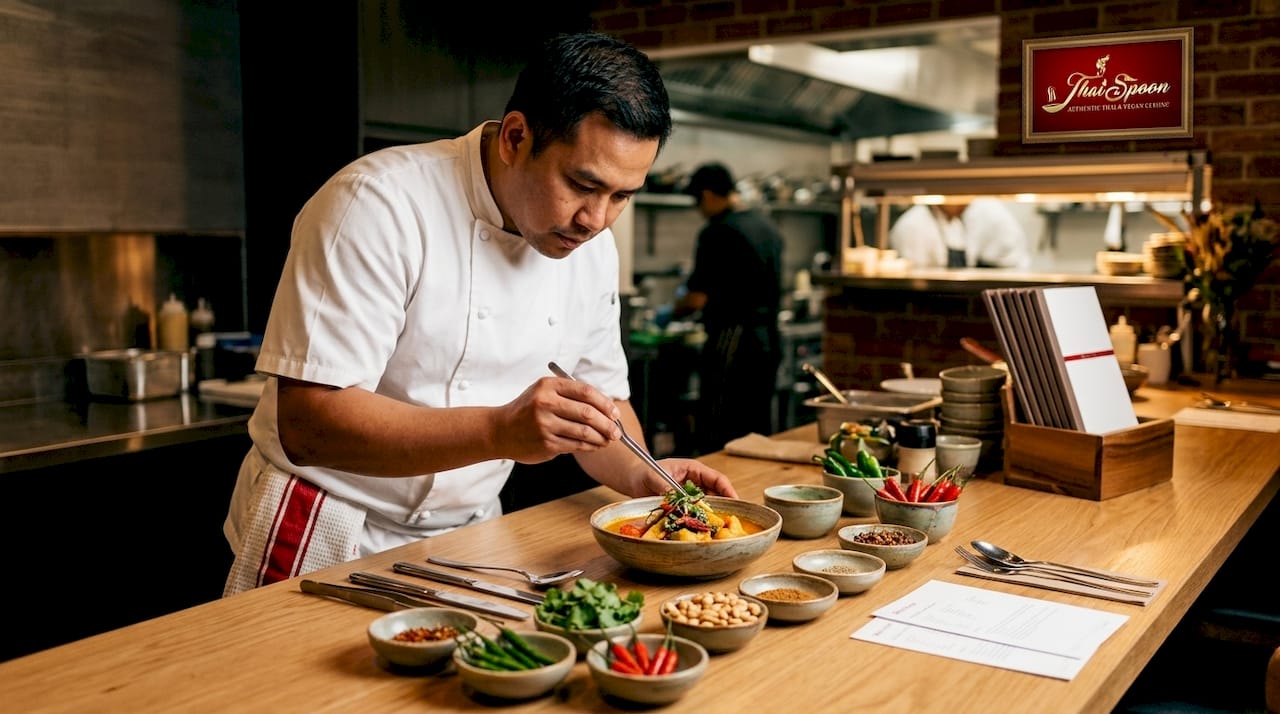
Most people who book a “chef’s table” at a Thai restaurant are expecting a special seat with a great view. What they actually get at a true Thai chef’s table is something far more immersive. What is a Thai chef’s table, exactly? It is a dedicated dining format, formally known as chef’s table cuisine, where a small group of guests sits inside or directly adjacent to the working kitchen, follows a custom multi-course tasting menu, and receives real-time narration and theatrical service from the chef or senior kitchen team. It is performance and education and meal, all at once.
Key takeaways
Point | Details |
Not just premium seating | A real chef’s table requires direct chef interaction and kitchen proximity, not just a nice table. |
Custom tasting menus | Expect a multi-course prix-fixe format specifically curated for the evening, not a standard menu. |
Book well in advance | Limited seating and custom preparation mean last-minute reservations are rarely possible. |
Verify before you book | Ask about seating location and chef interaction to confirm the experience is authentic. |
Dietary needs need advance notice | Fixed menus limit flexibility, so communicate restrictions when you make your reservation. |
What a Thai chef’s table really means
The phrase gets applied loosely across the restaurant industry, which is exactly where confusion starts. A true chef’s table experience, whether Thai or otherwise, is defined by kitchen proximity and direct chef interaction with a custom menu. It is not a corner booth labeled “chef’s table” to justify a premium price.
Here is what separates the real thing from a marketing label:
Kitchen seating: Guests sit at a counter or table physically inside the working kitchen or separated by no more than a low partition. This is the defining physical characteristic.
Dedicated group size: Typically 2 to 12 guests share the experience per seating. Larger groups dilute the interaction that makes the format worthwhile.
Custom multi-course menu: The chef designs a prix-fixe tasting menu specifically for that evening or for your party, not a pulled-from-the-standard-menu selection.
Real-time narration: The chef or a senior team member explains each course as it is plated, covering ingredients, techniques, and the reasoning behind flavor choices.
Theatrical service: Ingredient showcases, live plating, and course-by-course commentary are standard features, not special additions.
Many restaurants misuse the label, offering premium seating with no genuine interaction or customization. Those venues are selling ambiance. A real Thai chef’s table sells access.
Pro Tip: Before booking, ask two specific questions: “Where exactly is the table located relative to the kitchen?” and “Will the chef personally present and explain courses?” If the answers are vague, you are looking at branding, not a true experience.
Why Thai cuisine makes the chef’s table format exceptional
Thai food is not built for speed. It is built for balance, and that balance depends on timing, layering, and the exact moment an ingredient hits heat.
“Timing and control of flavor progression is a structural hallmark in Thai cuisine, making chef’s table proximity especially valuable.” Sorn, a Southern Thailand voyage
When you are seated at the counter and watching a chef build a curry paste from scratch before your eyes, you understand something about that dish that no menu description can convey. The flavor timing and culinary choreography that define Thai cooking become visible. That is the educational core of the experience.
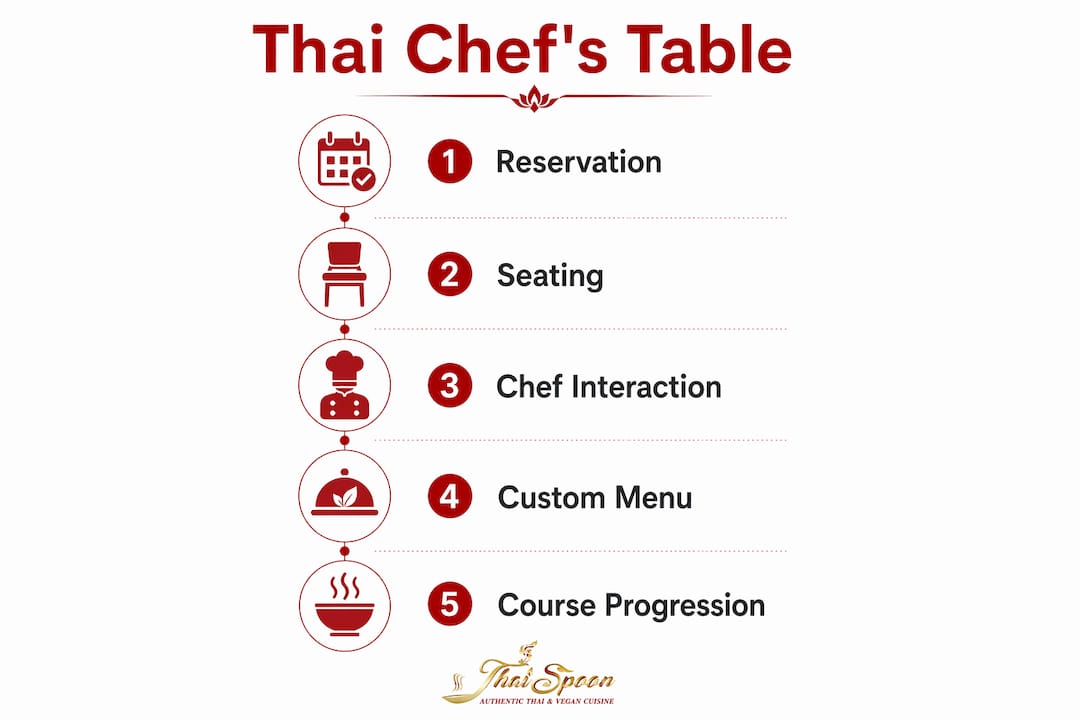
Here is how a well-structured Thai chef’s table typically flows through its courses to reflect authentic Thai meal structure:
Amuse-bouche or welcome bite: A single-bite introduction to the chef’s flavor philosophy, often featuring a prominent Thai aromatic like lemongrass, galangal, or kaffir lime.
Starter courses (two to three): Light dishes that build from delicate to more assertive flavors, showcasing raw technique and ingredient quality.
Soup or intermezzo course: A palate reset, often a clear broth or a small bowl of something gently spiced to prepare the palate for the heart of the meal.
Main courses (two to three): The most complex dishes. This is where Thai flavor balancing, the simultaneous presence of sweet, sour, salty, spicy, and sometimes bitter, is most apparent.
Dessert: Thai desserts often feature coconut milk, palm sugar, and pandan, providing a gentle close after the intensity of the savory courses.
The progression mirrors the concept of a Thai food tasting workflow, where each course builds on the last rather than standing alone. Watching a chef execute this live, explaining each decision, is what transforms a meal into something you genuinely learn from.
What to expect: menus, pricing, and logistics
Understanding the practical side of a Thai chef’s table helps you go in with the right expectations and no unpleasant surprises.
Menu format
Most Thai chef’s table experiences run six courses or more. Dusit Thani Pattaya, for example, offers a six-course chef’s table event complete with international wine pairings and intimate chef interaction. Six courses sounds like a lot, but portions are designed for progression, not fullness, so pacing feels comfortable over two to three hours.
Pricing
The per-person pricing at chef’s tables reflects the personal chef engagement, the limited seating, and the event-driven nature of the experience. Dusit Thani Pattaya prices their chef’s table at THB 2,940 net per person, with member discounts available at select venues. Expect to pay significantly more than you would for a standard Thai restaurant meal, and understand that the premium covers far more than food.
Component | Standard Thai restaurant | Thai chef’s table |
Menu type | À la carte | Custom prix-fixe tasting menu |
Chef interaction | None or minimal | Direct, course-by-course narration |
Seating location | Dining room | Inside or adjacent to kitchen |
Group size | Varies | 2 to 12 guests |
Advance booking | Optional | Required, often weeks ahead |
Dietary flexibility | High | Limited due to fixed menu |
Average duration | 45 to 90 minutes | 2 to 3 hours |
Reservations and seating
Chef’s table experiences require advance reservations by their nature. The kitchen must prepare a custom menu, stock specific ingredients, and schedule senior staff accordingly. Walk-ins are not a realistic option.
Dietary accommodations
Because the menu is fixed, last-minute dietary changes are far less flexible than at a standard restaurant. If you have allergies or restrictions, communicate them at the time of booking, not on the night.
Pro Tip: Ask the venue whether the chef’s table is a permanent fixture or an event-based program. Permanent kitchen counter seating generally delivers more consistent interaction. Event-based formats vary in quality depending on the chef present that evening.
How to choose and prepare for the right experience
Not every venue that uses the term “chef’s table” earns it. Here is how to evaluate whether a booking is worth your time and money.
Ask about seating location specifically. Seating proximity to the kitchen is the single biggest factor in experience quality. A private dining room in the back of the restaurant is not a chef’s table in any meaningful sense.
Confirm who will be interacting with you. Is it the head chef? A sous chef? A server reading from notes? The answer tells you a great deal about the experience level you are buying.
Review the menu format. A curated multi-course tasting menu signals a real program. A standard menu with “special” items added does not.
Check the group size limit. Intimate groups of six or fewer typically yield far richer interaction than groups of ten or twelve. Smaller means more access.
Communicate dietary needs immediately. Do not wait for a confirmation email. Call or message the moment you book.
Once you are there, engage actively. Ask about the Thai seasonings and ingredients being used. Ask why a dish is plated a certain way. The chefs running these experiences are teachers as much as cooks, and the best chef’s table evenings are conversations, not performances you sit through silently.
Chef’s table vs. other Thai dining formats
Understanding how the chef’s table compares to other formats clarifies exactly what you are signing up for.
Chef’s table terminology varies globally, and the term has been applied to everything from a three-Michelin-star counter experience to a reserved booth with a slightly better view. That inconsistency makes comparison essential.
Standard fine dining and tasting menus without a chef’s table component are still exceptional experiences. But the separation between kitchen and dining room means you receive the finished product without any insight into how it was made. You taste the dish. At a chef’s table, you understand it.
A chef’s table dining format functions like a curated performance where the kitchen choreography is the centerpiece. In Thai cuisine specifically, where a single dish might require three distinct cooking techniques and a carefully sequenced addition of aromatics, seeing that process live changes how the flavors register when you eat.
Standard Thai restaurant dining is wonderful for exactly what it is: approachable, flavorful, and social. A chef’s table adds a layer of intention and intimacy that transforms a meal into a memory. The comparison is not about quality. It is about what kind of experience you want to have.
My honest take on what makes or breaks the experience
I have watched a lot of diners leave a so-called chef’s table feeling mildly underwhelmed, and I think I know why. They focused entirely on the food and missed the conversation.
The food at a true Thai chef’s table is almost always exceptional. But the food is not the point. The point is proximity. When you are seated close enough to hear the wok, smell the aromatics hit the oil, and watch the chef make a real-time decision about seasoning, you are inside the process. That is something that cannot be replicated by any beautifully written menu description.
What I have found is that diners who ask questions during the meal consistently report more satisfying experiences than those who sit back quietly. Ask about the origin of an ingredient. Ask why galangal is used instead of ginger in a particular dish. The chef’s answer will change how you taste everything that follows.
The harder challenge is finding venues that deliver a genuine experience rather than a premium price tag attached to a comfortable chair. My advice: trust specificity. A venue that can tell you exactly where the table sits, exactly who will be presenting your food, and exactly what the menu format will be is a venue that has thought seriously about the experience they are offering.
— Thai
Experience authentic Thai dining at Thai Spoon Las Vegas
If the concept of an immersive, chef-led Thai dining experience sounds like exactly what you have been looking for, Thaispoonlasvegas brings that level of care and culinary intention to every meal they serve in the northwest Las Vegas area.
[
From their meticulously crafted full menu of authentic Thai dishes to their private catering and event services, Thaispoonlasvegas offers the kind of food-first experience that captures the spirit behind chef’s table cuisine. Whether you are planning a large gathering or exploring Thai flavors for the first time, their catering and private event services can be shaped into a curated Thai culinary event for your group. Thaispoonlasvegas is approximately 20 minutes from the Strip, well away from the tourist crowds, which means the focus stays where it belongs: on the food.
FAQ
What is a Thai chef’s table?
A Thai chef’s table is a dedicated dining format where a small group of guests sits inside or adjacent to a working kitchen and follows a custom multi-course tasting menu with direct narration and interaction from the chef.
How many people can sit at a chef’s table?
Most chef’s table seatings accommodate 2 to 12 guests, with smaller groups of six or fewer typically yielding the most personal interaction with the chef.
How much does a Thai chef’s table cost?
Pricing varies by venue, but structured experiences like the Dusit Thani Pattaya chef’s table are priced at THB 2,940 net per person, reflecting the custom menu, limited seating, and personal chef engagement.
Do I need to reserve a chef’s table in advance?
Yes. Chef’s table experiences require advance reservations because the kitchen must prepare a fully custom menu and schedule dedicated senior staff for your group.
Can I request dietary accommodations at a chef’s table?
You can, but the fixed menu format means last-minute dietary changes are far less flexible than at a standard restaurant. Always communicate restrictions at the time of booking.
Recommended
Comments