


What Is Spicy Thai Salad: Flavors and Ingredients
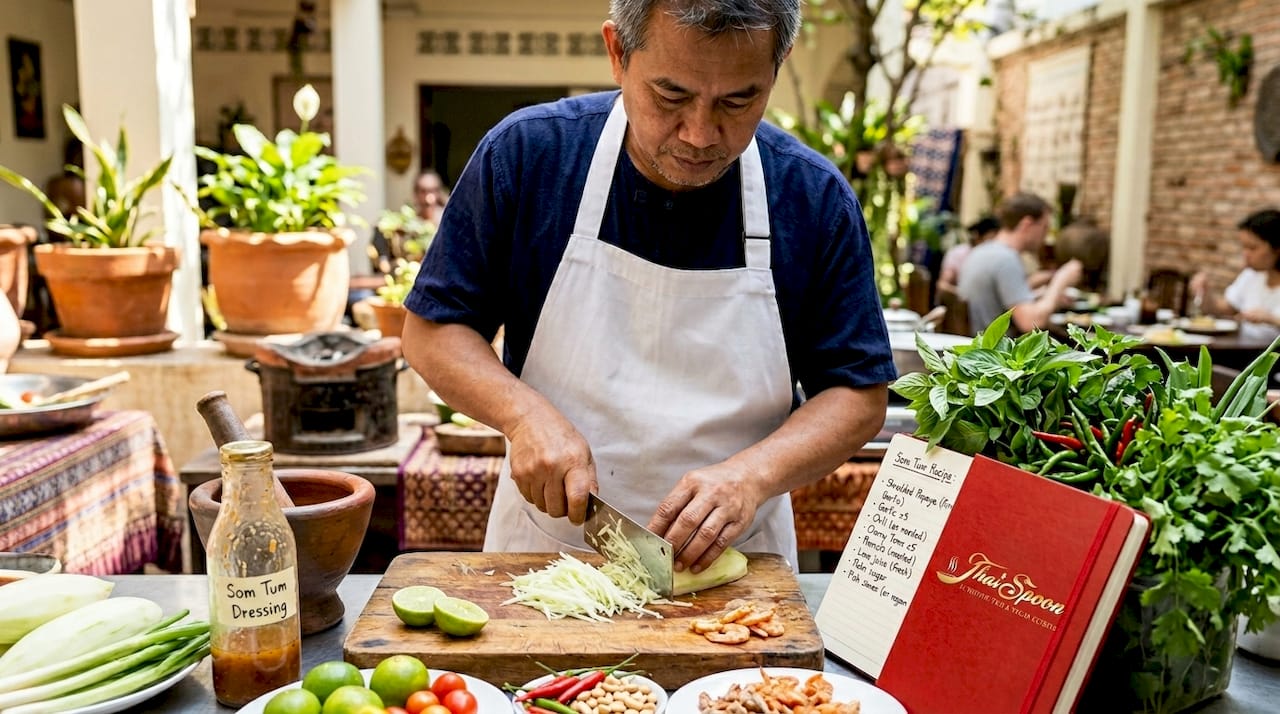
TL;DR:
Spicy Thai salad relies on a delicate balance of sweet, sour, salty, and spicy flavors to create harmony. Fresh herbs, high-quality ingredients, and proper dressing preparation are essential for authentic taste. Controlling heat and patience in flavor adjustments are key to making and enjoying this complex dish.
Most people assume spicy Thai salad is just vegetables tossed with hot chili sauce. That assumption misses almost everything that makes it worth eating. A spicy Thai salad is a precisely balanced dish where sweet, sour, salty, and spicy work together so well that removing any single element throws off the whole thing. Understanding what is spicy Thai salad means understanding that balance, and once you do, a whole category of incredible Thai cooking opens up to you.
Table of Contents
Key takeaways
Point | Details |
Balance defines the dish | Spicy Thai salad is built on four flavors working together: sweet, sour, salty, and spicy. |
Fresh ingredients matter most | Herbs like cilantro, mint, and basil are not garnish. They are core to the flavor. |
Heat is adjustable | Removing seeds from bird’s eye chilies can cut heat intensity significantly without losing aroma. |
Multiple varieties exist | Som Tum, Larb, and Mango Salad each use different bases but share the same flavor logic. |
Dressing must be made fresh | Pre-made dressings flatten the flavor profile that makes Thai salads stand out. |
What is spicy Thai salad, really
Spicy Thai salad is a category of Thai dishes that centers on raw or briefly prepared ingredients dressed in a bold, multi-layered sauce. The dish does not rely on a single dominating flavor. Instead, it asks every ingredient to play a specific role, and the result is something that tastes simultaneously bright, rich, hot, and refreshing.
The foundation of this style of cooking goes back centuries in Thai culinary tradition, where food was never about one note. Thai cooks treat a salad the way a musician treats a chord. Each ingredient adds its frequency, and the goal is harmony, not volume. That philosophy is why spicy Thai salads taste so different from Western salads dressed with vinaigrette.
The signature sweet-sour-spicy-salty profile sets Thai salads apart from any other salad tradition. You will not find a Thai salad that is only about crunch, or only about greens. Every component earns its place.
Core ingredients for spicy Thai salad
Getting the ingredients right is where most home cooks either nail it or fall short. The list is not long, but quality and freshness matter more here than in almost any other dish you will make.
The base vegetables and proteins:
Green papaya (for Som Tum), cucumber, or shredded cabbage form the textural backbone
Fresh herbs including cilantro, mint, and basil add aromatic depth that balances the heat
Proteins vary by salad type: minced pork, ground chicken, shrimp, or tofu for vegan versions
Cherry tomatoes and long beans appear in many versions, especially Som Tum
Green mango is common in mango salad varieties and adds a tart, almost citrusy crunch
The flavor builders:
Fish sauce provides the salty, umami backbone
Fresh lime juice delivers the sour brightness
Palm sugar adds a soft, caramel-like sweetness that white sugar cannot replicate
Bird’s eye chilies bring sharp heat with a floral edge
Beyond these, two texture ingredients define many spicy Thai salads. Crushed peanuts and toasted rice powder are what give dishes like Larb their distinctive crunch and nutty depth. Skipping them produces a flat, one-dimensional result.
Regional variations are real. In northeastern Thailand (Isaan), fermented fish sauce called pla ra replaces regular fish sauce in Som Tum, adding funk and complexity. In Bangkok, versions tend to be slightly sweeter and less funky, which is why the same salad name can taste completely different depending on where you eat it. If you want to learn more about essential Thai ingredients, it helps to understand how each one functions before you start cooking.
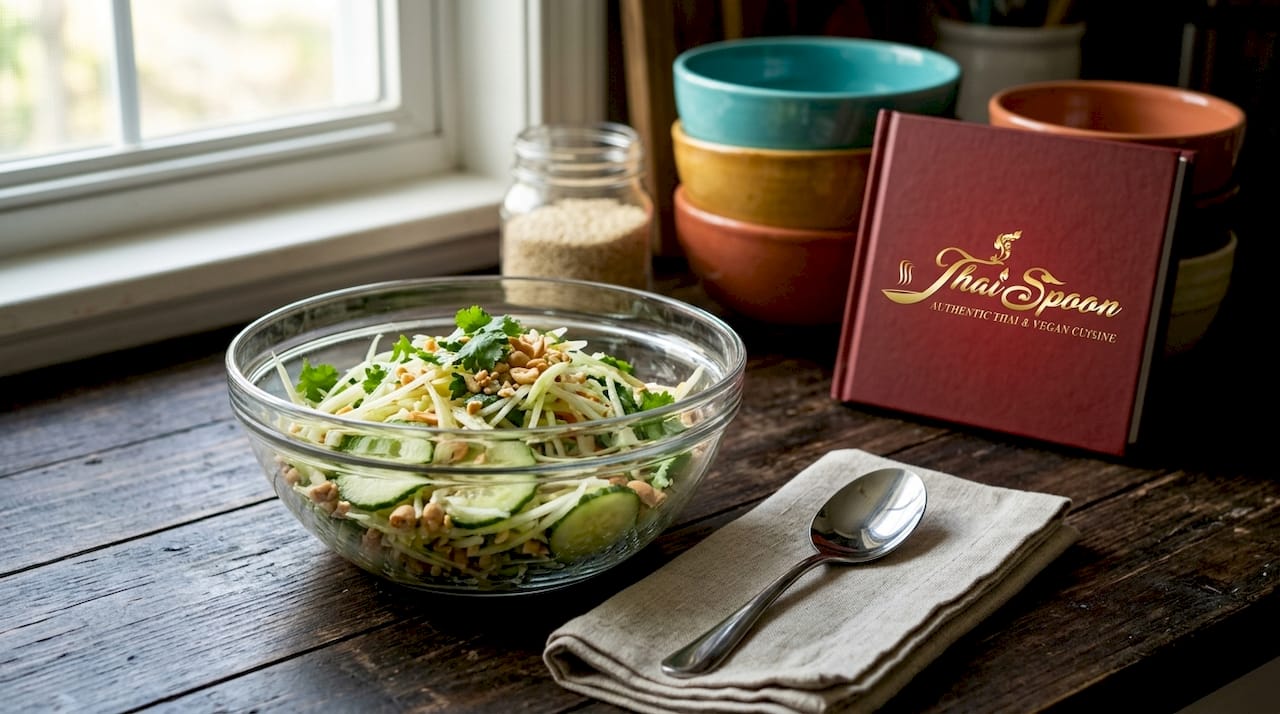
Pro Tip: Palm sugar dissolves slowly. Grate it or warm it briefly in the lime juice before mixing the dressing so it blends without leaving sweet pockets in the salad.
Understanding the flavor balance in Thai salads
The flavor logic behind spicy Thai salad is not complicated once you map it out. Each of the four tastes has a primary ingredient that delivers it, and adjusting any one of them shifts the whole dish.
Salty (fish sauce): Fish sauce is not just salt. It carries fermented umami that deepens every other flavor around it. Too little and the salad tastes flat. Too much and everything else disappears. Start with one tablespoon and adjust from there.
Sour (lime juice): Fresh lime juice is non-negotiable. Bottled lime juice oxidizes and loses its sharp brightness. The sour element lifts the entire dish and keeps it from feeling heavy. Roll your limes on the counter before cutting. You will get twice the juice.
Sweet (palm sugar): Palm sugar softens the edges of the sour and spicy notes. It does not make the salad sweet in the way dessert is sweet. It rounds things out. If you cannot find palm sugar, light brown sugar works, but use slightly less.
Spicy (bird’s eye chili): Bird’s eye chilies are small, intense, and floral. The seeds hold most of the heat. Removing them can reduce heat intensity by 50 to 75% while keeping the chili’s distinctive aroma. Start with one chili if you are heat-sensitive.
The most common mistake home cooks make is tasting the dressing on its own and adjusting it until it tastes balanced by itself. That is the wrong approach. The dressing should taste slightly too intense on its own because it will be diluted by the vegetables and herbs once tossed. Taste the full dressed salad, not just the sauce.
Pro Tip: Build the dressing in this order: dissolve palm sugar in lime juice first, then add fish sauce, then chili. This sequence helps you layer flavors rather than guessing at ratios.
Thai salad flavors are balanced through a deliberate process, not added all at once. Thinking of it as a formula rather than improvisation will make your first attempt significantly better.
Popular types of spicy Thai salads
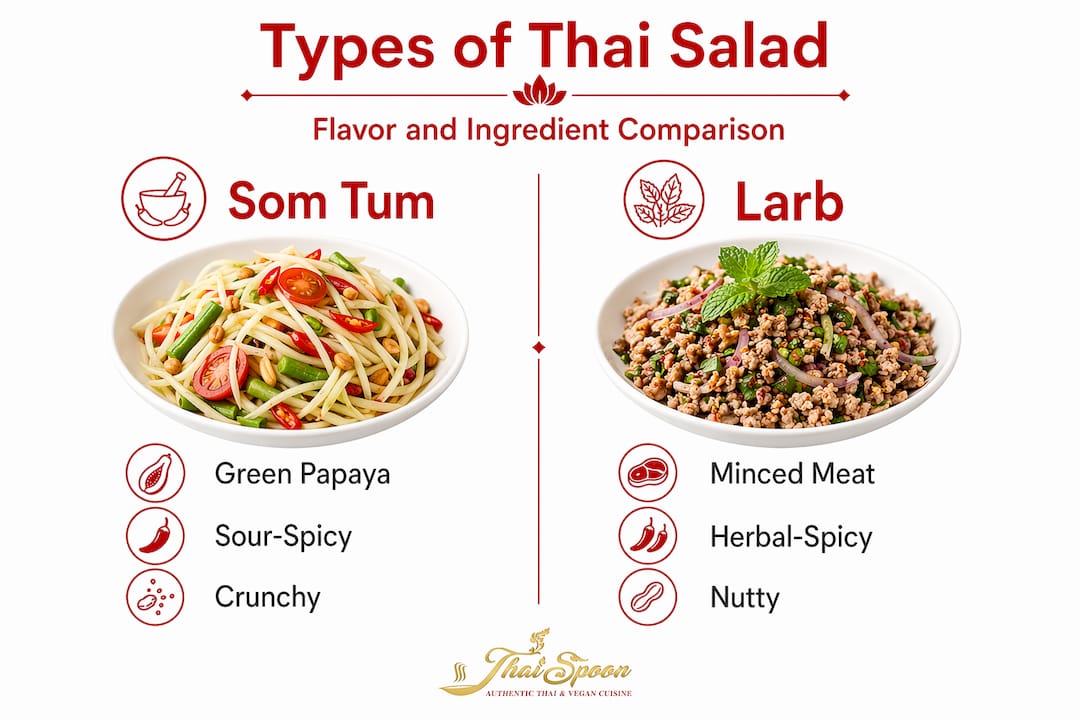
Thai cuisine has several distinct spicy salad varieties, each with its own ingredient logic and regional roots. Here is how the most popular ones compare:
Salad | Main ingredient | Key flavors | Texture | Region of origin |
Som Tum | Green papaya | Sour, spicy, slightly sweet | Crisp, crunchy | Northeast Thailand (Isaan) |
Larb | Minced pork or chicken | Savory, herbaceous, spicy | Tender with crunchy rice powder | Northeast Thailand (Isaan) |
Spicy mango salad | Green mango | Tart, sweet, spicy | Firm and juicy | Central Thailand |
Yum Talay | Mixed seafood | Savory, sour, spicy | Soft and tender | Coastal Thailand |
Cucumber salad | Fresh cucumber | Mild, sour, spicy | Light and crisp | Nationwide |
Som Tum, Larb, and Mango Salad are built on different bases but governed by the same four-flavor rule. Larb is the most protein-forward of the group and uses toasted rice powder as a textural signature that no other Thai salad uses as prominently. Yum Talay skews coastal and is often found in beach towns along the Gulf of Thailand. If you are new to spicy Thai salads and ordering from a menu, Som Tum is the entry point most people connect with immediately.
How to make spicy Thai salad at home
Making a great spicy Thai salad at home is realistic, even on your first try, if you follow the steps in the right order.
Prep your base first. Shred green papaya or cucumber into thin strips. Pat everything dry so the dressing clings rather than pools at the bottom of the bowl.
Toast and crush your peanuts and rice powder. Toast raw rice in a dry pan until golden brown, then grind it coarsely. This step takes five minutes and makes a noticeable difference in texture and flavor.
Make the dressing from scratch. Fresh lime, fish sauce, and palm sugar are the base. Pre-made dressings flatten the fresh brightness that defines this dish. Mix, taste, and adjust before adding chilies.
Add chilies last. Slice or pound your bird’s eye chilies and add them after the other dressing components are balanced. This gives you control over heat before it is mixed in.
Toss gently. Use your hands or tongs and toss just enough to coat. Over-mixing bruises herbs and makes the vegetables go limp.
Rest for 10 to 15 minutes. Resting allows the dressing to meld into the vegetables while preserving their snap. Do not skip this step.
Serve with sticky rice or jasmine rice. The rice absorbs the dressing that pools at the bottom of the bowl, which is actually the best part of the whole meal.
Pro Tip: If you cannot find green papaya, shredded kohlrabi or firm green mango makes a close substitute. The texture is similar and the tartness holds up well with the dressing.
For serving ideas, consider what to serve with spicy Thai salad beyond rice: grilled pork skewers, a simple clear broth soup, or even fried tofu all work well alongside the bright, acidic flavors.
My take on what makes or breaks a spicy Thai salad
I have tasted a lot of versions of this dish, from street carts in Bangkok to home kitchens in Nevada, and the biggest mistake I keep seeing is the same one every time. People chase the spice and forget the sour. The lime juice is what makes a spicy Thai salad feel alive. Without enough of it, the salad just tastes hot and flat, which is not interesting.
What I have learned is that patience in adjusting flavors is the real skill here. Thai cooks do not just throw things together. They taste repeatedly, adjust by small amounts, and let each addition settle before judging it. That process takes maybe five extra minutes, but it is the difference between a good salad and one people ask you to make again.
Ingredient sourcing also matters more than most guides admit. Fish sauce from Thailand, specifically brands with a short ingredient list, tastes cleaner than cheaper alternatives. If you can get it from an Asian grocery store rather than a generic supermarket, you will notice the difference immediately.
And for home cooks who are nervous about heat: you have complete control. Use one chili without seeds, taste the salad, and add more gradually. The Thai seasonings guide is a useful resource if you want to understand the full flavor toolkit before you start experimenting. There is no shame in making a mild version that you actually enjoy eating.
— Thai
Taste authentic spicy Thai salad at Thai Spoon Las Vegas
If reading this made you want to taste the real thing before committing to making it at home, Thaispoonlasvegas is worth the trip. Located in northwest Las Vegas, about 20 minutes from the Strip, the restaurant serves authentic Thai dishes with the kind of flavor balance this article talks about, made by people who have been doing this for years.
[
You can browse the full Thai Spoon menu to see what is available for dine-in, pickup, or delivery. If you are planning an event and want to bring these flavors to a larger crowd, Thaispoonlasvegas also offers catering services that include Thai favorites alongside options for vegan and gluten-free diets. It is a practical way to experience professionally balanced Thai flavors on your own schedule.
FAQ
What is spicy Thai salad made of?
Spicy Thai salad typically includes a vegetable base like green papaya or cucumber, fresh herbs (cilantro, mint, basil), a protein such as minced pork or shrimp, and a dressing made from fish sauce, lime juice, palm sugar, and bird’s eye chili. Crushed peanuts and toasted rice powder are common finishing ingredients.
What does spicy Thai salad taste like?
It tastes sour, savory, spicy, and slightly sweet all at once. The lime juice provides brightness, fish sauce delivers depth, palm sugar softens the edges, and bird’s eye chili brings sharp heat with a floral note.
How spicy is a typical spicy Thai salad?
Heat level varies by recipe and cook, but the dish can be very hot when made traditionally with several whole bird’s eye chilies. Removing the seeds or reducing the number of chilies can cut the heat significantly while keeping the flavor intact.
What is the difference between Som Tum and Larb?
Som Tum is a green papaya salad dressed with lime, fish sauce, palm sugar, and chili. Larb is a minced meat salad that adds toasted rice powder and a heavier herb profile, giving it a more savory, textured character.
Is spicy Thai salad healthy?
Yes. Spicy Thai salads are generally low in calories, high in fresh vegetables, and loaded with herbs that carry real nutritional value. The health benefits of Thai food extend beyond flavor, with fresh ingredients and minimal processing making it one of the better options in any cuisine.
Recommended
Comments