


What Is Thai Basil and Why Cooks Love It

Finding truly authentic ingredients for homemade Asian dishes can be a rewarding challenge for food enthusiasts across Northwest Las Vegas. If you’re passionate about enhancing your culinary skills, understanding the nuances of Thai basil’s distinctive sweet licorice flavor can transform familiar recipes into memorable creations. Discover how this specialty herb brings unique aroma and robust taste to stir-fries, soups, and curries while connecting you to the best sourcing and preparation tips for local cooks.
Table of Contents
Key Takeaways
Point | Details |
Unique Flavor Profile | Thai basil offers a sweet licorice flavor that is much more complex and heat-resistant than sweet basil, making it essential for high-heat dishes. |
Key Culinary Uses | Ideal for stir-fries, curries, and soups, Thai basil retains its distinct flavor when added at the end of cooking. |
Sourcing and Storage | Fresh Thai basil can be best sourced from Asian markets; it should be stored in a damp paper towel in a sealed bag to maintain freshness. |
Substitution Alternatives | Sweet basil is the closest alternative, although mint or cilantro can also provide complementary flavors when Thai basil is unavailable. |
Thai Basil Defined: Core Qualities and Myths
Thai basil is a distinctive herb that stands apart from common sweet basil, offering unique characteristics that make it a prized ingredient in Southeast Asian cuisine. Unlike its more familiar counterpart, this aromatic herb brings an extraordinary flavor profile that transforms dishes with its complex notes.
Originally cultivated in tropical regions of Asia, Thai basil belongs to the Lamiaceae family and represents a specialized cultivar of the Ocimum basilicum species. Its botanical lineage contributes to several remarkable qualities:
Distinctive sweet licorice flavor
Silky green leaves with small white flowers
Ability to grow as an annual or perennial depending on climate
Strong heat resistance compared to other basil varieties
Culinary experts appreciate Thai basil for its robust characteristics. Fragrant edible leaves make it an essential ingredient in soups, stews, and meat dishes, providing a unique aromatic dimension that elevates traditional recipes.
Common myths about Thai basil often mischaracterize its versatility. Some home cooks believe it’s interchangeable with sweet basil, but its flavor profile is significantly more complex and heat-stable. Thai basil maintains its distinctive taste even when exposed to high cooking temperatures, making it superior for stir-fries and hot preparations.
Pro tip: When purchasing Thai basil, look for bright green leaves with sturdy stems and avoid wilted or discolored bunches to ensure maximum flavor and freshness.
Key Varieties and What Makes Each Unique
Basil is a remarkably diverse herb with multiple varieties that each bring unique characteristics to the culinary world. Multiple basil cultivars offer distinct flavor profiles, leaf shapes, and cooking applications that can transform dishes across different cuisines.
The primary basil varieties include:
Sweet Basil (Genovese): Classic Italian variety with broad, bright green leaves
Thai Basil: Characterized by narrow leaves and strong licorice flavor
Purple Basil: Deep burgundy leaves with a milder taste
Lemon Basil: Citrusy aroma perfect for light dishes
Greek Basil: Small-leafed variety with compact growth
Thai basil stands out among these varieties due to its exceptional culinary characteristics. Strong licorice and anise aroma distinguishes it from other basil types, making it indispensable in Southeast Asian cooking. Its robust flavor profile allows it to maintain intensity even during high-heat cooking processes, unlike more delicate basil varieties.
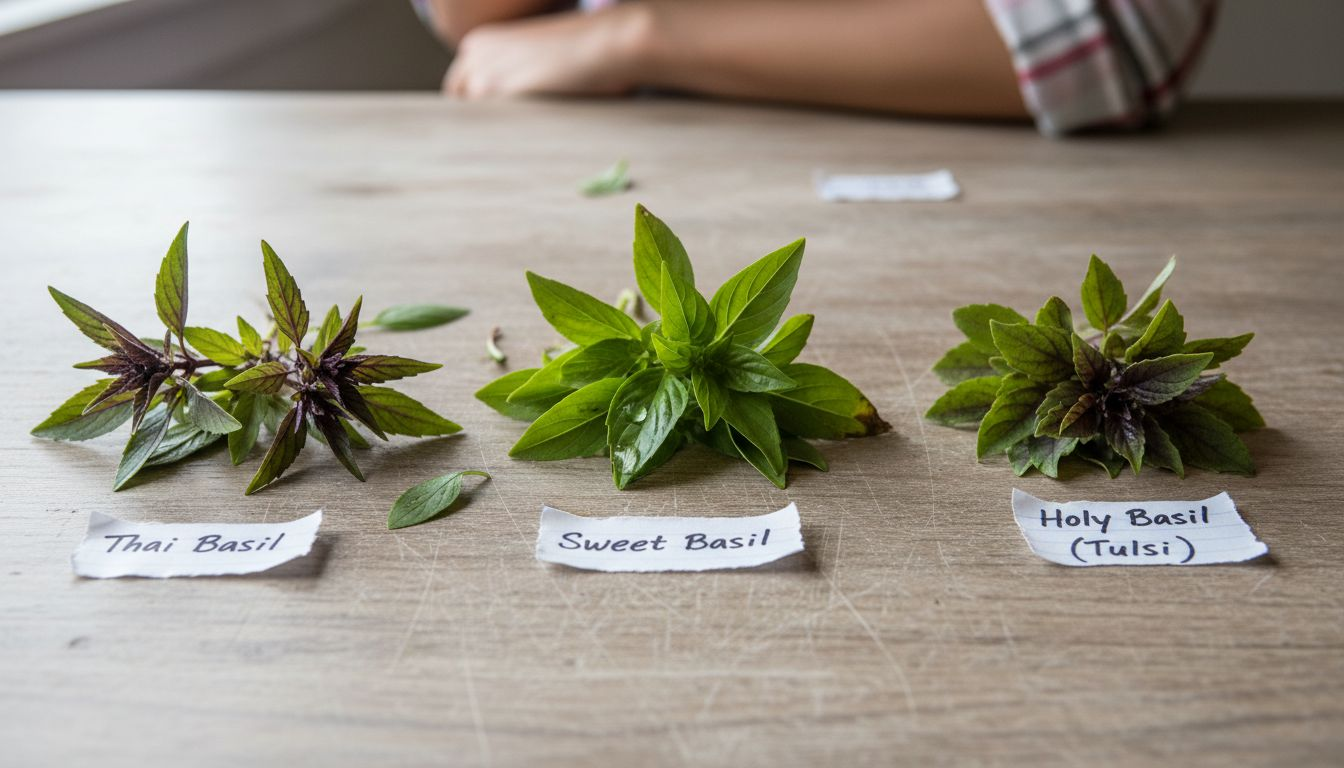
Each variety offers unique sensory experiences. Sweet basil brings a classic, mild flavor ideal for Italian cuisine, while purple basil adds dramatic visual appeal to salads and garnishes. Lemon basil introduces bright, citrusy notes that complement seafood and light summer dishes. Thai basil, with its distinctive spicy undertones, provides an authentic flavor foundation for stir-fries, curries, and traditional Southeast Asian recipes.
Here’s a summary comparing key basil varieties, highlighting their unique qualities and main culinary uses:
Basil Variety | Flavor Notes | Appearance | Typical Uses |
Sweet Basil | Mild, slightly sweet | Broad, bright green leaves | Classic for Italian dishes |
Thai Basil | Spicy, licorice, anise | Narrow, silky green leaves | Southeast Asian stir-fries |
Purple Basil | Subtle, floral, mild | Deep burgundy leaves | Visual garnish, salads |
Lemon Basil | Citrusy, bright | Pale green, narrow leaves | Seafood, light summer dishes |
Holy Basil | Peppery, medicinal | Hairy, green oval leaves | Herbal teas, ceremonies |
Pro tip: When experimenting with different basil varieties, start by using small quantities to understand their unique flavor characteristics and find the perfect match for your specific dish.
Flavor Profile and Culinary Applications
Thai basil brings a remarkable complexity to culinary experiences, offering a flavor profile that sets it apart from other herb varieties. Unique sweet and spicy characteristics define its distinctive taste, featuring pronounced licorice and anise undertones that transform ordinary dishes into extraordinary culinary creations.
The herb’s culinary applications span multiple cooking traditions, particularly in Southeast Asian cuisine. Its robust flavor profile makes it ideal for various dishes:
Stir-fries: Adds intense aromatic notes
Curries: Provides depth and complexity
Pho and noodle soups: Enhances broth with fresh herbal notes
Garnishes: Offers visual and flavor complexity
Infused beverages: Creates unique herbal drinks
Thai basil maintains its distinctive flavor best when added towards the end of cooking. Unlike delicate sweet basil, this variety can withstand higher temperatures while preserving its characteristic spicy and licorice-like essence. Professional chefs appreciate its ability to provide authentic flavor without losing aromatic intensity during preparation.
The herb’s versatility extends beyond traditional cooking methods. Its edible flowers can be used to create elegant garnishes, and the leaves work beautifully in cold preparations like salads, summer rolls, and herb-infused oils. The combination of visual appeal and complex flavor makes Thai basil a favorite among culinary enthusiasts seeking to elevate their cooking.
Pro tip: To maximize Thai basil’s flavor, add the fresh leaves in the last minute of cooking and gently tear them to release their full aromatic potential.
Thai Basil vs. Sweet and Holy Basil
Distinct basil varieties showcase remarkable differences in flavor, aroma, and culinary application. While they may appear similar at first glance, Thai basil, sweet basil, and holy basil each bring unique characteristics that set them apart in the botanical and culinary world.
The key differences between these basil varieties include:
Sweet Basil:
Mild, clove-like aroma
Most common in Italian cuisine
Delicate flavor profile
Best used in fresh preparations
Thai Basil:
Strong anise and licorice fragrance
Spicy, robust flavor
Withstands high-heat cooking
Essential in Southeast Asian dishes
Holy Basil:
Peppery, medicinal taste
Ceremonial and religious significance
Less culinary, more medicinal use
Distinctive pungent aroma
Culinary cultivars of Ocimum basilicum demonstrate remarkable diversity in growing conditions and applications. Sweet basil remains the most versatile, with a milder flavor that adapts to various cuisines. Thai basil stands out for its distinctive licorice notes and ability to maintain flavor intensity during cooking, making it a favorite in stir-fries and spicy dishes.
Holy basil occupies a unique space, primarily valued for its medicinal properties and religious significance rather than culinary applications. Its more intense, almost medicinal flavor profile sets it apart from its more food-friendly cousins. Chefs and home cooks appreciate each variety for its distinct characteristics, understanding that substitution can dramatically alter a dish’s intended flavor profile.
Pro tip: When substituting basil varieties, remember that each type brings a unique flavor profile – never assume they can be used interchangeably without impacting the dish’s overall taste.
Finding, Storing, and Substituting Thai Basil
Thai basil requires specific sourcing and storage techniques to maintain its vibrant flavor and aromatic qualities. Specialty herb sources like Asian grocery stores and farmers markets offer the most reliable fresh options for home cooks seeking authentic ingredients.
When sourcing and storing Thai basil, consider these essential guidelines:
Sourcing Locations:
Asian specialty grocery stores
Farmers markets
Local herb gardens
Specialty produce sections
Storage Techniques:
Wrap in damp paper towel
Store in sealed plastic bag
Refrigerate up to one week
Trim stem ends before storing
Keep away from direct cold spots
If fresh Thai basil is unavailable, substitute herbs can provide similar flavor profiles. Sweet basil represents the closest alternative, though it lacks the distinctive licorice undertones. Mint or cilantro can offer complementary herbal notes in recipes when Thai basil is not accessible.
For quick reference, here’s how to best source, store, and substitute Thai basil:
Aspect | Best Practices | Alternatives |
Sourcing | Asian grocers, farmers markets | Home gardens, specialty stores |
Storing | Damp towel, sealed bag, refrigerate | Stems in water, loose plastic cover |
Substitution | Sweet basil (nearest match) | Mint, cilantro in a pinch |
Home gardeners can successfully cultivate Thai basil with proper care. The plant thrives in full sun, requires well-drained soil, and performs best in warm temperatures. Container gardening works particularly well, allowing herbs to be moved indoors during cooler months and providing fresh leaves throughout the growing season.
Pro tip: For maximum flavor preservation, store Thai basil like fresh-cut flowers by placing the stems in water and covering loosely with a plastic bag in the refrigerator.
Experience the Authentic Flavor of Thai Basil at Thai Spoon Las Vegas
Understanding the distinctive taste and culinary versatility of Thai basil is the first step to appreciating authentic Thai cuisine. If you have been searching for the bold licorice and anise notes that make Thai basil so special, you do not have to look any further. At Thai Spoon Las Vegas, we bring the vibrant, aromatic essence of fresh Thai basil directly to your plate, elevating dishes like Pad Thai, Yellow Curry, and Steak Fried Rice with the unmistakable flavor that true food lovers crave.
Discover why cooking with Thai basil is beloved by chefs and home cooks alike by tasting it in our carefully crafted menu. Whether you are dining in or ordering online for pickup or delivery, now is the time to indulge in genuine Thai flavors that you can trust. Explore our offerings and place your order today at Thai Spoon Las Vegas to savor the fresh herb taste that transforms every bite.
Frequently Asked Questions
What is Thai basil and how does it differ from sweet basil?
Thai basil is a unique herb known for its strong anise and licorice flavor, setting it apart from sweet basil, which has a milder, sweeter flavor profile. Thai basil’s narrow, silky leaves also make it visually distinct from the broader leaves of sweet basil.
What culinary applications are best for Thai basil?
Thai basil is ideal for stir-fries, curries, pho, and noodle soups. Its robust flavor withstands high cooking temperatures, making it a preferred choice in Southeast Asian cuisine where intense flavors are desired.
How should I store Thai basil to maintain its flavor?
To keep Thai basil fresh, wrap the leaves in a damp paper towel and store them in a sealed plastic bag in the refrigerator. Alternatively, you can place the stems in water like cut flowers and cover them loosely with a plastic bag.
Can I substitute Thai basil for other basil varieties in recipes?
While sweet basil can be used as a substitute for Thai basil in a pinch, it lacks the distinctive licorice note. Mint or cilantro can also provide complementary herbal flavors, but expect some differences in the overall taste of the dish.
Recommended
Comments