


What Is Thai Jasmine Rice: Your Complete Guide
TL;DR:
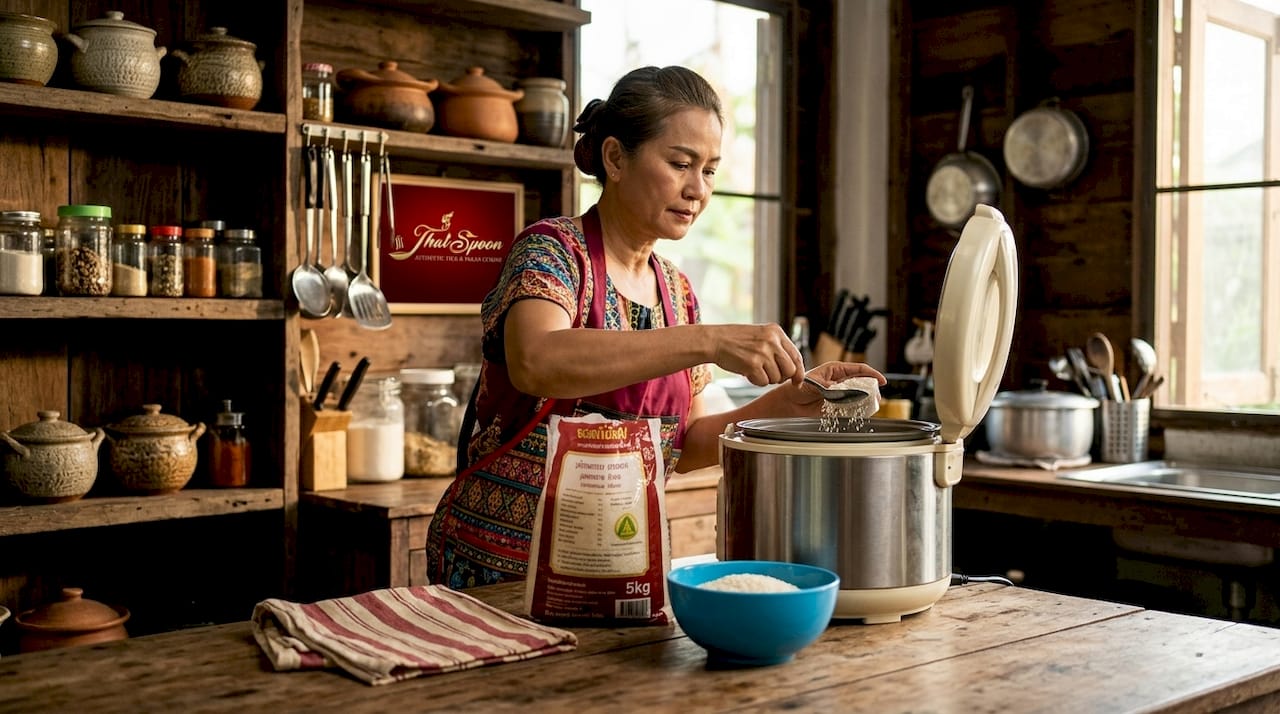
Thai jasmine rice, a fragrant long-grain variety from Thailand, is valued for its soft texture and floral aroma. Its scent stems from a natural compound, not jasmine flowers, and authentic rice bears a government-issued certification with Protected Geographical Indication status. Proper preparation, including minimal rinsing and resting, enhances its unique aroma and sticky texture, making it ideal for Thai dishes like curries and stir-fries.
Thai jasmine rice is one of those ingredients that sounds simple but carries more depth than most people realize. What is Thai jasmine rice, exactly? It’s a long-grain variety native to Thailand, prized for its soft texture, mild floral aroma, and ability to absorb the bold flavors of curries and stir-fries without disappearing into the background. Here’s the twist most people miss: the name has nothing to do with jasmine flowers. The scent comes from a naturally occurring compound in the grain itself, and that distinction matters if you want to understand why this rice is in a category of its own.
Table of Contents
Key Takeaways
Point | Details |
Name doesn’t mean flowers | Thai jasmine rice gets its floral scent from a chemical compound, not jasmine blossoms. |
Origin and certification matter | Authentic Thai Hom Mali rice carries a government-issued green logo proving its source and quality. |
Texture beats basmati for curries | Jasmine rice’s soft, slightly clingy grains soak up sauces far better than basmati’s dry, separate grains. |
Naturally gluten free and non-GMO | Thai jasmine rice contains no gluten and is developed through traditional selective breeding, not genetic modification. |
One rinse is enough | Over-rinsing strips the starch that gives jasmine rice its signature glossy, tender texture. |
What is Thai jasmine rice and where does it come from
The story starts in 1945, when Thai agricultural researchers identified a naturally fragrant rice variety growing in the northeastern province of Chonburi. That discovery led to the development of KDML105, the official strain behind what the world now calls Thai Hom Mali rice. “Hom Mali” translates roughly to “fragrant jasmine” in Thai, which explains both the name and the confusion around it.
Authentic jasmine rice grows primarily in Thailand’s northeastern region, known as Isan, as well as provinces like Surin and Roi Et. These areas hold Protected Geographical Indication status, meaning rice from these regions meets specific climate, soil, and cultivation standards that rice grown elsewhere simply cannot replicate.
The plant itself is photoperiod sensitive, meaning its grain development responds to seasonal changes in daylight. This photoperiod sensitivity ties the harvest to a precise annual window. Farmers plant during the rainy season, typically July, and the crop is harvested around November. After harvesting, the grain is sun-dried and carefully sorted before reaching markets.
Why does geography matter so much? The sandy, mineral-rich soils of northeastern Thailand, combined with the region’s specific rainfall patterns and temperature swings, produce the chemical compound that creates the rice’s distinctive aroma. Grow the same KDML105 seeds in a different country with different soil and climate, and you get a noticeably less fragrant result. Strict geographical and quality controls protect Thai Hom Mali’s global reputation as a premium product.
KDML105 is the primary certified strain behind authentic Thai jasmine rice
The northeastern region of Thailand, including Surin and Roi Et, holds Protected Geographical Indication status
Photoperiod sensitivity means harvest timing is locked to seasonal daylight shifts
Soil composition and rainfall directly influence the grain’s aromatic intensity
Pro Tip: If you’re buying Thai jasmine rice at an Asian grocery store, look at the country of origin label. Rice labeled “jasmine” but grown in the U.S., Vietnam, or Cambodia may taste similar but will lack the aroma depth of true Thai Hom Mali.
The aroma and culinary properties that set it apart
The scent you notice when jasmine rice cooks is not imaginary and not artificial. It comes from a compound called 2-acetyl-1-pyrroline, also found in pandan leaves and jasmine flowers, which explains the naming connection. Thai jasmine rice produces this compound at higher concentrations than most other rice varieties, which is why freshly cooked jasmine rice fills a kitchen with a scent that is warm, slightly nutty, and faintly floral all at once.
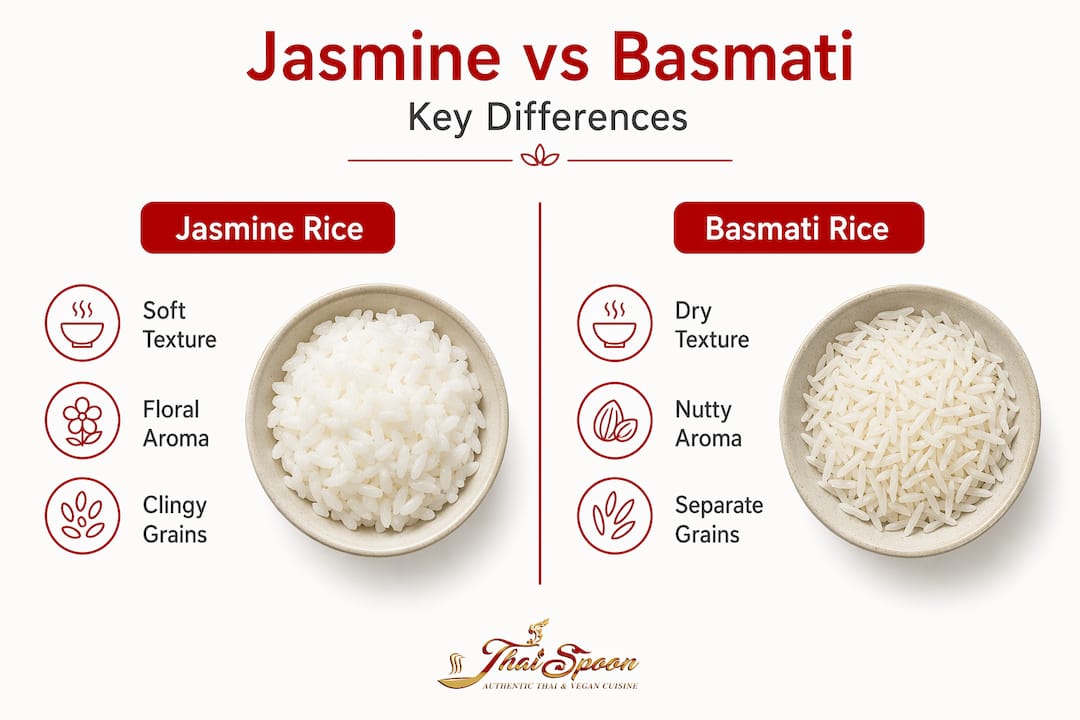
Texture is where jasmine rice separates from its closest comparison, basmati. Here is a straightforward breakdown:
Feature | Thai jasmine rice | Basmati rice |
Grain length | Long grain | Long grain |
Texture after cooking | Soft, slightly clingy | Dry, fluffy, separate grains |
Aroma profile | Floral, slightly sweet | Nutty, earthy |
Best culinary uses | Curries, stir-fries, grilled meats | Pilafs, biryani, rice dishes with dry spices |
Starch behavior | Higher, contributes to cohesion | Lower surface starch |
Jasmine rice is softer and slightly clingy compared to basmati’s dry, separate grain structure, which makes it far better for scooping up thick sauces. When you eat Thai green curry or red curry over jasmine rice, the grains actually hold the sauce rather than letting it slide off. That’s not an accident. It’s a functional pairing that Thai cooks have relied on for generations.
Culturally, the texture of jasmine rice carries meaning. In Thailand, rice is not just a side dish. It sits at the center of the meal, and everything else is built around it. The role of rice in Thai meals goes beyond calories. It anchors the table. The soft, lightly sticky texture allows diners to scoop meat and vegetables together without utensils, which is how many traditional Thai meals are eaten.
Nutritional value of Thai jasmine rice
Thai jasmine rice is not a diet food, but it’s also not nutritionally empty. A 100g serving of cooked jasmine rice contains roughly 130 calories, 2.7g protein, 0.3g fat, and 28g carbohydrates. A full cup of cooked rice comes in around 200 calories.
Nutrient | Per 100g cooked | Per 1 cup cooked (approx.) |
Calories | 130 | ~200 |
Protein | 2.7g | ~4g |
Fat | 0.3g | ~0.5g |
Carbohydrates | 28g | ~43g |
White jasmine rice has a higher glycemic index than brown jasmine rice, meaning it raises blood sugar faster. If you are managing blood sugar, pairing jasmine rice with protein, fat, and fiber in the same meal slows absorption significantly. Think of a Thai plate with chicken, vegetables, and coconut-based curry sauce. That combination changes how the carbohydrates hit your body compared to eating the rice alone.
Thai jasmine rice is naturally non-GMO, developed through traditional selective breeding over decades of agricultural refinement. It is also naturally gluten free, making it safe for people with celiac disease or gluten sensitivity. If you are shopping in markets where labeling standards vary, checking for explicit non-GMO and gluten free certifications is still worth the few seconds it takes.
Pro Tip: Brown jasmine rice retains its bran layer, which adds fiber and slows digestion, but it requires more water and a longer cooking time than white jasmine rice. Expect about 1.75 to 2 cups of water per cup of brown jasmine rice and at least 40 to 45 minutes of simmering.
How to cook Thai jasmine rice the right way
Selecting and cooking authentic jasmine rice well are two separate skills. Both matter.
Identifying genuine Thai Hom Mali rice
Premium Thai Hom Mali rice carries a green trademark logo issued by Thailand’s Ministry of Commerce. This logo signals that the rice meets national purity and origin standards. Without it, you may be buying a jasmine blend, a jasmine-style rice from another country, or an older crop with diminished aroma. Asian supermarkets and specialty grocery stores are your best bet for finding certified Thai Hom Mali. Some online retailers also carry it, though shipping large bags can be cost-prohibitive.
Watch out for:
Bags labeled “jasmine blend” (mixed with lower-quality rice)
Broken grains throughout the bag (sign of poor processing or old stock)
No country of origin listed on the label
Very low price compared to comparable bags (often a quality indicator)
Step-by-step cooking method
Measure your rice and water using a 1:1.25 ratio (1 cup of rice to 1.25 cups of water) for stovetop cooking.
Rinse the rice once under cold water. One rinse removes surface dust without stripping the starch layer that creates texture.
Combine rice and water in a pot with a tight-fitting lid. Do not add salt.
Bring to a full boil over medium-high heat, then immediately reduce to the lowest setting.
Cover and cook for 15 minutes without lifting the lid.
Remove from heat and let it rest, covered, for 10 minutes before fluffing with a fork.
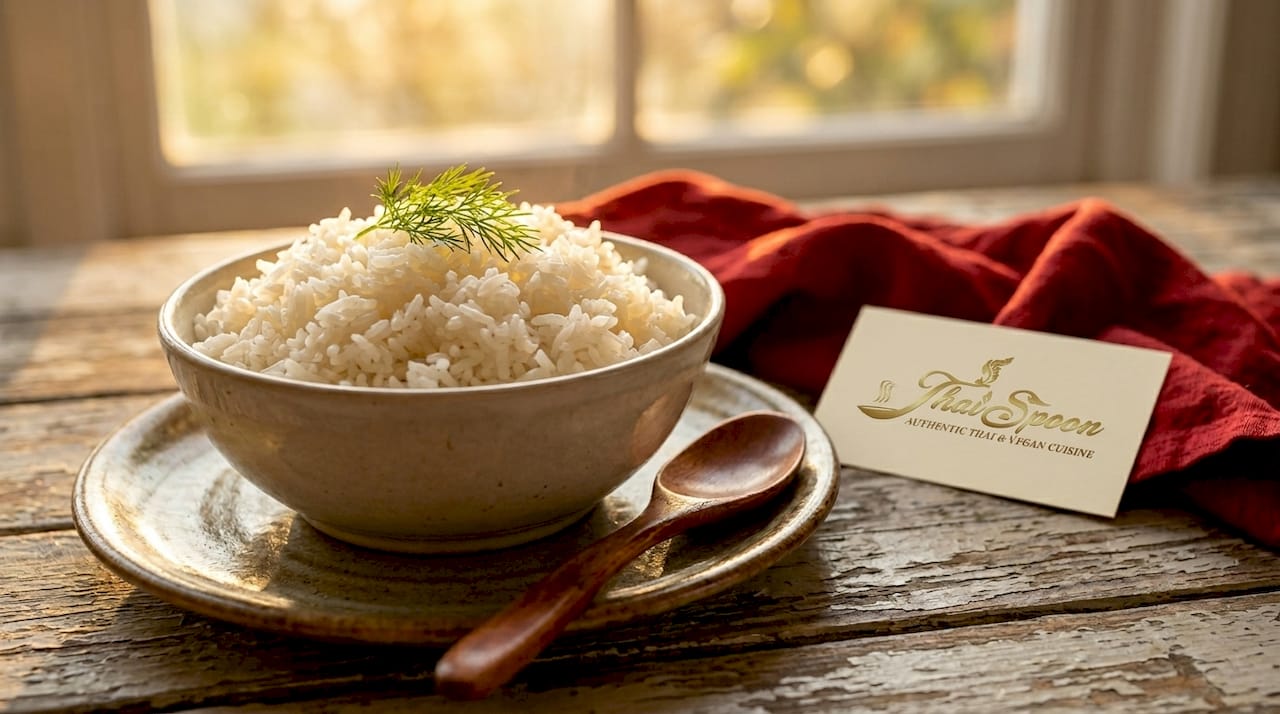
Resting is the step most home cooks skip. It allows residual steam to finish cooking the grains evenly and helps the texture settle. Cooking jasmine rice to be tender and chewy with grains that hold slightly together is exactly what you want for pairing with saucy Thai dishes.
Pro Tip: Minimizing rinsing preserves the starch balance that gives jasmine rice its signature glossy finish and cohesive texture. If your cooked rice looks dull and falls apart too easily, over-rinsing is usually the cause.
For pairing guidance and deeper technique, the full breakdown at how to cook Thai rice at home covers stovetop, rice cooker, and soaking methods with specific ratios for each.
My take on what jasmine rice actually represents
I’ve watched a lot of people cook jasmine rice and get it mostly right but miss what makes it special. They rinse it three times because that’s what they do with every rice. They cook it the same way they cook long-grain white rice. They use it as a blank filler under whatever they made for dinner. And the rice works fine that way. But fine is not the same as right.
In my experience, jasmine rice done well is not neutral. It adds something. The aroma changes how a dish smells at the table. The texture changes how sauce behaves on the spoon. When I eat a properly cooked bowl of Thai jasmine rice with a well-made green curry, the two things become one dish. They’re not separate components plated together.
What I’ve learned is that the people who love Thai food deeply also tend to respect the rice. They don’t treat it as an afterthought. They buy the certified variety, they use the right water ratio, they let it rest. These are small choices, but they’re the difference between a meal that tastes like takeout and a meal that tastes like Thailand.
The cultural weight of jasmine rice in Thai cooking is something I genuinely believe Western food culture underestimates. You can find the role of rice in Thai cuisine covered extensively elsewhere, but the short version is this: the rice is not the side dish. It’s the foundation.
— Thai
Experience authentic Thai jasmine rice at Thai Spoon Las Vegas
Knowing what jasmine rice is and actually tasting it prepared the right way are two different things.
[
At Thaispoonlasvegas, every dish that comes with rice is built around authentic Thai jasmine rice cooked to the right texture for each recipe. Whether you’re ordering Yellow Curry, Pad Thai, or Steak Fried Rice, the rice is not an afterthought. It’s part of the dish. Browse the full menu to see everything available for dine-in, pickup, or delivery in the northwest Las Vegas area. If you’re planning a larger event, Thaispoonlasvegas also offers catering services that bring authentic Thai flavors, jasmine rice included, directly to your venue.
FAQ
What is the difference between jasmine rice and basmati rice?
Jasmine rice is softer and slightly sticky when cooked, making it ideal for curries and stir-fries. Basmati rice cooks up dry with separate grains, which suits pilafs and biryani better.
Is Thai jasmine rice gluten free?
Yes. Thai jasmine rice is naturally gluten free and safe for people with celiac disease or gluten sensitivity. Always check packaging for cross-contamination warnings if you have a severe allergy.
How much water do you use to cook Thai jasmine rice?
Use a 1:1.25 ratio of rice to water for stovetop cooking. Rinse the rice once, bring to a boil, then simmer covered on low heat for 15 minutes, followed by a 10-minute rest.
Where can you buy authentic Thai jasmine rice?
Asian grocery stores are the most reliable source for certified Thai Hom Mali rice. Look for the green Thai Ministry of Commerce logo on the bag to confirm authenticity and origin.
What are the main Thai jasmine rice types?
The primary type is KDML105, the original certified strain. You may also find RD15, a newer variety developed for drought resistance. White jasmine rice is the most common, but brown jasmine rice is available and retains more fiber and nutrients.
Recommended
I didn’t realize Thai jasmine rice gets its floral scent from a natural compound rather than jasmine flowers, and the KDML105/Hom Mali certification explanation was genuinely interesting. The tip about rinsing only once is helpful, since I’ve likely been washing away the starch that gives it that glossy texture. If you’re planning a Vegas food trip to Thai Spoon and also want a quick look at casino info, https://casinoskattefria.com/ is worth a peek.