


What Vegetables in Pad Thai: a Home Cook's Guide
TL;DR:
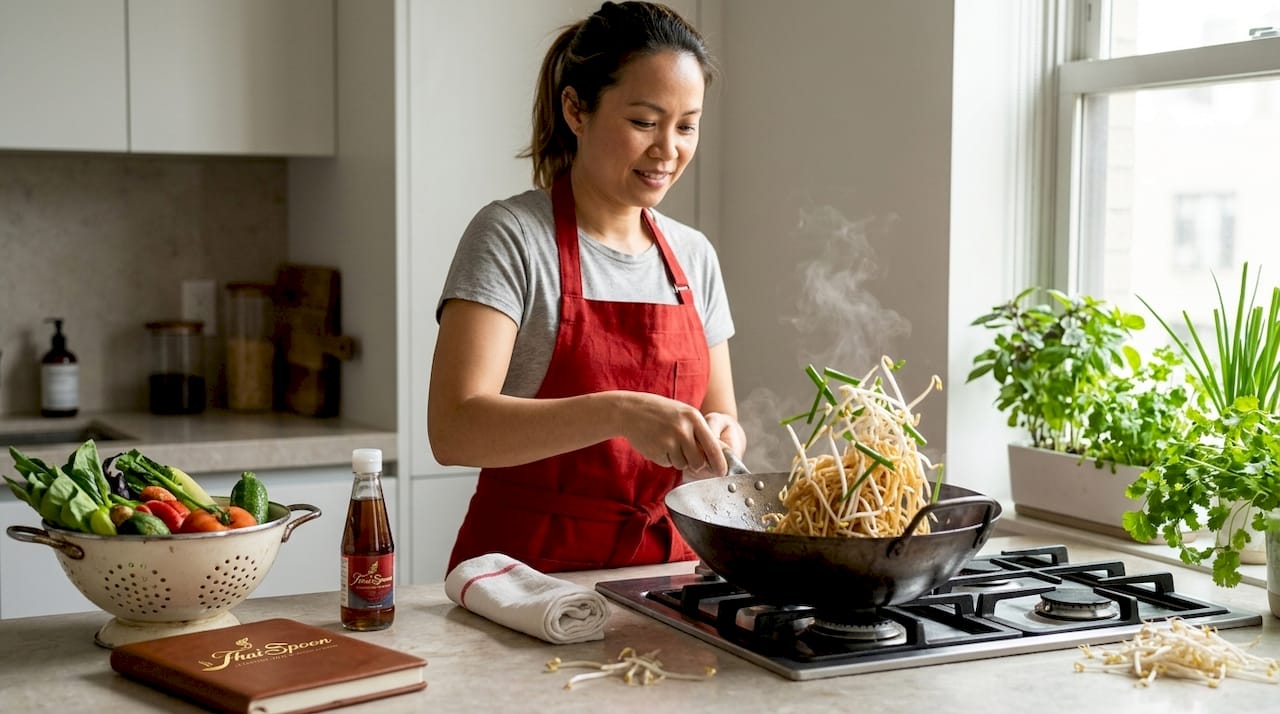
Authentic Pad Thai features minimal vegetables, primarily bean sprouts and garlic chives added at the end of cooking for crunch and flavor. Modern versions often include colorful vegetables like carrots, bell peppers, and broccoli, which require careful pre-cooking to prevent sogginess. Proper vegetable preparation and understanding traditional ingredients enhance the dish’s flavor balance and texture.
Pad Thai has a reputation that slightly misleads home cooks before they ever turn on a burner. Most people picture a colorful tangle of noodles loaded with vegetables, but the authentic version tells a different story. If you’ve ever wondered what vegetables in Pad Thai are actually traditional versus what restaurants pile on to modernize the dish, you’re asking exactly the right question. Understanding this distinction changes how you cook it, how it tastes, and whether the result actually resembles the dish served on the streets of Bangkok.
Table of Contents
Key takeaways
Point | Details |
Traditional veggies are minimal | Authentic Pad Thai uses only bean sprouts and garlic chives as standard vegetables. |
Pickled turnip adds hidden depth | Chai po provides salty-sweet crunch and is frequently left out of home recipes by mistake. |
Modern versions add color and nutrition | Carrots, red bell peppers, broccoli, and snow peas are popular additions in contemporary and vegan recipes. |
Cooking order protects texture | Stir-fry heartier vegetables first, then push aside before adding eggs and sauce to avoid sogginess. |
More vegetables can hurt the dish | Moisture-heavy additions dilute the tamarind sauce and compromise noodle texture if not handled carefully. |
What vegetables in Pad Thai are actually traditional
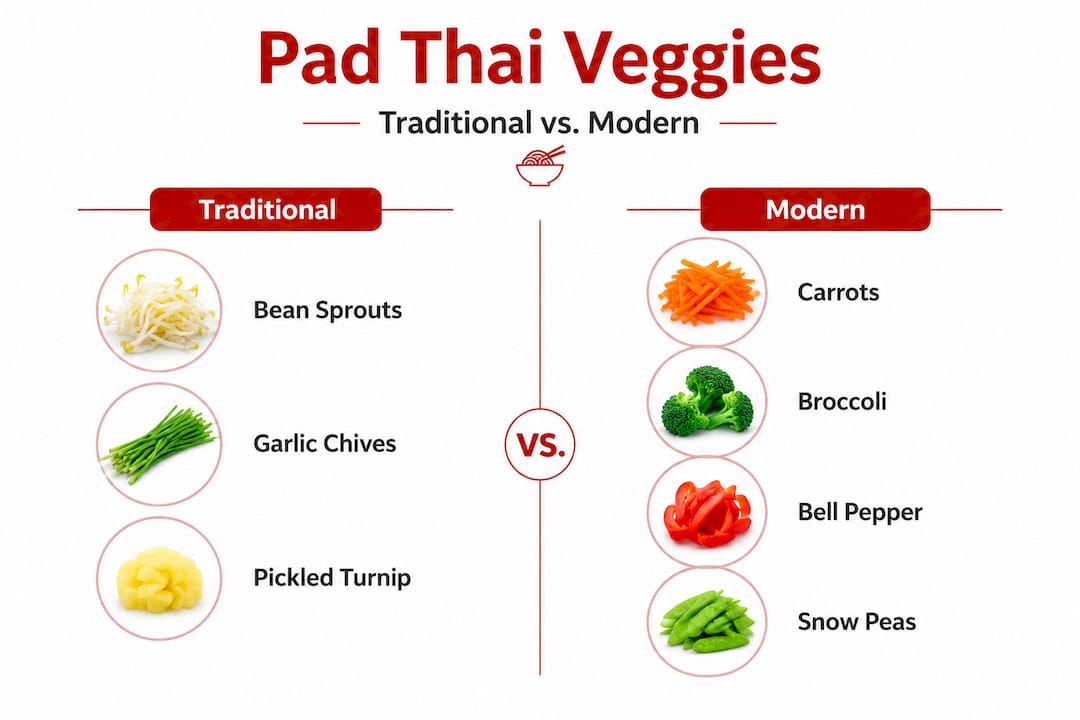
Most people are surprised to learn how short the traditional vegetable list really is. Authentic Pad Thai uses fresh bean sprouts and garlic chives as the only standard vegetables, and they go in at the very end of cooking to keep their crunch. That’s it. No broccoli, no bell peppers, no julienned zucchini. The dish was never designed to be a vegetable stir-fry.
The logic behind this is worth understanding. Bean sprouts provide fresh contrast to the deep, tangy complexity of tamarind sauce without adding bulk or interfering with the noodle texture. They deliver crunch and a mild, watery freshness that acts almost like a palate reset between bites. Garlic chives bring a gentle oniony note that complements the savory sauce without dominating it. The vegetable component is designed to provide contrast, not volume.
There’s a third ingredient in this category that most home cooks skip entirely: pickled turnip, known as chai po. This salty-sweet crunchy ingredient sits somewhere between a vegetable and a condiment. It gets rinsed and added during the stir-fry phase, dissolving slightly into the sauce and adding a dimension of flavor that no other ingredient replicates. Skip it, and your Pad Thai will taste noticeably flat even if everything else is correct.
Here is what you will find in a traditionally authentic Pad Thai vegetable lineup:
Bean sprouts: Added raw at the very end, or lightly tossed for 30 seconds maximum. Overcooked sprouts turn limp and watery.
Garlic chives: Flat-leaf, with a stronger, garlicky bite compared to regular chives. Cut into 1-inch segments.
Pickled turnip (chai po): Rinsed to remove excess salt, added mid-cook. Brings salty-sweet depth and a chewy-crunchy bite.
Shallots or green onions: Used by many traditional cooks to add a mild sweetness and aromatic base at the start of cooking.
Pro Tip: If you can’t find garlic chives at a local Asian grocery store, the green tops of scallions are a reasonable substitute. They lack the same punch, but they preserve the color and general flavor direction of the original.
You can read more about vegetables in Thai cuisine to understand how each ingredient plays a specific role in the broader flavor system, not just in Pad Thai.
Modern and vegan vegetable additions
Walk into most Thai restaurants outside of Thailand, and you’ll see a far more colorful bowl. Home cooks and chefs have expanded the Pad Thai vegetable options significantly over the past few decades, driven by two things: nutrition goals and visual appeal.
The most common additions in contemporary recipes include:
Julienned carrots: Add sweetness, color, and a satisfying crunch. They cook quickly and don’t release much moisture.
Red bell peppers: Visually striking, mildly sweet, and quick-cooking. They hold their texture well in a hot wok.
Broccoli florets: Popular in vegan versions for substance and nutrition, but require careful handling due to water content.
Snow peas: Crisp, sweet, and fast-cooking. They add a fresh green element that works well with the tamarind sauce.
Zucchini: Occasionally used, though it releases water quickly and can soften the sauce.
Mushrooms: Shiitake and cremini varieties are popular additions that bring an umami note, especially in vegan recipes.
Cabbage: Shredded finely, it wilts quickly and adds mild sweetness without disrupting the sauce balance significantly.
Home cooks frequently add these vegetables in quantities of one to two cups, though none of them are traditional. The motivation is usually to make the dish more filling or more nutritious, especially in plant-based versions where protein additions like tofu need textural partners.
For vegan Pad Thai ingredients, the expanded vegetable list often becomes the centerpiece of the dish rather than the background. This is a legitimate adaptation. It serves a different purpose and a different eater. The key is knowing that you are making a modern version, not a traditional one, and cooking the vegetables accordingly.
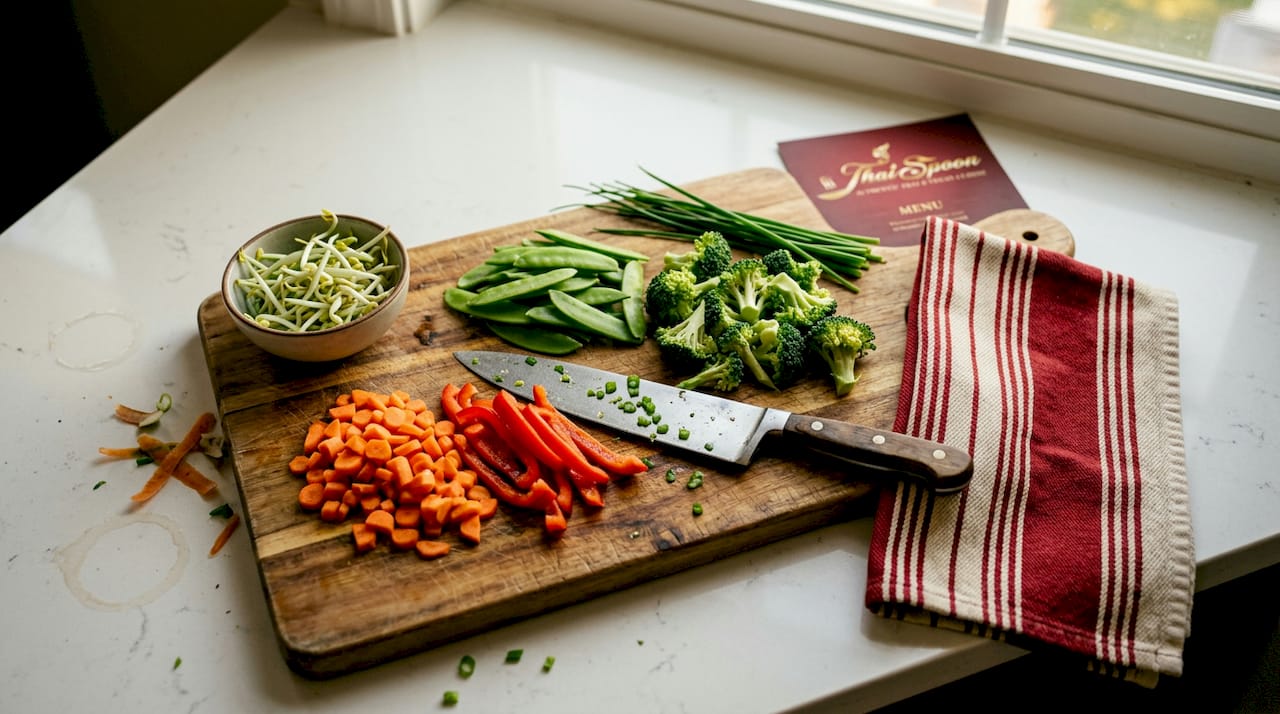
Many Western recipes use broader vegetable selections that conflict with the traditional minimal vegetable philosophy. This doesn’t make them wrong. It makes them different. Understanding the difference puts you in control of what ends up in your bowl.
How to prepare and cook your vegetables correctly
Getting the vegetable prep right is where most home cooks lose the dish. You can have perfect noodles and a well-balanced sauce, then ruin everything by adding cold, chunky vegetables that steam instead of sear.
Follow this sequence for reliable results:
Cut everything thin and uniform. Vegetables cut into thin matchsticks or small bite-sized pieces cook in 1 to 2 minutes alongside the noodles. Thicker cuts require longer cooking, which throws off the timing of the entire dish.
Pre-cook heartier vegetables separately. Broccoli and zucchini release moisture when they hit heat. Stir-fry these separately for 4 to 5 minutes, or blanch briefly, then set them aside before building the main dish. This keeps the wok hot and prevents excess liquid from diluting the sauce.
Add vegetables in the right order. Start with aromatics and anything that needs color development, like bell peppers and carrots. Push them to the side of the wok, scramble your eggs in the center, then combine everything before adding the sauce.
Follow the correct cooking sequence. Cook vegetables first for flavor, then push aside for eggs, and add the sauce last. This protects the sugar in the tamarind sauce from burning and keeps both eggs and vegetables from turning to mush.
Add sprouts and garlic chives last. These go in with 30 seconds left on the clock. They are not meant to cook. They are meant to warm through and maintain their snap.
Pro Tip: Use a wok or the widest, heaviest pan you own, and get it genuinely hot before anything goes in. A crowded, lukewarm pan steams vegetables instead of searing them, and you lose the smoky depth that defines good Pad Thai.
For step-by-step guidance with timing details, the Pad Thai recipe walkthrough at Thaispoonlasvegas covers the full cooking sequence with specific heat and timing notes.
Traditional versus modern: how vegetable choices change the dish
The gap between authentic Pad Thai vegetable use and Western interpretations is bigger than most people realize, and it shows up directly in the final flavor.
Vegetable | Traditional role | Modern use | Effect on dish |
Bean sprouts | Core ingredient, added last | Still used, sometimes reduced | Crunch and freshness, essential contrast |
Garlic chives | Core ingredient, added last | Often replaced with scallions | Aromatic depth, slight garlic note |
Pickled turnip (chai po) | Flavor base, mid-cook | Frequently omitted | Salty-sweet complexity, significant loss if skipped |
Carrots | Not traditional | Extremely common | Sweetness and color, minimal moisture |
Red bell peppers | Not traditional | Very common | Sweetness, visual appeal, some moisture |
Broccoli | Not traditional | Common in vegan versions | Substance and nutrition, significant moisture risk |
Zucchini | Not traditional | Occasional | Can water down the sauce quickly |
Mushrooms | Not traditional | Popular in vegan versions | Umami, absorbs sauce readily |
Traditional vendors prioritize sauce balance and noodle texture over bulk vegetables, and you can taste that philosophy in every bite. The sauce clings to each noodle precisely because there are no moisture-releasing vegetables competing with it. When you add moisture-heavy vegetables like zucchini or broccoli without pre-cooking them separately, the sauce thins out and the noodles become slippery rather than saucy.
This isn’t an argument against adding vegetables. It’s an argument for adding them correctly. The real taste of Pad Thai depends on that sauce-to-noodle relationship above everything else. Protect it, and you can add whatever vegetables you like. Let it break down, and the dish loses its identity regardless of which vegetables you chose.
Explore the essential Pad Thai types to see how different versions handle vegetable additions across regional and modern interpretations.
My take on vegetables in Pad Thai
I’ve eaten Pad Thai prepared dozens of different ways, from street stalls in Bangkok to upscale Thai restaurants and home kitchens right here in Las Vegas. One pattern stands out every single time: the versions people remember are rarely the ones loaded with the most vegetables.
What I’ve learned is that the impulse to add more vegetables usually comes from a genuinely good place. Nutrition. Color. Making the dish feel more substantial. But more isn’t always better when you’re working with a dish built around such precise flavor balance. The tamarind sauce, the fish sauce, the palm sugar, the noodles. These elements are talking to each other constantly, and when you add too many vegetables that release water, you interrupt that conversation.
My honest take is this: cook authentic Pad Thai at least once before you start customizing it. Use just the bean sprouts, the garlic chives, and the pickled turnip. Understand what the dish is supposed to taste like in its intended form. After that, every addition you make will be a conscious, informed choice instead of a guess. Adding carrots and snow peas to a dish you truly understand is very different from adding them to a dish you’ve never tasted at its baseline.
The home cooks I admire most are the ones who learn the rules deeply before they break them. Pad Thai rewards that kind of respect.
— Thai
Experience authentic Pad Thai at Thai Spoon Las Vegas
If you want to taste Pad Thai the way it’s meant to be made, before experimenting in your own kitchen, Thaispoonlasvegas serves an authentic version built on the principles covered in this article. Every element, from the noodle texture to the sauce balance, reflects years of working with traditional Thai ingredients and techniques.
[
Thaispoonlasvegas is located in northwest Las Vegas, about 20 minutes from the Strip, and offers both dine-in and online ordering for pickup and delivery. Browse the full menu options to explore Pad Thai alongside vegan-friendly and gluten-free dishes. Planning a larger event? The catering services bring authentic Pad Thai to corporate events, private parties, and group gatherings across the Las Vegas area.
FAQ
What are the traditional vegetables in Pad Thai?
Traditional Pad Thai uses only bean sprouts and garlic chives as standard vegetables, both added at the end of cooking to retain their crunch and freshness.
Is pickled turnip a vegetable in Pad Thai?
Yes. Pickled turnip, called chai po, is a traditional Pad Thai ingredient that adds a salty-sweet, chewy crunch and significant flavor depth, though many home recipes leave it out.
What vegetables can I add to a vegan Pad Thai?
Popular vegan Pad Thai vegetable additions include julienned carrots, red bell peppers, snow peas, broccoli, mushrooms, and shredded cabbage, all of which increase nutrition and visual appeal.
Why do extra vegetables make Pad Thai soggy?
Moisture-heavy vegetables like zucchini and broccoli release water during cooking, which dilutes the tamarind sauce and softens the noodles. Pre-cooking them separately or blanching first solves this problem.
What greens are used in traditional Pad Thai?
Garlic chives are the primary green used in authentic Pad Thai. They have a flat leaf with a stronger, more garlicky flavor than regular chives and are cut into short segments before being tossed in at the very end of cooking.
Recommended
Hey everyone! I place sports bets occasionally, mostly when there’s a big football match and I’ve actually followed the teams for a while. Online casino games are more of an occasional thing for me, since it’s easy to lose track of time and money. I usually compare different Casino Online options, and sites like https://casinoo.games/ can be useful when looking into sports betting and online casino choices. For me, the main rule is to set a strict budget beforehand and treat it purely as entertainment, not as a way to make regular income. How often do you guys play or bet?