


What Is Thai Meal Flow: A Food Lover's Guide
TL;DR:
Thai meal flow emphasizes communal, simultaneous sharing of dishes built around rice and balanced flavors. It fosters harmony through layered dishes representing all five core tastes, with etiquette supporting respectful, connected dining. Regional variations influence the flow, presentation, and customs, enriching the authentic Thai dining experience.
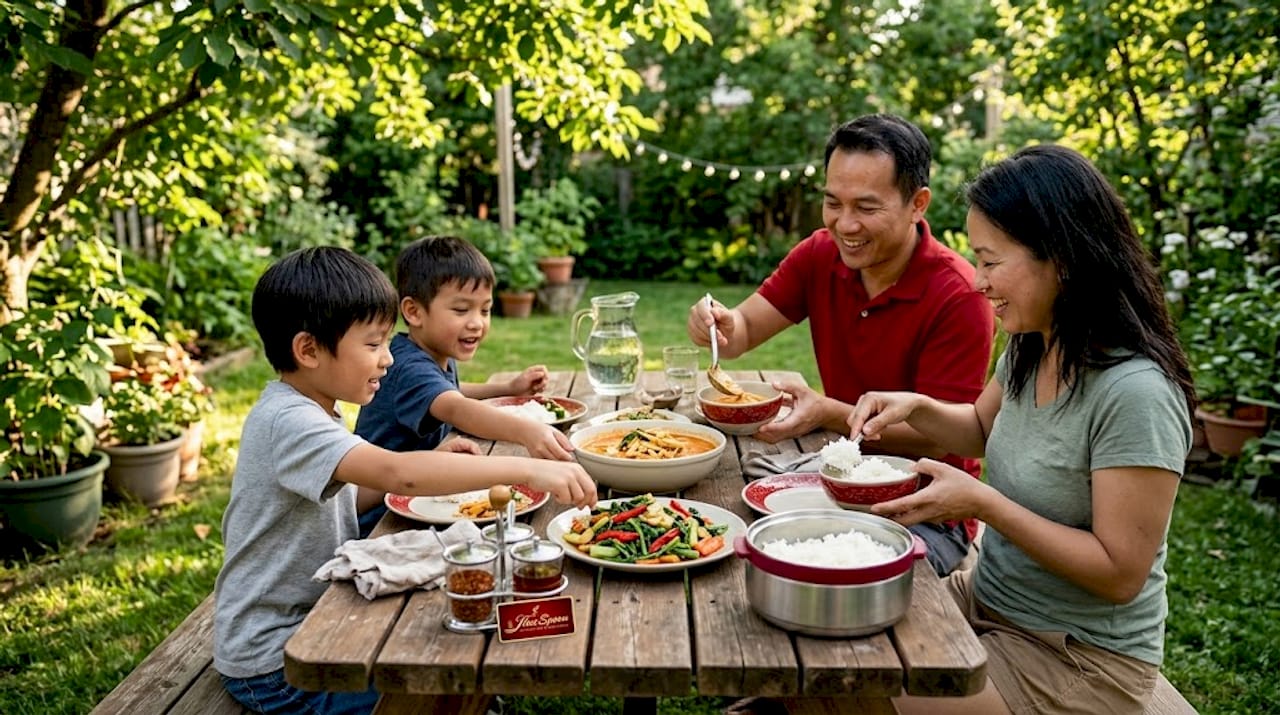
Most Western diners sit down at a Thai restaurant expecting a starter, then a main, then dessert. That assumption misses the entire point. What is Thai meal flow, really? It’s a communal, all-at-once dining experience built around balance, where rice anchors the table and shared dishes work together to deliver every flavor in a single meal. Understanding this shifts Thai dining from confusing to deeply satisfying.
Table of Contents
Key takeaways
Point | Details |
No sequential courses | Thai meals are served simultaneously, not in Western-style courses. |
Rice is the anchor | Steamed jasmine or sticky rice serves as the meal’s foundation, not a side dish. |
Five flavors on one table | Dishes are chosen to represent sweet, sour, salty, bitter, and spicy together. |
Etiquette shapes the meal | Spoon and fork are standard; rice is treated with cultural respect. |
Regional styles vary | Northern, Southern, Central, and Isaan traditions each carry distinct meal flow customs. |
What is Thai meal flow and how it works
At its core, authentic Thai meals are communal. Everyone at the table shares from a central spread of dishes, all served at the same time. There is no waiting for a starter to clear before the main arrives. The whole table lands together.
Rice sits at the center of this structure. In Central Thailand, that means fragrant steamed jasmine rice. In the North and Northeast, it’s glutinous sticky rice. Every other dish radiates outward from that central bowl, designed to be eaten alongside it rather than independently.
A traditional spread follows a recognizable pattern:
A curry dish (coconut-based or water-based depending on region)
A stir-fry for texture contrast
A soup, typically served throughout the meal rather than as a separate course
A fresh salad or relish to cut through richness
A nam prik (chili dipping sauce) with raw or blanched vegetables
This structure ensures that the five fundamental flavors of Thai cuisine, sweet, sour, salty, bitter, and spicy, all appear on the table simultaneously. No single dish carries all five. The balance comes from the combination.
Meal Element | Role on the Table |
Steamed jasmine rice | Base and neutral anchor |
Curry (gang) | Rich, aromatic depth |
Clear soup (gang jued) | Light, brothy balance |
Stir-fry (pad) | Textural contrast, savory |
Fresh salad (yam) | Bright acidity and heat |
Nam prik with vegetables | Bitter, spicy, refreshing |
The philosophy behind family-style Thai dining is not just practical. It reflects a worldview where food is shared, flavors are balanced, and no single ingredient dominates.
How Thai flavors are layered across the meal
The reason Thai food tastes so complex is not accident. It comes from deliberate layering. Every skilled Thai cook builds flavor in sequence, and the meal flow itself mirrors this philosophy.
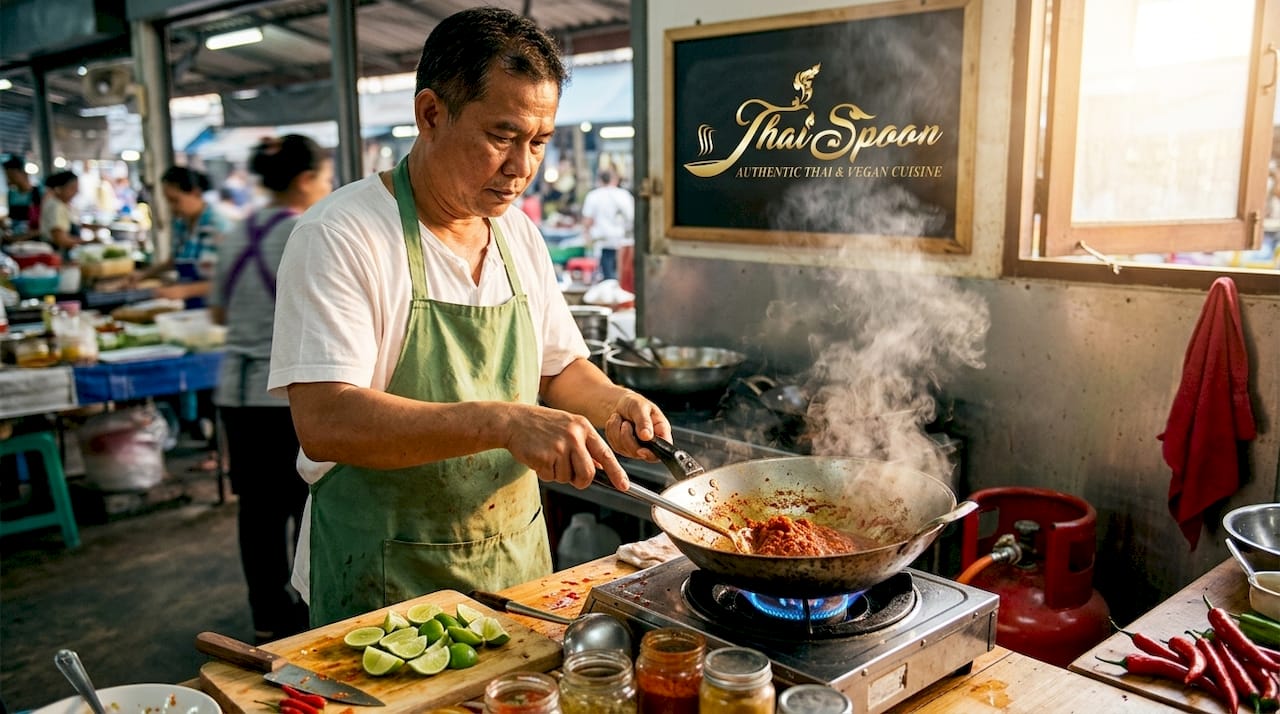
The Thai Five flavor approach means chefs deliberately select dishes to harmonize the full flavor spectrum across a shared table. A rich, sweet coconut curry pairs with a sour, herbaceous salad. A salty stir-fry balances against a light, clear broth. No dish is an island.
Within each dish, the same layering logic applies. Thai flavor building requires a deliberate sequence to maintain complexity without overpowering heat or salt. The process looks like this:
Start with an aromatic base: shallots, garlic, lemongrass, galangal, or curry paste heated in oil to activate fragrance
Add proteins or vegetables next, coating them in that aromatic layer
Introduce liquids like coconut milk, stock, or fish sauce to build the sauce body
Adjust salt, sweetness, and acid toward the end, tasting constantly
Finish with fresh herbs, lime juice, or chili to lift the aroma
The critical insight is that curry pastes must be heated briefly before adding other ingredients. Rushing this step produces flat, raw-tasting results. This is where most home cooks lose the depth they’re chasing.
Pro Tip: When replicating Thai flavor balance at home, aim to include one dish from each flavor category rather than doubling up on similar profiles. A table with two coconut curries but no fresh salad will feel heavy and one-dimensional.
Thai meal etiquette and how to dine authentically
Knowing the structure of a Thai meal is one thing. Knowing how to sit inside that structure graciously is another. Thai meal etiquette carries genuine cultural weight, and a few key habits shift the experience from tourist-style eating to something closer to authentic.
Use a spoon and fork, not chopsticks. Chopsticks in Thai dining are reserved for noodle dishes. For rice-based meals, the fork is used to push food onto the spoon, which carries it to the mouth. The knife never appears at a Thai table because dishes arrive pre-cut.
Serve rice properly. Rice etiquette includes avoiding single scoops, a gesture traditionally reserved for spirit offerings, and never wasting grains in the bowl. Rice carries spiritual and agricultural significance in Thai culture that still shapes table manners today.
Take small amounts from shared dishes. You sample a little from each dish per portion of rice rather than loading your plate with one thing. This keeps the flavor balance intact and respects the communal nature of the meal.
Mix flavors on your plate intentionally. Place a spoonful of curry next to a bite of stir-fry next to a pinch of salad and eat them in combination. Thai food rewards this approach far more than eating each dish in isolation.
Don’t rush. Pacing in a traditional Thai meal reflects the cultural value of togetherness. The soup stays on the table throughout. Conversation fills the space between bites.
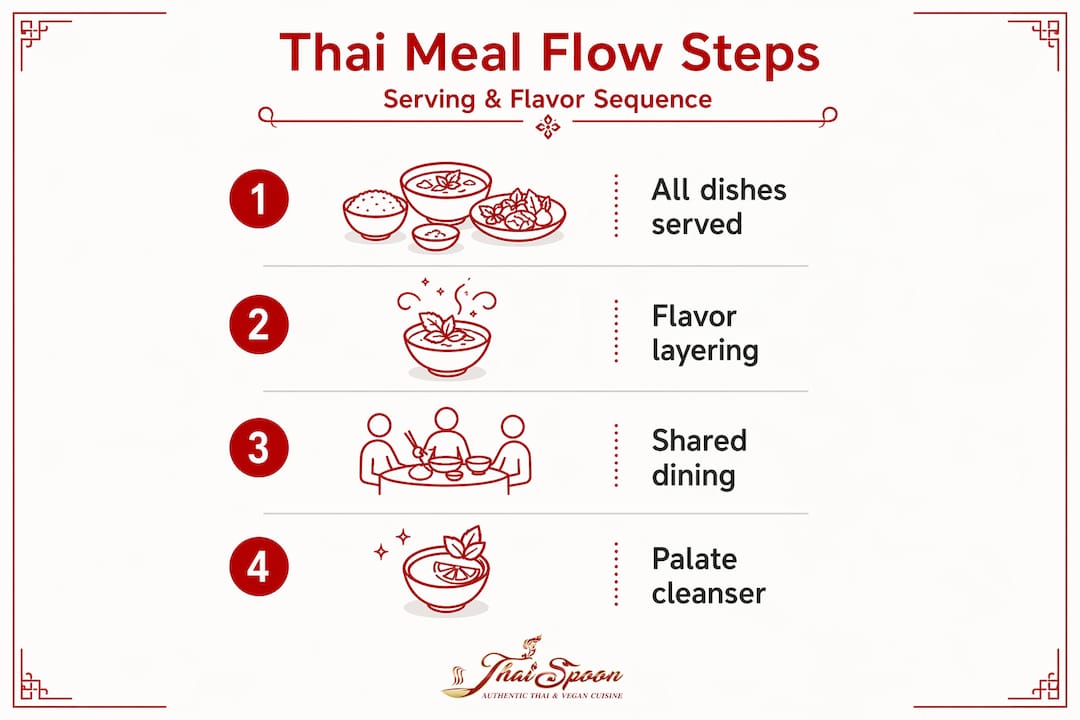
Meals often end with a light palate cleanser like sorbet or ice cream, something cool and simple to settle the palate after the heat and complexity of the main spread.
Pro Tip: If you’re hosting a Thai meal at home, place small serving spoons in each shared dish rather than letting guests use their own utensils. This reflects traditional Thai hospitality and keeps the communal spirit intact.
Recreating Thai meal flow at home
Home cooks can absolutely pull off an authentic Thai meal flow. The key is in selection and sequencing, choosing dishes that balance each other before you start cooking anything.
Start with these planning principles:
Choose dishes across flavor categories. Pick one rich dish (curry or braised), one fresh or acidic dish (larb, yam, or papaya salad), one light dish (clear soup or steamed vegetable with dipping sauce), and one stir-fry for texture.
Center the rice. Place the rice bowl literally in the middle of the table. All other dishes orbit around it. This physical arrangement communicates the meal’s structure before anyone takes a bite.
Scale dishes evenly. Each shared dish should serve as a flavor accent, not a main event. Portion sizes are intentionally smaller per dish because variety, not volume, is the point.
For cooking, follow the flavor layering sequence: build your aromatic base, add ingredients, introduce liquids, then season and finish. For spice guidance, the resource on using Thai spices covers how to calibrate heat without losing the underlying flavor layers.
Common Mistake | What to Do Instead |
Serving dishes one at a time | Place all dishes on the table simultaneously |
Treating rice as a side dish | Make rice the central anchor; build dishes around it |
Using the same protein in every dish | Vary proteins and cooking methods for textural contrast |
Over-salting individual dishes | Season lightly per dish; the combination creates full flavor |
Skipping the fresh element | Always include at least one raw or acidic dish for brightness |
Using essential Thai ingredients like fish sauce, palm sugar, tamarind, and fresh lime correctly makes the difference between a meal that tastes like Thai food and one that genuinely feels like it.
Regional variations in Thai meal flow
Thailand’s regions each carry their own interpretation of the meal, and those differences run deeper than just spice level.
Northern Thailand (Lanna) is home to the Khantok feast, where diners shape glutinous rice into balls by hand and dip them into sauces and shared dishes arranged on a raised circular tray. Guests sit on the floor, and the tactile, social nature of the meal is the entire experience. Dishes tend to be milder and herb-heavy.
Southern Thailand leans hard into heat. Turmeric features prominently, dishes are spicier, and the cooking reflects the region’s proximity to Malaysia and the sea. Rice is still jasmine-style, but the surrounding dishes are bolder and often include more seafood and coconut-based curries.
Central Thailand is what most people picture when they think of Thai food. Jasmine rice, balanced flavors, elegant presentation. This is the region that produced Pad Thai, Tom Kha Gai, and Green Curry in their most recognized forms.
Isaan (Northeast Thailand) centers on sticky rice served in small woven baskets. The cuisine is bold, fermented, and funky, with grilled meats, som tum papaya salad, and larb driving the flavor profile. Thai food’s regional complexity reflects local environment, wellness traditions, and seasonality, which means Isaan food tastes unlike anything from the South or Central regions.
Each regional style shapes how you sit, what utensils you use, how you handle the rice, and which flavors anchor the table. Knowing this adds real depth to how you read a Thai menu.
My perspective on what Thai meal flow really teaches you
I’ve watched a lot of first-time Thai diners get the experience almost exactly backward. They treat the curries like mains, the rice like a filler, and they eat dish by dish. They enjoy the food. But they miss the conversation the meal is trying to have with them.
What authentic Thai meal flow actually teaches is that harmony is built, not found. No single dish carries the whole experience. The balance only appears when you let the sweet, the sour, the heat, and the freshness land together. That’s not a food rule. It’s a philosophy about how good things work.
The communal structure also changes the social dynamic at the table. When everyone shares everything, decisions become collective. You ask your neighbor to pass the nam prik. You notice what they’re combining on their plate. Meals stretch longer because there’s always more to try.
The rice etiquette, the spoon technique, the light sorbet at the end, these aren’t arbitrary customs. They’re accumulated wisdom about how to eat in a way that honors the food and the people who made it. Home cooks who understand the meal flow don’t just cook better Thai food. They host more memorable tables.
— Thai
Experience authentic Thai meal flow at Thai Spoon Las Vegas
Understanding Thai meal flow on paper is one thing. Tasting it done right is entirely different.
[
At Thaispoonlasvegas, the menu is built around exactly this kind of balance. From the signature dishes like Pad Thai and Yellow Curry to the layered flavors of Steak Fried Rice, every plate reflects the communal, flavor-balanced approach that defines authentic Thai dining. If you’re planning a larger gathering and want to bring that shared-table experience to your own event, the catering services at Thaispoonlasvegas are built for groups who want the real thing. Located in northwest Las Vegas, about 20 minutes from the Strip, it’s where locals go when they’re done with tourist-row food and ready for the genuine article.
FAQ
What is Thai meal flow in simple terms?
Thai meal flow refers to the communal, all-at-once style of serving where rice anchors the table and multiple shared dishes representing different flavors are presented simultaneously. There are no sequential courses as in Western dining.
What dishes make up a traditional Thai meal?
A traditional Thai meal typically includes steamed rice, a curry, a stir-fry, a clear soup, a fresh salad or relish, and a chili dipping sauce with vegetables. Together they represent the five Thai flavor pillars: sweet, sour, salty, bitter, and spicy.
What utensils do Thai people use at meals?
Thai diners use a spoon and fork for rice-based meals. The fork pushes food onto the spoon, which carries it to the mouth. Chopsticks are reserved for noodle dishes only, and knives do not appear at the traditional Thai table.
How does sticky rice differ in Thai meal flow?
Sticky rice, common in Northern and Northeastern Thailand, is served in small woven baskets and eaten by hand, shaped into small balls and dipped into sauces. It plays the same central anchoring role as jasmine rice but changes the tactile and social experience of the meal.
How do regional Thai styles affect the meal flow?
Northern Thai meals like the Khantok feast involve floor seating and hand-rolled rice balls, Southern Thai tables skew spicier and seafood-heavy, Central Thai meals emphasize elegant balance, and Isaan dining centers on sticky rice with bold, fermented flavors. Each region shapes dish selection, pacing, and etiquette differently.
Recommended
Comments