


What Is Thai Rice Vermicelli: a Home Cook's Guide
TL;DR:
Thai rice vermicelli are delicate, white noodles made from rice flour that absorb flavors well and break easily. They differ from glass noodles, which are translucent and elastic due to mung bean starch, impacting texture and sauce absorption. Proper soaking, rinsing, and adding them at the end of cooking enhance dish texture and flavor; understanding regional names aids in selecting authentic noodles.
If you’ve ever stood in an Asian grocery aisle holding two near-identical bags of thin white noodles and had no idea which one to grab, you’re not alone. Understanding what is Thai rice vermicelli, how it differs from glass noodles or wheat noodles, and why that difference matters is exactly what separates a good Thai dish from a frustrating one. These delicate, rice flour-based strands show up in everything from bright, herb-loaded salads to rich coconut soups, and knowing how to work with them unlocks a huge range of Thai rice noodle dishes you can confidently make at home.
Table of Contents
Key takeaways
Point | Details |
Rice vermicelli vs. glass noodles | Rice vermicelli are white and break easily; glass noodles are transparent and slippery with a different mouthfeel. |
Soaking vs. boiling | Soaking in hot water for 10 to 15 minutes works well for most dishes; boiling for 3 to 4 minutes suits heartier preparations. |
Rinse immediately after cooking | Cooling noodles under cold water stops cooking and prevents gummy, clumped strands. |
Drain well before adding sauce | Add noodles near the end of cooking to absorb flavor without overcooking or breaking apart. |
Regional names matter | Knowing names like sen mee and mee hoon helps you find the right noodle in any Asian market. |
What is Thai rice vermicelli, exactly
Rice vermicelli are thin noodles made from rice flour and water. That’s it. No eggs, no wheat, no additives in the traditional version. The result is a pale white, slightly translucent strand that turns soft and chewy when cooked but stays delicate enough to soak up dressings, broths, and stir-fry sauces without dominating them.
In Thailand, these noodles go by sen mee, which translates roughly to “thin noodles.” In Southern Thailand and among Thai-Chinese communities, you’ll hear mee hoon. Across Southeast Asia, you’ll encounter other cognates: bún in Vietnam, bee hoon in Singapore and Malaysia, and regional names like num banh chok in Cambodia. Knowing these names matters practically. When you walk into a Vietnamese or Chinese grocery and ask for Thai rice vermicelli by its Thai name, you might get blank stares. Ask for mee hoon or bee hoon and you’ll get exactly what you need.
How rice vermicelli compares to similar noodles
The most common mix-up involves glass noodles, also called cellophane noodles or woon sen in Thai. Glass noodles are made from mung bean starch, not rice flour, which gives them a transparent appearance when cooked and a slippery, elastic texture. Rice vermicelli, by contrast, stays white and breaks more cleanly. They also absorb sauces differently. Glass noodles grip sauces and stay springy. Rice vermicelli soaks up flavor and softens into the dish.
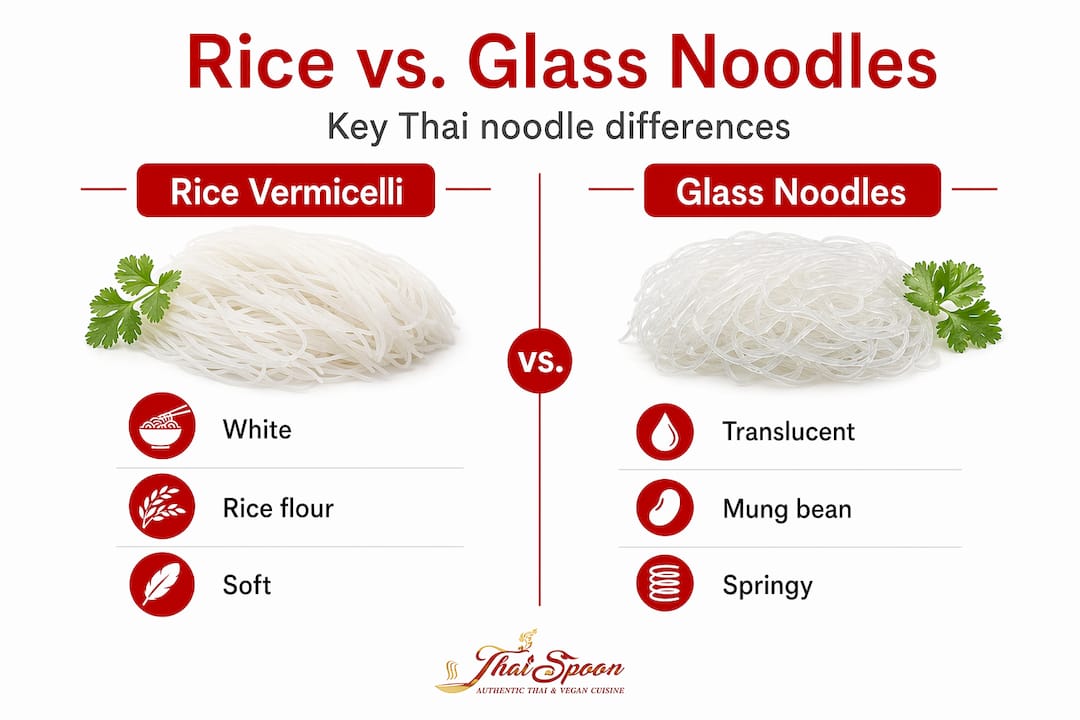
Here’s a quick comparison to keep in mind:
Noodle type | Base ingredient | Color when cooked | Texture | Best used in |
Rice vermicelli | Rice flour | White to off-white | Soft, slightly firm | Salads, soups, stir-fries, rolls |
Glass noodles | Mung bean starch | Translucent | Elastic, slippery | Stir-fries, soups, dumplings |
Rice stick noodles | Rice flour | White | Flat, chewy | Pad Thai, drunken noodles |
Wheat vermicelli | Wheat flour | Pale yellow | Firmer, denser | Fusion dishes, noodle soups |
Rice vermicelli also comes in thickness variations. Ultra-thin versions are ideal for fresh spring rolls and salads. Slightly thicker versions hold up better in soups and stir-fries. Most packages are labeled by thickness, so check before you buy.
How to cook rice vermicelli properly
Getting the texture right is where most home cooks stumble. The noodles cook fast, and that speed works against you if you’re not paying attention.
The two main methods:
Soaking in hot water. Pour recently boiled water over the dried noodles in a bowl and let them soak for 10 to 15 minutes. This is the gentler method and works well for salads, rolls, and dishes where you want the noodles to finish cooking in a sauce or broth. The noodles will be pliable but not fully cooked.
Boiling directly. Boiling rice vermicelli for 3 to 4 minutes in a pot of water gives you fully cooked, tender noodles. This method suits hearty stir-fries and soups where the noodles won’t see additional heat.
Whichever method you use, the next step is non-negotiable. Rinse the noodles immediately under cold running water. This stops the cooking process and washes off the surface starch that causes strands to glue together. Rapid cooling prevents gummy texture and keeps your noodles separate and clean-looking in the bowl.
Practical steps for consistently good results:
Soak or boil according to your dish type.
Drain thoroughly in a colander.
Rinse under cold water for at least 30 seconds.
Shake out excess water before using.
Toss lightly with a tiny amount of neutral oil if noodles will sit for more than a few minutes before you need them.
Add noodles to your dish near the end of cooking rather than at the beginning.
That last point matters more than most recipes mention. Noodles added near the end of cooking absorb the sauce flavors without breaking down or turning to mush. If you cook them in the sauce from the start, you’ll end up with a clumped, overcooked mass instead of distinct, flavorful strands.
Pro Tip: If your noodles clump after rinsing, run them under warm water briefly and gently pull the strands apart with your fingers before adding them to the dish.
Signature Thai dishes that use rice vermicelli
Once you understand the noodle, the dishes start making sense. Rice vermicelli shows up across the spectrum of Thai cooking in ways that highlight its core strength: absorbing flavor without getting in the way.
Here are the most prominent examples:
Pad Sen Mee. A stir-fry version of the noodles with egg, bean sprouts, green onions, and soy-based sauce. It’s the less-famous cousin of Pad Thai but uses rice vermicelli instead of wider rice stick noodles, giving it a lighter, softer texture.
Kanom Jeen. Fresh, fermented rice vermicelli served as a base for rich curries and spicy soups. The noodles are coiled into small mounds on a plate and topped with green or orange curry. This is one of the oldest rice noodle dishes in Thai culinary tradition.
Yum Sen Mee. A cold vermicelli salad tossed with shrimp, pork, herbs, chili, lime juice, and fish sauce. Salty, sour, and sweet dressings soak into the noodles, and chopped peanuts add the crunch that contrasts against the soft strands.
Rice vermicelli soup. Found in street stalls across Thailand, thin vermicelli in clear pork or chicken broth topped with fresh herbs, fried garlic, and bean sprouts. Clean, fast, satisfying.
Spring rolls and fresh rolls. The noodles fill both fried and fresh versions, adding bulk and texture while staying neutral enough to let the vegetables and protein lead.
What makes rice vermicelli especially suited to these dishes is its flavor neutrality and sauce absorption capacity. The noodle doesn’t have a strong taste of its own. It takes on whatever you pair with it. That’s actually a feature, not a flaw. Thai flavors are bold and layered, and a noodle that steps back and lets lime, fish sauce, galangal, and lemongrass do the talking is exactly what those dishes need.
Garnishes play a big role too. Fresh cilantro, mint, thinly sliced red chili, crushed roasted peanuts, and a wedge of lime are the standard finishing kit for most cold and room-temperature vermicelli dishes. Together, they create the textural and flavor contrast that makes Thai food so satisfying.
Substitutions and variations worth knowing
Sometimes you’re mid-recipe and realize you have the wrong noodle. Here’s what you can actually do about it.
If a recipe calls for glass noodles and you only have rice vermicelli, substituting rice vermicelli works, but expect a less elastic, more delicate result. The dish will taste similar but the texture will be softer and the noodles will break more easily when tossed. Handle them gently, cook them slightly less than you think you need to, and add them to the wok at the very last minute.
Going the other direction, replacing rice vermicelli with glass noodles in a salad like Yum Sen Mee changes the dish significantly. Glass noodles won’t absorb the dressing the same way. They’ll stay slippery and separate, which gives you a completely different eating experience.
Pro Tip: When adapting a Southeast Asian recipe that calls for “thin rice noodles,” rice vermicelli is almost always the correct choice. The right noodle identity affects texture and sauce absorption more than any other ingredient in the dish.
For home cooks building a broader recipe repertoire, it’s worth keeping at least two sizes of rice vermicelli in the pantry. Ultra-thin for salads and rolls, medium-thin for stir-fries and soups. Both are inexpensive, shelf-stable, and more forgiving than most people expect once you understand the soaking timing. You can find extensive rice vermicelli recipes and ideas at Tastevibe’s recipe collection if you want to explore beyond Thai cooking into Vietnamese, Malaysian, and Singaporean uses of the same noodle.
My take on working with these noodles
I’ve cooked Thai rice vermicelli hundreds of times in authentic preparations, and the single mistake I see most often from beginners is skipping the rinse. People pull the noodles out of boiling water or the soaking bowl and go straight into the wok. Within two minutes they have a sticky, clumped pile instead of a dish. That cold rinse step is not optional.
The second thing I’ve learned is that the noodle does its best work when you stop trying to make it the star. When I see recipes where someone loads the noodles with heavy, complex sauces and cooks everything together from the start, the dish always falls apart texturally. Thai rice vermicelli is a support player. Give it clean preparation, add it at the end, and let your aromatics, proteins, and dressings carry the dish. That’s when it truly shines.
My personal favorite use is a cold yum sen mee on a warm day. Briefly soaked noodles, plenty of lime and fish sauce, shrimp, and a generous pile of fresh herbs. Simple, fast, and genuinely satisfying in a way that a bowl of rice never quite matches.
— Thai
Taste the real thing at Thaispoonlasvegas
Understanding a noodle in theory only gets you so far. Sometimes the fastest way to truly learn a dish is to eat one made correctly by people who’ve been cooking it for years.
[
At Thaispoonlasvegas, authentic Thai noodle dishes are a core part of what we do. Whether you’re after a classic preparation to benchmark your own cooking or you simply want a well-made Thai meal without driving to the Strip, our kitchen in northwest Las Vegas delivers the real thing. Browse the full menu here to see current Thai rice noodle dishes and seasonal offerings. Planning a gathering? Our catering services cover events of all sizes with authentic Thai food that travels well, including noodle-based dishes that hold up beautifully for group service.
FAQ
What is rice noodle made from?
Rice noodles, including Thai rice vermicelli, are made from rice flour and water. Unlike wheat noodles, they contain no gluten, which makes them naturally suitable for gluten-free diets.
How do you cook rice vermicelli without it clumping?
Boil for 3 to 4 minutes, then rinse immediately under cold running water to remove surface starch. Drain well and toss lightly with neutral oil if not using right away.
What is the difference between rice vermicelli and glass noodles?
Rice vermicelli are made from rice flour and stay white when cooked. Glass noodles are made from mung bean starch and turn translucent. They have a slippery, elastic texture that rice vermicelli does not.
What Thai dishes use rice vermicelli?
Common Thai rice noodle dishes using rice vermicelli include Pad Sen Mee, Yum Sen Mee salad, Kanom Jeen with curry, rice vermicelli soup, and both fried and fresh spring rolls.
Can you substitute rice vermicelli for glass noodles?
Yes, with adjustments. Substituting rice vermicelli for glass noodles yields a softer, less elastic texture. Handle the noodles gently, reduce cooking time slightly, and add them at the very end of the recipe.
Recommended
Comments