


Tom Yum Kung: Discover Thailand's iconic hot & sour soup
TL;DR:
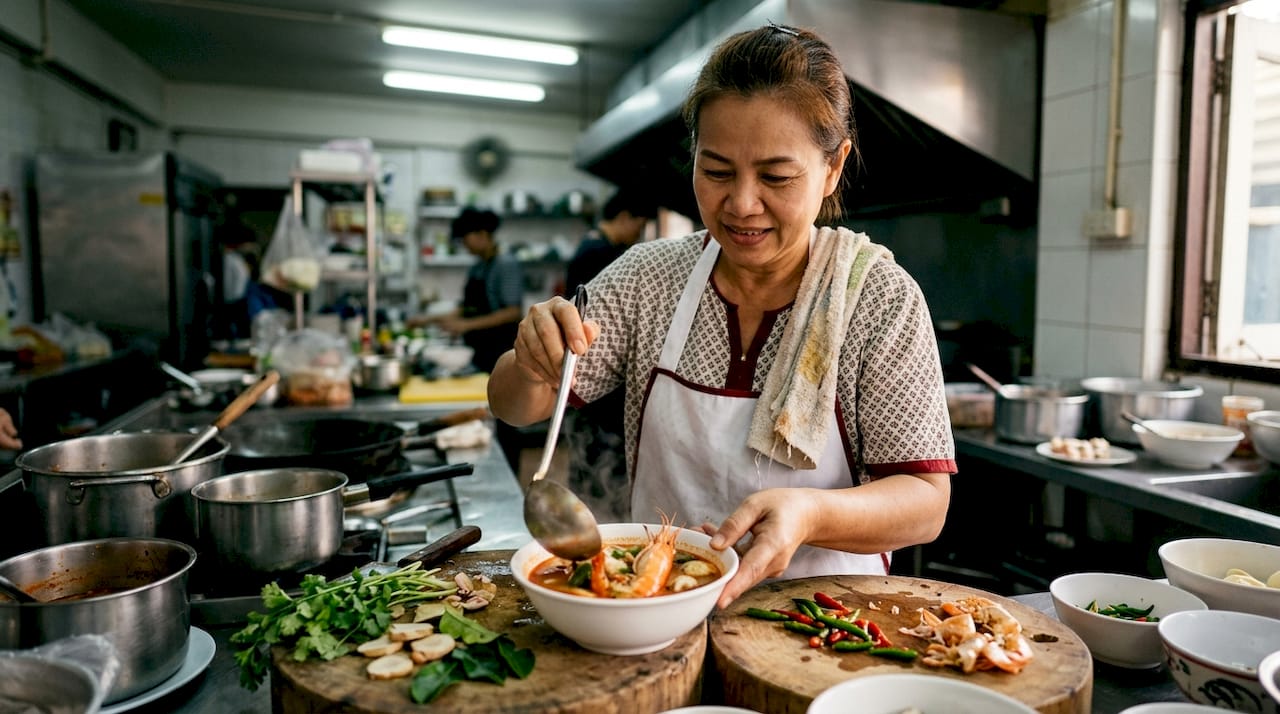
Tom Yum Kung is a traditional spicy, sour Thai shrimp soup with a balanced, layered flavor profile.
Key ingredients include lemongrass, galangal, kaffir lime leaves, chilies, and fresh shrimp, often prepared by bruising herbs.
In Las Vegas, authentic versions can be found with clear broth, served in hot pots, and enjoyed for their health benefits and complex flavors.
Tom Yum Kung isn’t just a bowl of spicy broth. It’s one of Thailand’s most recognized dishes worldwide, a soup so layered in flavor and history that a single spoonful can stop you mid-conversation. If you’ve been ordering it without thinking much about what’s in it, you’re leaving a lot of pleasure on the table. This guide breaks down exactly what Tom Yum Kung is, why its ingredients matter, how it’s made, and where Las Vegas food lovers can find the most authentic version possible. Whether you’re dining in or ordering takeout, understanding this soup changes how you experience it.
Table of Contents
Key Takeaways
Point | Details |
Signature flavors | Tom Yum Kung balances hot, sour, and aromatic notes for a distinctive Thai taste experience. |
Essential ingredients | Lemongrass, galangal, kaffir lime leaves, and shrimp are must-haves for authenticity. |
Clear vs. creamy | Choose between bold traditional clear broth or modern creamy recipes, each prized by different fans. |
Ordering tips | Look for head-on shrimp and specify spice level to get the best Tom Yum Kung in Las Vegas. |
What is Tom Yum Kung? Origins and flavor profile
Let’s clear something up right away. Tom Yum Kung is not a generic spicy soup with shrimp thrown in. Every word in its name carries meaning. “Tom” means to boil, “Yum” refers to a Thai-style salad with a spicy and sour dressing, and “Kung” simply means shrimp. Put it together and you have a dish that’s been refined over centuries in Thai kitchens. It is, at its core, a classic Thai hot and sour shrimp soup featuring a spicy, tangy broth infused with lemongrass, kaffir lime leaves, galangal, and fresh chilies.
Thailand has long exported this dish to the world, and for good reason. It’s bold without being one-dimensional. The flavor profile hits four notes simultaneously: hot from the chilies, sour from lime juice, savory from fish sauce, and aromatic from the herbs. No single element dominates. That balance is what separates Tom Yum Kung from every other spicy soup you’ve tried.
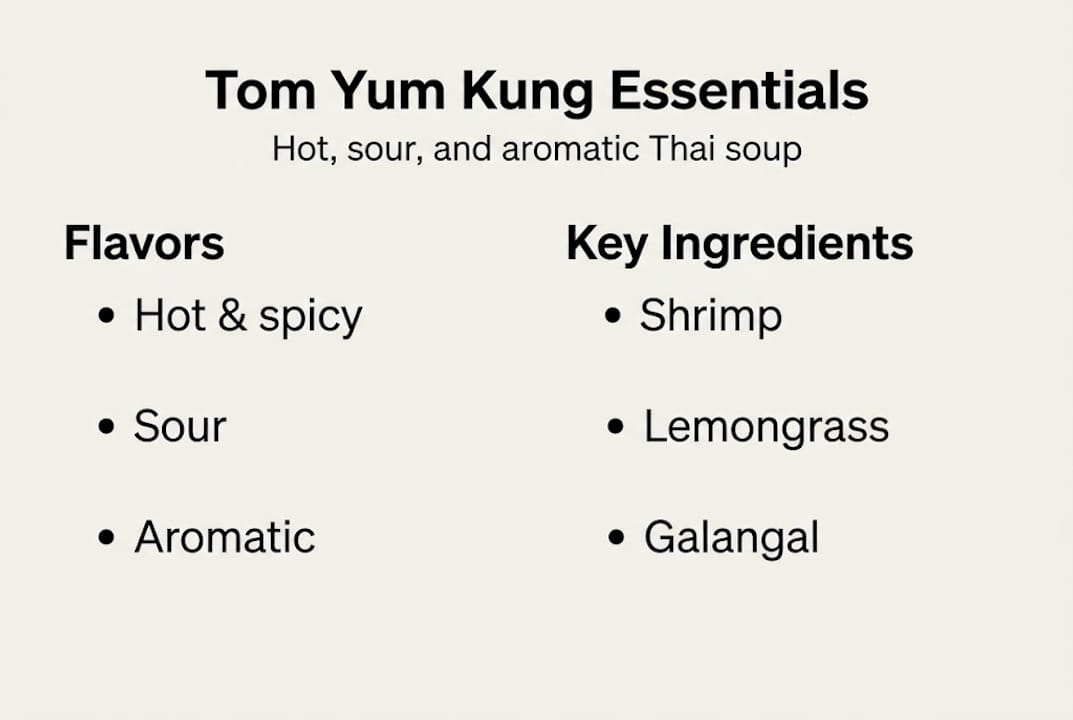
Here’s a quick look at what makes this soup nutritionally interesting:
Component | Role in the soup |
Lemongrass | Citrus aroma, digestive aid |
Galangal | Earthy, peppery depth |
Kaffir lime leaves | Floral citrus fragrance |
Thai chilies | Heat and complexity |
Shrimp | Protein and natural sweetness |
Fish sauce | Umami and saltiness |
Lime juice | Bright acidity |
Beyond flavor, the herbs in Tom Yum Kung carry real nutritional weight. Research has shown that the herbs are 100x more effective than common antioxidants at inhibiting tumor growth in lab studies. That’s not a marketing claim. That’s peer-reviewed science attached to a bowl of soup.
For a deeper look at the dish’s full story, check out this complete Tom Yum guide or explore the role of a Thai soup base in creating that signature flavor. You can also browse other authentic Thai soups to see how Tom Yum Kung compares.
Essential herbs and ingredients: The backbone of Tom Yum Kung
Now that you know what Tom Yum Kung is, let’s break down the essential components that make or break its flavor. The aromatics in this soup aren’t decoration. They are the soup.
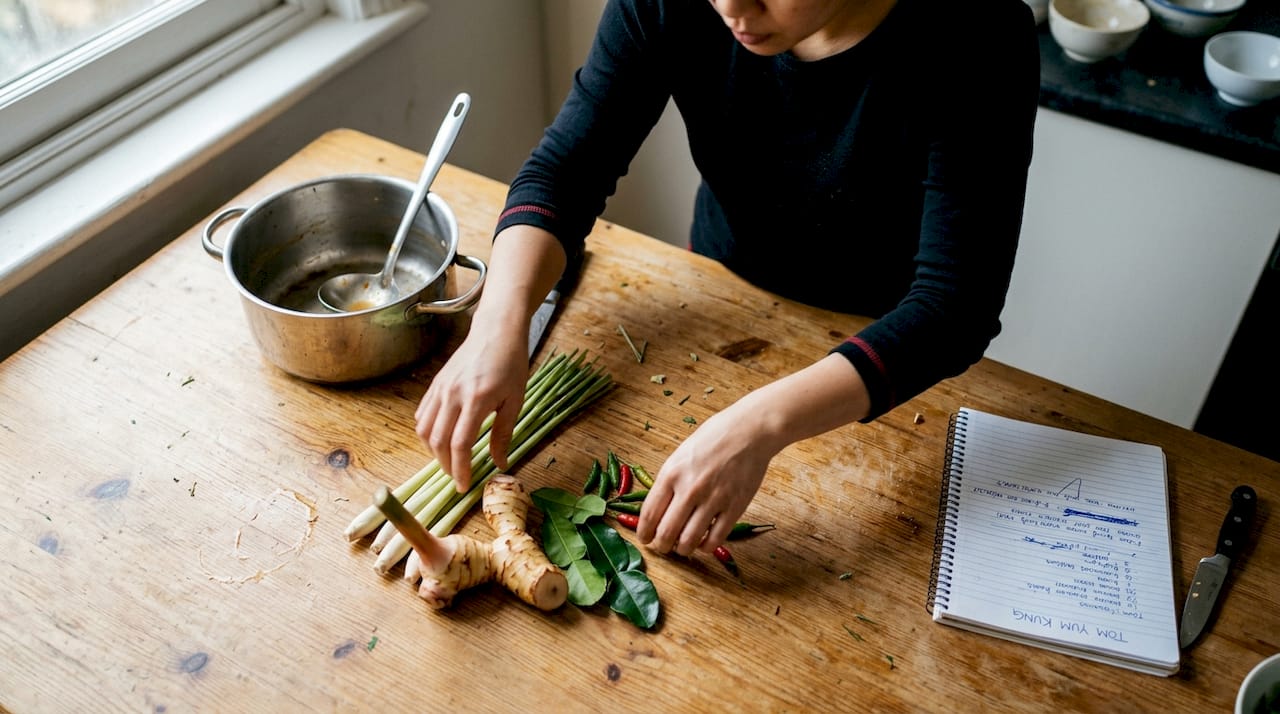
Key herbs like lemongrass, kaffir lime leaves, galangal, and chilies are prepared by bruising, not chopping, to release their oils without disintegrating into the broth. This technique is what gives Tom Yum Kung its clean, aromatic punch rather than a muddy, overworked flavor.
Here’s how each ingredient contributes:
Lemongrass: Adds a citrusy, slightly floral aroma. It’s bruised and cut into large pieces so it infuses without becoming chewy.
Galangal: Often confused with ginger, but sharper and more piney. It gives the broth an earthy backbone.
Kaffir lime leaves: Torn, not cut, to release their fragrant oils. They add a floral citrus note that no other ingredient can replicate.
Thai bird’s eye chilies: The source of heat. Adjust the quantity to control spice level without losing the dish’s character.
Mushrooms: Usually oyster or straw mushrooms. They absorb the broth and add a meaty texture.
Tomatoes: Add a mild sweetness and slight acidity that rounds out the sourness from lime.
Shrimp: The star protein. Head-on shrimp produce a richer, more complex stock.
Ingredient | Vegan substitute | Flavor impact |
Shrimp | Tofu or mushrooms | Lighter, less oceanic |
Fish sauce | Soy sauce or tamari | Less depth, still savory |
Shrimp stock | Vegetable stock | Milder base |
For home cooks, understanding essential Thai ingredients can transform your cooking. And if you’re still sorting out the basics, this guide to understanding Tom Yum Soup is a great starting point.
Pro Tip:
, and always use head-on shrimp if you can find them. The heads release a natural sweetness into the stock that pre-peeled shrimp simply cannot match.
How Tom Yum Kung is made: Traditional techniques and modern variations
Understanding the ingredients is one thing. But the true soul of Tom Yum Kung comes out in how it’s made, from technique to customization.
Authentic preparation follows a logical sequence that builds flavor at every stage. Here’s how it typically goes:
Make the shrimp stock. Simmer shrimp shells and heads in water to build a rich, sweet base.
Bruise and add aromatics. Lemongrass, galangal, and kaffir lime leaves go in first to infuse the stock.
Add mushrooms, onions, and tomatoes. These cook briefly to soften and release their flavors.
Add the shrimp. Shrimp cook fast. Overcooked shrimp turn rubbery, so they go in last and come out quickly.
Season iteratively. Fish sauce, lime juice, and chili are added and tasted in stages, not dumped in all at once.
Finish off heat. Add lime juice off heat to preserve its fresh, bright acidity. Heat destroys the volatile compounds that make lime juice sing.
“The balance between hot, sour, salty, and aromatic is not achieved by a recipe. It’s achieved by tasting and adjusting until the bowl feels alive.” This is the standard every authentic Thai kitchen holds itself to.
The preparation methodology of simmering shrimp stock, bruising herbs, and seasoning iteratively is what separates a restaurant-quality bowl from a flat, one-note version.
There are two main variations of Tom Yum Kung: clear broth, called nam sai, and creamy broth, called nam khon. The creamy version uses evaporated or coconut milk along with roasted chili paste. Both are legitimate, but they deliver very different experiences.
For a deeper breakdown, read this guide to making Tom Yum or explore how it compares to other spicy Thai dishes on the heat scale.
Tom Yum Kung in Las Vegas: Where to find and how to enjoy
After breaking down how Tom Yum Kung is made, let’s look at where in Las Vegas you can experience this dish authentically, along with tips to spot the real deal and enjoy it at its best.
Las Vegas has a surprisingly strong Thai food scene, especially once you move away from the Strip. Here’s what to look for and keep in mind:
Ask for head-on shrimp. Restaurants that use head-on shrimp for best stock are signaling that they care about the foundation of the dish.
Choose your broth style. Clear broth (nam sai) is the traditional choice and delivers a more intense herbal flavor. Creamy (nam khon) is richer and more approachable for newcomers.
Specify your spice level. Most Thai restaurants in Las Vegas will accommodate your heat preference. Don’t be shy about asking for medium if you’re not sure.
Order takeout in a hot pot. Hot pot containers keep the soup at a safe serving temperature and help the flavors continue to develop during transit.
Pair it right. Tom Yum Kung pairs beautifully with jasmine rice, which absorbs the broth and softens the heat. Spring rolls make a great starter.
From a health perspective, each serving is about 156 calories, making it one of the lighter options on any Thai menu without sacrificing satisfaction.
Explore the full range of Thai soup varieties in Las Vegas to plan your next meal, or check out must-try Thai dishes beyond the soup course. If you love bold broth flavors, Tom Yum inspired noodles are worth exploring too.
Why Tom Yum Kung is more than just a soup: An insider’s perspective
Most diners order Tom Yum Kung and enjoy it without ever slowing down to notice what’s happening in the bowl. That’s a missed opportunity.
Here’s what we’ve observed after years of serving Thai food in Las Vegas: people who try the clear broth version first almost always prefer it once they understand what they’re tasting. The clear nam sai delivers an authentic bold herbal punch that the creamy version softens. Traditionalists avoid the milk and chili paste entirely because they believe it masks the herbs rather than supporting them.
We’re not saying creamy is wrong. It’s delicious. But if you’ve only ever had the creamy version, you haven’t fully met Tom Yum Kung yet.
This soup rewards attention. The lemongrass isn’t meant to be eaten. The galangal is there to infuse, not to chew. The lime juice was added at the last second for a reason. When you understand what makes Tom Yum unique, every sip becomes more intentional. Slow down. Smell the broth before you taste it. Ask for the clear version at least once. That’s where the real experience lives.
Explore Tom Yum Kung and authentic Thai cuisine in Las Vegas
Ready to experience Tom Yum Kung and a full spectrum of Thai flavors for yourself? Thai Spoon Las Vegas brings authentic Thai cooking to the northwest part of the city, just 20 minutes from the Strip, without the tourist markup or the noise.
Browse our full menu to see our Thai soups, curries, noodle dishes, and more, including options for vegan and gluten-free diets. Planning a group event or office lunch? Our Thai catering services bring the flavor directly to your venue. When you’re ready to eat, skip the drive and order Tom Yum Kung online for pickup or delivery. Authentic Thai food, on your schedule.
Frequently asked questions
What makes Tom Yum Kung different from other Thai soups?
Tom Yum Kung is a classic Thai hot and sour shrimp soup built on a spicy, tangy broth infused with lemongrass, galangal, and kaffir lime leaves, making it distinct from milder coconut-based soups like Tom Kha.
Which version of Tom Yum Kung should I order: clear or creamy?
Order clear (nam sai) for a bold, herbal, traditional flavor, or creamy (nam khon) for a richer, milder experience. Both variations are authentic but deliver noticeably different results.
Is Tom Yum Kung a healthy option?
Yes. At roughly 156 calories per serving and loaded with herbs studied for their antioxidant properties, Tom Yum Kung is one of the most nutritionally favorable soups on any Thai menu.
Can I order Tom Yum Kung for takeout in Las Vegas?
Absolutely. Many Las Vegas Thai restaurants offer Tom Yum Kung in hot pots for takeaway, which keeps the soup hot and helps the flavors hold during transit.
Recommended
Comments