


Discover the meaning of 'Pad' in Pad Thai: authentic flavor
TL;DR:
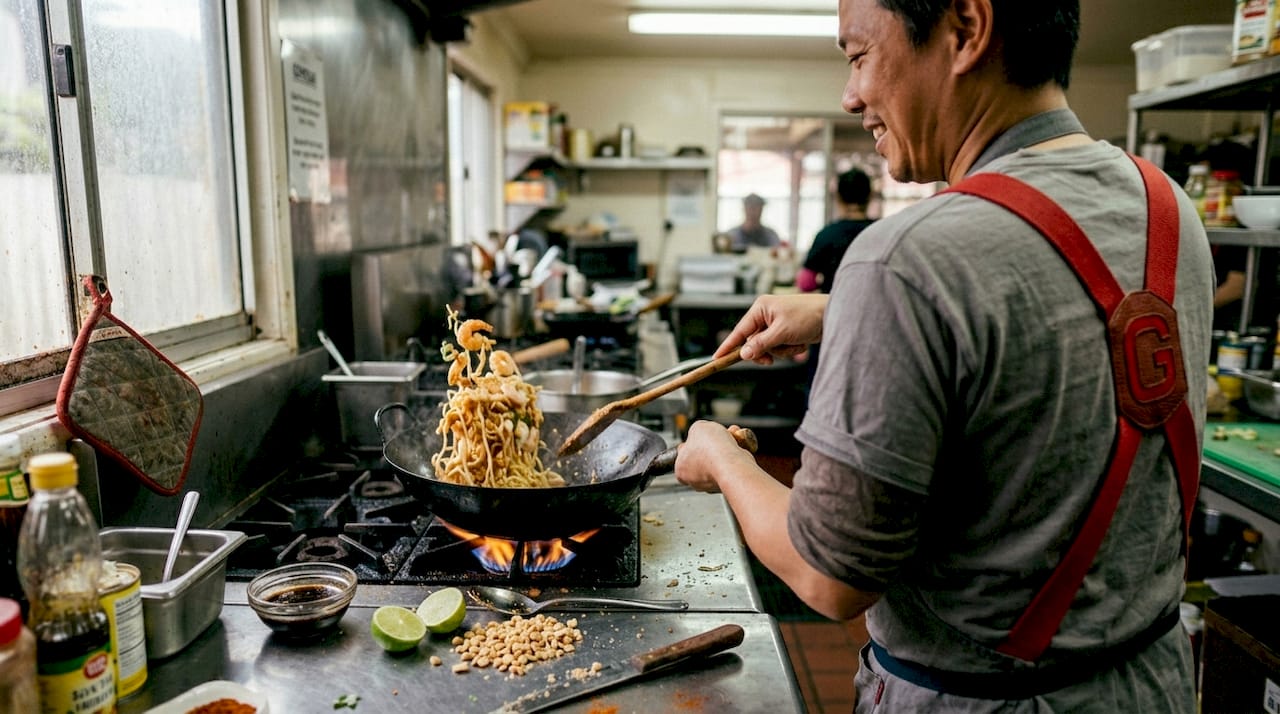
“Pad” in Pad Thai means stir-fry, not noodles or flavor.
Authentic Pad Thai features a tamarind-based sauce with specific ingredients cooked via high-heat wok-frying.
True Thai Pad Thai balances four flavors and emphasizes technique, distinguishing it from Western versions.
Most people assume the word “Pad” in Pad Thai refers to a type of noodle or a specific dish style. It’s a reasonable guess, but it’s completely wrong. “Pad” is actually the Thai word for stir-fry, and that single distinction changes everything about how you understand, order, and appreciate this iconic dish. Once you know what “Pad” really means, you start noticing the difference between a plate that was rushed together and one that was cooked with real technique. This article breaks down the true meaning of “Pad,” the ingredients that define authentic Pad Thai, and how to find the real thing right here in Las Vegas.
Table of Contents
Key Takeaways
Point | Details |
‘Pad’ means stir-fry | The word ‘Pad’ in Pad Thai refers to the stir-frying technique, not a noodle type. |
Authentic Pad Thai ingredients | True Pad Thai is made with rice noodles, tamarind-based sauce, eggs, protein, bean sprouts, and chives. |
Flavor balance signals authenticity | Look for a balanced mix of sweet, sour, salty, and spicy tastes to identify genuine Pad Thai. |
Recognize real Pad Thai in Las Vegas | Choose dishes with tamarind sauce and drier texture to enjoy true Thai street style. |
What does ‘Pad’ mean in Pad Thai?
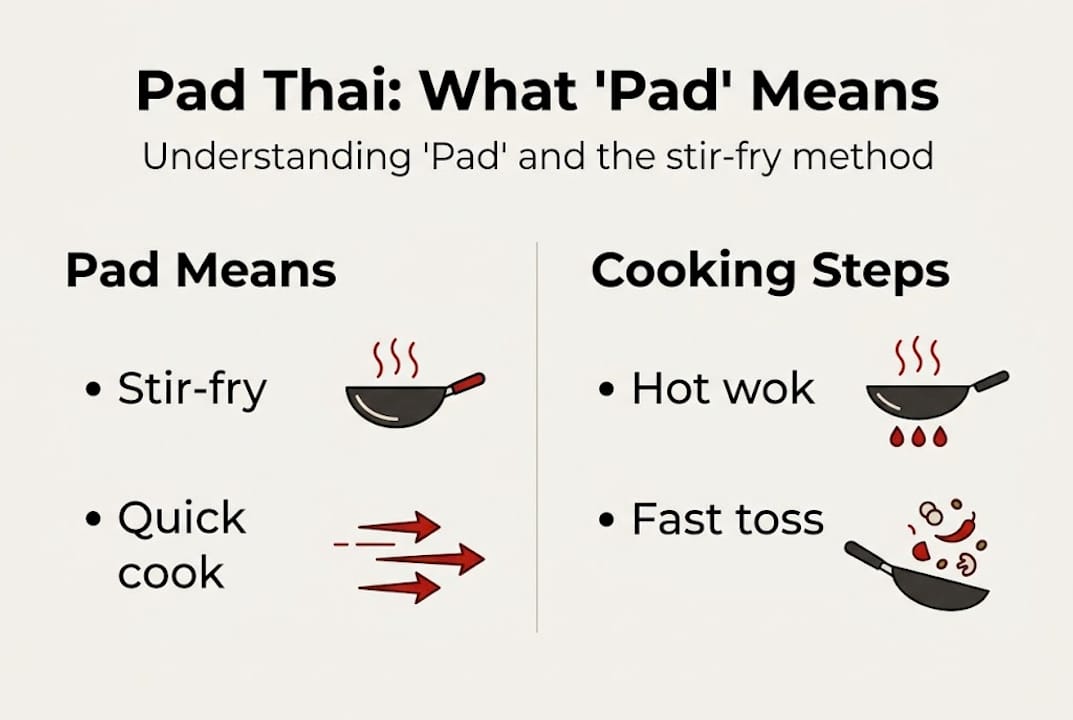
The word “Pad” means stir-fry in Thai, derived from the Thai word ผัด (pronounced “phat” or “pad”), which refers specifically to the quick wok-frying cooking method. It’s not a description of the noodles. It’s not a flavor profile. It’s a cooking technique, and that technique is the heart of the dish.
This matters because stir-frying is a precise, high-heat process. The wok must be screaming hot. The ingredients go in at specific moments. The cook has maybe 90 seconds to pull everything together before the noodles overcook or the eggs turn rubbery. When you understand that “Pad” is a verb, not a noun, you start appreciating why a great Pad Thai feels so alive on the plate.
The name itself has a fascinating political backstory. The dish was renamed “Pad Thai” in the 1930s and 1940s by the Thai government under Prime Minister Phibun as part of a nationalist campaign. Originally called “Kway Teow Pad,” a Chinese-style rice noodle stir-fry, the government rebranded it to promote Thai national identity, encourage rice consumption, and distance the dish from its Chinese roots. So the name “Pad Thai” literally means “Thai stir-fry,” a declaration of cultural ownership as much as a recipe.
This context is worth keeping in mind when you explore a complete Pad Thai guide, because the dish carries cultural weight far beyond its ingredients.
Here’s a quick comparison of what “Pad” actually signals versus common misconceptions:
Common belief | Reality |
“Pad” refers to noodle type | “Pad” means stir-fry technique |
Any noodle dish can be Pad Thai | Must use wok-frying method |
The name is purely descriptive | Name has nationalist/political roots |
It’s a Chinese dish | Rebranded as distinctly Thai in the 1940s |
Knowing this, every time you order Pad Thai, you’re ordering a Thai stir-fry, and the quality of that stir-fry is everything.
The essential ingredients and cooking process
With the meaning clear, let’s explore the must-have ingredients and the stir-fry process that create authentic Pad Thai.
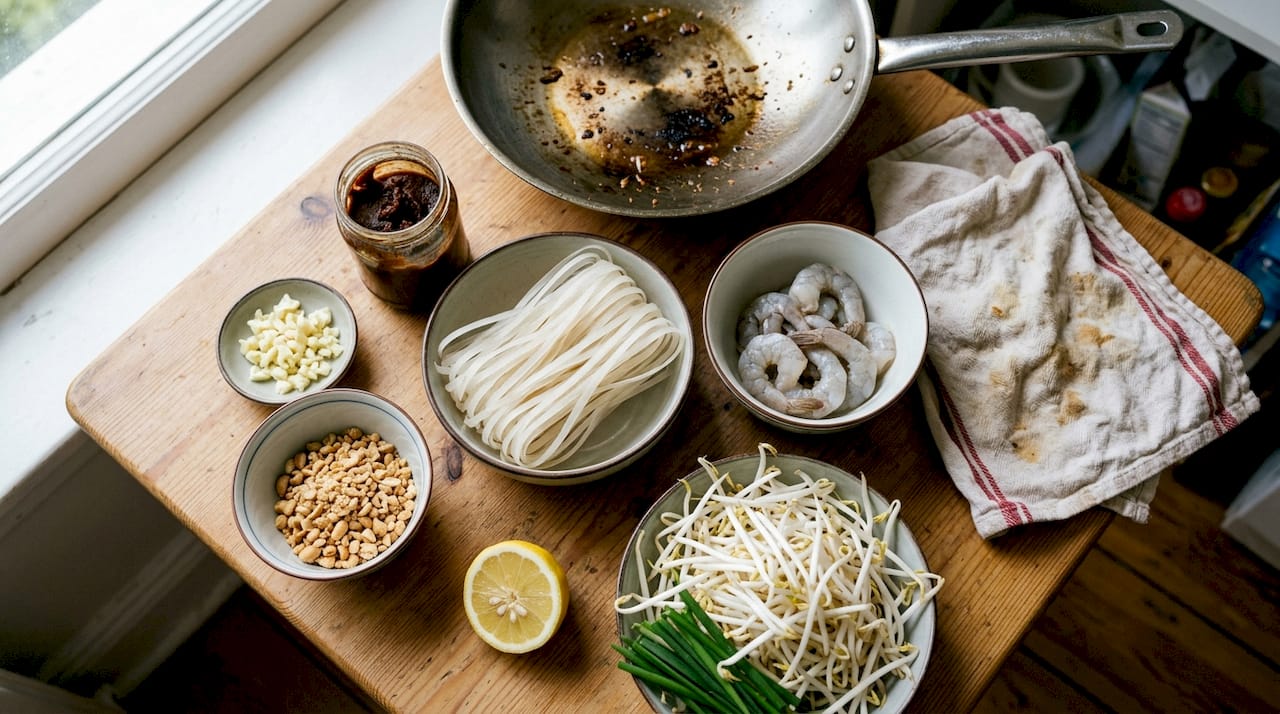
Authentic Pad Thai is built on a precise set of ingredients. The dish involves stir-frying flat rice noodles with proteins such as shrimp, chicken, or tofu, along with eggs, bean sprouts, garlic chives, and peanuts, all brought together with a sauce of tamarind, fish sauce, and palm sugar for a sweet-sour-salty balance. Each component plays a specific role, and swapping one out changes the entire character of the dish.
The sauce is where most shortcuts happen. Tamarind paste provides a fruity, tart backbone that no other ingredient can replicate. Fish sauce adds depth and saltiness without tasting “fishy” when used correctly. Palm sugar rounds everything out with a mild, caramel-like sweetness. Together, these three create a flavor that is layered and complex without being heavy.
Here’s a breakdown of the core ingredients and their roles:
Ingredient | Role in the dish |
Flat rice noodles | Base texture, absorbs sauce |
Tamarind paste | Tart, fruity depth |
Fish sauce | Salty umami foundation |
Palm sugar | Mild sweetness, balance |
Eggs | Richness and body |
Bean sprouts | Crunch and freshness |
Garlic chives | Herbal bite |
Peanuts | Nutty finish and texture |
The cooking sequence matters just as much as the ingredients. Authentic preparation calls for soaking rice noodles in room temperature water for 30 to 60 minutes, then stir-frying in a specific sequence: aromatics first, then protein, then noodles with sauce, with bean sprouts and chives added last to preserve their texture. This order prevents clumping and helps achieve wok hei, the smoky, slightly charred flavor that defines great stir-fry cooking.
The key ingredients and their preparation form the foundation of the Pad Thai flavor guide that separates a memorable plate from a forgettable one. If you want to try making it yourself, a solid authentic Pad Thai recipe walks you through the exact process.
Pro Tip: When soaking your noodles, aim for springy and pliable, not soft and mushy. If the noodle bends without snapping but still has a slight firmness in the center, it’s ready for the wok. Over-soaked noodles will turn to mush during the high-heat cook.
Authentic Thai vs. Western Pad Thai: Key differences
Understanding the essentials leads to a bigger question: what separates a truly authentic Thai Pad Thai from a Westernized plate?
The differences are more significant than most diners realize. Traditional Thai Pad Thai emphasizes a “funky” depth from dried shrimp and fish sauce, with less sweetness than Western adaptations. The benchmark is a balance of four flavors: sweet, sour, salty, and spicy. No single flavor dominates. Everything competes and cooperates at the same time.
Western versions tend to drift toward sweetness and extra sauce. Western Pad Thai is often sweeter and wetter, with clumpy noodles, compared to the Thai dry-style with abundant sprouts and chives for lightness. Some restaurants even substitute ketchup for tamarind, which produces a completely different flavor profile that is recognizable but inauthentic.
Here’s how the two versions compare side by side:
Feature | Authentic Thai Pad Thai | Western Pad Thai |
Sauce base | Tamarind | Ketchup or sweet chili |
Texture | Dry, separated noodles | Wet, clumpy noodles |
Sweetness | Balanced, subtle | Dominant |
Umami depth | Dried shrimp, fish sauce | Often reduced or absent |
Garnish | Fresh sprouts, chives, lime | Peanuts, sometimes lime |
Key signs you’re eating the real thing:
Noodles are separate and slightly charred, not stuck together
The sauce tastes tart before it tastes sweet
Dried shrimp or a noticeable savory depth is present
Bean sprouts are fresh and crunchy, added at the end
A wedge of lime comes on the side, not just as decoration
“True authenticity is rarer outside Thailand due to tamarind quality and wok skill. If your Pad Thai tastes like a sweet noodle dish, something got lost in translation.”
For a deeper look at the variations available locally, the guide to Pad Thai types covers the full spectrum from street-style to restaurant versions.
Pad Thai in Las Vegas: What to look for
Let’s bring it home. How can you ensure you’re getting genuine Pad Thai here in Las Vegas?
Las Vegas has no shortage of Thai restaurants, but the quality varies widely. Prioritize tamarind-based sauce over ketchup substitutes, look for dried shrimp for umami depth, and avoid overly sweet or ketchup-heavy versions that cater to tourist palates rather than authentic flavor.
Here’s a practical checklist for ordering Pad Thai in Las Vegas:
Ask about the sauce. A simple question like “Is your Pad Thai made with tamarind?” tells you a lot. Confident, specific answers are a good sign.
Check the noodle texture. When your plate arrives, look for noodles that are slightly dry and separated, not swimming in sauce.
Look at the garnishes. Fresh bean sprouts, garlic chives, and a lime wedge signal attention to detail.
Taste before you add anything. Authentic Pad Thai is already balanced. If it needs a lot of lime or chili to taste interesting, the sauce base may be off.
Notice the aroma. Wok hei produces a subtle smokiness you can smell before you take a bite. It’s a reliable indicator of high-heat, skilled cooking.
Once you have your plate, the way you eat it matters too. Mix in the peanuts and squeeze the lime right before you dig in. If dried chili flakes are available on the table, add a small pinch and taste as you go. The must-try Thai dishes in Las Vegas list can also help you branch out once you’ve found a Pad Thai you trust. And if you’re new to the dish entirely, a guide to eating Pad Thai walks you through the full experience.
Pro Tip: Ask your server specifically whether the sauce is tamarind-based and whether the dish is prepared to order in a wok. Restaurants that cook to order almost always produce better results than those using pre-made sauce batches.
Why authenticity in Pad Thai matters more than you think
Here’s an opinion you might not expect: chasing authentic Pad Thai isn’t about being a food snob. It’s about getting more out of every bite.
When a cook understands that “Pad” is a technique and not just a label, the dish becomes an act of precision. The heat, the timing, the sequence of ingredients, all of it reflects a deep respect for how flavor actually works. That care shows up on your plate in ways you can taste but might struggle to explain.
Authenticity also connects you to something real. The real Pad Thai flavor is the product of decades of refinement, a dish shaped by culture, politics, and culinary tradition. When you eat a version that shortcuts the tamarind or skips the wok hei, you’re eating a copy of a copy. It might be fine, but it’s not the same experience.
The deeper you understand what you’re eating, the more you notice and appreciate. That’s not elitism. That’s just paying attention.
Experience real Pad Thai in Las Vegas
Ready to taste the difference for yourself?
At Thai Spoon Las Vegas, Pad Thai is made the way it should be: tamarind-based sauce, wok-prepared noodles, and the kind of high-heat technique that produces real wok hei. Every plate is cooked to order, with proteins ranging from shrimp and chicken to tofu for vegan diners.
Beyond Pad Thai, the full Thai Spoon menu includes Yellow Curry, Steak Fried Rice, and a range of dishes built on the same commitment to authentic flavor. Whether you’re dining in or ordering takeout, Thai Spoon Las Vegas makes it easy to enjoy genuine Thai cooking without heading to the Strip. Come in and taste what “Pad” was always meant to be.
Frequently asked questions
Does ‘Pad’ in Pad Thai mean noodles?
No, “Pad” means stir-fry in Thai, derived from ผัด (phat or pad), referring to the quick wok-frying cooking method, not the noodles themselves.
What are the main ingredients in authentic Pad Thai?
Authentic Pad Thai uses flat rice noodles, tamarind, fish sauce, palm sugar, eggs, bean sprouts, garlic chives, peanuts, and a protein like shrimp, chicken, or tofu.
How can I identify real Pad Thai in Las Vegas?
Look for tamarind-based sauce, lighter sweetness, the option of dried shrimp, and dry-style noodles with fresh sprouts rather than a sweet, saucy plate.
Why is the flavor so balanced in authentic Pad Thai?
The dish is crafted around four flavor benchmarks: sweet, sour, salty, and spicy, with tamarind, fish sauce, palm sugar, and chili each contributing to the overall harmony.
Recommended
Comments