


What Pad Thai Sauce Really Tastes Like: A Full Flavor Guide
TL;DR:
Pad Thai sauce is a carefully balanced blend of sweet, sour, salty, and umami flavors, not just a sweet condiment. Its core ingredients—palm sugar, tamarind, and fish sauce—combine to create a complex, layered taste that elevates the dish. Achieving authentic flavor relies on restraint and appreciation of each component’s role in harmony.
Most people assume Pad Thai sauce is simply sweet with a little tang. That’s a bit like saying a symphony is just loud and quiet. The truth is, Pad Thai sauce is one of the most carefully balanced condiments in all of Thai cooking, built from ingredients that each carry a distinct personality. Sweet, sour, salty, and umami don’t just coexist in this sauce. They push and pull against each other to create something genuinely fascinating on the palate. Once you understand what’s actually happening in every bite, you’ll never look at a plate of Pad Thai the same way again.
Table of Contents
Key Takeaways
Point | Details |
Taste is balanced | Pad Thai sauce perfectly balances sweet, sour, salty, and umami flavors. |
Tamarind is essential | Tamarind creates the signature tang that sets Pad Thai apart from other noodle dishes. |
Palm sugar adds depth | Unlike white sugar, palm sugar brings a rich, caramel nuance to the sauce. |
Umami comes from fish sauce | Fish sauce (sometimes with oysters or soy) provides the savory backbone of Pad Thai. |
Balance is key | Authentic Pad Thai never tastes overly sweet—it’s all about harmonious flavors. |
The main flavors of Pad Thai sauce explained
Now that you know there’s more to Pad Thai sauce than meets the tongue, let’s break down exactly what those core flavors are and where they come from.
The sauce at the heart of every good Pad Thai rests on three foundational ingredients: palm sugar for sweetness, tamarind for sourness, and fish sauce for salt and umami. These aren’t interchangeable pantry fillers. Each one was chosen over centuries of Thai culinary tradition because it delivers a flavor profile that’s richer, more layered, and more complex than any modern shortcut could replicate.
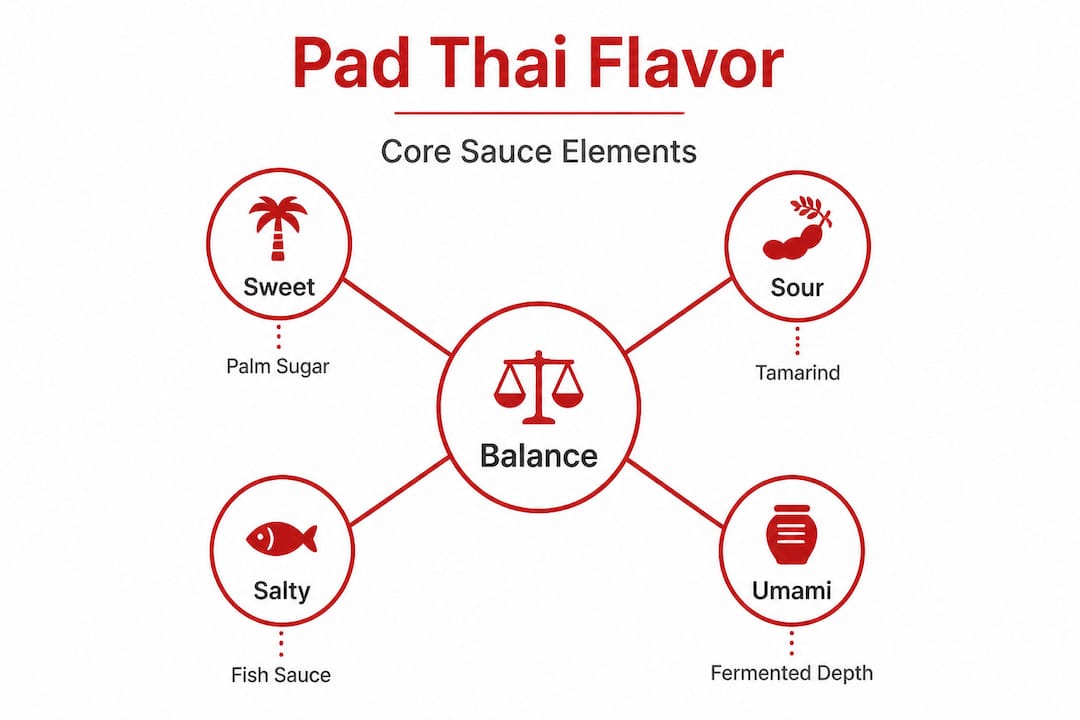
As the kitchen experts at Hot Thai Kitchen confirm, Pad Thai sauce is “a balanced mix of sweet, sour, salty, and savory (umami) flavors.” That balance is the whole point. None of these four elements is supposed to dominate, and when one does, the dish loses its soul.
The core components work like this:
Palm sugar contributes warmth and gentle caramel sweetness
Tamarind paste brings fruity, tart acidity that lifts the palate
Fish sauce delivers sodium and that deeper, savory umami foundation
Optional additions like oyster sauce or soy sauce add further complexity
If you want to really understand real Pad Thai flavors, it helps to think of the sauce less like a topping and more like a conductor. It organizes everything else on the plate.
Flavor component | Primary source | Sensory role |
Sweet | Palm sugar | Warmth, roundness, caramel depth |
Sour | Tamarind paste | Brightness, fruity tang, lift |
Salty | Fish sauce | Salinity, savory punch |
Umami | Fish sauce, oyster sauce | Lingering depth, craveable finish |
Understanding these key Pad Thai ingredients is the first step toward appreciating why great Pad Thai tastes the way it does.
“The genius of Pad Thai sauce is that it asks four very bold flavors to share the same space without any one of them being asked to leave.”
Sweetness: nuanced caramel notes from palm sugar
Let’s focus on the sweetness, which is more sophisticated than you might expect.
When most people picture a sweet sauce, they imagine something like ketchup or simple syrup. The sweetness in authentic Pad Thai sauce is entirely different. Palm sugar, derived from the sap of certain palm trees, undergoes a natural caramelization process during production. The result is a sugar with layered, slightly smoky, butterscotch-like notes that refined white sugar simply cannot match. As Inquiring Chef notes, palm sugar is “caramel-like and more nuanced than refined sugar.”
This distinction matters enormously. When you swap palm sugar for regular white sugar, you get a one-dimensional sweetness that sits flat on your tongue. Palm sugar, by contrast, has a warmth that blends into the other flavors. It doesn’t announce itself. It supports the entire structure.
Thai cooks are also very deliberate about how much sweetness they allow. According to Hot Thai Kitchen, Pad Thai leans “naturally toward the sweeter side, but balanced recipes avoid excessive sugar.” This is a crucial distinction. The goal is a sweetness you feel rather than one you taste overtly.
Here’s what separates palm sugar in Pad Thai sauce from inferior alternatives:
Depth of flavor: Palm sugar carries toffee and caramel notes that linger without being cloying
Texture integration: It dissolves into the sauce more smoothly, creating better coating on noodles
Flavor partnership: Its subtle complexity allows tamarind and fish sauce to come through clearly
Gradual release: The sweetness doesn’t hit immediately; it arrives mid-palate and stays gently
Pro Tip: If you’re making Pad Thai at home and can’t find palm sugar, coconut sugar is a closer substitute than white or brown sugar. It shares some of those caramel undertones, even if it’s not a perfect match.
Many mass-market Pad Thai sauces sold in grocery stores lean heavily on refined sugar, which is why they often taste cloying or one-note. This is a known pitfall. Understanding Thai sauce flavor tips helps explain why restaurant Pad Thai so often tastes more vibrant than homemade versions using bottled sauces.
For context, some studies on Thai culinary traditions indicate that the traditional sweet-sour-salty balance in Thai cooking was developed over hundreds of years, specifically to stimulate multiple areas of the palate simultaneously. It wasn’t an accident. It was a deliberate system of flavor construction. Understanding the Thai sweet chili flavor profile alongside Pad Thai sauce reveals just how consistent this principle of balance is across Thai cuisine.
The sour edge: Tamarind’s bold and fruity tang
If sweetness is the opening act, sourness, sourced from tamarind, delivers the show’s vivid punch.
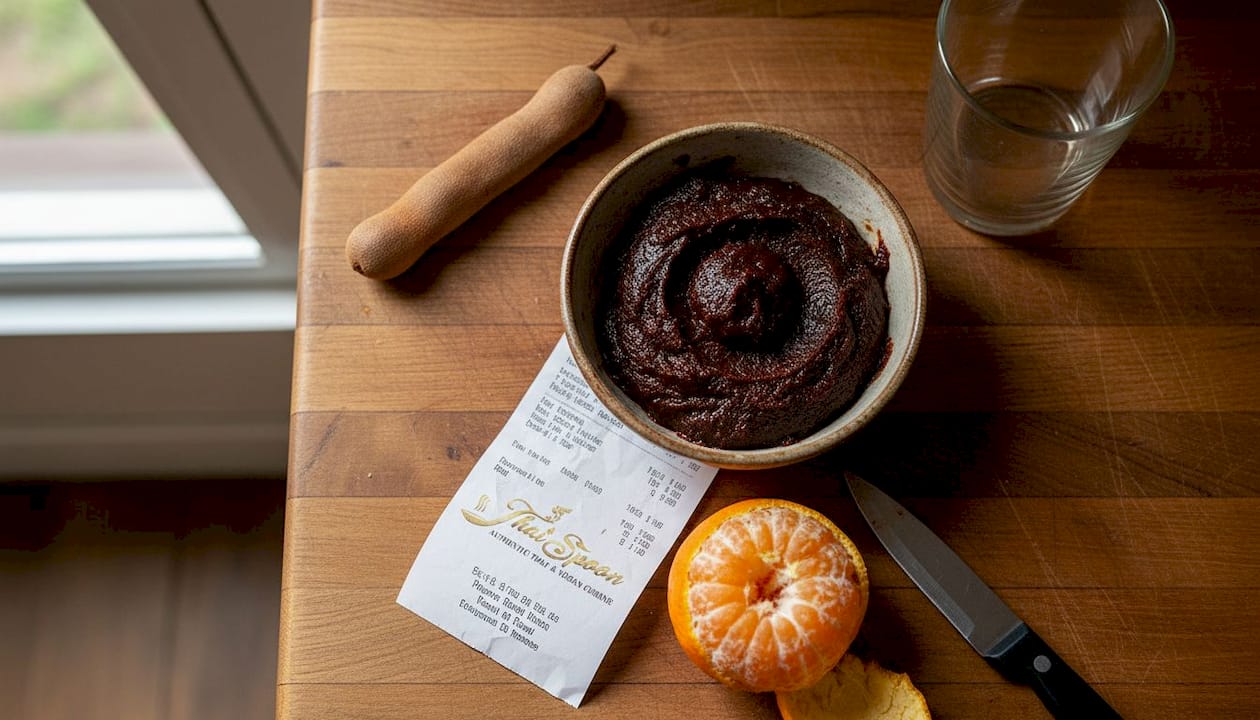
Tamarind is a pod-like fruit native to tropical regions of Africa and Asia. When processed into paste, it produces an acidity that is entirely its own. Think of a fruit that combines the tartness of lemon, the depth of dried prune, and a faint sweetness all at once. That’s tamarind. And as RecipeTin Eats explains, sourness from tamarind gives “a tangy tartness rather than simple vinegar-like acidity.”
This is a critical point. Vinegar is sharp and one-directional. It cuts through everything but doesn’t add any flavor complexity of its own. Lemon juice is brighter but thin. Tamarind’s acidity is fruity, rounded, and almost three-dimensional. It provides brightness without stripping the sauce of its depth.
Here’s why tamarind cannot simply be substituted:
It adds flavor, not just acid. Vinegar adds acidity and nothing else. Tamarind brings tartness plus fruity, slightly sweet undertones.
It integrates smoothly. Tamarind paste blends into the sauce, distributing evenly without breaking its texture.
It creates the signature tang. That specific, recognizable Pad Thai brightness comes exclusively from tamarind.
It supports umami. The fruity acid in tamarind actually amplifies the savory notes from fish sauce rather than competing with them.
Pro Tip: Look for tamarind concentrate or tamarind paste at Asian grocery stores. The paste is thicker and needs to be diluted with warm water before use. Avoid tamarind “powder,” which tends to lack the nuance of real paste.
Sour agent | Flavor profile | Blends into sauce? | Authentic substitute? |
Tamarind paste | Fruity, rounded, complex | Yes | Yes, the original |
White vinegar | Sharp, thin, one-note | Yes | No |
Lime juice | Bright, citrusy, thin | Yes | Partial only |
Lemon juice | Citrusy, slightly floral | Yes | No |
If you want to truly understand the art of balancing Thai flavors, tamarind is the ingredient that makes that balance feel alive. Without it, even a technically correct Pad Thai sauce falls flat.
Salty and umami: The depth from fish sauce
Balancing sweet and sour is only part of the secret. The third essential: a savory depth that makes the dish craveable.
Fish sauce is the backbone of Pad Thai’s savory character. Made from fermented fish and salt, it’s been a cornerstone of Southeast Asian cooking for over a thousand years. What it brings to Pad Thai sauce isn’t just saltiness. It contributes glutamates, the naturally occurring compounds responsible for umami, that specific sensation of deep, lingering savoriness that keeps you reaching for another forkful.
According to Serious Eats, umami notes come “mainly from fish sauce (sometimes combined with soy sauce or oyster sauce depending on the recipe).” That combination matters. Some recipes layer fish sauce with oyster sauce to build an even richer, more caramelized savory note. The result is a sauce that doesn’t taste just salty; it tastes deep.
Here’s what fish sauce actually does in the sauce:
Provides sodium without overwhelming the palate with sharpness
Delivers glutamates that produce the umami experience
Adds a fermented complexity that no simple salt can replicate
Balances the sweetness by anchoring it with savory weight
“A well-made Pad Thai sauce should never taste fishy. The fermented character of fish sauce disappears into the background, leaving only its savory contribution.”
Sauce | Flavor contribution | Umami level | Commonly used in |
Fish sauce | Sharp salt, deep umami | High | Traditional Pad Thai |
Oyster sauce | Sweet, thick, savory | Medium-high | Some Thai recipes |
Soy sauce | Clean salt, mild umami | Medium | Vegan adaptations |
Mushroom sauce | Earthy, mild | Medium | Vegetarian versions |
For tips on Pad Thai dining tips and how to recognize quality umami in a dish, understanding this layer is essential. A Pad Thai where the fish sauce is balanced correctly should never feel briny or overpowering. The finish should be long, savory, and satisfying.
How Pad Thai sauce tastes in the dish: Balance, nuance, and evolution
So, what happens when all these bold tastes hit the wok with noodles and classic toppings?
Here’s the remarkable thing about Pad Thai sauce: it changes as you eat. When chefs taste-test the sauce before cooking, it can feel almost aggressive, sharply sweet and tangy in isolation. But once it coats the noodles and mingles with the other components, everything shifts. The Spruce Eats notes that Pad Thai sauce is “often perceived as ‘sweet first, sour last’ when taste-testing before it’s mixed through noodles; once distributed, flavors mellow.”
This evolution happens for very specific reasons:
Noodles absorb and redistribute the sauce, spreading flavors more thinly across a larger surface area and softening intensity.
Bean sprouts add crunch and freshness, which breaks up the richness of the sauce and provides textural contrast.
Crushed peanuts introduce fat and earthiness, which rounds out the sharper sour and salty notes significantly.
Green onions bring a mild vegetal brightness that lifts the overall flavor without adding more acidity.
Protein absorbs the sauce differently than noodles, creating pockets of concentrated and diluted flavor throughout every bite.
Pro Tip: Authentic Pad Thai is often served with a small plate of condiments including sugar, chili flakes, fish sauce, and dried chili powder. This isn’t an afterthought. It’s an invitation to fine-tune the balance to your own palate. That practice reveals just how seriously Thai food culture takes the idea of personal flavor harmony.
The myth of Pad Thai as a sticky-sweet noodle dish largely comes from low-quality versions made with too much sugar and not enough tamarind or fish sauce. Authentic Pad Thai, done correctly, is never sweet-heavy. It’s bright, savory, and layered in a way that makes it genuinely one of the must-try Thai dishes for any food lover.
Pairing also amplifies the experience. Think about what you eat alongside it. A cold Thai iced tea, for example, adds its own sweetness that can highlight the sour and salty notes in the Pad Thai by contrast. Exploring perfect Pad Thai pairings can completely transform how you experience this dish at the table.
Why most descriptions of Pad Thai sauce miss the point
Now that you know the science and the tradition, here’s what most people, and even some recipes, get wrong about Pad Thai sauce.
The single biggest mistake in both popular writing and home cooking is treating Pad Thai sauce as primarily a sweet sauce with supporting flavors. That framing is backwards. As Hot Thai Kitchen’s authentic guidance confirms, the flavor should be “balanced and not primarily sweet.” Sweetness is one voice in a quartet, not the lead singer.
Western adaptations of Pad Thai often amplify the sugar content significantly, either to appeal to palates accustomed to sweet Asian-American dishes, or to mask the use of lower-quality sour or savory components. The result is a dish that tastes pleasant but lacks the dynamic tension that makes authentic Pad Thai genuinely interesting. It’s the culinary equivalent of turning a complex piece of music into elevator sound.
The real craft of Pad Thai sauce lies in restraint. Every ingredient exists to balance, not to dominate. Palm sugar shows up to soften the acid of tamarind. Tamarind shows up to cut through the fat and richness that fish sauce and protein bring. Fish sauce shows up to ground the entire mixture so it doesn’t float away into candy territory. This back-and-forth is what makes the sauce feel alive, and it’s what you lose when any single ingredient is overdone.
The other thing most descriptions miss is the temporal nature of the flavor. Pad Thai sauce doesn’t give you everything at once. The sweetness arrives first. The tang follows. The umami settles in as a finish. That sequence is intentional and represents the Thai principle of balancing Thai ingredients in a way that creates an experience, not just a taste.
This is why Pad Thai, done right, remains fascinating and comforting in every single bite. It doesn’t exhaust you. It keeps revealing itself.
Experience authentic Pad Thai flavor for yourself
After learning so much about what makes Pad Thai sauce unique, why not taste the real thing in Las Vegas or bring those flavors to your next gathering?
Reading about sweet, sour, salty, and umami only gets you so far. The real understanding comes from tasting Pad Thai made by a kitchen that cares deeply about getting that balance right. At Thai Spoon Las Vegas, located in the northwest Las Vegas area about 20 minutes from the Strip, every dish on the menu reflects a genuine commitment to authentic Thai flavor.
[
Whether you’re a northwest Las Vegas local or visiting the city and looking for something more authentic than tourist-area dining, Thai Spoon has you covered. Browse the Thai Spoon menu to see the full range of classic Thai dishes available, from Pad Thai to Yellow Curry and Steak Fried Rice. You can also explore our menu options for vegan and gluten-free alternatives. Planning a party or corporate event? Thai Spoon Catering brings those authentic flavors to your next gathering with professional service and flexible menus.
Frequently asked questions
Is Pad Thai sauce supposed to be sweet or tangy?
Pad Thai sauce is designed to balance sweet, sour, and salty equally. Authentic versions never lean heavily toward just one flavor.
What gives Pad Thai sauce its signature tang?
The signature tang comes from tamarind paste, which delivers a fruity, tart acidity that is rounder and more complex than vinegar or lemon juice.
Can you make Pad Thai sauce without fish sauce?
Fish sauce is traditional, but vegetarian versions work well with soy sauce or mushroom sauce. These alternatives cover the salty notes but provide varying umami levels compared to fish sauce.
Why does some Pad Thai taste too sweet?
Over-reliance on refined sugar and too little tamarind throws off the balance. Authentic recipes, as emphasized in Thai culinary tradition, prioritize not primarily sweet flavor above all else.
What’s the best way to try authentic Pad Thai sauce?
Visiting a Thai restaurant with a kitchen focused on traditional techniques gives you the clearest, most honest experience of Pad Thai’s true flavor balance. No bottled sauce or takeout shortcut comes close to the real thing.
Recommended
Comments