


What to eat with Tom Yum soup for a full Thai meal
TL;DR:
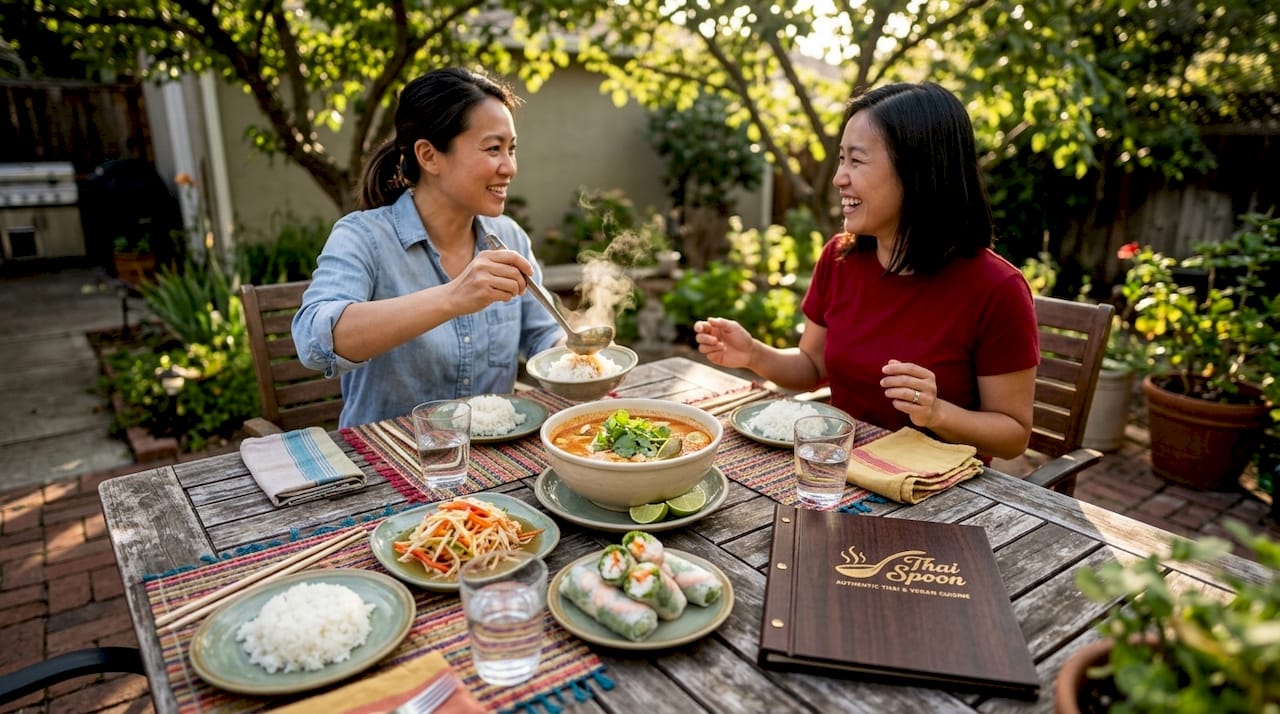
Most people enjoy Tom Yum soup quietly, but pairing it properly enhances the entire Thai dining experience.
Jasmine rice serves as a neutral, palate-cleansing partner that can be served on the side or poured over the soup for a heartier meal.
Adding sides like spring rolls and papaya salad introduces contrasting textures and flavors, creating a balanced, satisfying feast.
Most people treat Tom Yum soup like a solo act. It arrives at the table, bold and aromatic, and diners sip it quietly before moving on to the main course. But in northwest Las Vegas, where authentic Thai dining is only a short drive from the everyday hustle, you’re missing half the experience if you stop there. Tom Yum’s sharp, citrusy broth and herb-forward heat are actually designed to play well with others. The right pairings transform a single bowl into a complete, satisfying Thai meal that leaves everyone at the table talking.
Table of Contents
Key Takeaways
Point | Details |
Jasmine rice balances flavor | Steamed rice soothes the heat and acidity of Tom Yum and is a traditional pairing. |
Crunchy sides add contrast | Spring rolls and papaya salad offer freshness and texture alongside Tom Yum. |
Omelets and noodles build a feast | Include Kai Jeow omelet and Thai noodles for a heartier meal with Tom Yum. |
Avoid excessive acidity | Keep pairings mild or crunchy to prevent flavor overload from overly tart sides. |
Complete meal progression | Create an authentic Thai dining experience with rice, rolls, salad, and soup. |
The role of jasmine rice in Thai dining
Now that you know pairs matter, let’s begin with the classic foundation, jasmine rice. No pairing is more fundamental in Thai cuisine, and for good reason. The delicate floral aroma and slightly sticky texture of jasmine rice create an ideal neutral partner for Tom Yum’s bold personality.
Steamed jasmine rice neutralizes the heat and lime acidity in Tom Yum, giving your palate a moment to recover between spoonfuls of the broth. Think of it like a reset button. Each bite of rice clears the slate so you can fully appreciate the next sip of soup without flavor fatigue. This is especially important with a soup as assertive as Tom Yum, where lemongrass, galangal, kaffir lime leaves, and fish sauce all compete for attention.
“In authentic Thai dining, the relationship between rice and soup is less like a side dish and more like a partnership. Neither is complete without the other.”
Traditionally, the rice does more than sit on the side of the plate. Pouring Tom Yum soup over jasmine rice is a well-established Thai method that softens the soup’s intensity while creating a comforting, almost porridge-like texture. This approach works beautifully when the broth is particularly spicy or when the diner prefers a heartier, more filling experience.
For northwest Las Vegas locals dining at a Thai restaurant, here’s a practical move: when you order Tom Yum, specifically request steamed jasmine rice as your base. Many casual Thai diners skip this step and leave the table feeling like the meal was incomplete. The rice anchors everything.
Jasmine rice method | Best for | Effect on Tom Yum |
Rice on the side | Traditional sipping experience | Palate-cleansing between bites |
Soup poured over rice | Heartier, fuller meal feel | Softens heat, adds body |
Rice stirred into broth | Family-style sharing meals | Absorbs herbs and spice |
Pro Tip: Ask your server to bring the jasmine rice at the same time as your Tom Yum, not after, so you can alternate bites from the very first spoonful. Learn more about our tom yum soup guide to understand what makes the broth so layered and complex.
Spring rolls and papaya salad: Crunch and freshness
With rice as your base, it’s time to build out your meal with sides that add new textures and flavors. Two sides consistently rise to the top for Tom Yum pairings: spring rolls and papaya salad (Som Tum). They are not interchangeable, and understanding how each one works will help you build a more intentional plate.
Fresh or fried spring rolls pair beautifully with Tom Yum because they deliver exactly what the soup lacks: crunch and a sense of substance. The soup is liquid, brothy, and intensely flavored. A spring roll, whether light and fresh or golden and crispy from the fryer, gives you something to bite into. The contrast between textures is genuinely satisfying in a way that a second bowl of soup just never achieves.
Fresh spring rolls wrapped in rice paper carry cool, herby fillings like cucumber, mint, and vermicelli noodles. They cool the palate between bites of spicy Tom Yum, acting almost like a gentle counterweight. Fried spring rolls take a different approach, offering that addictive crispiness that makes you want to keep reaching across the table.
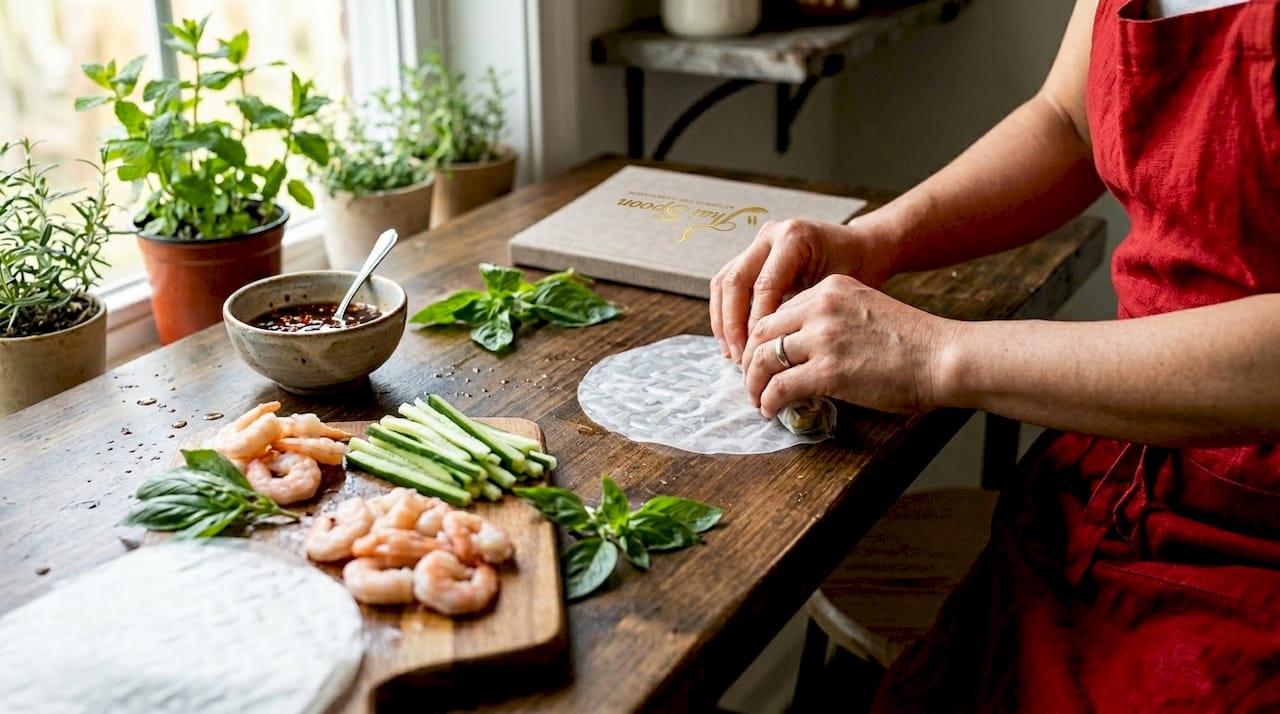
Papaya salad echoes Tom Yum’s sour and spicy profile, which is exactly why it works so well as a pairing. Som Tum typically combines shredded green papaya with lime juice, fish sauce, chili, garlic, and peanuts. The crunchy texture of raw papaya and the familiar sour-spicy balance make it feel like a natural extension of Tom Yum rather than a random side dish.
The nuance here matters. When building a complete Tom Yum meal, think in terms of a progression: neutral rice first, then the tangy crunch of papaya salad, then the satisfying bite of spring rolls. Each element adds a new dimension without fighting for dominance.
Here’s what to look for when ordering these sides:
Spring rolls: Opt for fresh rolls when you want something lighter; fried rolls when you want texture contrast
Papaya salad: Request moderate spice if you’re already having spicy Tom Yum, to avoid heat overload
Peanuts in Som Tum: A welcome creamy element that tempers acidity from both the salad and the soup
Dipping sauce: The sweet chili sauce that comes with spring rolls also pairs surprisingly well as a quick dip with spoonfuls of rice
Side dish | Texture it adds | Flavor it brings | Best combined with |
Fresh spring rolls | Light, chewy crunch | Cool, herby, mild | Spicy Tom Yum |
Fried spring rolls | Crispy, golden snap | Savory, rich | Milder Tom Yum variations |
Papaya salad | Crunchy, raw | Sour, spicy, fresh | Classic Tom Yum with shrimp |
Pro Tip: If you’re ordering for a group, one order of spring rolls and one papaya salad shared across two or three bowls of Tom Yum creates a natural “family style” dynamic that makes the whole table more lively. Check out best sides for tom yum for the full breakdown, and if you’re new to Thai food, our list of must-try Thai dishes Las Vegas is a great starting point.
Thai omelets, noodles, and feast-worthy additions
Once you’ve got your crunchy sides, expand your meal with rich, hearty additions that turn a simple soup order into something worth lingering over.
Kai Jeow, the Thai-style omelet, is one of the most underrated Tom Yum companions you’ll ever try. Most Western diners walk right past it on the menu without a second glance. That’s a mistake. Kai Jeow is fried in plenty of oil until it puffs up with a slightly crispy exterior and a rich, eggy interior. Its savory, mild flavor does something important: it grounds the entire meal. When Tom Yum’s acidity and heat feel like a lot, a bite of Kai Jeow brings everything back to center. Pairing Tom Yum with Kai Jeow and noodles is a classic approach in Thai home cooking, and it creates a deeply satisfying spread.
Noodles deserve equal attention. Whether you choose rice noodles or egg noodles, they soak up the Tom Yum broth in a way that rice doesn’t. Adding noodles to your meal adds bulk and creates a heartier, more filling experience without masking any of the soup’s delicate herbal notes. Tom Yum noodles are a natural evolution of the classic soup, and if you’ve never tried the combination, it will change how you think about the dish entirely.
Here’s how to build a full Tom Yum feast at a northwest Las Vegas Thai restaurant:
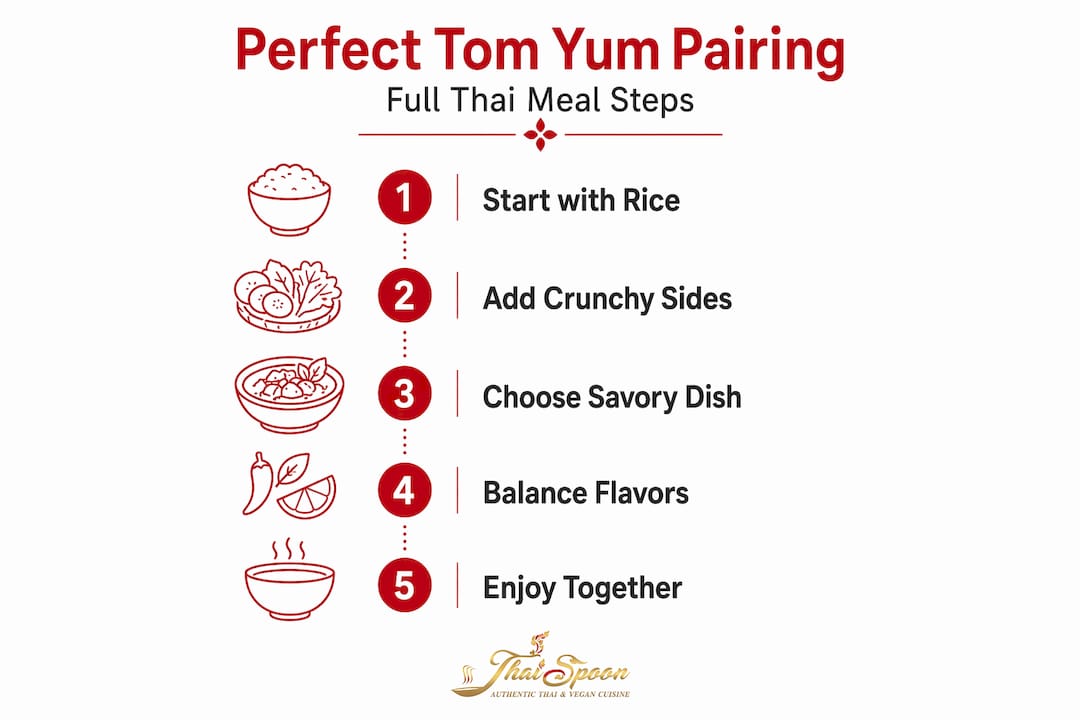
Start with jasmine rice on the table before anything else arrives
Order Tom Yum soup as the centerpiece
Add Kai Jeow (Thai omelet) for richness and protein
Round out with spring rolls and papaya salad for texture and freshness
Include noodles if the group is hungry or you want to make it a true feast
What makes this approach work is variety. You’re not piling up similar flavors. You’re layering sour, spicy, savory, rich, crispy, and soft all in the same meal. That’s what a complete Thai dining experience actually looks like.
Worth noting: groups of four or more people can typically order two or three of these additions and share everything family style. This approach lets everyone explore authentic Thai feast dishes without committing to a single plate. It’s the smartest way to eat Thai food.
Pairing logic: Balancing flavors and avoiding common pitfalls
Before assembling your meal, it pays to know the principles behind pairing, and what to steer clear of.
Tom Yum is built on four primary flavor pillars: sour (lime juice), spicy (chili), savory (fish sauce), and fragrant (lemongrass, galangal, kaffir lime). When you’re selecting pairings, your goal is not to repeat all four pillars in every side dish. Instead, you want to either complement or contrast. The best companions cool and refresh with neutral or crisp ingredients, or echo Tom Yum’s herb and acid profile without overwhelming it.
Here’s the key mistake many diners make: stacking too many acidic elements. Tom Yum is already quite acidic, so adding sides with sharp vinaigrettes or strong citrus dressings pushes the meal into an uncomfortable zone where every element feels like it’s competing. Your mouth gets tired of the same sensation, and nothing stands out.
Instead, aim for this balance:
Neutral and absorbent: jasmine rice, plain noodles, Thai omelet
Crunchy and refreshing: spring rolls, fresh cucumber slices, papaya salad with moderate dressing
Creamy or rich: peanut-based dips, Kai Jeow with a golden crust, coconut-infused sides
Avoid: salads with heavy vinaigrettes, sides with strong lemon or vinegar bases, anything overly salty that competes with fish sauce in the broth
Temperature contrast also plays a role most diners overlook. Serving a cold fresh spring roll alongside a steaming bowl of Tom Yum creates an immediate and pleasurable contrast. The hot broth and the cool roll alternate in a way that keeps every bite interesting. Read more about Thai soups in Las Vegas and explore authentic Thai soup varieties to see how different soups call for different pairing strategies.
Pro Tip: When in doubt, anchor your meal with rice and choose one crunchy side. That two-item combination works with virtually every Thai soup and creates a satisfying, balanced experience without overthinking the details.
Fresh perspective: Reimagining Tom Yum as the centerpiece
Let’s be honest about something. The traditional approach to Tom Yum in most American Thai restaurants positions it as a starter, something you sip before the “real food” arrives. That framing undersells one of the most dynamic soups in the world.
At Thai Spoon Las Vegas, we’ve watched northwest Las Vegas diners discover something over and over: when you order Tom Yum intentionally as the center of the meal rather than the preamble to it, the entire experience shifts. Instead of finishing the broth politely and waiting for Pad Thai, you build the table around the soup. Rice, sides, and additions orbit it. Guests share, swap bites, and use understanding Tom Yum as a launching point for exploring the full range of Thai flavors.
This isn’t just a romanticized idea. It’s how many Thai households actually eat. The soup is the anchor of the table, not an opening act. When you adopt that mindset, you stop treating Tom Yum as something to hurry through and start using it to set the pace for the whole meal. That shift creates more enjoyment, more conversation, and honestly, more interesting food decisions.
The local advantage for northwest Las Vegas diners is real. Away from the Strip’s tourist pressure and rushed service, you have the space to eat at that slower, more intentional pace. Use it.
Experience authentic pairings at Thai Spoon Las Vegas
If you’re hungry to try these pairings in northwest Las Vegas, here’s where to start your culinary journey. Thai Spoon Las Vegas brings these classic Thai combinations to life with ingredients and recipes that honor traditional methods without the tourist-area markup or the rushed atmosphere.
[
Browse our Thai Spoon menu to find Tom Yum soup alongside spring rolls, papaya salad, jasmine rice, and hearty noodle dishes that bring all these pairing principles together in one visit. Planning a larger gathering? Our Thai catering Las Vegas service lets you bring the full feast experience to your event, with everything from Tom Yum to shared sides handled for you. Whether you’re dining in or ordering online, we make it easy to eat Thai the way it’s meant to be enjoyed.
Frequently asked questions
Can you add rice directly into Tom Yum soup?
Rice is traditionally spooned alongside or poured over with the soup, not added directly into the bowl, which preserves the broth’s clarity and keeps the textures distinct.
What non-spicy sides work well with Tom Yum?
Steamed jasmine rice, Kai Jeow (Thai omelet), and noodles are excellent non-spicy options that balance the soup’s heat without adding more fire to the meal.
Are fried spring rolls a good match for Tom Yum soup?
Yes, fried spring rolls add crunch and contrast that complement Tom Yum perfectly, though very greasy versions can make the overall meal feel heavy.
Is papaya salad too acidic to pair with Tom Yum?
Papaya salad works well, but avoid overly tart vinaigrettes that stack extra acidity on top of Tom Yum’s already lime-forward profile.
How can I order a complete Tom Yum meal at a Las Vegas Thai restaurant?
Request jasmine rice, spring rolls, and papaya salad alongside your soup to create a full progression of textures and flavors that makes the meal feel complete.
Recommended
Comments