


What to Put in Red Curry: a Home Cook's Guide

TL;DR:
Properly fried curry paste is essential for deep flavor development in red curry. Using full-fat coconut milk and balancing key seasonings ensures a creamy, fragrant, and well-rounded dish. Preparation and technique, especially frying the paste and managing cooking times, are crucial for achieving authentic, restaurant-quality results at home.
Red curry is one of those dishes that looks deceptively simple but falls flat fast when the wrong ingredients go in. Knowing what to put in red curry, and in what order, is what separates a watery, one-note pot from something deeply fragrant, creamy, and balanced. This guide walks you through every layer: the paste, the protein, the vegetables, the aromatics, and the seasoning adjustments that make the difference between takeout-quality and something genuinely worth cooking at home.
Table of Contents
Key takeaways
Point | Details |
Bloom your paste first | Frying red curry paste in oil for 1-2 minutes before adding liquid unlocks deep, complex flavor. |
Full-fat coconut milk only | Light coconut milk thins the sauce and dulls the flavor. Always go full-fat. |
Balance four flavor pillars | Fish sauce, palm sugar, lime juice, and curry paste must all be present and in proportion. |
Choose the right vegetables | Waxy potatoes, bell peppers, and bamboo shoots hold their texture. Starchy vegetables cloud the sauce. |
Start low on heat | Curry paste heat varies by brand. Start with two tablespoons and build from there. |
What to put in red curry: the full ingredient breakdown
Every great red curry starts with understanding its building blocks. There are five categories you need to account for: the paste itself, a fat and liquid base, a protein, vegetables, and the seasoning that ties it all together. Miss one layer and the dish feels incomplete.
The paste and aromatic base
Red curry paste is the engine of the dish. Whether you make it from scratch or reach for a jar, the core components are the same: dried red chilies, garlic, shallots, lemongrass, galangal (or ginger as a stand-in), and shrimp paste. If you are cooking vegan, a good miso paste substitutes well for the shrimp paste without wrecking the depth. You can explore these foundational flavors in more detail with this Thai ingredients overview.
For store-bought paste, quality varies wildly. High-quality pastes like Mae Ploy are a reliable shortcut that professional cooks actually trust. A smaller, brighter can from a grocery store brand often lacks the punch you need.
Protein options that work
The most popular red curry protein options are chicken thighs, shrimp, and tofu. Thighs win over breasts every time because the higher fat content keeps them tender through simmering. Shrimp cooks in under three minutes once the sauce is hot, so it goes in last. A standard batch uses about 1.5 lbs of protein for a four-serving curry.
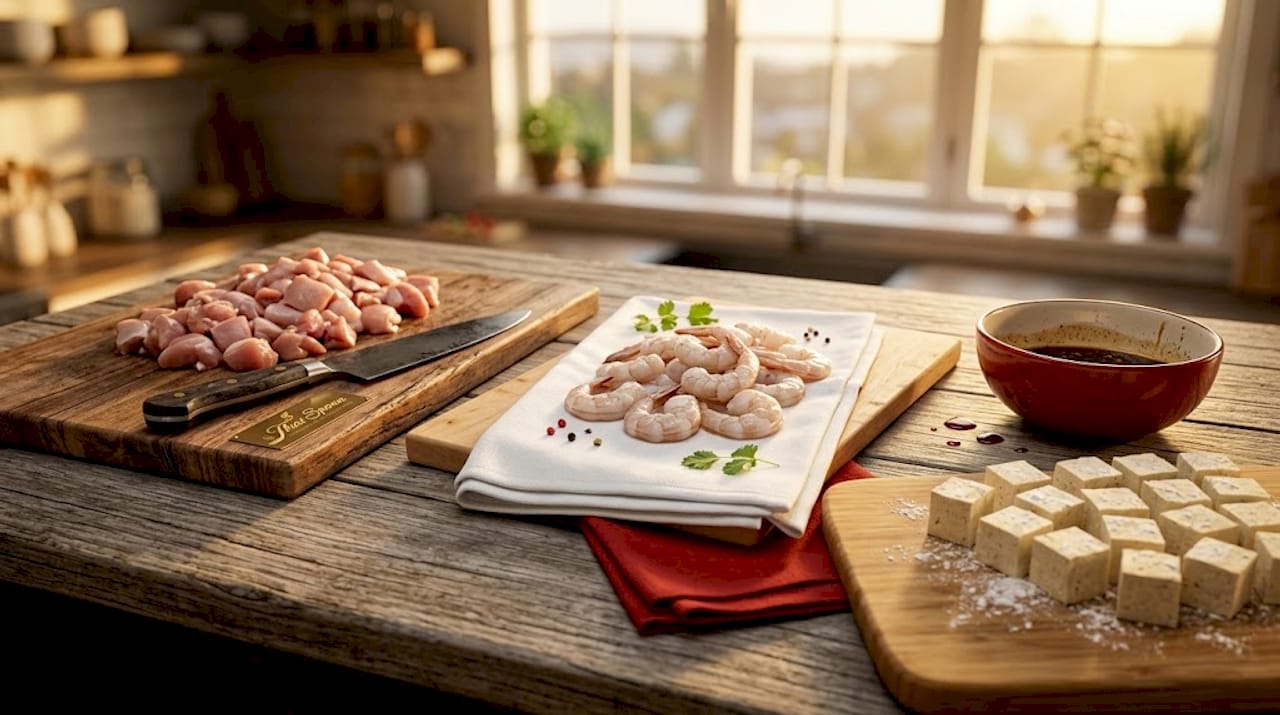
Tofu requires a little more preparation. Pressing tofu and coating it with cornstarch before cooking gives it a firm, slightly crispy surface that holds up in the sauce instead of turning to mush. Plant-based cooks can also use seitan or canned chickpeas as a heartier substitute.
Best vegetables for red curry
The best vegetables for red curry share one quality: they hold their structure when simmered. Here are the top choices and why they work:
Bell peppers (red or yellow): Add sweetness and bright color. Slice them into strips, not chunks.
Bamboo shoots: Bring a subtle earthy flavor and satisfying chew. Canned versions work fine after rinsing.
Baby corn: Mild flavor, appealing texture, absorbs the sauce beautifully.
Thai eggplant: The traditional choice. Small, round, slightly bitter. Quartered and added midway through cooking.
Zucchini: A great addition for home cooks looking for something easy to find. Holds texture well.
Waxy potatoes: If you want potatoes in your curry, use Yukon Gold or red new potatoes specifically. Starchy varieties like russets dissolve into the sauce and cloud it.
A good batch works with roughly 2 cups of mixed vegetables to keep the protein-to-vegetable ratio in balance.
The liquid and seasoning foundation
The flavor foundation uses 14 oz full-fat coconut milk, 2 to 3 tablespoons of red curry paste, 1 tablespoon of fish sauce, and 1 tablespoon of palm sugar. Those four ingredients create the salty, sweet, rich, and spicy base that everything else builds on. Full-fat coconut milk is non-negotiable for creaminess. Light versions make the sauce thin and mild in all the wrong ways.
Fish sauce brings salinity and umami. Palm sugar rounds out the heat. Lime juice finishes the dish with brightness. For a deeper look at how these Thai seasonings work together, that context is worth having before you cook.
Pro Tip: If you cannot find palm sugar, light brown sugar is a workable substitute. Avoid white sugar, which brings sharpness instead of the mellow sweetness you are after.
Prep work that sets you up for success
Good curry comes from good prep. Before the pan gets hot, you want everything measured, cut, and ready to go. Thai cooking moves fast once it starts.
Here is a practical prep sequence to follow before you cook:
Press your tofu. Wrap the block in a clean towel and set something heavy on it for at least 15 minutes. The drier it is, the better it browns.
Cut your protein into even pieces. For chicken, aim for 1-inch chunks. Uniform size means everything cooks at the same rate. For shrimp, peel and devein, then set aside separately since it goes in last.
Slice your vegetables. Bell peppers in strips, eggplant quartered, zucchini in half-moons. Aim for pieces that will be tender but not collapsed after 5 to 7 minutes of simmering.
Measure out your paste. Start with 2 tablespoons in a small bowl. Have extra paste close by in case you want to increase the heat after tasting.
Open and measure your coconut milk. Give the can a good shake first. Measure your fish sauce, palm sugar, and lime juice into small prep bowls so you can add them quickly.
Prep your garnishes last. Slice fresh red chilies, tear Thai basil leaves, and have lime wedges ready.
Pro Tip: If time allows, marinate chicken pieces in a tablespoon of fish sauce and a teaspoon of curry paste for 30 minutes before cooking. It adds a subtle extra layer of flavor that you will notice immediately.
How to cook red curry: technique and timing
This is where most home cooks either get it right or lose the dish. The technique is not complicated, but the order and the timing matter more than most recipes explain.
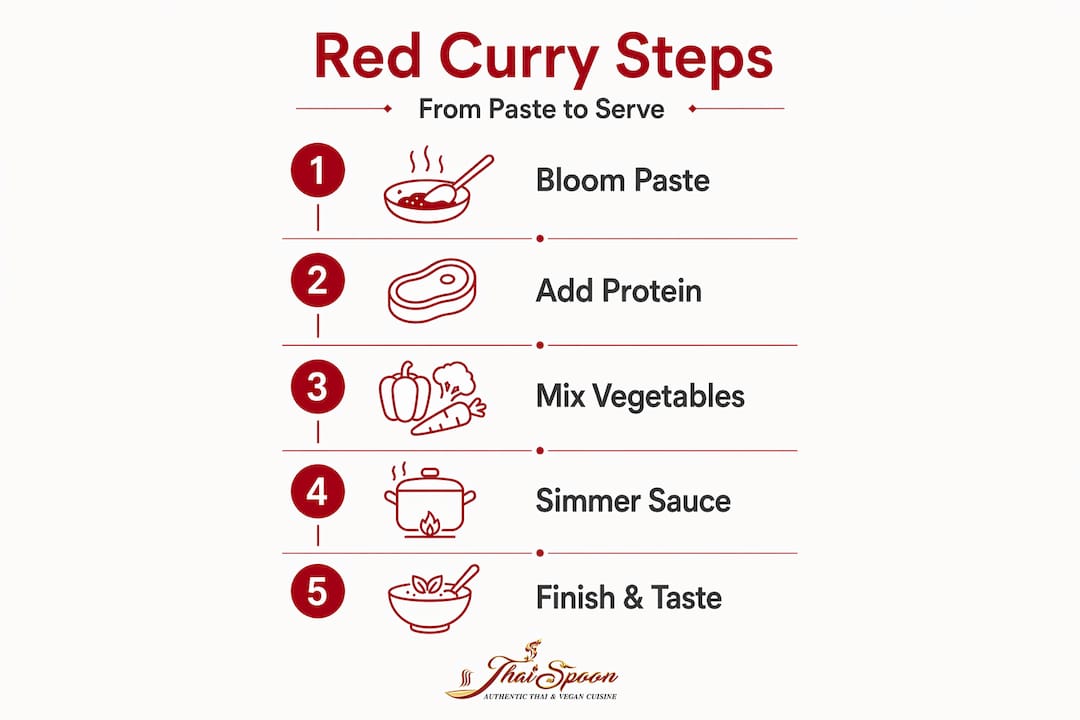
Heat a wide pan or wok over medium heat with a tablespoon of neutral oil or the thick cream from the top of the coconut milk can.
Add the curry paste and fry it. This is the step most recipes rush. Frying the paste for 1 to 2 minutes in the hot fat blooms the aromatics, deepens the color, and drives off the bitter raw edge. You will see the oil turn orange and the fragrance shift from sharp to round. That is your signal.
Add your protein now if you are using chicken. Stir to coat it in the paste and cook for about 2 minutes.
Pour in roughly half of the coconut milk. Stir well to deglaze the paste from the pan. Then add the rest.
Add any broth or water at this point if you want a thinner sauce, typically a half cup maximum. More than that and you start losing the body of the curry.
Add the vegetables that need the most time first: potatoes, eggplant, bamboo shoots. Simmer on medium-low for about 8 minutes.
Add quick-cooking vegetables next: bell peppers, zucchini, baby corn. Simmer for another 4 to 5 minutes.
If using shrimp or tofu, add them now. Shrimp turns pink and curls in 2 to 3 minutes. Crispy tofu just needs to warm through.
“Authentic red curry gets its flavor from balance, not just heat. Every component should pull in the same direction.”
Season at the very end. Add fish sauce, palm sugar, and a squeeze of lime. Taste after each addition. The goal is a sauce that tastes balanced across salty, sweet, sour, and heat. No single flavor should dominate.
One critical detail throughout: simmer the coconut milk gently and never let it reach a rolling boil. High heat causes the fat to separate and the sauce to curdle. Medium-low keeps it creamy.
Adjusting flavor and fixing common problems
Even experienced cooks hit snags. Here is how to troubleshoot the most common issues.
Too spicy? Add more coconut milk or a small spoonful of palm sugar. Both dial back the heat without flattening the flavor. Do not add water. It thins the sauce and strips the richness.
Not spicy enough? Stir in extra paste one teaspoon at a time, or add fresh sliced red chilies. Curry paste heat is unpredictable by brand, so always taste and adjust rather than dump in a second spoonful all at once.
Too thin? Remove the lid and let the sauce reduce over medium heat for a few minutes. Alternatively, mix one teaspoon of cornstarch with two teaspoons of cold water and stir it in.
Too salty? Add a small amount of palm sugar and a squeeze of lime. Acid and sweetness counteract saltiness more effectively than adding more liquid.
Lacks depth? This usually means the paste was not fried long enough. You cannot undo that at this stage, but a small spoon of fish sauce and a pinch of sugar often rescue a flat sauce.
Finish every bowl with fresh herbs. Thai basil and fresh cilantro add a layer of aroma right before serving that no amount of simmering can replicate. Fried shallots, sliced fresh chilies, and a wedge of lime on the side give the dish a professional finish at the table.
Pro Tip: Raw cashews toasted in a dry pan and scattered on top add crunch and a mild richness that pairs particularly well with vegetable or tofu versions.
My honest take on cooking red curry at home
I want to be direct about something most guides sidestep: the single biggest reason home cooks end up with mediocre red curry is skipping the paste-frying step. Every time. People see a hot oily pan and instinctively want to pour the liquid in fast, but that impulse costs you the entire base of the dish. Those two minutes of frying are where the curry actually becomes itself. I have watched this make the difference between something that tastes like soup with a bit of spice and something that has real, round, restaurant-level depth.
The second thing I have learned is to stop trying to make the curry “authentic” and start trying to make it balanced. Authenticity comes from respecting the technique and the four flavor pillars. It does not require a specific protein or vegetable list. I have made excellent red curry with sweet potato and chickpeas because the technique was right. I have also made a forgettable one with perfect Thai eggplant because I rushed the paste.
Start with less heat than you think you need. You can always increase it. You cannot un-spice a curry once it is scorched into the sauce. Adjust with confidence at the end, and trust the process.
— Thai
Taste it yourself at Thaispoonlasvegas
[

If you want to know what a properly balanced red curry tastes like before you attempt it at home, Thaispoonlasvegas is the reference point you need. Located in the northwest Las Vegas area, the restaurant serves authentic Thai dishes made with real aromatics, proper technique, and the kind of flavor depth this guide has been describing. The full menu includes red curry alongside vegan and gluten-free options, so every preference is covered.
Thaispoonlasvegas also offers catering services for events of all sizes, bringing authentic Thai food to your gathering without the complexity of cooking for a crowd. Online ordering for pickup and delivery is available directly through the website, making it easy to get a bowl when the craving hits before your home cooking skills get to that level.
FAQ
What vegetables work best in red curry?
Bell peppers, bamboo shoots, baby corn, Thai eggplant, and zucchini all hold up well in red curry. If you use potatoes, stick with waxy varieties like Yukon Gold since starchy types dissolve and cloud the sauce.
What protein goes in red curry?
Chicken thighs, shrimp, and pressed tofu are the most common red curry protein options. Chicken thighs stay tender during simmering, shrimp cooks in 2 to 3 minutes and goes in last, and tofu should be pressed and cornstarch-coated to hold its texture.
How much red curry paste should I use?
Start with 2 tablespoons per batch for a moderate heat level. Since paste heat varies significantly by brand, add more gradually after tasting rather than committing to a larger amount upfront.
Can I make red curry without fish sauce?
Yes. Soy sauce or tamari works as a substitute and keeps the dish vegan-friendly. The flavor profile shifts slightly since fish sauce carries a fermented depth that soy does not fully replicate, but the balance of salty, sweet, and sour can still be achieved.
Why does my red curry taste flat?
A flat curry usually means the paste was added directly to liquid without frying first. Blooming the paste in hot oil for 1 to 2 minutes releases the aromatic compounds that give red curry its signature depth and removes the raw, bitter edge from the chilies.
Recommended
Comments