


Why host events at Thai restaurants: 5 proven benefits
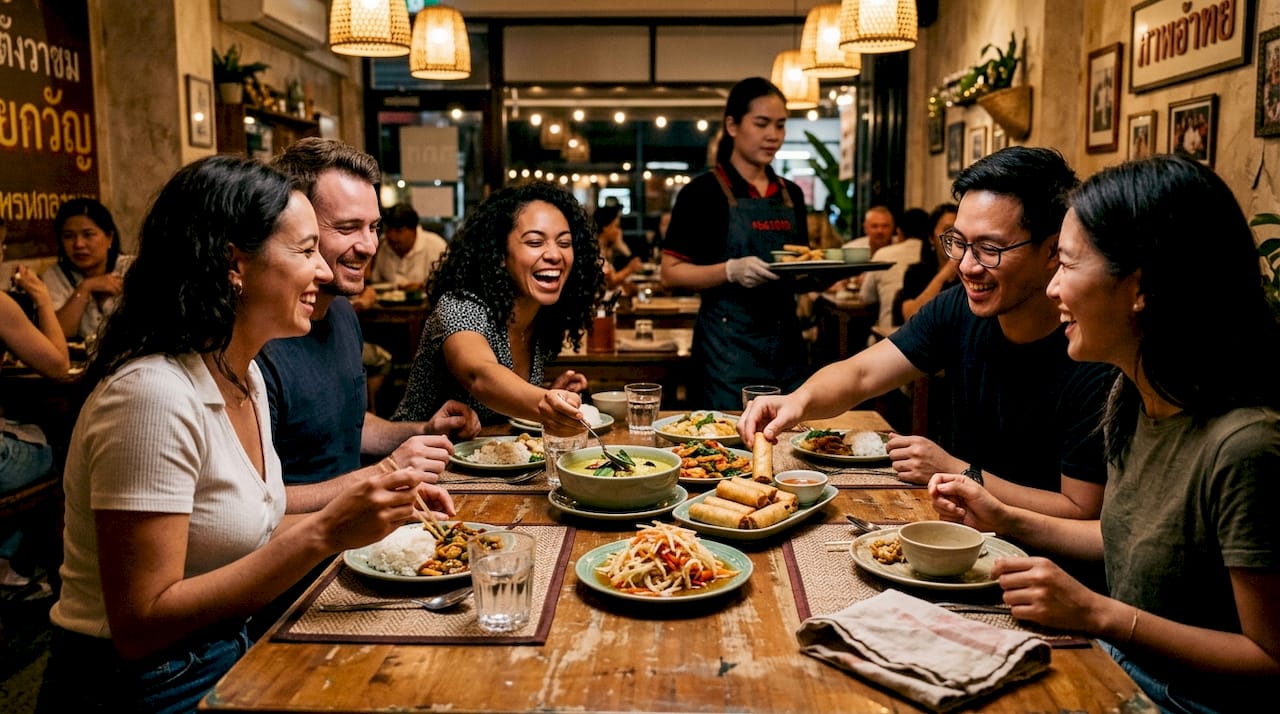
Planning your next event in northwest Las Vegas? You might be overlooking one of the most engaging venue options: Thai restaurants. While conventional event spaces focus on ambiance and capacity, Thai venues deliver something far more valuable—an immersive culinary experience that sparks conversation and leaves lasting impressions. The combination of bold flavors, flexible serving styles, and authentic atmosphere creates events guests remember long after they leave. This guide explores why Thai restaurants are ideal for your next gathering, from intimate celebrations to corporate functions.
Table of Contents
Key Takeaways
Point | Details |
Flavor sparks conversation | Thai flavors create natural conversations and memorable experiences that engage guests. |
Shareable dining boosts interaction | Dishes designed for passing and sampling encourage mingling during cocktail hours. |
Flexible service options | Most Thai dishes can be prepared vegan, vegetarian, or gluten free without sacrificing flavor. |
Plan ahead and specify details | Contact the restaurant 3 to 4 weeks in advance for groups over 15 or 6 to 8 weeks for events over 30 to secure dates and tailor pricing and menus. |
The unique appeal of Thai cuisine for events
Thai food transforms ordinary gatherings into sensory experiences. The cuisine’s signature balance of sweet, sour, salty, and spicy creates natural conversation starters as guests discover new flavor combinations. Unlike predictable catering options, Thai dishes invite exploration and sharing, turning meals into interactive experiences rather than passive dining.
Research shows that 80% of American hosts say international foods like Thai make events memorable, significantly higher than traditional American fare. This preference stems from novelty and the communal nature of Thai dining traditions. When you serve Pad Thai, Yellow Curry, or Panang alongside fresh spring rolls and satay, you’re offering variety that appeals to adventurous eaters and cautious guests alike.
The shareability factor matters tremendously for event success. Thai restaurants excel at creating dishes designed for passing and sampling:
Appetizers like spring rolls, dumplings, and satay encourage mingling during cocktail hours
Curries and stir-fries work perfectly for family-style service where guests interact while serving themselves
Noodle dishes like Pad Thai and Drunken Noodles provide familiar comfort with exciting flavor profiles
Rice dishes such as Pineapple Fried Rice double as conversation pieces with their presentation
When ordering Thai food for groups, the visual appeal matches the taste. Vibrant colors from fresh vegetables, aromatic herbs, and carefully plated presentations create photo opportunities that extend your event’s reach through social media. Guests naturally document and share beautiful food, giving your gathering organic promotion.
“Thai cuisine doesn’t just feed guests—it creates experiences. The aromatic profiles, colorful presentations, and interactive serving styles turn meals into memorable moments that define successful events.”
The cuisine’s inherent flexibility accommodates various dietary preferences without requiring separate menus. Most Thai dishes can be prepared vegan, vegetarian, or gluten-free without compromising flavor. This inclusiveness eliminates the common event planning headache of coordinating multiple meal options, streamlining both ordering and service.
How to book and plan your event at a Thai restaurant
Successful Thai restaurant events start with strategic planning. Follow these steps to ensure smooth coordination:
Contact the restaurant 3-4 weeks in advance for groups over 15 people, or 6-8 weeks for events exceeding 30 guests. Popular dates during holiday seasons require even earlier booking.
Specify your exact headcount and event type during initial contact. Corporate functions, birthday celebrations, and wedding receptions each have different service requirements that affect pricing and menu options.
Discuss serving style preferences based on your group dynamics. Book early via online or phone, specify group size and dietary needs, choose buffet or family-style to match your event’s formality level and timing constraints.
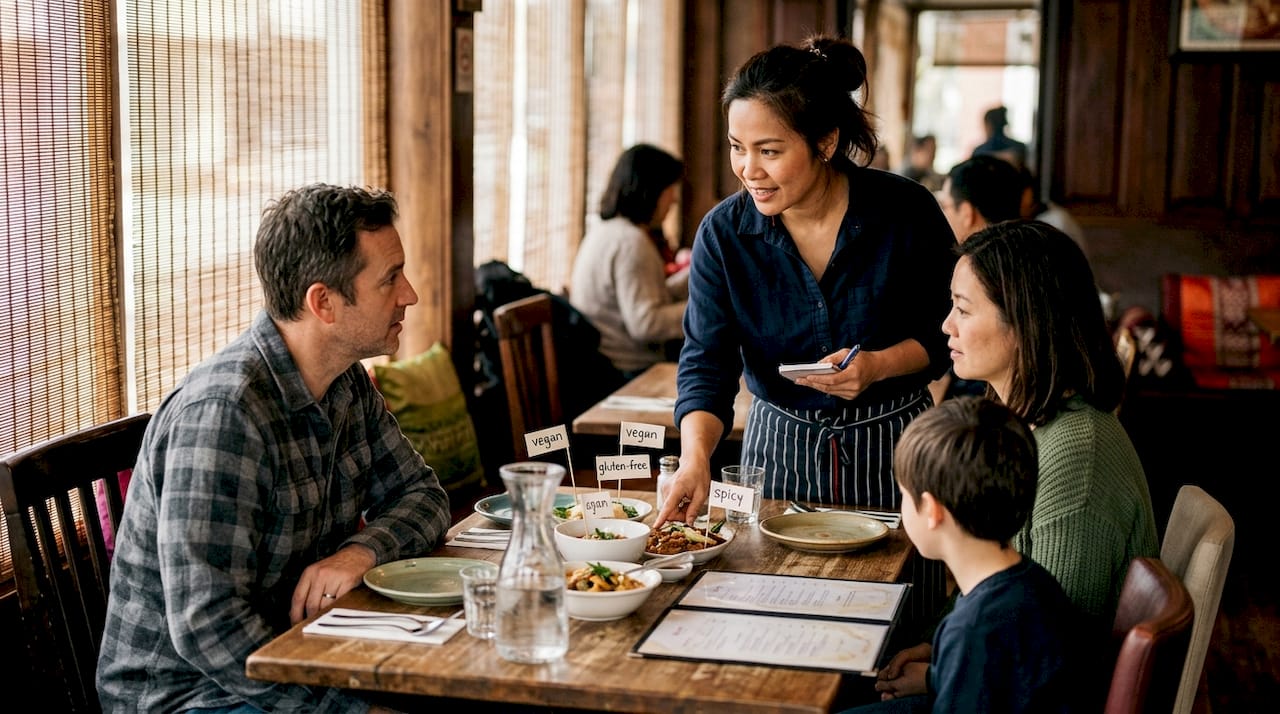
Communicate all dietary restrictions and allergies upfront. Provide specific details about vegan requirements, gluten sensitivities, nut allergies, and spice tolerance levels. Thai kitchens can accommodate most needs with advance notice.
Review and customize the proposed menu to balance familiar crowd-pleasers with adventurous options. Include at least two mild dishes for conservative palates alongside bolder choices for adventurous eaters.
Confirm beverage arrangements including whether the venue provides alcohol, allows BYOB, or requires you to use their bar service. Some Thai restaurants offer beer and wine pairings that complement the cuisine.
Buffet service works exceptionally well for casual gatherings and networking events where guests mingle freely. The format allows people to serve themselves at their own pace, accommodating various arrival times and eating speeds. Family-style service creates intimacy for seated dinners, encouraging interaction as guests pass dishes around the table.
Pro Tip: Request a tasting session for large events. Many Thai restaurants offer sample portions of proposed menu items, letting you adjust spice levels and confirm dish quality before committing to the full order.
When streamlining Thai party reservations, ask about package deals that bundle appetizers, entrees, and desserts at discounted rates. These pre-designed menus simplify planning while reducing per-person costs. Clarify what’s included—plates, utensils, serving dishes, setup, and cleanup services vary by venue and package tier.
Timing coordination prevents service bottlenecks. Thai dishes taste best when served fresh and hot, so work with the restaurant to schedule food preparation that aligns with your event timeline. For buffets, stagger dish delivery to maintain temperature and freshness throughout the event duration.
Benefits and challenges of hosting events at Thai restaurants
Every venue choice involves trade-offs. Understanding both advantages and potential drawbacks helps you make informed decisions:
Advantages | Challenges |
Unique flavor profiles create memorable experiences | Some guests may be unfamiliar with Thai cuisine |
Typically 20-30% less expensive than traditional catering | Private venue buyouts can carry premium pricing |
Built-in ambiance with authentic cultural decor | Limited customization of existing restaurant atmosphere |
Dietary flexibility accommodates most restrictions | Spice levels require careful menu planning |
Family-style service encourages guest interaction | Service timing depends on kitchen capacity |
Fresh ingredients ensure high food quality | Advance notice needed for large group accommodations |
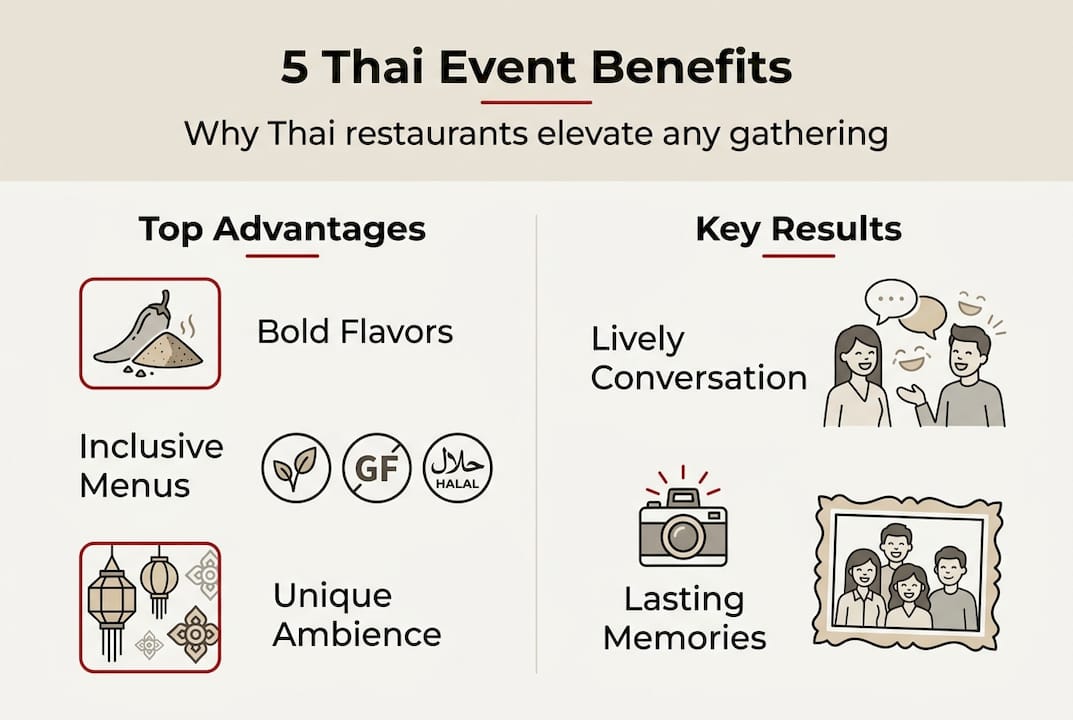
The cost advantage deserves emphasis. Pros dominate with unique, affordable, inclusive options; cons include service risks and premium buyouts compared to hotel ballrooms or dedicated event spaces. Thai restaurants often charge per-person rates that include food, basic service, and use of their dining space, eliminating separate venue rental fees.
Key benefits that make Thai restaurants stand out:
Authentic atmosphere eliminates decoration costs—the existing cultural elements, artwork, and ambiance create instant event appeal
Experienced staff understand group service dynamics and can advise on portion sizes and menu balance
Kitchen proximity allows real-time adjustments if dishes run low or guests request modifications
Turnkey solution combines venue, food, and service in one package, reducing coordination complexity
Potential challenges require proactive management. Service variability can occur when restaurants handle events significantly larger than their typical capacity. Mitigate this risk by choosing established venues with documented experience serving groups your size. Ask for references from previous event hosts.
Spice sensitivity affects some guests, particularly those unfamiliar with Thai cuisine. Address this by including clear spice indicators on menu cards and ensuring at least 40% of dishes are mild to medium heat. Most Thai kitchens can prepare dishes with customized spice levels when requested in advance.
Pro Tip: Visit the restaurant during a busy service period before booking. Observe how staff handle multiple tables, food quality during peak times, and overall atmosphere when the venue is full. This reconnaissance reveals operational capabilities better than empty restaurant tours.
The best Thai restaurant experience comes from matching venue capabilities to your event requirements. A 20-person corporate lunch has different needs than a 50-person birthday celebration. Ensure the restaurant’s typical service model aligns with your expectations for formality, pacing, and interaction style.
Tips for hosting unforgettable Thai-themed events
Elevate your Thai restaurant event with these proven strategies:
Maximize the sharing experience. Family-style service naturally encourages interaction as guests pass dishes, discuss flavors, and recommend favorites to tablemates. Thai food’s balance of flavors boosts sharing and conversation, increasing guest satisfaction by 90% compared to individually plated meals. Arrange tables to facilitate easy passing and ensure serving utensils for each dish.
Leverage happy hour timing for budget-conscious events. Many Thai restaurants offer discounted appetizers and drinks during off-peak hours. Scheduling your event during these windows can reduce costs by 25-35% while maintaining food quality. This works particularly well for casual networking events or team celebrations.
Create a guided tasting experience. For guests unfamiliar with Thai cuisine, provide simple menu cards explaining each dish’s key ingredients and flavor profile. Include spice level indicators and highlight which dishes pair well together. This education component transforms dining into an engaging cultural experience.
Additional strategies for success:
Communicate expectations clearly with restaurant staff regarding timing, service style, and any special requirements like speeches or presentations
Plan for dietary restrictions by labeling dishes with common allergen information and vegan/gluten-free indicators
Consider beverage pairings that complement Thai flavors—Thai iced tea, coconut water, and light beers balance spicy dishes effectively
Arrange seating strategically to mix familiar and adventurous eaters, encouraging those experienced with Thai food to guide newcomers
Pro Tip: Request that appetizers include both familiar and adventurous options. Start with recognizable items like spring rolls and satay before introducing more distinctive flavors like papaya salad or fish cakes. This progression helps cautious eaters warm up to bolder tastes.
When hosting Thai parties tips emphasize the importance of pacing. Thai meals traditionally progress through multiple courses, creating natural conversation breaks. Work with your venue to time dish delivery that allows guests to savor each course without feeling rushed or waiting too long between servings.
The family-style Thai dining format particularly suits events where networking and relationship building are priorities. Shared plates break down social barriers more effectively than individual meals, giving guests natural reasons to interact and collaborate.
Photography opportunities enhance your event’s impact. Thai food’s visual appeal creates Instagram-worthy moments that extend your gathering’s reach. Encourage guests to photograph and share their favorite dishes, potentially tagging your event hashtag and the restaurant’s social media accounts.
Discover Thai Spoon catering and menu options for your event
Ready to plan your next memorable gathering? Thai Spoon Las Vegas brings authentic flavors and experienced event service to northwest Las Vegas, just 20 minutes from the Strip. Our community-focused approach ensures your event receives personalized attention, from initial menu planning through final cleanup.
Explore our comprehensive Thai catering services designed for groups of all sizes. Whether you’re planning an intimate celebration or a large corporate function, our flexible packages accommodate your specific needs and budget. Our Thai Spoon menu page showcases signature dishes like Pad Thai, Yellow Curry, and Steak Fried Rice, with clear indicators for vegan and gluten-free options.
Booking early ensures best availability and allows our team to customize menus that perfectly match your event’s theme and guest preferences. Review detailed Thai Spoon menu details to start planning your unforgettable Thai dining experience today.
Why host events at Thai restaurants FAQ
How to accommodate dietary restrictions at Thai restaurants?
Thai restaurants excel at dietary flexibility. Communicate all restrictions during booking, specifying vegan, vegetarian, gluten-free, or allergy requirements. Most Thai dishes can be modified without compromising flavor, and experienced kitchens maintain separate preparation areas to prevent cross-contamination.
What event sizes fit best in Thai restaurant settings?
Thai restaurants typically accommodate groups from 15 to 60 people comfortably, depending on venue size. Smaller intimate gatherings of 15-25 work well for private dining rooms, while larger spaces handle corporate events up to 50-60 guests. Always confirm capacity during initial booking conversations.
Are Thai restaurant events suitable for corporate functions?
Absolutely. Thai restaurants provide professional atmospheres perfect for business lunches, team celebrations, and client entertainment. The unique cuisine creates memorable impressions while family-style service encourages team bonding. Many venues offer private spaces that balance professionalism with relaxed dining.
How early should I book for a Thai restaurant event?
Book 3-4 weeks ahead for groups of 15-30 people, or 6-8 weeks for larger gatherings. Holiday seasons and weekends require even earlier reservations. Early booking ensures menu customization time and guarantees your preferred date and time slot.
Can Thai restaurants customize menus for themes or preferences?
Most Thai restaurants welcome menu customization for events. Work with the chef to adjust spice levels, create themed dish selections, or incorporate specific ingredients. Provide customization requests during initial planning to allow adequate preparation time for specialty items or unique presentations.
Recommended

Comments