





Curry Varieties Explained: Choosing Thai Favorites
- mail469793
- Jan 11
- 8 min read
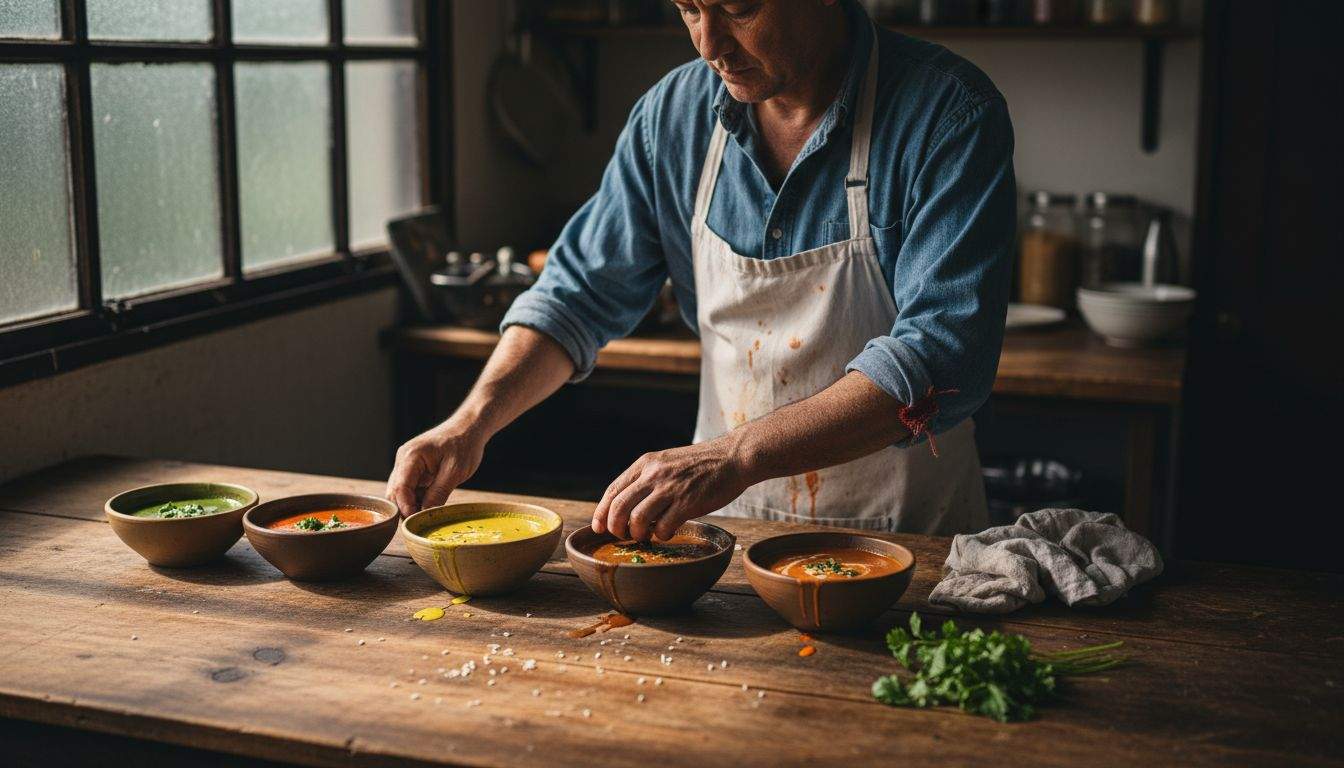
Most American diners in Northwest Las Vegas are surprised to discover that Thai curry is far more than a spicy sauce. Thai cuisine showcases a rich tradition of layered flavors and regional ingredients, making each curry variety a new adventure for the palate. If you crave truly authentic Thai curries, understanding the balance of heat, aromatic spices, and creamy textures will help you make informed choices whether dining out or picking up takeout.
Table of Contents
Key Takeaways
Point | Details |
Understanding Curry | Curry is a complex culinary tradition defined by a harmonious blend of spices that varies across cultures, particularly in South Asia and Thailand. |
Thai Curry Variations | Thai curries, including Yellow, Green, Red, Massaman, and Panang, utilize distinctive ingredients that create unique flavor profiles and heat levels. |
Spice Importance | The careful selection and preparation of spices are crucial in shaping the flavor and complexity of each curry dish. |
Dietary Adaptability | Thai curries can easily accommodate vegan and gluten-free diets, allowing for flavorful meals without traditional animal-based proteins or gluten. |
Curry Basics and Flavor Foundations
Curry represents a complex culinary tradition that goes far beyond a simple sauce. Originating in South Asia, curry encompasses a diverse range of spiced dishes with regional variations that tell rich stories of culture and flavor. The fundamental essence of curry lies in its intricate spice blend, which transforms ordinary ingredients into extraordinary meals.
At its core, curry is defined by a harmonious combination of spices that create depth and complexity. Typical foundational spices include turmeric, cumin, coriander, ginger, and chili peppers. These ingredients aren’t just flavor enhancers; they represent a delicate balance of heat, earthiness, and aromatics that distinguish Thai curries from other global interpretations. Thai curries, in particular, often incorporate coconut milk, which adds a creamy richness that softens the spice intensity and creates a smooth, luxurious texture.
Understanding curry’s flavor profile requires recognizing its key components. Spice combinations vary widely across different regions, with each locale developing unique masalas or spice mixes that reflect local ingredients and cooking traditions. In Thai cuisine, this means balancing the four fundamental taste elements: sweet, sour, salty, and spicy. A perfect Thai curry doesn’t just deliver heat, but creates a symphony of flavors where no single taste overwhelms the others.
Pro Tip: When exploring Thai curries, start with milder versions like Yellow or Massaman curry to understand the foundational flavor profile before advancing to spicier variations.
Thai Curry Types and Key Ingredients
Thai curries represent a vibrant culinary landscape with unique characteristics that set them apart from other global curry traditions. Distinctive Thai curry pastes form the foundation of these remarkable dishes, combining fresh herbs, aromatics, and complex spice blends that create extraordinary flavor profiles. Unlike Indian curries, Thai versions emphasize fresh ingredients and a delicate balance of taste sensations.
Traditional Thai curry types include Green, Red, Yellow, Massaman, and Panang, each distinguished by its specific combination of herbs and spices. Green curry typically features fresh green chilies and Thai sweet basil, creating a bright, intense flavor. Red curry uses dried red chilies for a deeper, more robust taste. Yellow curry, influenced by Indian cuisine, incorporates turmeric and tends to be milder. Massaman curry reveals Muslim culinary influences with its warming spices like cinnamon and cardamom, while Panang offers a slightly thicker, more nutty profile with ground peanuts.
The essential ingredients in Thai curries go far beyond simple spice combinations, encompassing a rich array of fresh herbs and aromatics. Key components include galangal, lemongrass, kaffir lime leaves, Thai sweet basil, and fresh chilies. These ingredients are typically ground into a paste with garlic, shallots, and sometimes shrimp paste, creating a flavor base that transforms ordinary ingredients into extraordinary culinary experiences. Coconut milk plays a crucial role, providing a creamy texture that balances and softens the intense spice profile.
Pro Tip: When preparing Thai curry at home, invest in fresh herbs and a good mortar and pestle to create authentic curry pastes that capture the true essence of Thai cuisine.
How Spices Shape Each Curry Profile
Spices are the essential storytellers of curry cuisine, transforming simple ingredients into complex culinary experiences that tantalize the senses. Each spice contributes a unique note to the flavor symphony, creating depth, heat, and nuanced taste profiles that distinguish different curry styles. The intricate dance of spices determines not just the heat level, but the entire sensory journey of the dish.
In Thai curry traditions, individual spices play critical roles. Turmeric brings a golden hue and earthy undertone, while cumin delivers warmth and depth. Coriander seeds introduce bright, citrusy notes that cut through richness, and fresh chilies provide the characteristic heat that defines each curry variety. Green curry relies on fresh green chilies and Thai basil for its vibrant profile, whereas red curry uses dried red chilies for a more intense, smoky flavor. The careful selection and proportion of these spices create a balanced, harmonious experience that is quintessentially Thai.
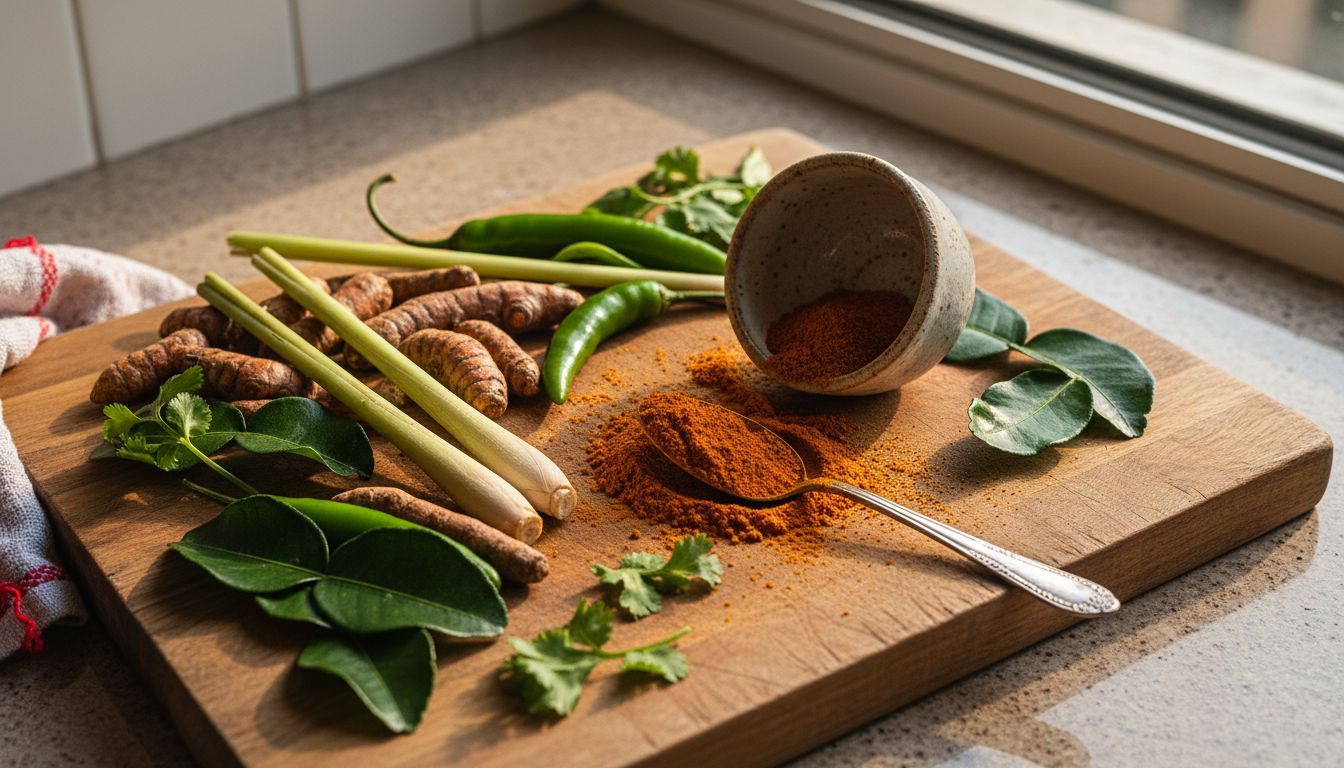
Spice preparation techniques dramatically influence final curry flavors, with methods like toasting, grinding, or blending transforming raw ingredients into complex flavor foundations. Whole spices toasted before grinding release more intense aromatics, while fresh herbs ground into paste create a more vibrant, immediate taste. The technique of blooming spices in hot oil or coconut milk allows their essential oils to unfurl, spreading their flavor more completely throughout the dish and creating a more integrated, nuanced curry experience.
Pro Tip: Invest in a high-quality mortar and pestle to grind your own spice blends, as freshly ground spices will always deliver more complex and authentic flavors than pre-packaged alternatives.
Yellow, Green, and Red Curry Compared
Thai yellow curry offers a milder culinary experience compared to its more vibrant green and red counterparts. Distinguished by its warm golden color and gentle spice profile, yellow curry represents a perfect entry point for those new to Thai cuisine. Characterized by turmeric, cumin, and a blend of aromatic spices, this curry typically features tender chicken or beef accompanied by soft potatoes, creating a comforting and approachable dish.
Green curry stands in stark contrast, delivering a more intense and complex flavor experience. Characterized by fresh green chilies and herbaceous notes, this curry packs a significant heat punch that distinguishes it from yellow varieties. Thai basil, kaffir lime leaves, and green chilies combine to create a vibrant, pungent sauce that dances across the palate. The bright green color signals its fresh ingredients, while coconut milk provides a creamy counterpoint to the sharp, spicy elements.
Red curry occupies a middle ground between yellow and green, offering a robust flavor profile that balances heat and depth. Dried red chilies provide a smoky, intense base that differs from the fresh chilies used in green curry. The sauce tends to be slightly thicker and more concentrated, with a deep red color that hints at its complex spice blend. Unlike yellow curry’s mild temperament, red curry delivers a more pronounced heat that appeals to those seeking a bolder taste experience.
The following table compares key Thai curry styles and their signature aspects:
Curry Type | Heat Level | Distinctive Ingredient | Flavor Description |
Yellow | Mild | Turmeric | Warm, gentle, earthy |
Green | Spicy | Green chilies, basil | Vibrant, fresh, aromatic |
Red | Medium/Spicy | Dried red chilies | Smoky, robust, concentrated |
Massaman | Mild/Medium | Cinnamon, cardamom | Rich, nutty, subtle heat |
Panang | Medium | Ground peanuts | Thick, creamy, nutty |
Pro Tip: When exploring these curry varieties, start with yellow curry and progressively work your way toward spicier versions to build your palate and appreciation for Thai flavor nuances.
Dietary Options: Vegan And Gluten-Free Curries
Plant-based and gluten-free curry options offer delicious alternatives for diners with dietary restrictions or health-conscious preferences. Thai cuisine naturally lends itself to adaptable, inclusive meals that can easily accommodate vegan and gluten-free requirements without compromising flavor. By substituting traditional proteins with plant-based alternatives and carefully selecting ingredients, curry lovers can enjoy authentic Thai taste experiences that align with their nutritional needs.
Vegan curry variations typically replace animal proteins with nutrient-dense plant-based options like tofu, tempeh, and legumes. Chickpeas, lentils, and mixed vegetables can create substantial, satisfying curry dishes that capture the essence of traditional recipes. Coconut milk provides a rich, creamy base that ensures these curries remain true to their Thai culinary roots, while allowing for complete customization. Vegetarian curry preparations can meet comprehensive nutritional requirements when thoughtfully constructed to include a balanced mix of proteins, vitamins, and minerals.
Ensuring a gluten-free curry experience requires careful ingredient selection. Rice noodles, rice, and naturally gluten-free vegetables form the foundation of these dishes. Chefs must be vigilant about potential gluten contamination in soy sauces, curry pastes, and seasoning blends, often opting for certified gluten-free alternatives. Many traditional Thai curry spices and herbs are inherently gluten-free, which simplifies the process of creating safe, delicious meals for those with gluten sensitivities.
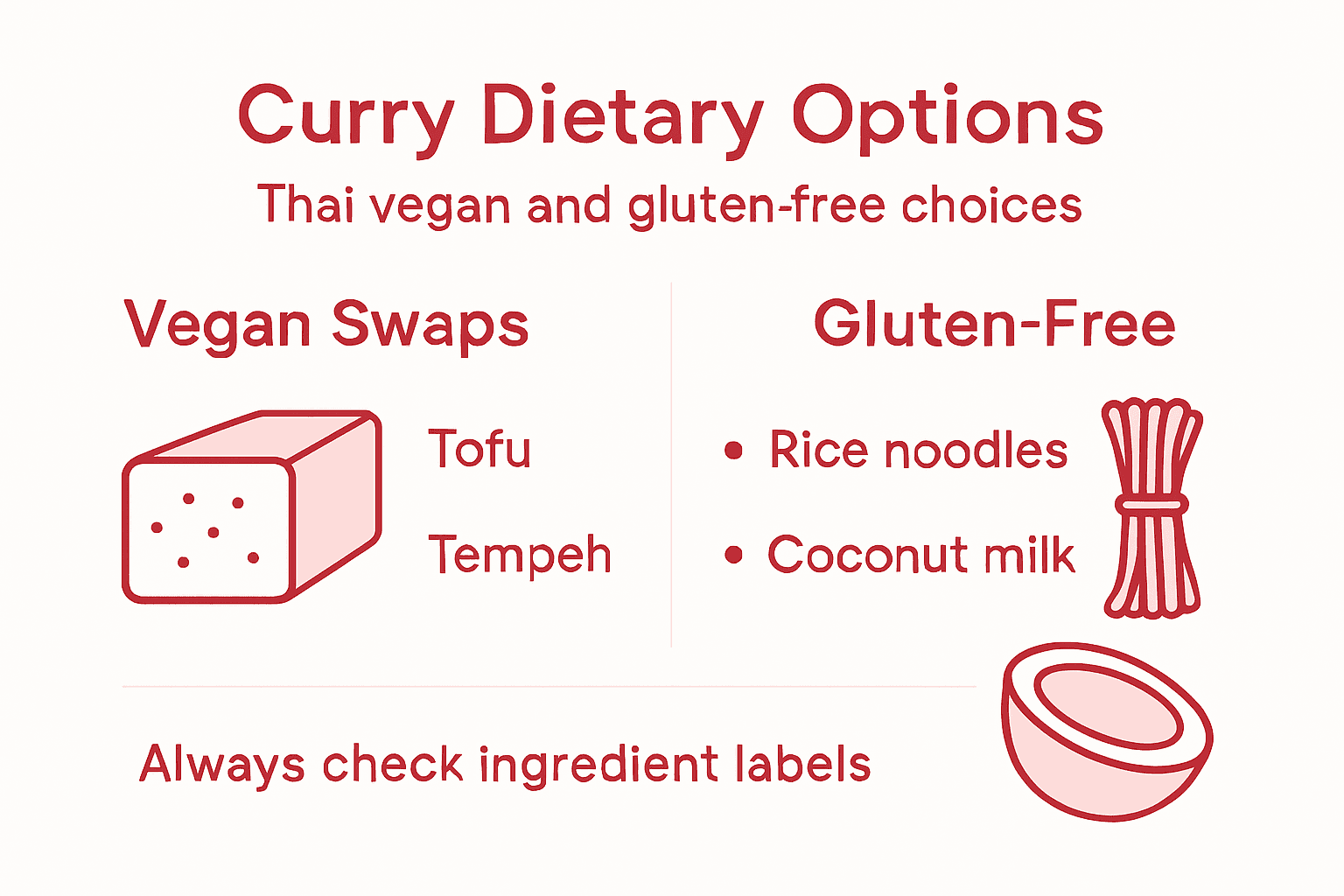
Here’s a reference for common vegan and gluten-free substitutions in Thai curries:
Ingredient to Replace | Vegan Substitute | Gluten-Free Substitute | Resulting Benefit |
Animal protein | Tofu or tempeh | Tofu, chickpeas | Plant-based protein option |
Wheat noodles | Rice vermicelli | Rice noodles | Naturally gluten-free |
Soy sauce (contains wheat) | Tamari or coconut aminos | Certified gluten-free soy sauce | Safe for gluten sensitivities |
Fish sauce | Mushroom or soy sauce | Gluten-free mushroom sauce | Vegan and gluten-free flavoring |
Pro Tip: Always communicate your dietary requirements clearly with restaurant staff and request verification of ingredient sources to ensure your curry meets your specific dietary needs.
Discover Your Perfect Thai Curry Experience Today
Choosing the right Thai curry can feel overwhelming with so many delicious options to explore. Whether you seek the mild comfort of Yellow Curry, the vibrant kick of Green Curry, or the bold heat of Red Curry understanding the unique flavor profiles helps you find the dish that truly satisfies your cravings. At Thai Spoon Las Vegas we recognize this challenge and offer a menu that delights every palate including vegan and gluten-free choices so you can enjoy authentic Thai flavors tailored just for you.

Dive into our authentic selection and experience firsthand the rich spices and fresh ingredients that make Thai curries extraordinary. Order online now for pickup or delivery from Thai Spoon Las Vegas and discover why locals trust us for their favorite Thai meals. Explore our menu offerings featuring classic favorites like Yellow Curry and Pad Thai or plan a special event with our catering services. Don’t wait to bring the true taste of Thailand to your table today.
Frequently Asked Questions
What are the main types of Thai curries?
The main types of Thai curries include Green, Red, Yellow, Massaman, and Panang curry. Each type is distinguished by its unique combination of herbs and spices.
What key ingredients are commonly used in Thai curry?
Common key ingredients in Thai curry include galangal, lemongrass, kaffir lime leaves, Thai sweet basil, coconut milk, and various fresh chilies.
How do yellow, green, and red curries differ in flavor and heat level?
Yellow curry is mild and earthy, while green curry is spicy and vibrant due to fresh green chilies. Red curry offers a medium heat with a robust, smoky flavor profile.
Can Thai curries be made vegan and gluten-free?
Yes, Thai curries can be made vegan by using plant-based proteins like tofu or legumes, and gluten-free by ensuring the use of certified gluten-free sauces and noodles.
Recommended
Comments