


Thai Food Allergies – Navigating Safe Dining in Las Vegas
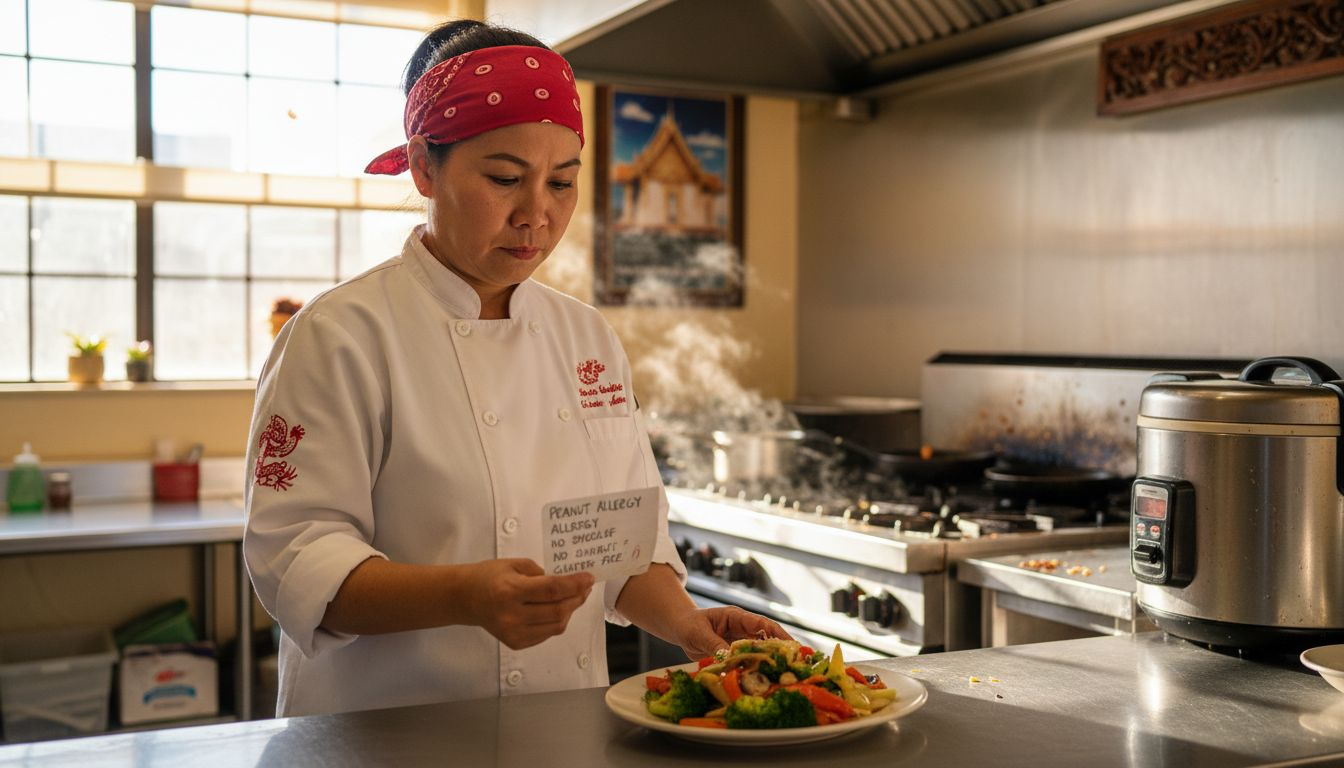
Dining out in Northwest Las Vegas can be stressful when you are navigating food allergies, especially with the bold flavors and complex ingredients found in Thai cuisine. With dishes that frequently feature peanuts, shrimp, soy, and wheat, understanding the difference between food allergies and intolerances is vital for your safety and peace of mind. This overview highlights the unique allergy risks in Thai fare, clears up common misconceptions, and suggests how to find allergen-friendly menu options for a safer dining experience.
Table of Contents
Key Takeaways
Point | Details |
Understanding Allergens | Thai cuisine often includes common allergens like shrimp, peanuts, and soy, making it essential for allergy-sensitive diners to identify these ingredients. |
Communication is Key | Diners should communicate specific allergies with restaurant staff to minimize cross-contamination risks and ensure safe dining experiences. |
Avoiding High-Risk Ingredients | Selecting dishes without shellfish, fish sauce, and peanuts can significantly reduce the risk of allergic reactions. |
Preparation and Proactivity | Preparing an allergy card and researching restaurants beforehand can help ensure a safer dining experience for individuals with food allergies. |
Defining Thai Food Allergies and Misconceptions
Food allergies represent a complex health challenge affecting millions of Americans, with significant implications for dietary choices. In the context of Thai cuisine, understanding these allergenic risks becomes even more critical for diners with sensitivities.
Food allergies are not merely inconveniences but serious medical conditions that can trigger potentially life-threatening reactions. Research indicates food allergies impact 10.8% of adults in the United States, with Thai food presenting unique challenges due to its diverse ingredient profile.
Common misconceptions about food allergies can lead to dangerous misunderstandings:
Confusing food allergies with food intolerances
Believing only children experience allergic reactions
Assuming all allergy tests are equally reliable
Thinking mild past reactions guarantee future safety
Healthcare professionals emphasize that Thai cuisine’s complex ingredient combinations require extra caution. Ingredients like shrimp, peanuts, tree nuts, and soy - frequently used in Thai dishes - are among the most common allergens.
Diagnostic Challenges
Allergy testing requires precise, targeted approaches. Indiscriminate food panel testing can lead to unnecessary dietary restrictions and potential misdiagnosis. Specialists recommend working directly with allergists who can conduct comprehensive, individualized assessments.
Pro tip: Before dining at a Thai restaurant, always call ahead to discuss specific ingredient concerns and potential cross-contamination risks.
Common Thai Cuisine Allergens Identified
Thai cuisine represents a complex landscape of potential allergenic ingredients, with multiple critical food allergens present that require careful consideration for diners with sensitivities. Understanding these specific allergens becomes crucial for safe and enjoyable dining experiences.
Major Allergens in Thai Cuisine include ingredients commonly found in traditional dishes:
Crustacean shellfish (shrimp, crab)
Peanuts
Soy products
Wheat
Eggs
Tree nuts
Fish
The FDA identifies nine primary food allergens that are particularly relevant in Thai cooking. Shellfish and peanuts stand out as especially prevalent, with many popular Thai dishes incorporating these ingredients as core components.
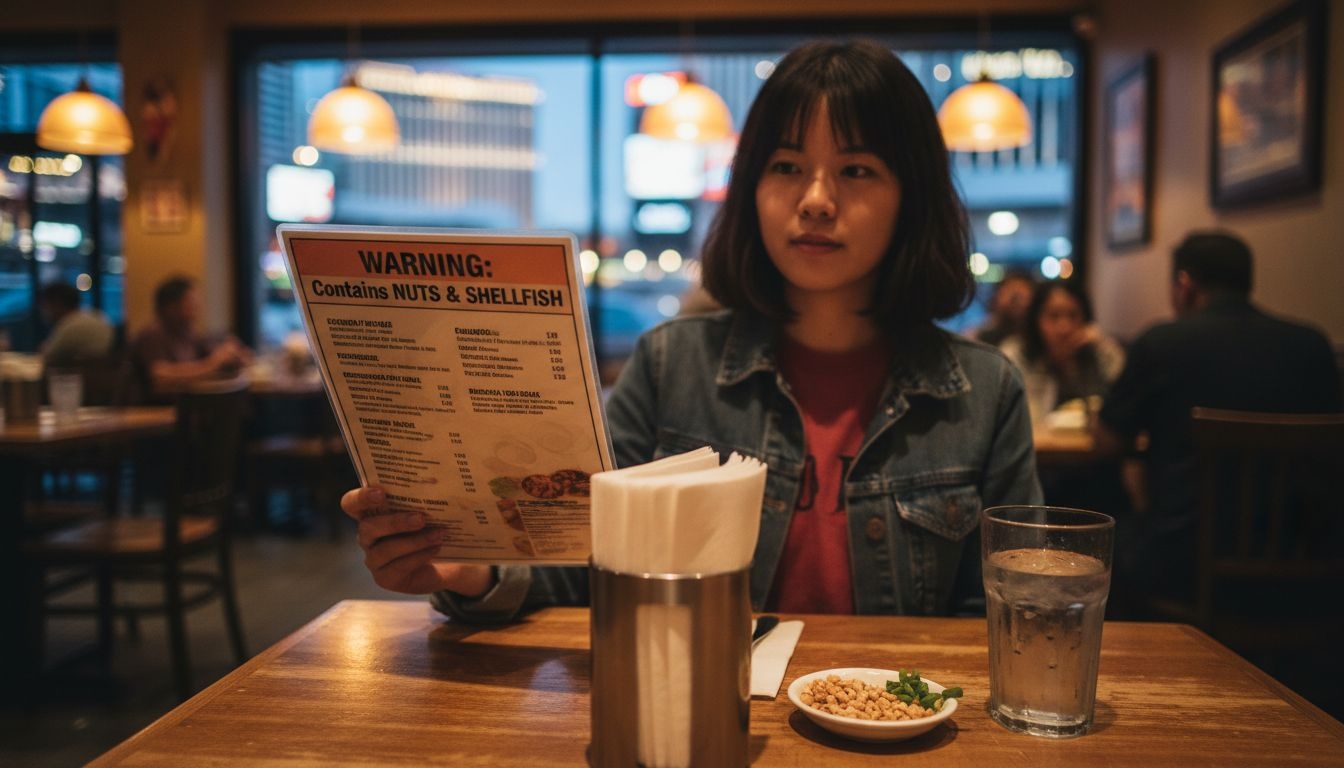
Here’s a comparison of major Thai cuisine allergens and how they commonly appear in traditional dishes:
Allergen | Typical Sources in Thai Food | High-Risk Dish Examples |
Shrimp & Shellfish | Curries, stir-fries, noodle dishes | Tom Yum soup, Pad Thai |
Peanuts | Sauces, salads, desserts | Satay sauce, Papaya salad |
Tree Nuts | Curry pastes, sweets, salad toppings | Massaman curry, coconut desserts |
Soy | Sauces, tofu, seasonings | Soy sauce stir-fries, tofu entree |
Fish | Sauces, stocks, grilled dishes | Fish sauce, grilled whole fish |
Regional variations in Thai cuisine can significantly impact allergen exposure. Coastal regions tend to feature more seafood-based dishes, increasing the likelihood of shellfish-related allergic reactions. Northern Thai cuisine, by contrast, often emphasizes peanut-based sauces and tree nut ingredients.
Allergen Sensitivity Patterns
Research indicates that certain populations demonstrate higher sensitivity to specific Thai food allergens. Crab, for instance, emerges as a particularly common sensitization trigger, with complex implications for diners with shellfish allergies.
Pro tip: Always request detailed ingredient lists and communicate your specific allergies to restaurant staff before ordering Thai cuisine.
Hidden Ingredients and Cross-Contact Risks
Thai cuisine presents unique challenges for individuals with food allergies, particularly through complex cross-contamination risks that can trigger severe allergic reactions. Understanding these hidden dangers is crucial for safe dining experiences.
Common Cross-Contact Scenarios in Thai restaurant kitchens include:
Shared cooking surfaces
Reused utensils
Communal preparation areas
Splash-over during wok cooking
Shared oil in deep fryers
Seasoning from previous dishes
Indirect ingredient transfers
Cross-contamination mechanisms extend beyond visible ingredient mixing. Even microscopic traces of allergens can provoke serious reactions, making kitchen practices critically important for allergy-sensitive diners.
Specific Thai cooking techniques increase cross-contact risks. Wok cooking, with its high-heat splatter and rapid ingredient transfers, can introduce allergens into seemingly safe dishes. Sauces like fish sauce, which contain hidden allergenic ingredients, are frequently used across multiple menu items.
Kitchen Contamination Risks
The complexity of Thai cuisine’s preparation methods means that seemingly safe dishes can harbor unexpected allergens. Marinades, stocks, and cooking oils often contain trace ingredients that might trigger allergic responses.
Pro tip: Request clean, dedicated cooking surfaces and utensils when dining with severe food allergies, and always communicate your specific dietary restrictions clearly.
Safer Choices and Allergen-Friendly Menu Options
Navigating Thai cuisine with food allergies requires strategic menu selection and clear communication. Identifying safer ingredient combinations becomes crucial for protecting against potential allergic reactions.
Recommended Allergen-Friendly Dish Categories:
Vegetable-based stir-fries
Coconut milk curries without seafood
Plain steamed rice dishes
Herb-infused salads
Tofu-based entrees (with careful protein verification)
Vegetable spring rolls
Plain grilled proteins
Key strategies include avoiding high-risk ingredients like fish sauce, shrimp paste, and shellfish. Focus on dishes emphasizing fresh herbs, vegetables, and simple protein preparations that minimize cross-contamination risks.
Safe Protein and Vegetable Options
Some of the safest Thai menu choices involve selecting dishes with clearly defined ingredients. Chicken or tofu-based dishes prepared without shellfish or peanut sauces offer lower-risk alternatives for allergy-sensitive diners.
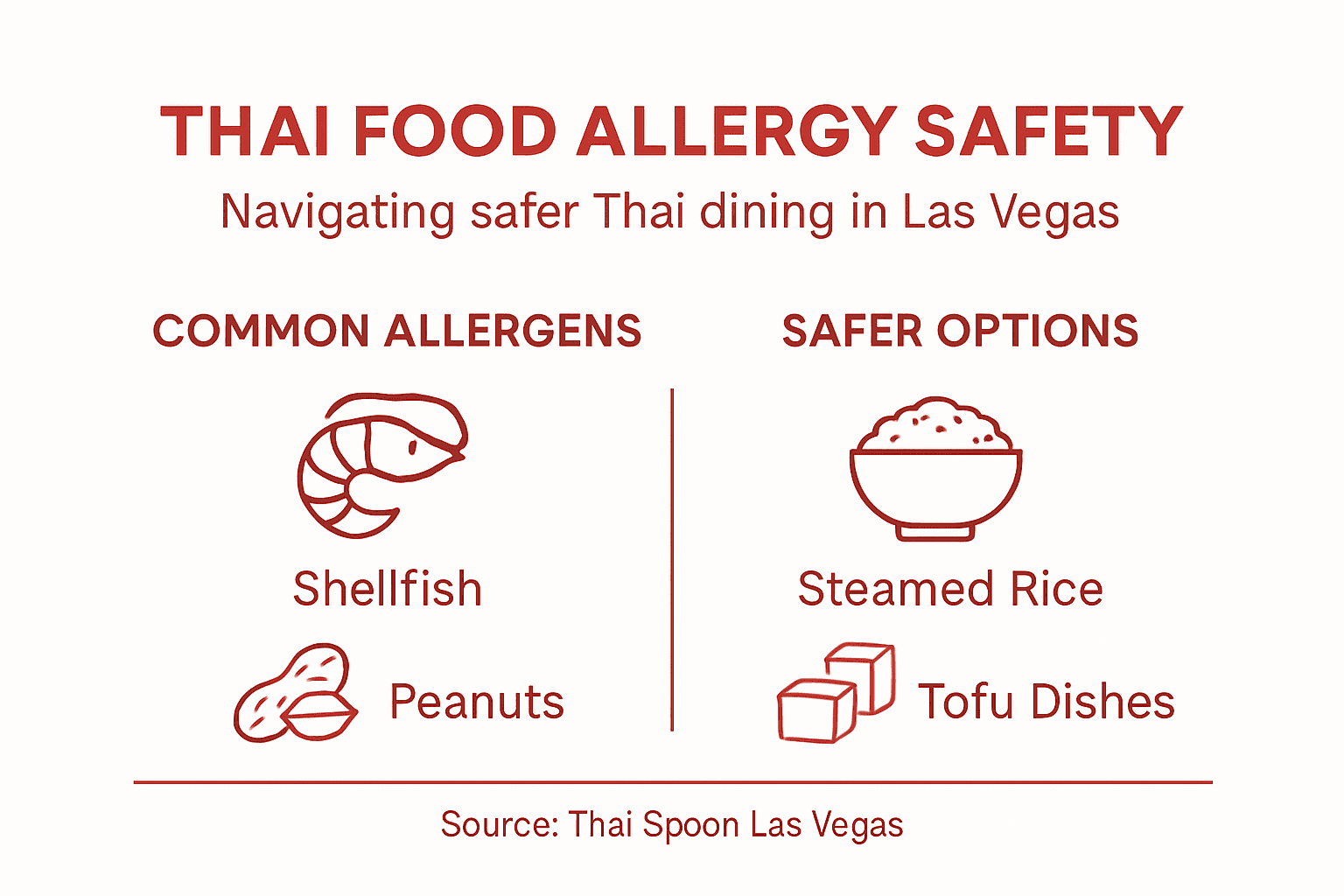
Pro tip: Request all sauces and marinades on the side, and always confirm ingredient details directly with restaurant staff before ordering.
To help allergy-sensitive diners select safer Thai menu items, here is a summary of recommended strategies and their benefits:
Strategy | Practical Benefit | Example Application |
Confirm sauces & marinades | Reduces hidden allergen exposure | Request sauces on the side |
Choose simple protein dishes | Limits ingredient unpredictability | Order grilled chicken/tofu |
Opt for vegetable-based options | Avoids common seafood allergens | Select fresh herb salads |
Communicate clearly with staff | Enhances kitchen safety measures | Share allergy card with server |
Dining Out in Las Vegas: Communication and Tips
Navigating food allergies in Las Vegas restaurants requires proactive communication and strategic planning. Thai cuisine presents unique challenges that demand careful attention and clear dialogue with restaurant staff.
Critical Communication Strategies:
Research restaurants in advance
Call ahead to discuss specific allergy concerns
Request detailed ingredient information
Ask about kitchen cross-contamination protocols
Speak directly with managers or head chefs
Consider dining during less busy hours
Bring written allergy documentation if necessary
The importance of clear communication with restaurant staff cannot be overstated. Each interaction should involve transparent, specific discussions about ingredient composition, preparation methods, and potential cross-contact risks.
Preparation and Safety Tactics
Successful dining with food allergies involves multiple layers of preparation. This includes carrying emergency medication, understanding menu complexities, and being prepared to advocate for your dietary needs.
Pro tip: Create a personalized allergy card in both English and visual format that clearly outlines your specific dietary restrictions to share with restaurant staff.
Enjoy Authentic Thai Flavors Safely with Thai Spoon Las Vegas
Managing food allergies while craving authentic Thai cuisine can feel overwhelming. With concerns about hidden allergens like shellfish, peanuts, and soy, plus risks of cross-contamination, finding a trustworthy dining spot that understands your dietary needs is essential. Thai Spoon Las Vegas prioritizes safe dining by offering clear ingredient information and accommodating allergen-friendly requests so you can savor dishes like Pad Thai or Yellow Curry without worry.
Don’t compromise your health for flavor. Visit Thai Spoon Las Vegas to explore our menu featuring vegan, gluten-free, and customizable options. Call ahead or order online for pickup or delivery to ensure your meal meets your specific allergy requirements. Take control of your dining experience now and enjoy safe, delicious Thai food right in northwest Las Vegas.
Frequently Asked Questions
What are common allergens found in Thai cuisine?
Thai cuisine often contains allergens such as shrimp, peanuts, tree nuts, soy, wheat, eggs, and fish. These ingredients are prevalent in various traditional dishes, making it critical for those with allergies to be cautious.
How can I communicate my food allergies when dining at a Thai restaurant?
Before ordering, it’s essential to discuss your specific allergies with the restaurant staff. Be clear about your dietary restrictions and ask detailed questions regarding ingredients and preparation methods to minimize cross-contamination risks.
What safety measures should I take when eating Thai food?
Request that all sauces and marinades be served on the side, and choose simple dishes made with known ingredients. Always confirm the specifics of each dish and consider dining during less busy hours to ensure better communication with staff.
Are there safer menu options for diners with food allergies at Thai restaurants?
Yes, safer choices often include vegetable-based stir-fries, plain steamed rice, herb-infused salads, and grilled proteins. It’s advisable to avoid high-risk ingredients like fish sauce and shellfish and to focus on clearly defined menu items.
Recommended

Comments