


Thai Menu Terms: Unlocking Authentic Flavors Locally

Ordering Thai food in Northwest Las Vegas can feel like decoding a secret language, especially when you want real flavors and need vegan or gluten-free options. Thai cooking terms signal more than just ingredients—they reveal specific cooking methods, heat levels, and flavors shaped by traditions from places like Northern Thailand. Gaining a clear understanding of these authentic menu terms helps you make confident choices, enjoy every bite, and find genuine Thai dishes tailored perfectly to your dietary needs. Authentic Thai menu terminology transforms your dining experience.
Table of Contents
Key Takeaways
Point | Details |
Understanding Cooking Terms | Familiarize yourself with core Thai cooking terms like “pad” and “gaeng” to predict dish flavor and texture. |
Identifying Ingredients | Learn key ingredients like “nam pla” (fish sauce) and “mai sai” (without) to make informed dining choices and modifications. |
Spice Level Awareness | Know the spice level descriptors to avoid ordering dishes that are too spicy or bland for your palate. |
Health and Dietary Options | Recognize vegan and gluten-free considerations while ordering to ensure meals meet dietary needs without sacrificing flavor. |
What Thai Menu Terms Really Mean
Thai menu terms often look mysterious if you haven’t grown up eating Thai food. Those unfamiliar word combinations describe specific cooking techniques, ingredient preparations, and flavor profiles that matter for understanding what you’re ordering.
The beauty of Thai cuisine lies in its precision. When a menu says “pad” versus “gaeng,” you’re looking at fundamentally different cooking methods. Understanding authentic cooking techniques helps you predict exactly how your dish will taste and what texture to expect.
Core Cooking Method Terms
These appear constantly on Thai menus and define how your food gets prepared:
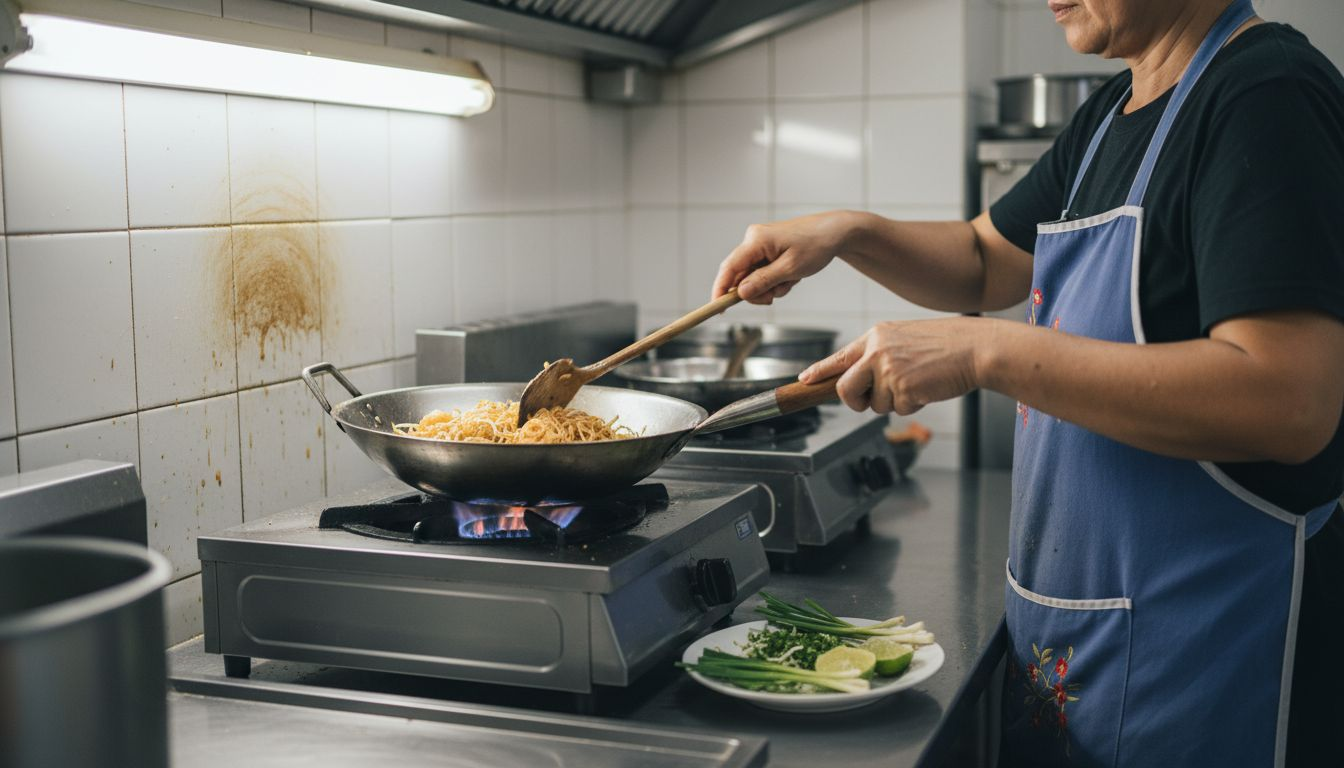
Pad means stir-fried, using high heat and quick movement to cook ingredients
Gaeng translates to curry, typically a wet dish with coconut milk or broth
Tom indicates boiling or simmering, creating lighter broths and soups
Yum refers to spicy salad dishes served cold or at room temperature
Kaeng hang lay describes a specific slow-cooked, dry curry style
Satay means grilled on skewers, usually with peanut sauce
Understanding cooking methods helps you choose dishes that match your texture preferences and heat tolerance.
When you’re dining in northwest Las Vegas and see “Pad Thai,” you instantly know it’s a stir-fried noodle dish with specific flavors. If you spot “Gaeng Panang,” expect a rich, coconut-based curry that’s creamy and complex.
Ingredient and Flavor Terms
Menu descriptions often include terms describing what goes into the dish or how it tastes:
Prik means chili pepper; “prik kee noo” refers to tiny, fiery bird’s eye chilies
**Nam pla" is fish sauce, that distinctive funky-smelling ingredient adding depth
**Nam Jim" indicates a sauce or dipping liquid
**Mai sai" means without or no (“mai sai gluten” = no gluten)
**Sod" means fresh; paired with vegetables for raw or minimally cooked items
**Kratiem" is garlic, often describing garlic-forward dishes
Vegans and those seeking gluten-free options in northwest Las Vegas will appreciate knowing these terms. Requesting “mai sai nam pla” (no fish sauce) and “mai sai nam pla plaa” ensures you avoid gluten-containing soy sauce derivatives.
Understanding authentic Thai menu terminology gives you confidence ordering exactly what you want without surprises arriving at your table.
Spice Level Language
Heat intensity uses specific terminology:
Pet nit noi means slightly spicy
Pet means medium spice
**Pet maak" means very spicy
“Pet maak maak” means extremely hot
Local food enthusiasts in the Las Vegas area can request specific spice levels. You’ll never overshoot your heat tolerance or get a bland dish by mistake.
Pro tip: When ordering at a new Thai restaurant, ask your server what “pet” tastes like in their kitchen—heat levels vary significantly between establishments, so this baseline helps you calibrate your order accurately.
Popular Dishes and Their Key Ingredients
Thai cuisine builds flavor through a careful balance of five tastes: sour, sweet, salty, spicy, and bitter. Every popular dish you’ll find at Thai Spoon in northwest Las Vegas relies on specific ingredients working together to create that harmony.
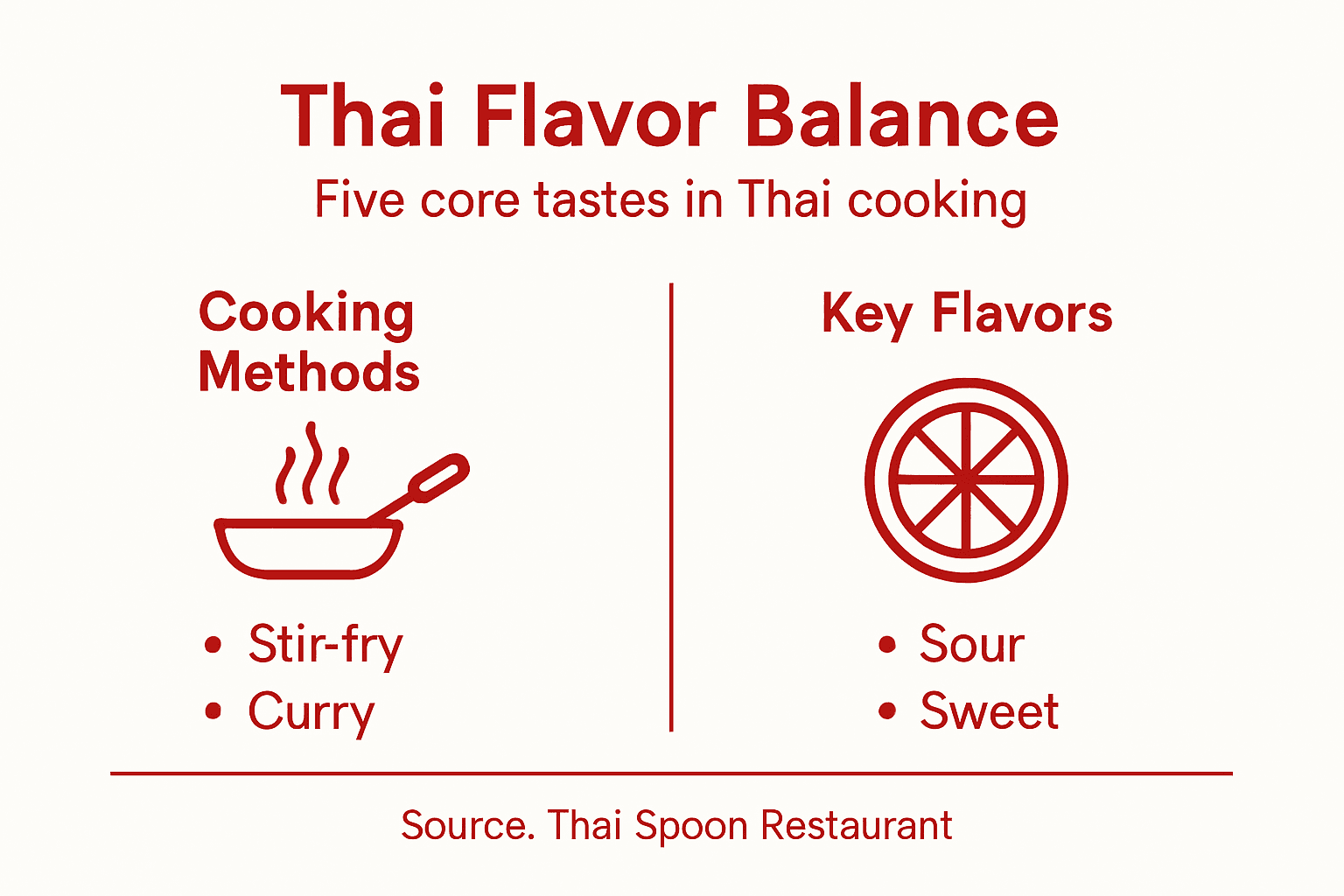
The most recognizable Thai dishes share common foundation ingredients. Five-flavor balance in Thai cooking creates the signature taste profile that makes dishes memorable and crave-worthy.
Pad Thai and Noodle Dishes
Pad Thai remains the most ordered Thai dish globally, and for good reason. This stir-fried noodle dish combines rice noodles with specific ingredients that create the perfect sweet-sour-salty balance:
Rice noodles form the base, absorbing flavors while maintaining texture
Tamarind paste provides sourness and depth
Fish sauce adds umami and saltiness
Palm sugar balances with sweetness
Shrimp or chicken provides protein
Bean sprouts and peanuts add crunch
Lime juice brightens the dish
For vegan versions at Thai Spoon, tofu replaces animal protein while maintaining the core flavor profile. The sauce remains largely the same, making the dish accessible across dietary preferences.
Curry Dishes
Thai curries vary by color and region, but all share coconut milk as their base. This ingredient creates the creamy, rich texture that defines curries:
Green curry uses fresh green chilies, creating sharp heat and grassy notes
Red curry blends red chilies with lemongrass and galangal for warming spice
Yellow curry incorporates turmeric and is milder, earthy, and slightly sweet
Panang curry uses peanut paste alongside coconut, creating nutty richness
All curries feature fresh herbs like Thai basil, cilantro, and kaffir lime leaves. These brighten the dish and add authentic flavor that dried herbs cannot replicate.
Rice-Based Dishes
Rice dishes showcase how regional preferences shape ingredient selection. Central Thailand favors jasmine rice, while the northeast uses sticky rice. Fried rice dishes incorporate eggs, vegetables, and proteins with the rice grain itself.
Core Thai ingredients like lemongrass, galangal, and fish sauce appear across nearly every dish, creating flavor consistency and authenticity.
The beauty of understanding ingredients means you can request modifications. Knowing that essential Thai sauces contain specific elements helps vegans and gluten-free diners make informed choices about customization.
Here’s a quick reference comparing popular Thai dishes by their cooking method and key flavor elements:
Dish Type | Cooking Method | Signature Flavors | Typical Protein |
Noodle Dishes | Stir-fried (Pad) | Sweet, sour, salty | Chicken, shrimp, tofu |
Curry Dishes | Simmered (Gaeng) | Spicy, creamy, herbal | Chicken, beef, tofu |
Rice Dishes | Fried or steamed | Savory, aromatic, mild | Egg, vegetables, chicken |
Salad Dishes | Cold/mixed (Yum) | Spicy, tangy, fresh | Seafood, tofu, vegetables |
Grilled Dishes | Grilled (Satay) | Smoky, nutty, savory | Chicken, pork |
Key Ingredients You’ll See
These appear in almost every Thai dish:
Fish sauce (nam pla): the funky base adding depth
Coconut milk: richness and creamy texture
Lemongrass: citrusy, aromatic flavor
Galangal: spicy-sweet root similar to ginger
Thai chilies: fresh heat without overpowering
Lime: brightness and acidity
Thai basil: licorice-like herb unique to the cuisine
Pro tip: When ordering, ask if fish sauce can be omitted or replaced with additional lime and soy sauce alternatives—this small change accommodates vegan preferences while maintaining authentic Thai flavor balance.
Vegan and Gluten-Free Options Decoded
Navigating Thai menus as a vegan or gluten-free diner requires understanding which ingredients hide in traditional dishes. The good news: Thai Spoon in northwest Las Vegas offers numerous options that satisfy both dietary needs without sacrificing authentic flavor.
Thai cooking naturally accommodates plant-based eating. Rice, vegetables, and plant-based proteins feature prominently in the cuisine, making vegan modifications straightforward once you know what to ask for.
Understanding Hidden Animal Products
Vegans face hidden challenges in Thai cuisine. Fish sauce appears in nearly every savory dish, providing umami depth that feels essential to the flavor profile. Here’s what you need to know:
Fish sauce (nam pla): the primary animal product in Thai cooking
Shrimp paste: used in curry pastes and some stir-fries
Oyster sauce: adds savory depth to noodle dishes
Anchovy-based stocks: the base for many soups and broths
Egg: present in fried rice and some noodle dishes
When you request a vegan dish, specifically ask for these ingredients to be omitted or replaced. Most restaurants, including Thai Spoon, can substitute with soy sauce, additional lime juice, or vegetable-based broths.
Gluten-Free Considerations
Gluten hides in unexpected places on Thai menus. Understanding plant-based protein options helps you identify naturally gluten-free dishes and modifications.
Common gluten-containing ingredients in Thai cuisine include:
Soy sauce: wheat-based unless specified tamari or coconut aminos
Fish sauce: occasionally contains wheat additives
Curry pastes: some brands add wheat flour as filler
Noodles: most contain wheat unless labeled rice noodles
Thickening agents: cornstarch is safe, but some sauces use wheat flour
Ask your server specifically about soy sauce brand and request tamari substitutes. Rice noodles and pad thai with rice noodles (not wheat) are naturally gluten-free when prepared without regular soy sauce.
Naturally Vegan and Gluten-Free Dishes
Some Thai dishes require minimal modification:
Vegetable stir-fries (pad vegetable): request no fish sauce, use tamari
Coconut-based curries: naturally dairy-free, avoid fish-based curries
Vegetable soups: ask for vegetable broth instead of seafood stock
Fresh spring rolls: skip any shrimp varieties
Sticky rice: pure rice, naturally vegan and gluten-free
Requesting specific modifications isn’t unusual at Thai restaurants—chefs expect and accommodate dietary requests regularly.
When ordering vegan Thai options, communicate clearly about both vegan and gluten-free needs simultaneously. This prevents cross-contamination and ensures your meal meets your requirements.
This summary helps vegan and gluten-free diners identify hidden risks and best ordering strategies:
Dietary Need | Hidden Ingredient Risks | Best Menu Strategies | Customization Tips |
Vegan | Fish sauce, shrimp paste | Focus on veggie stir-fries | Ask for plant-based sauces |
Gluten-Free | Soy sauce, wheat noodles | Pick rice noodle dishes | Request tamari or rice noodles |
Both Vegan & GF | Broths, curry pastes | Choose coconut-based curries | Confirm sauces are wheat-free |
Ordering Strategy for Success
Approach the menu systematically. Choose your base dish, then specify modifications clearly:
Select a dish without inherent animal products (vegetable-based preferred)
Request no fish sauce, no shrimp paste, no oyster sauce
Ask for soy sauce brand or request tamari
Confirm noodles are rice-based if ordering noodle dishes
Request vegetables stay fresh and uncooked if worried about oil or broth
Pro tip: Call Thai Spoon ahead of time to discuss your specific vegan and gluten-free needs—speaking directly with kitchen staff ensures they understand your requirements and can recommend dishes modified perfectly for your dietary preferences.
Ordering Tips to Avoid Common Mistakes
Ordering Thai food successfully comes down to understanding what you’re actually getting. Many diners make choices based on incomplete information, then feel disappointed when their dish arrives different from expectations.
Take time before ordering. Rushing through the menu leads to regrettable choices, especially when unfamiliar with Thai terminology and preparation methods.
Read Descriptions Carefully
Menu descriptions tell you critical information. Understanding menu layout and dish descriptions helps you select dishes matching your actual preferences rather than guessing.
Pay attention to these description elements:
Heat level indicators: mild, medium, or spicy notation
Protein type: beef, chicken, shrimp, or vegetarian options
Sauce base: coconut milk, broth, or dry preparation
Texture notes: crispy, soft, or chunky descriptions
Special preparation: fried, steamed, or grilled methods
Ingredient callouts: garlic, peanuts, or sesame mentions
Many diners order “Pad Thai” assuming all versions taste identical. Reality: preparation varies by restaurant. Thai Spoon’s version differs from competitors, so reading their specific description prevents surprises.
Ask Clarifying Questions Before Ordering
Your server or the kitchen staff can answer questions that the menu cannot. Don’t hesitate to ask specifics about preparation, ingredients, or modifications.
Key questions to ask:
“How spicy is this dish in your restaurant?”
“Does this contain fish sauce or shellfish?”
“Can you make this without [specific ingredient]?”
“Is this served hot or cold?”
“What size portion comes with this dish?”
“How long does this take to prepare?”
Asking these questions upfront prevents ordering regrets. Staff expects and welcomes detailed questions from diners unfamiliar with Thai cuisine.
Avoid Common Ordering Mistakes
These errors happen repeatedly at Thai restaurants:
Ordering only familiar dishes: You miss authentic flavors unique to Thai Spoon
Requesting everything mild: Thai food’s charm is balanced heat, not absence of spice
Assuming all versions identical: Restaurants prepare dishes differently based on their style
Overlooking vegetarian options: Many traditional dishes work perfectly without meat
Ignoring side dishes: Rice, noodles, and sides transform your meal experience
Combining too many spicy dishes: Balance your order with milder options
Restaurant staff understand Thai cuisine better than you do—trusting their recommendations often leads to better meals than making assumptions.
When ordering multiple dishes, request variety in heat levels and preparation styles. This creates a balanced meal experience and lets you taste different aspects of Thai cooking.
Strategic Ordering Approach
Plan your order systematically to avoid mistakes:
Choose one curry dish and one stir-fried dish for variety
Select a noodle or rice dish as your base
Add one vegetable-forward option for balance
Request one mild and one medium-spice dish minimum
Ask if sharing portions suit your group size
Ordering this way ensures you experience multiple cooking methods and flavor profiles rather than ending up with three similar dishes.
Pro tip: Ask your server what they personally recommend from the menu based on your stated preferences—staff familiarity with ingredient combinations and cooking techniques reveals hidden gems you’d never find by reading the menu alone.
Unlock the True Taste of Thai Cuisine with Confidence
Ordering Thai food can feel overwhelming when menu terms and spice levels seem unfamiliar. The article breaks down essential Thai cooking methods like pad, gaeng, and yum while decoding ingredients such as fish sauce and prik for a clearer understanding. If you want to avoid surprises and savor authentic flavors tailored to your spice tolerance and dietary needs, Thai Spoon Las Vegas is your local solution. We specialize in authentic Thai dishes including vegan and gluten-free options crafted with traditional ingredients and cooking techniques.
Discover the joy of ordering exactly what you crave with no confusion. Explore our menu to find perfectly prepared Pad Thai, rich curries, and flavorful stir-fries. Whether dining in northwest Las Vegas or ordering for pickup or delivery, our staff is ready to help you customize your meal so you know what to expect in every bite. Don’t wait to experience true Thai taste away from the Strip at Thai Spoon. Visit us today and unlock your authentic Thai dining experience at Thai Spoon Las Vegas.
Frequently Asked Questions
What do the terms ‘Pad’ and ‘Gaeng’ mean in Thai cooking?
‘Pad’ means stir-fried, while ‘Gaeng’ refers to curry. Understanding these terms helps you know the cooking methods and will influence the texture and flavor of the dish you’re ordering.
How can I determine the spice level in Thai dishes?
Thai menus often indicate spice levels using terms like ‘Pet nit noi’ for slightly spicy, ‘Pet’ for medium spice, and ‘Pet maak’ for very spicy. Always feel free to ask your server for their definitions to ensure you order according to your heat preference.
What common ingredients should I be aware of when ordering Thai food?
Some key ingredients to look out for include fish sauce (nam pla), coconut milk, lemongrass, and Thai chilies. These ingredients significantly impact the flavor profile of various dishes, so being aware of them can help with dietary preferences.
Are there vegan and gluten-free options in Thai cuisine?
Yes, many Thai dishes can be made vegan or gluten-free. Be sure to ask for no fish sauce or shrimp paste, and check that soy sauce is replaced with a gluten-free alternative like tamari. Many vegetable and rice-based dishes are readily available to accommodate these dietary needs.
Recommended
Comments