


Why Gluten-Free Thai Matters for Las Vegas Foodies
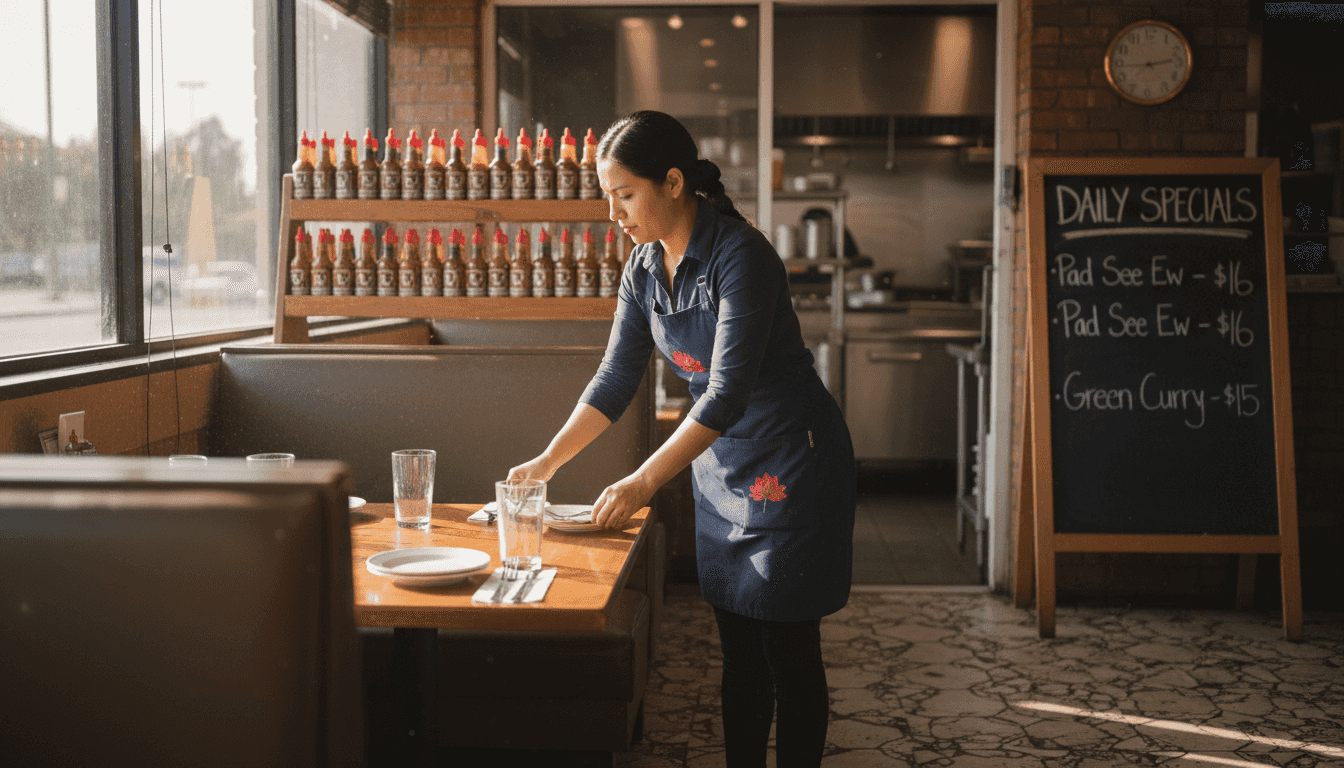
Finding truly authentic Thai food that meets gluten-free standards can feel challenging in Northwest Las Vegas. Many residents with celiac disease or gluten sensitivity need clear answers about which dishes are actually safe. Thai cuisine relies on a variety of naturally gluten-free foundation ingredients like rice, fish sauce, and lemongrass, offering a vibrant experience without restriction. This guide reveals how restaurants preserve real flavor while following trusted FDA gluten-free labeling rules, so you can enjoy every bite with confidence.
Table of Contents
Key Takeaways
Point | Details |
Understanding Gluten-Free Thai Cuisine | Recognize that gluten-free Thai food removes gluten-containing sauces and ingredients while preserving authentic flavors. |
Ingredient Safety Matters | Always verify that sauces, pastes, and potentially harmful ingredients are gluten-free before ordering to avoid hidden gluten. |
Communication is Key | When dining out, ask specific questions about preparation methods and ingredient sources to ensure safety. |
Health Benefits | A gluten-free diet supports recovery for those with celiac disease or gluten sensitivity, enhancing energy and nutrient absorption. |
Defining Gluten-Free Thai Cuisine in Las Vegas
Gluten-free Thai cuisine in Las Vegas represents a specific adaptation of traditional Thai cooking that removes gluten-containing ingredients while preserving authentic flavors. For northwest Las Vegas residents with celiac disease or gluten sensitivity, understanding what gluten-free Thai actually means separates safe dining choices from risky assumptions.
Traditional Thai cooking naturally relies on many gluten-free foundation ingredients. Rice, rice noodles, fresh herbs like lemongrass and kaffir leaves, palm sugar, tamarind paste, and fish sauce form the backbone of most Thai dishes. These core components contain no gluten, making Thai cuisine potentially safer than many other cuisines for gluten-sensitive eaters.
The challenge emerges when sauces and seasoning blends enter the picture. Some traditional Thai preparations use soy sauce, oyster sauce, or other condiments that contain wheat. Curry pastes, despite their appearance, sometimes hide gluten in their ingredients. This is where gluten-free Thai cuisine differs from standard Thai cooking—it explicitly substitutes these problematic ingredients with safe alternatives.
Gluten-free Thai cuisine maintains authentic taste by swapping problematic sauces for gluten-free versions, not by reducing flavors or quality.
When understanding gluten-free Thai cuisine, you’re looking at dishes where every ingredient has been vetted for gluten content. This means chefs replace regular soy sauce with tamari or certified gluten-free soy sauce. They verify that curry pastes, fish sauce blends, and any pre-made seasonings meet safety standards.
Las Vegas restaurants offering gluten-free Thai options should follow FDA gluten-free labeling standards, which require foods labeled gluten-free to contain less than 20 parts per million of gluten. This regulatory threshold exists because trace amounts below this level are typically safe for most people with celiac disease.
Key differences in gluten-free Thai preparation include:
Tamari or coconut aminos instead of regular soy sauce
Certified gluten-free curry pastes or house-made versions
Cross-contamination prevention in kitchen preparation
Ingredient transparency from the restaurant
Clear labeling of which dishes are genuinely gluten-free
The distinction matters because “naturally gluten-free” ingredients don’t guarantee a dish is safe. A Pad Thai made with rice noodles and fresh vegetables still becomes problematic if the sauce contains wheat-based soy sauce. Gluten-free Thai cuisine requires intentional, deliberate ingredient selection and preparation.
For northwest Las Vegas foodies, this means asking detailed questions when ordering. Does the restaurant use gluten-free soy sauce? Are curry pastes certified? Do they prepare gluten-free dishes in a separate area? These specifics define whether you’re eating Thai cuisine that happens to be gluten-free or Thai cuisine intentionally prepared to be gluten-free.
Pro tip: Call Thai Spoon ahead of time to discuss specific gluten-free needs with the kitchen staff—they can explain exactly how each dish is prepared and flag any ingredients that might concern you.
Core Ingredients and Naturally Gluten-Free Dishes
Thailand’s pantry contains ingredients that have naturally avoided gluten for centuries. Understanding what makes these components safe helps you identify dishes that work for your dietary needs without requiring special modifications or cross-contamination concerns.
Rice and rice noodles form the foundation of most Thai cooking. Jasmine rice, sticky rice, and rice noodles provide the carbohydrate base for countless dishes without any gluten worry. These staples appear in everything from stir-fries to soups, making them your safest bet when ordering.
The flavor profile of Thai cuisine relies heavily on aromatic herbs and seasonings. Fresh lemongrass, kaffir lime leaves, Thai chilies, and galangal create the distinctive taste you expect from authentic Thai food. None of these ingredients contain gluten, and they’re essential to preserving genuine flavor in gluten-free preparations.
The best gluten-free Thai dishes aren’t specially made—they’re traditionally prepared with ingredients that have always been naturally gluten-free.
Fish sauce and shrimp paste provide the umami depth that makes Thai cuisine crave-worthy. While these seem unusual to Western palates, both are naturally gluten-free and fundamental to authentic taste. Palm sugar and tamarind paste add the sweet and sour notes that balance spicy heat, and both are entirely safe options.
Naturally gluten-free Thai dishes include several classics:
Larb (minced meat salad with fresh herbs)
Tom Yum (hot and sour soup with shrimp or chicken)
Green or Red Curry (when made with gluten-free curry paste)
Grilled Fish or Chicken with sticky rice
Fresh Spring Rolls (with rice paper wrappers)
Pad Krapow Moo (ground pork with holy basil)
When ordering any rice-based or vegetable-forward dish, you’re typically safe. The danger zones come with noodle soups that use wheat noodles, dishes with soy-based sauces, or fried items that may use wheat-containing breading. Understanding staple Thai ingredients helps you spot safe options instantly.
Many staple foods across Thai menus are naturally gluten-free because fruits, vegetables, meats, and fish inherently avoid gluten. This means a Pad See Ew made with rice noodles or a simple grilled fish with jasmine rice carries zero gluten risk if prepared with proper sauce choices.
The key difference between “naturally gluten-free” and “gluten-free prepared” matters here. A dish like Som Tam (papaya salad) is naturally gluten-free if made with just fresh ingredients. But Pad Thai might not be unless the kitchen uses tamari instead of soy sauce.
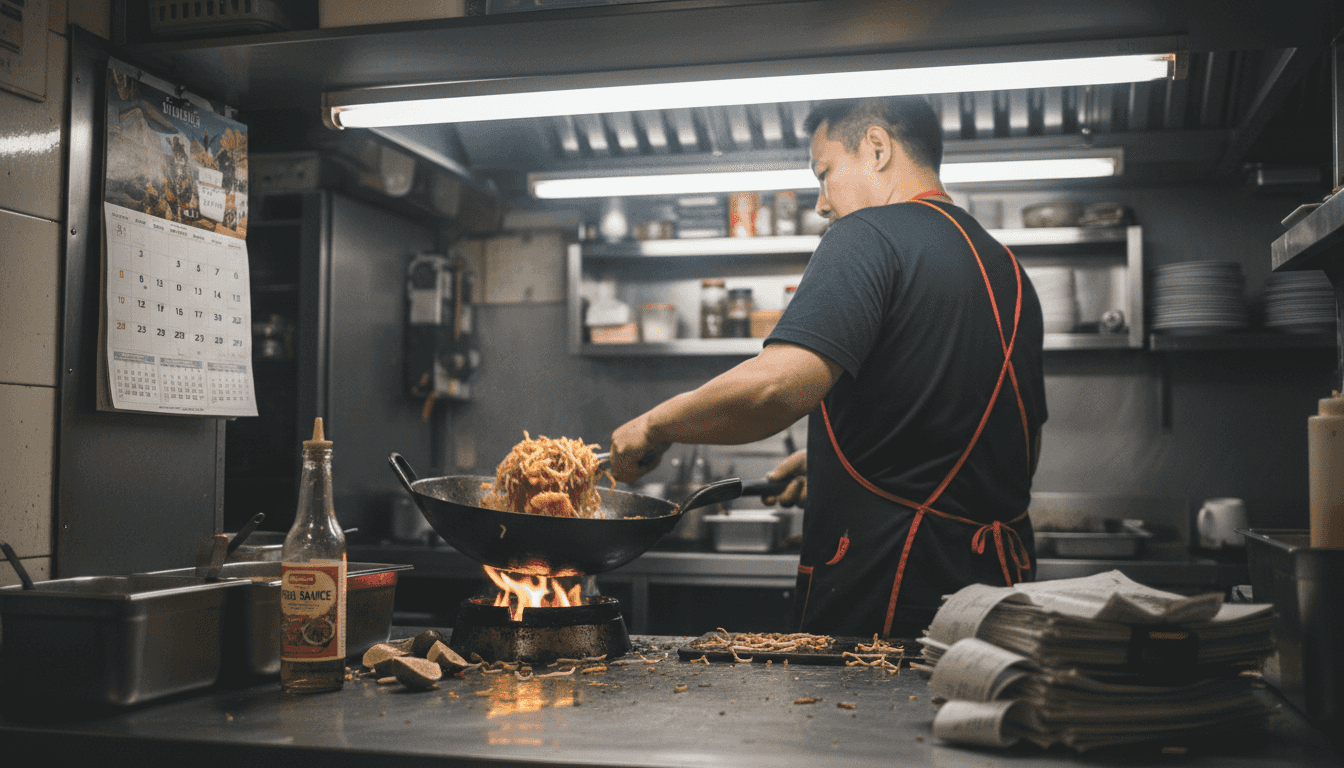
Pro tip: Ask your server at Thai Spoon which dishes come naturally gluten-free without modifications—these require no special kitchen procedures and arrive faster while reducing cross-contamination risk.
Compare naturally gluten-free dishes with those requiring gluten-free preparation steps:
Dish Type | Naturally Gluten-Free | Requires Gluten-Free Modification | Common Risk Factor |
Salads (e.g., larb, som tam) | Yes, if made with fresh items | Sometimes, check dressing and sauce | Hidden gluten in sauces |
Curries (red, green) | Sometimes, depends on paste | Substitute certified GF curry paste | Wheat in store-bought curry paste |
Stir-fries (Pad Krapow, Pad See Ew) | Yes, if rice noodles used | Replace soy with tamari, verify sauces | Soy sauce, oyster sauce often have wheat |
Soups (Tom Yum) | Yes, with fresh broth | Confirm broth and seasonings are GF | Thickening agents, pre-made broths |
Spring Rolls | Yes, rice paper wrappers | Ensure dipping sauce is gluten-free | Sauce contamination |
Here’s a quick reference for identifying safe versus risky Thai ingredients when eating gluten-free:
Ingredient Type | Safe Examples | Risk Examples | Notes |
Grains/Noodles | Jasmine rice, rice noodles | Wheat noodles, chow mein | Rice-based dishes generally safe |
Sauces/Condiments | Fish sauce, tamari | Soy sauce, oyster sauce with wheat | Always ask about soy-based sauces |
Seasonings | Fresh herbs, raw spices | Pre-made curry pastes, seasoning mixes | Check if curry paste is certified GF |
Proteins | Grilled chicken, shrimp | Breaded pork, fried items | Breading can contain wheat |
Sweets/Sours | Palm sugar, tamarind paste | Malt-based sweeteners | Most traditional Thai desserts are GF |
Hidden Gluten Sources and Safe Menu Choices
Gluten doesn’t announce itself on Thai menus. Many dishes appear safe at first glance but harbor hidden gluten sources that catch diners off guard. Knowing what to watch for separates truly safe meals from potentially dangerous assumptions.
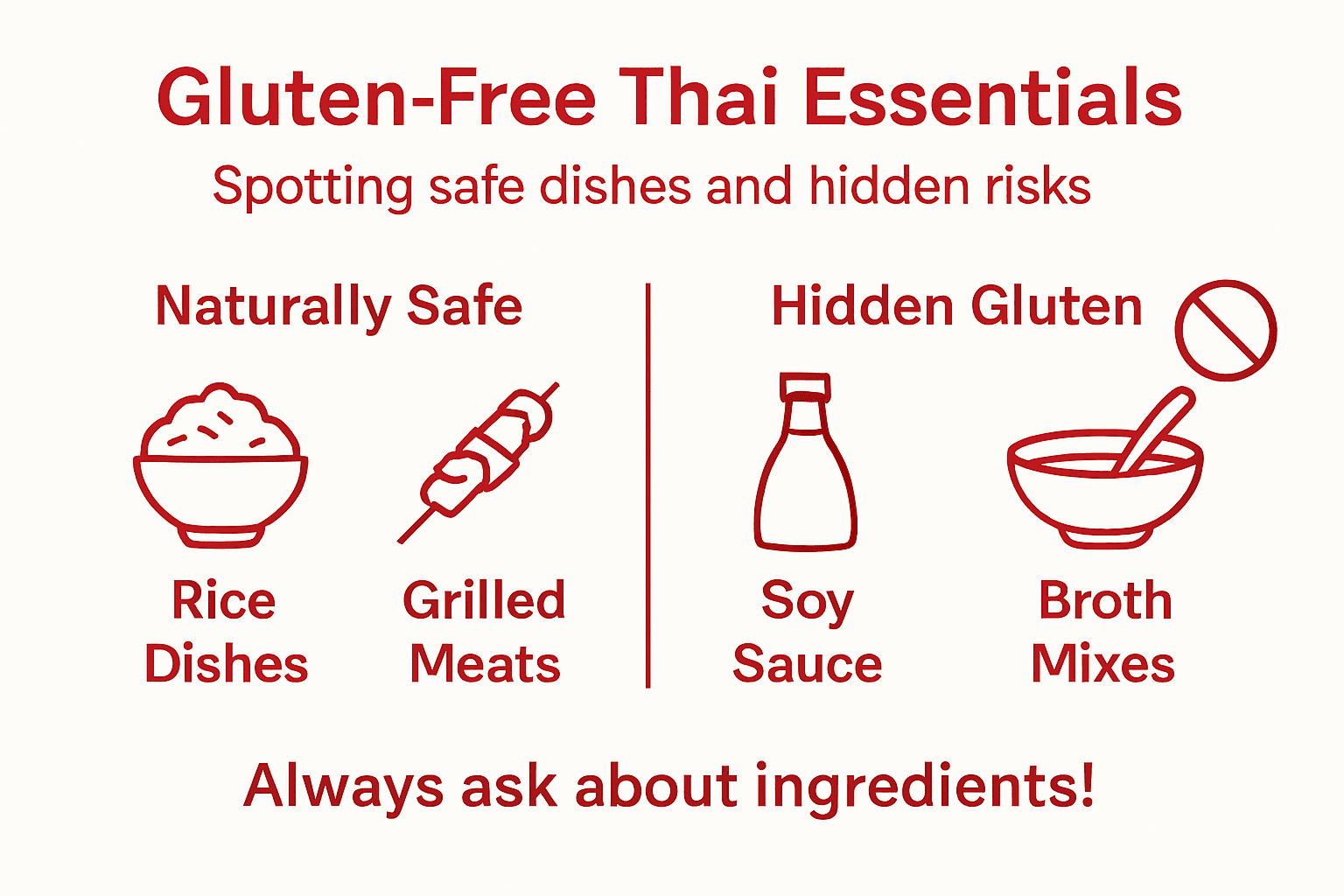
Soy sauce ranks as the number-one gluten culprit in Thai cooking. Traditional soy sauce contains wheat, making it unsafe for gluten-free diets. Most Thai restaurants use this ingredient liberally in sauces, marinades, and dipping preparations without thinking twice about it. Always ask whether the kitchen uses tamari or gluten-free soy sauce instead.
Oyster sauce presents another common trap. This rich, brown condiment typically contains wheat and appears in stir-fries, curries, and noodle dishes. Fish sauce itself is safe, but when combined with oyster sauce or other condiments, the gluten risk increases significantly.
Ask about every sauce before ordering—what tastes innocent often contains wheat that you cannot see or taste.
Seasoning blends and curry pastes hide gluten regularly. While raw spices and herbs remain naturally gluten-free, pre-made blends sometimes include wheat fillers or barley additives. Many traditional Thai curry pastes contain hidden gluten unless specifically certified otherwise. Always ask if curry pastes are made in-house or certified gluten-free.
Common hidden gluten sources include:
Soy sauce and oyster sauce in stir-fries
Seasoning mixes with wheat additives
Malt-based condiments
Store-bought curry pastes
Thickening agents in some sauces
Soy-based marinades
Hidden gluten sources in Thai cooking extend beyond obvious suspects. Broths, stocks, and even some fish sauce brands may contain gluten additives. Cross-contamination during food preparation poses another significant risk—shared cutting boards, fryers, or utensils can transfer wheat particles to otherwise safe dishes.
Safe menu choices focus on dishes with minimal sauces and clear ingredient lists. Grilled proteins with jasmine rice, fresh vegetable dishes without heavy sauces, and soups made with verified gluten-free broths work best. Spring rolls with rice paper wrappers stay safe when served with gluten-free dipping sauce.
When ordering at Thai Spoon or any Thai restaurant, use this approach: Start by identifying dishes built on rice, rice noodles, or fresh vegetables. Ask specifically whether soy sauce is used and request tamari as a substitute. Confirm that curry pastes are either house-made or certified gluten-free. Request that your dish be prepared separately from other orders to prevent cross-contamination.
Pro tip: Call ahead and speak directly with the kitchen staff about your gluten-free needs—Thai Spoon can prepare dishes specifically for you and explain exactly which ingredients go into each component, eliminating guesswork and keeping you safe.
Health Benefits and Dietary Impact
Choosing gluten-free Thai cuisine goes beyond avoiding discomfort. For northwest Las Vegas residents with celiac disease or gluten sensitivity, this dietary choice directly supports your body’s ability to heal and function optimally.
Celiac disease affects millions of Americans, and for those diagnosed, consuming gluten triggers an immune response that damages the small intestine. A gluten-free diet is the only medical treatment for this condition, making it non-negotiable rather than optional. Eliminating gluten allows intestinal damage to repair and symptoms to disappear over time.
Non-celiac gluten sensitivity affects many more people who experience digestive pain, bloating, brain fog, and fatigue without having celiac disease. These individuals benefit significantly from removing gluten, even though their condition differs medically. Both groups find relief when they commit to gluten-free eating.
Switching to gluten-free Thai cuisine isn’t about restriction—it’s about reclaiming your energy, digestion, and quality of life.
When gluten leaves your diet, nutrient absorption improves dramatically. A damaged intestinal lining cannot process vitamins, minerals, and proteins effectively. Once you eliminate gluten, your digestive system repairs itself, and your body finally absorbs the nutrition it needs. This translates to better energy, clearer skin, improved mood, and stronger immune function.
Health benefits of gluten-free dining include:
Reduced bloating and digestive discomfort
Improved nutrient absorption from food
Increased energy levels throughout the day
Clearer thinking and reduced brain fog
Better immune function
Healthier skin and hair
Beyond celiac disease, growing numbers of Americans adopt gluten-free diets for general wellness reasons. People notice reduced inflammation, improved digestion, and better athletic performance when gluten disappears from their meals. Thai cuisine supports these goals naturally because so many traditional dishes rely on rice and fresh vegetables rather than wheat.
Thailand’s cooking style aligns perfectly with gluten-free health goals. Fresh herbs, abundant vegetables, lean proteins, and healthy fats create meals that nourish your body while tasting incredible. You’re not eating cardboard or restriction food—you’re eating authentic, flavorful cuisine that happens to support your health.
For Las Vegas foodies managing celiac disease or gluten sensitivity, gluten-free Thai dining becomes your secret weapon. You get restaurant-quality food without guilt, fear, or compromise. Thai flavors are bold enough that removing gluten changes nothing about the experience—only your body’s response improves.
Pro tip: Combine gluten-free Thai meals with whole grains like jasmine rice and fresh vegetables to maximize nutrient absorption and stabilize energy levels throughout your day.
Avoiding Common Pitfalls and Ensuring Safety
Gluten-free dining requires vigilance. One careless moment—a shared cutting board, a sauce mixed into your rice, a kitchen staff member forgetting your special request—can trigger hours or days of suffering. Northwest Las Vegas foodies deserve to eat with confidence, not fear.
Cross-contamination ranks as the most common pitfall. Your gluten-free noodles touch a surface that previously held wheat pasta. Your chicken grills on a pan used for regular soy sauce dishes minutes earlier. Your rice shares a steamer with items containing gluten. These invisible transfers happen constantly in busy restaurants that don’t take gluten-free preparation seriously.
Hidden gluten appears where you least expect it. Common pitfalls include mislabeling, hidden gluten in sauces, and inadequate ingredient scrutiny. A dish labeled “gluten-free” may have been prepared on contaminated surfaces. Staff may not understand what gluten actually is or which ingredients contain it. Sauces added at the last moment might contain unexpected wheat products.
Assuming a dish is safe because it looks safe leads to dangerous mistakes—always verify every ingredient and preparation method.
Identifying truly safe restaurants makes all the difference. Las Vegas foodies benefit from seeking Certified Gluten-Free Safe Spots that have undergone independent verification for quality gluten-free practices. These establishments have proven their commitment through rigorous inspection and ongoing compliance. They understand cross-contamination risks and implement procedures to prevent them.
Key pitfalls to avoid include:
Assuming restaurants understand gluten-free requirements
Ordering without asking specific ingredient questions
Trusting menu labels without kitchen verification
Failing to mention celiac disease to server or chef
Accepting vague answers about ingredient sources
Ordering from restaurants lacking gluten-free expertise
When ordering Thai food, communicate clearly about your needs. Don’t say “I prefer gluten-free”—say “I have celiac disease and will become very ill if I consume any gluten.” This distinction changes how seriously kitchens take your request. Ask whether curry pastes are made in-house or store-bought. Request that your dish be prepared in a separate area with clean utensils and surfaces.
Specific questions protect you better than general requests. Instead of asking “Is this gluten-free?” ask “Does this dish contain soy sauce, oyster sauce, or any wheat products?” Ask how the dish is prepared. Ask what sauces touch it. Ask whether shared equipment was used. Restaurant staff appreciate specific questions because they can answer them accurately.
Thailand’s cooking style naturally supports gluten-free dining when restaurants take care. Thai Spoon and other quality establishments understand these risks and implement proper procedures. When you work with restaurants that prioritize your safety, you can enjoy authentic Thai cuisine without constant worry.
Pro tip: Visit Thai Spoon during slower hours to speak directly with the chef about your gluten-free needs—this allows detailed discussion without rushing and ensures your meal receives proper attention from start to finish.
Experience Authentic and Safe Gluten-Free Thai Cuisine Today
Living with celiac disease or gluten sensitivity means every meal comes with challenges that go far beyond taste. You need genuine gluten-free Thai options that carefully eliminate hidden wheat ingredients like soy sauce and curry pastes while preserving bold, authentic flavors. This article highlights the importance of intentional preparation and cross-contamination prevention to protect your health and enhance your dining experience.
At Thai Spoon Las Vegas, we specialize in crafting delicious, thoughtfully prepared gluten-free dishes using certified gluten-free sauces and naturally gluten-free ingredients like jasmine rice and fresh herbs. Whether you crave Pad Thai, Yellow Curry, or Steak Fried Rice, our kitchen prioritizes your safety without sacrificing the bold Thai flavors you love.
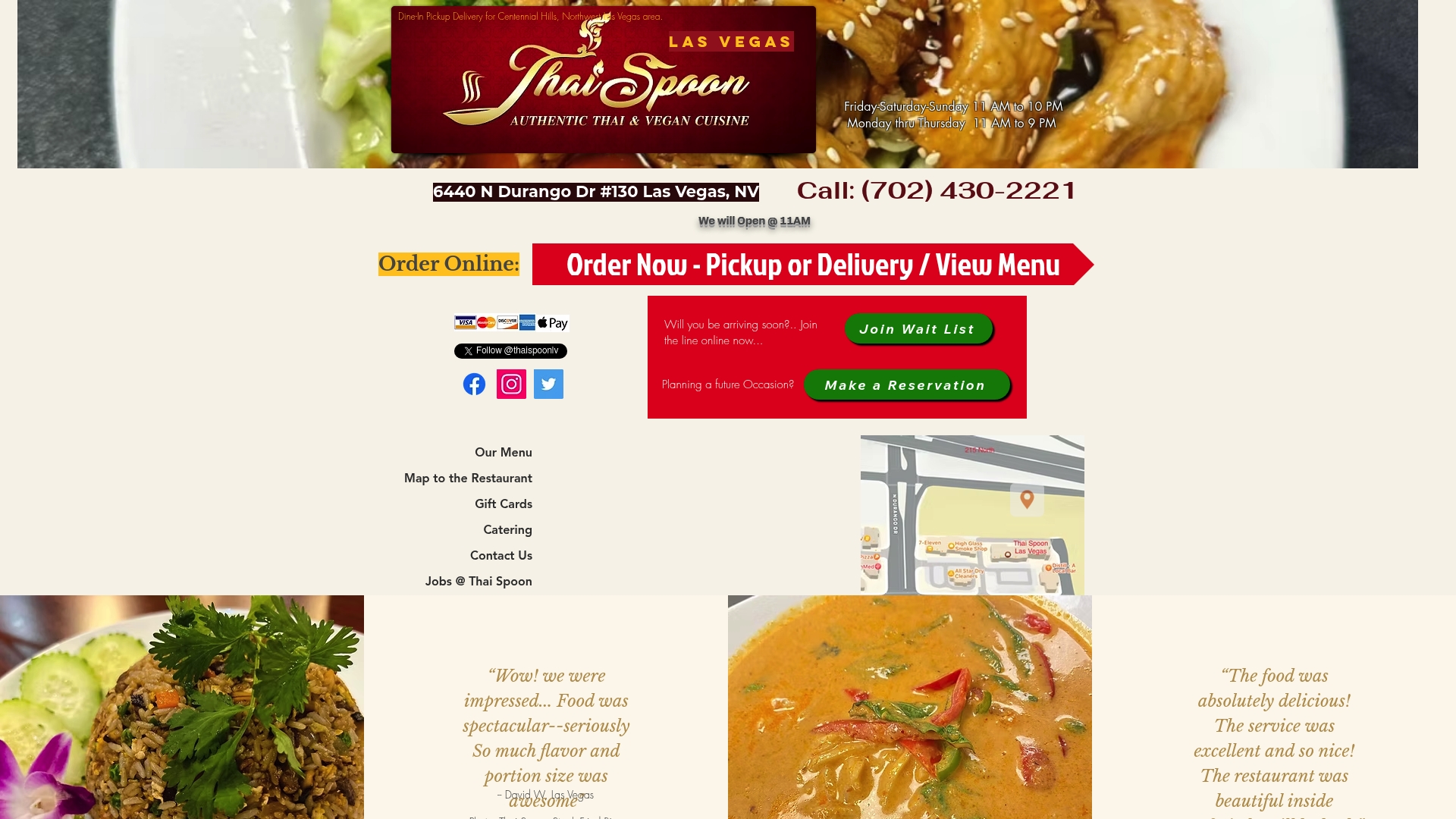
Don’t settle for guesswork when it comes to your health or your meal. Visit our website to explore our menu, order online for pickup or delivery, or call us ahead so we can customize your perfect gluten-free Thai experience. Experience peace of mind and unforgettable taste just 20 minutes from the Strip at Thai Spoon Las Vegas. Your safe and satisfying Thai meal starts here.
Frequently Asked Questions
What defines gluten-free Thai cuisine?
Gluten-free Thai cuisine adapts traditional Thai cooking by removing gluten-containing ingredients while maintaining authentic flavors, often substituting problematic sauces with gluten-free alternatives.
Why is asking about sauces important when dining gluten-free?
Many Thai dishes use sauces that may contain wheat, such as soy sauce and oyster sauce. It’s crucial to confirm whether these sauces are gluten-free to ensure your meal is safe for those with gluten sensitivities.
What are naturally gluten-free ingredients commonly used in Thai cooking?
Common gluten-free ingredients in Thai cuisine include rice, rice noodles, fresh herbs like lemongrass and kaffir lime leaves, fish sauce, palm sugar, and tamarind paste, all of which do not contain gluten.
How can I avoid cross-contamination when ordering gluten-free Thai food?
To avoid cross-contamination, always request that your gluten-free dish be prepared in a separate area and ask whether clean utensils and surfaces are used, especially in busy kitchens.
Recommended
Comments