


What is curry paste? Your guide to authentic Thai flavor
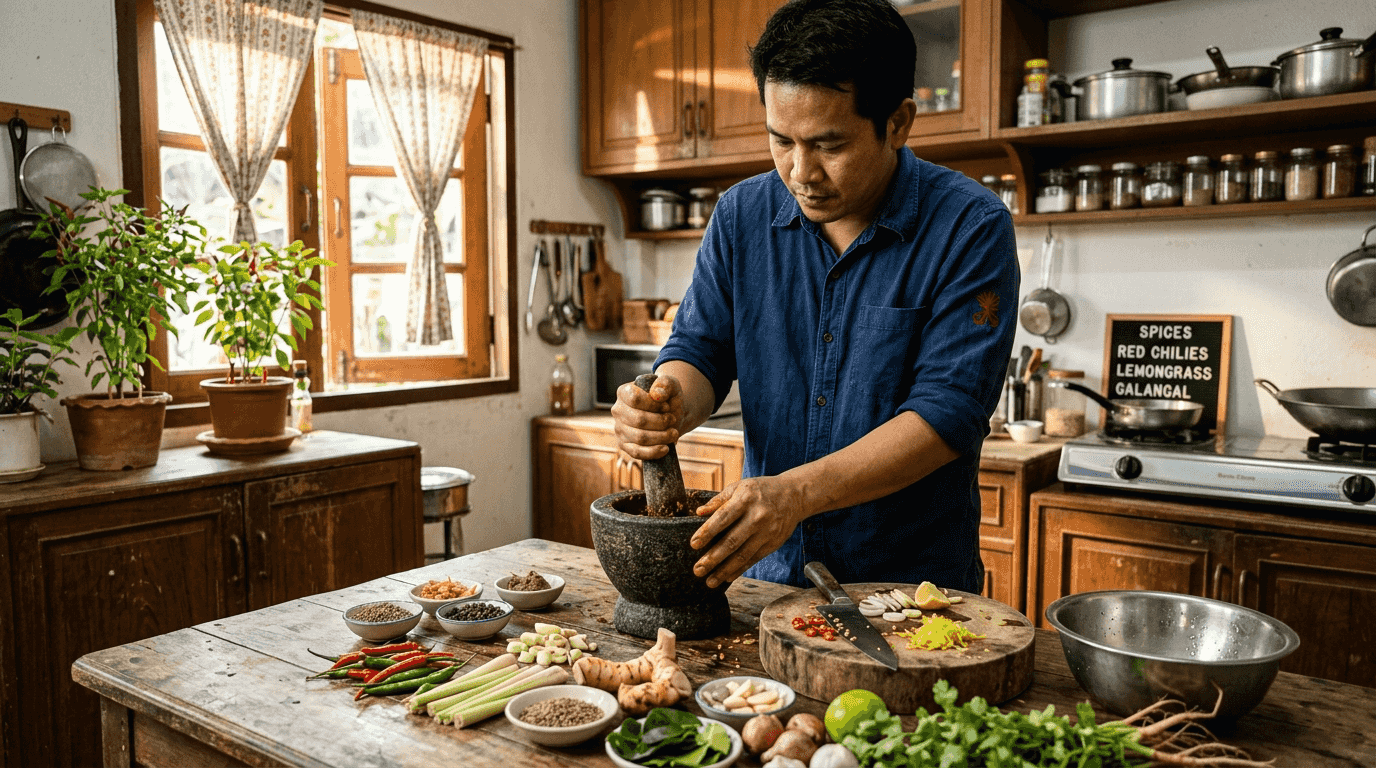
Many home cooks think curry paste is just a spicy sauce you squeeze from a jar, but that’s far from the truth. Curry paste is a complex, aromatic blend of fresh herbs, dried spices, and pungent aromatics that forms the flavor foundation of authentic Thai cuisine. Understanding what goes into curry paste, how it’s properly prepared, and how to use it transforms your cooking from ordinary to extraordinary. This guide breaks down the essential ingredients, traditional techniques, and practical tips you need to master curry paste and unlock genuine Thai flavors in your northwest Las Vegas kitchen.
Table of Contents
Key takeaways
Point | Details |
Curry paste is a complex blend | It combines fresh herbs, spices, and aromatics to create layered Thai flavors. |
Preparation method matters | Traditional mortar and pestle releases essential oils that food processors cannot replicate. |
Five main curry paste types | Red, green, yellow, Panang, and Massaman each offer distinct flavor profiles for different dishes. |
Proper blooming releases flavor | Sautéing paste in oil before adding liquid unlocks aromatic compounds and prevents bitterness. |
Balance prevents common mistakes | Moderating heat and layering flavors stepwise creates authentic taste instead of overwhelming spice. |
What is curry paste: ingredients and flavor foundations
Curry paste combines multiple ingredient categories to create its signature complexity. Thai Red Curry Paste is a foundational ingredient in Thai cuisine, providing a complex flavor profile through a blend of fresh herbs, spices, and aromatics. Each component plays a specific role in building layers of taste that define authentic Thai cooking.
The spice base typically includes coriander seeds, cumin, and white pepper. These dried spices provide warmth and depth without overwhelming heat. Toasting these spices before grinding intensifies their aromatic oils and creates a richer foundation for your paste.
Fresh herbs and aromatics form the heart of curry paste. Cilantro roots, lemongrass, and galangal contribute bright, citrusy, and slightly medicinal notes that distinguish Thai curry from other cuisines. Garlic and shallots add pungency and sweetness when cooked. Fresh ingredients like galangal and lemongrass significantly impact flavor quality, so seek them out at Asian markets in the Las Vegas area for the best results.
Shrimp paste adds essential umami depth that balances the bright herbs and fiery chilies. This fermented ingredient might smell intense raw, but it mellows during cooking and creates savory complexity. Vegetarian cooks can substitute fermented soybean paste or miso to achieve similar umami richness while maintaining dietary preferences.
Chili peppers provide heat, but their role extends beyond spice. Different chilies contribute color, fruity notes, and varying heat levels. Red curry uses dried red chilies for moderate heat and deep color, while green curry relies on fresh green chilies for brighter, more intense spice.
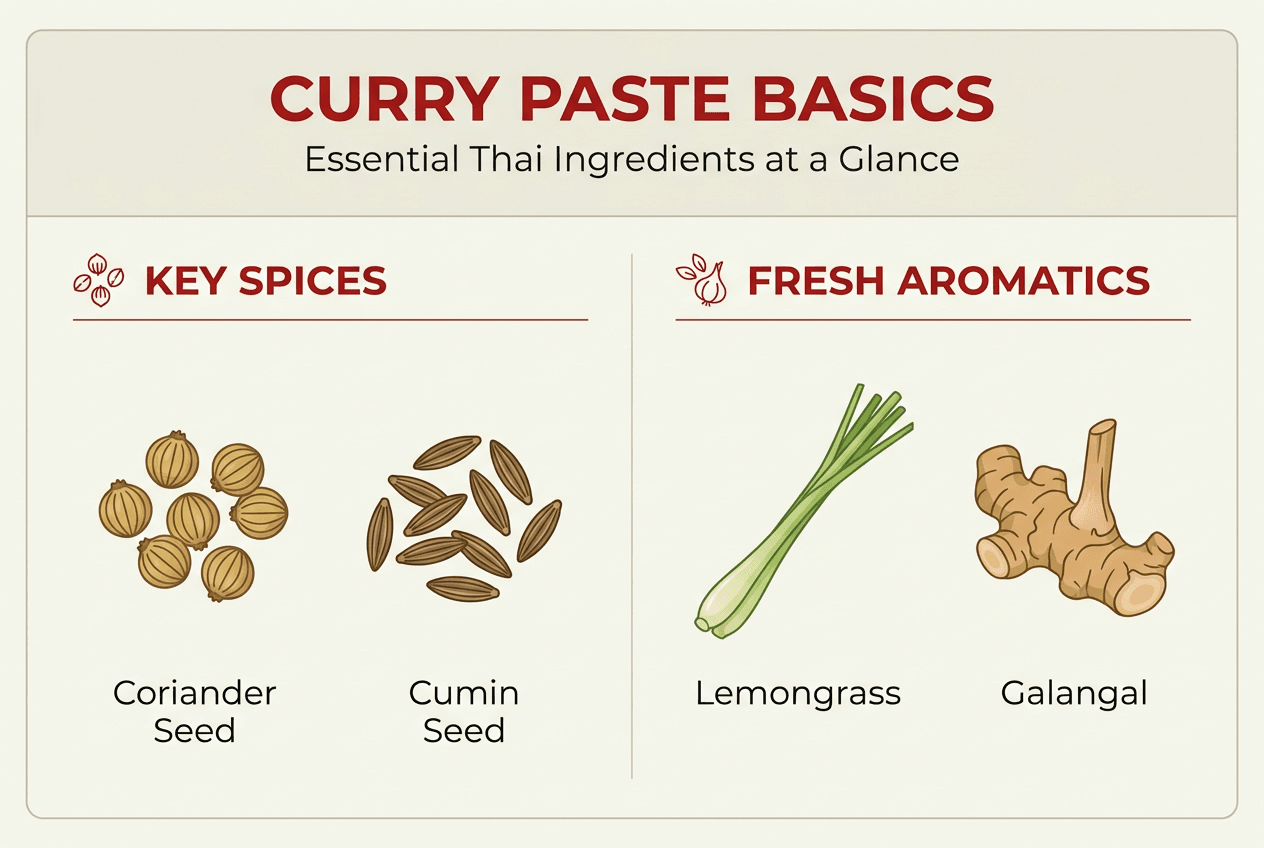
Thai curry paste is a concentrated blend of herbs and spices, forming the flavor foundation of Thai curries. The balance between these ingredient categories creates harmony. Too much chili overpowers the aromatic herbs, while insufficient spice leaves the paste flat and one dimensional.
Common mistakes include using dried herbs instead of fresh ones, which dramatically reduces aromatic impact. Another error is adding all ingredients at once without considering how each component releases flavor at different rates. Understanding these essential Thai ingredients helps you make informed substitutions when necessary.
Pro Tip: Freeze cilantro roots, lemongrass, and galangal when you find them fresh so you always have authentic ingredients ready for paste making without last minute shopping trips.
Key ingredient categories:
Dried spices: coriander, cumin, white pepper
Fresh aromatics: garlic, shallots, cilantro roots
Citrus herbs: lemongrass, kaffir lime zest
Roots: galangal, turmeric
Umami elements: shrimp paste, fish sauce
Chilies: fresh or dried depending on paste type
How to make authentic Thai curry paste: techniques and tips
Traditional preparation starts with proper ingredient prep. Chop lemongrass into thin rounds, peel and slice galangal, and remove cilantro roots from stems. These steps ensure even grinding and prevent fibrous chunks in your finished paste.
Toasting dried spices transforms their flavor profile. Heat coriander seeds, cumin, and peppercorns in a dry pan over medium heat for two to three minutes until fragrant. This step releases essential oils and creates deeper, more complex aromas that raw spices cannot provide. Let toasted spices cool completely before grinding to prevent moisture buildup.
The process of making curry paste involves blending ingredients to create a homogenous mixture with correct proportions. The traditional mortar and pestle method requires patience but delivers superior results. Start with the hardest ingredients like dried spices and work your way to softer items like herbs and chilies.
Step by step traditional method:
Grind toasted spices into fine powder using mortar and pestle
Add hard aromatics like galangal and lemongrass, pounding until fibrous
Incorporate garlic and shallots, grinding into a rough paste
Add chilies and cilantro roots, continuing to pound
Mix in shrimp paste last, working until smooth and homogenous
Adjust consistency with small amounts of water if needed
The method of preparation significantly impacts flavor; mortar and pestle produce richer taste than food processors. The pounding action crushes plant cell walls and releases aromatic compounds that chopping blades simply cannot extract. Food processors work faster but create a different texture and less intense flavor.
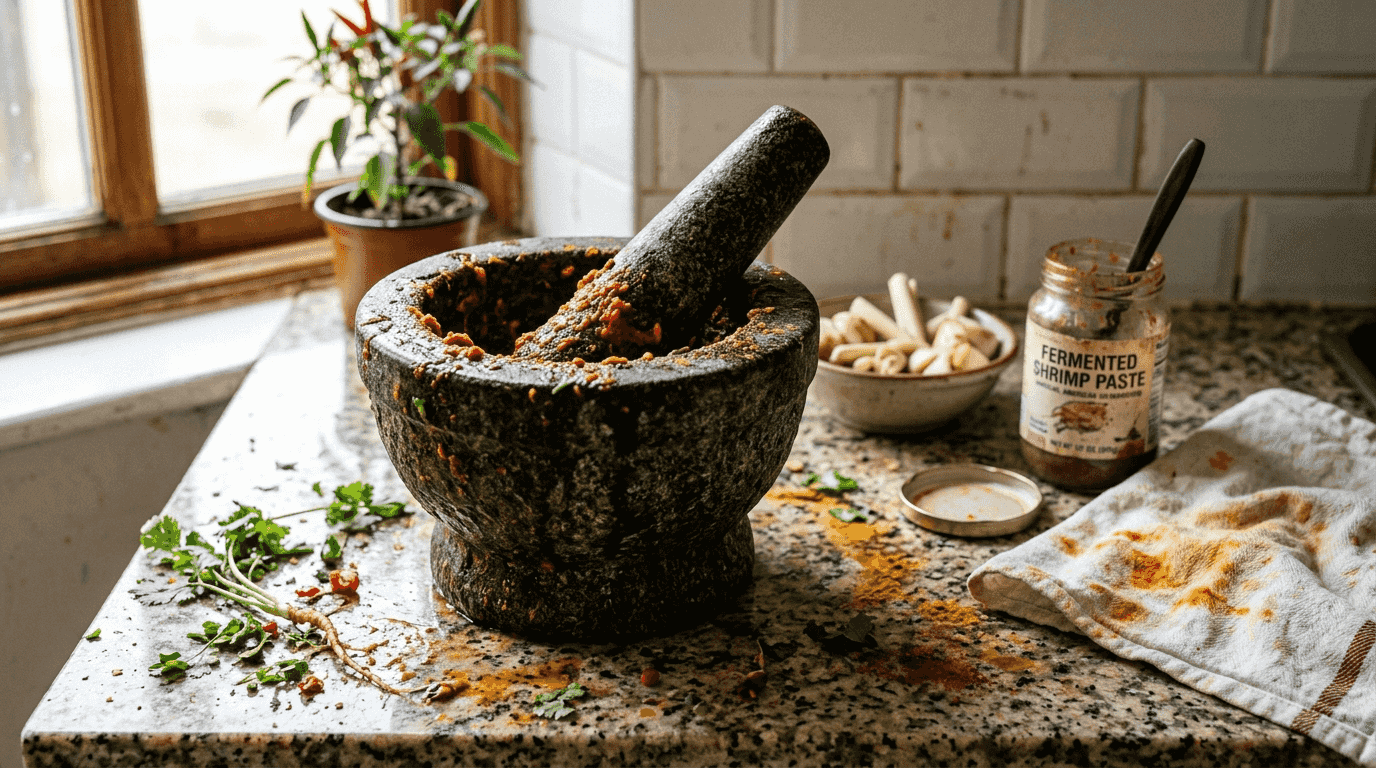
Time investment varies dramatically by method. Traditional methods involve using a mortar and pestle to grind ingredients for up to an hour for perfect consistency. Food processors reduce this to ten minutes but sacrifice some authenticity. Choose based on your priorities and available time.
Balancing chili quantity prevents overwhelming heat that masks other flavors. Start with fewer chilies than recipes suggest, then add more after tasting. You can always increase spice, but you cannot remove it once incorporated. Consider your audience’s heat tolerance when adjusting proportions.
Exploring different Thai cooking techniques helps you understand how preparation methods affect final dish quality beyond just curry paste.
Pro Tip: Patience in pounding paste results in richer, more authentic curry that tastes noticeably different from processor made versions, making the extra effort worthwhile for special meals.
“Pounding by hand unlocks fragrance that machine blending cannot replicate. The difference becomes obvious when you taste curry made from properly prepared paste.”
Different types of Thai curry pastes and their unique uses
Red curry paste balances heat and aromatics through dried red chilies, creating the most versatile option for home cooks. Its moderate spice level pairs well with beef, pork, duck, and hearty vegetables. The deep red color comes from dried chilies that also contribute subtle fruity notes beneath the heat.
Green curry paste delivers the most intense spice through fresh green chilies combined with abundant fresh herbs. This paste tastes brighter and more herbaceous than red curry, with prominent cilantro and basil notes. Green curry traditionally accompanies chicken, fish, and vegetables in coconut based sauces.
Yellow curry paste incorporates turmeric for its golden color and earthy, slightly bitter undertone. This milder option contains fewer chilies and more warming spices like cumin and coriander. The result tastes sweeter and less aggressive, making yellow curry ideal for those building heat tolerance or feeding children.
Panang curry paste stands apart through roasted peanuts and extra dried chilies that create a thicker, richer base. Each Thai curry paste has a unique flavor profile based on ingredients and cultural influences. Panang curries taste sweeter and less soupy than other varieties, often served with beef or pork.
Massaman curry paste reflects Persian and Indian influences through cardamom, cinnamon, and star anise. This aromatic paste creates the richest, most complex curry with prominent warm spices and subtle heat. Massaman curry traditionally features beef or lamb with potatoes and peanuts in a thick, fragrant sauce.
The core shared aromatic base is customized by specific ingredients to create red, green, yellow, Panang, and Massaman curry pastes. Understanding these distinctions helps you select the right paste for your main ingredient and desired flavor outcome.
Curry Type | Heat Level | Key Flavors | Best Proteins |
Red | Medium | Balanced, slightly sweet | Beef, pork, duck, vegetables |
Green | High | Herbaceous, bright, spicy | Chicken, fish, vegetables |
Yellow | Mild | Earthy, sweet, warming | Chicken, potatoes, tofu |
Panang | Medium | Rich, nutty, sweet | Beef, pork |
Massaman | Mild | Aromatic, complex, warm | Beef, lamb, chicken |
Choosing paste depends on your main ingredient and desired flavor direction. Delicate proteins like fish pair better with green or yellow curry, while robust meats handle red or Panang curry’s intensity. Consider the season too, lighter green curry suits hot weather while rich Massaman curry comforts during cooler months.
Proper blooming of paste in oil is essential to release flavors when cooking. Heat oil until shimmering, add curry paste, and stir constantly for one to two minutes until fragrant and slightly darkened. This step activates aromatic compounds and prevents raw, harsh flavors in your finished dish.
Exploring 7 essential types of Thai curries provides context for how different pastes create distinct regional dishes. Learning about curry varieties deepens your understanding of Thai culinary traditions.
Paste selection guide:
New to Thai cooking: Start with yellow or red curry
Heat seekers: Choose green curry or add extra chilies to red
Rich, complex flavors: Select Massaman or Panang
Light, fresh dishes: Use green curry with vegetables
Hearty winter meals: Opt for Massaman with beef
Using curry paste in your Thai cooking: flavor balance and troubleshooting
Start by blooming curry paste in oil to release essential oils and flavor compounds. Heat two tablespoons of neutral oil over medium heat, add curry paste, and stir constantly for one to two minutes. The paste should darken slightly and smell intensely aromatic. This crucial step prevents raw, harsh flavors and creates the foundation for balanced curry.
Moderate chili quantity to balance heat and fragrance. More chili doesn’t mean better curry, it often overwhelms the delicate herb and spice notes that define authentic Thai flavor. The balance of flavors, sweet, salty, sour, spicy, and umami, is vital in Thai red curry paste. Aim for complexity rather than pure heat.
Avoid scorching paste to prevent bitterness. Bitterness in curry often comes from scorched aromatics or overcooked herbs, not coconut milk. Keep heat at medium, stir constantly during blooming, and add liquid promptly once the paste becomes fragrant. Burned garlic or shallots create acrid flavors that permeate the entire dish.
If curry turns bitter, don’t panic. Fix bitter curry by adding fat like coconut cream, acidity from lime juice or tamarind, and sweetness through palm sugar. These additions rebalance flavors and mask burnt notes. Start with small amounts, taste frequently, and adjust gradually.
Recognize when to shift from sautéing paste to simmering the curry. Once aromatics bloom and oil separates from the paste, add coconut milk or stock immediately. Continuing to fry past this point risks burning and bitterness. The paste should look slightly oily and smell intensely fragrant before adding liquid.
Consistent stirring and timing affect flavor preservation. Stir paste constantly during blooming but reduce stirring once liquid is added. Excessive stirring after adding coconut milk can break the emulsion and create separated, oily curry. Gentle simmering allows flavors to meld without aggressive agitation.
Understanding flavor and heat balance through proper technique ensures your curries taste authentic rather than one dimensional or overwhelmingly spicy.
Pro Tip: Layer flavors stepwise rather than adding all ingredients at once. Bloom paste first, add proteins to sear, then liquid, then vegetables based on cooking time, and finally fresh herbs and lime juice at the end.
Troubleshooting common curry paste issues:
Too spicy: Add coconut cream, palm sugar, and serve with rice
Too bitter: Balance with lime juice, sugar, and extra coconut milk
Lacks depth: Bloom paste longer and add fish sauce for umami
Too thin: Simmer uncovered to reduce or add cornstarch slurry
Tastes raw: Ensure proper blooming time before adding liquid
Oil separates: Reduce heat and avoid over stirring after adding coconut milk
Explore authentic Thai flavors with Thai Spoon Las Vegas
Now that you understand what makes curry paste special, experience it firsthand at Thai Spoon Las Vegas. Our chefs craft authentic curry dishes using traditional techniques and fresh ingredients that showcase the complex flavors you’ve learned about. Whether you’re craving the bright heat of green curry or the rich depth of Massaman, our menu offers expertly balanced options that demonstrate proper curry paste application.
Tasting professionally prepared curry helps you recognize the flavor benchmarks to aim for in your home cooking. Visit our northwest Las Vegas location to explore how different curry pastes create distinct dishes, then apply those insights in your own kitchen. Planning a gathering? Our catering services bring authentic Thai cuisine to your events, letting you share genuine flavors with friends and family while learning through observation.
Frequently asked questions
What is the origin of Thai curry paste?
Thai curry paste evolved from ancient preservation techniques combining fresh aromatics with dried spices. Regional variations developed based on available ingredients and cultural influences from neighboring countries. The paste method concentrated flavors before refrigeration existed, allowing cooks to prepare bases in advance.
Can I substitute galangal if I can’t find it locally?
Ginger is a suitable substitute for galangal, though flavor is not identical. Fresh galangal is recommended, but ginger can substitute if unavailable. Use fresh ginger for best results, as dried or powdered versions lack the bright, citrusy notes that define authentic curry paste. Expect slightly different flavor with more peppery heat and less medicinal complexity.
How should I store homemade curry paste?
Store curry paste in an airtight container in the refrigerator for up to one week. For longer storage, freeze in small portions using ice cube trays or small containers. Frozen paste maintains quality for three months and thaws quickly when needed. Adding a thin layer of oil on top before refrigerating prevents oxidation and extends freshness.
What’s the difference between curry paste and curry powder?
Curry pastes are fresh herb and spice blends, while curry powders are dried ground spices. Paste contains moisture from fresh ingredients like lemongrass and galangal, creating concentrated flavor that blooms when cooked in oil. Powder lacks fresh aromatics and produces different flavor profiles suited to Indian rather than Thai cooking. They cannot substitute for each other in authentic recipes.
Can vegetarian or vegan versions of curry paste be made?
Shrimp paste adds umami but vegetarian alternatives are available. Vegetarian versions omit shrimp paste and use fermented soybean paste or miso for umami depth. White miso provides mild saltiness while red miso offers stronger flavor. The taste varies slightly from traditional paste but remains delicious and aromatic, maintaining the essential herb and spice complexity that defines Thai curry.
Recommended
Comments