


What Is Thai Street Food? Complete Guide Explained
Updated: Aug 18

Did you know that Thailand’s street food industry generated over USD 2.1 billion in North America alone in 2024? Thai street food goes far beyond casual meals, offering a bold mix of flavors shaped by centuries of cultural blending and local tradition. From fiery noodles cooked on bustling sidewalks to tangy salads freshly pounded by hand, each dish tells a unique story and brings the heart of Thai culture right to the table.
Key Takeaways
Point | Details |
Cultural Significance | Thai street food embodies centuries of cultural fusion and social interaction, reflecting the country’s diverse culinary heritage. |
Signature Dishes | Dishes like Pad Thai and Som Tam showcase Thailand’s complex flavor profiles of sweet, sour, spicy, and salty. |
Regional Diversity | Thailand’s street food varies significantly by region, with each area offering unique dishes and taste profiles. |
Authenticity and Sourcing | Authenticity is crucial in Thai street food, with vendors focusing on quality ingredients and traditional preparations to enhance consumer trust. |
Table of Contents
Defining Thai Street Food and Cultural Roots
Thai street food represents a vibrant culinary tradition that emerged from centuries of cultural mixing and urban innovation. Street food in Thailand isn’t just about sustenance—it’s a living, breathing expression of cultural history and social interaction. According to research from What Makes Thai Cuisine Unique, these culinary practices originated in the dynamic floating markets of canal communities, where vendors would prepare fresh meals directly for local residents and travelers.
The evolution of Thai street food tells a fascinating story of cultural intersection. As research indicates, the cuisine developed through a complex blend of influences: Chinese stir-fry techniques, Indian spice traditions, and European culinary methods. This multicultural fusion created Thailand’s signature flavor profile—a delicate balance of sweet, sour, spicy, and salty that makes Thai street food uniquely compelling. During the Vietnam War era, these flavors began capturing American attention, with Thai immigrants gradually introducing adapted versions of traditional dishes like pad Thai to Western palates.
Key characteristics of authentic Thai street food include:

Quick, fresh preparation
Bold, complex flavor combinations
Affordable pricing
Diverse range of dishes from noodles to grilled meats
Strong emphasis on immediate, on-the-spot cooking
Understanding Thai street food means appreciating more than just a meal—it’s about recognizing a dynamic culinary tradition that continues to evolve while maintaining deep connections to its rich cultural roots.
Popular Thai Street Food Dishes Explained
Thai street food offers an incredible variety of dishes that capture the essence of the country’s culinary traditions. Pad Thai, arguably the most famous street food globally, represents a perfect example of this cuisine’s complexity. According to research highlighted in 7 Best Thai Dishes to Try, this iconic noodle dish perfectly balances sweet, sour, and savory flavors that have captivated food lovers worldwide.
The street food landscape is incredibly diverse, featuring an array of mouth-watering options.
Research indicates that common street dishes include:
Som Tam: A spicy green papaya salad
Rad Na: Thick rice noodles with gravy
Khao Phat: Classic Thai fried rice
Satay: Grilled meat skewers with peanut sauce
Sticky Rice: Often paired with grilled chicken
Tom Yum Kung: A famous hot and sour soup
In the United States, certain Thai street food dishes have become mainstream favorites. Green curry, mango sticky rice, and pad Thai exemplify the cuisine’s remarkable ability to create harmonious flavor combinations that appeal to American palates. These dishes showcase Thai cooking’s fundamental philosophy: creating a perfect balance between sweet, sour, salty, bitter, and spicy elements that make each bite an exciting culinary adventure.
Regional Varieties and Flavor Profiles
Thai street food is a vibrant tapestry of regional culinary traditions, each area contributing unique flavors and cooking techniques. When exploring the nuanced Thai taste profile, one discovers remarkable diversity beyond the familiar pad Thai. Regional cuisine in Thailand varies dramatically, from the northern mountains to the southern coastal regions, creating a rich gastronomic landscape.
Northern Thai cuisine, for instance, showcases distinct characteristics like the famous khao soi—a coconut curry noodle soup—and kai yaang, a succulent grilled chicken dish. The Northeast Isan region brings its own bold flavor profile, characterized by spicy and tangy preparations that differ significantly from central Thai cooking. Southern Thai cuisine stands out with its intense seafood-based dishes and fiery curries that reflect the coastal environment.
Interesting regional variations include:
Here’s a summary of regional Thai street food characteristics:
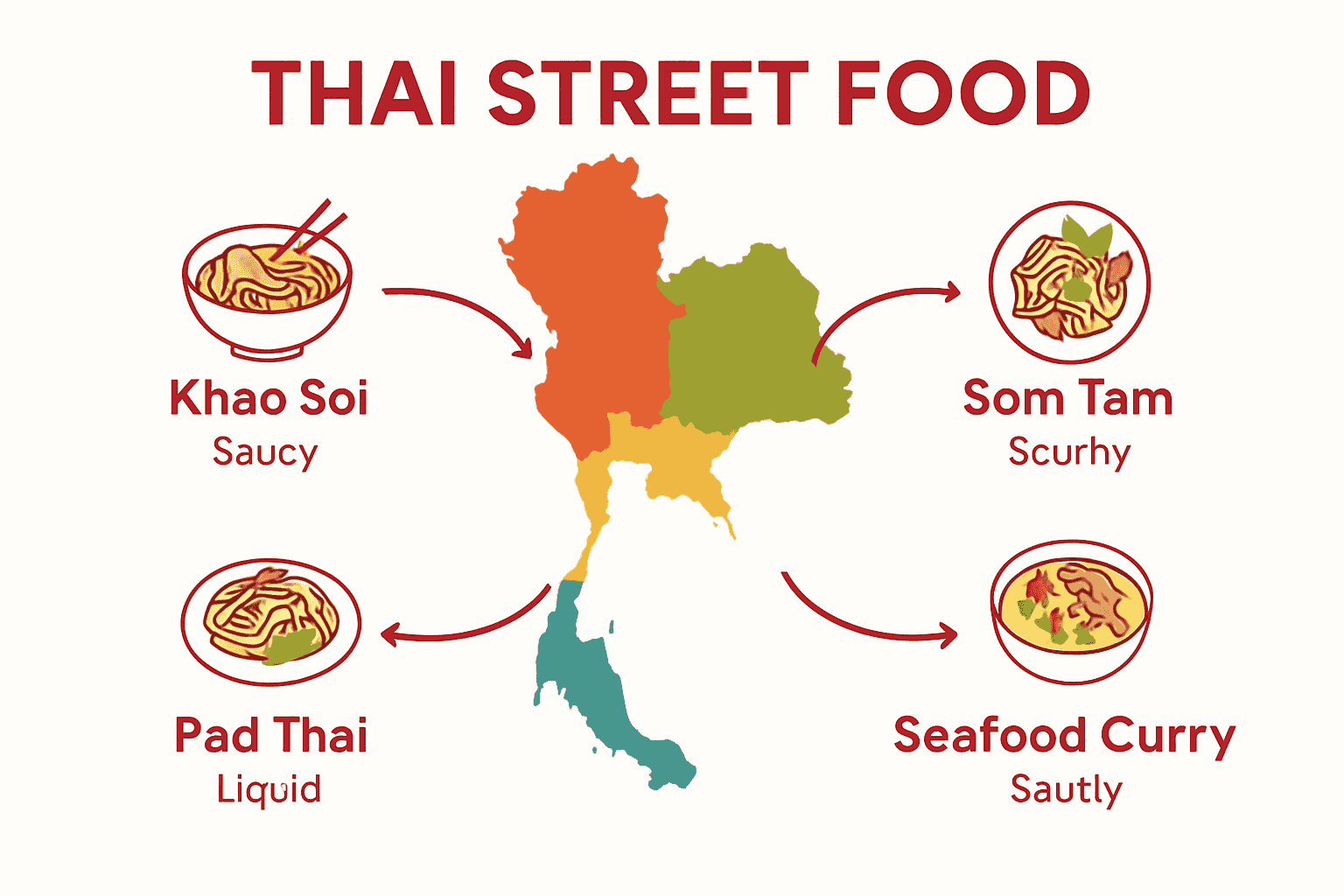
Region | Signature Dishes | Flavor Profile | Cooking Techniques |
Northern Thailand | Khao Soi Kai Yaang | Mild, herbal | Grilling Curry simmering |
Northeast Isan | Som Tam Larb | Spicy, tangy | Grilling Pounding salad |
Central Thailand | Pad Thai Tom Yum Kung | Sweet, balanced | Stir-frying Soups |
Southern Thailand | Seafood curries Satay | Fiery, seafood-centric | Grilling Curry stewing |
Northern Thailand: Mild, herb-infused dishes
Northeast Isan: Spicy, tangy street foods
Central Thailand: Sweet and balanced flavors
Southern Thailand: Seafood-heavy, extremely spicy preparations
According to recent market research, the North American Thai street food restaurant segment has reached an impressive USD 2.1 billion in 2024, with urban centers like Los Angeles and New York increasingly featuring specialized regional street food vendors. This growth reflects a growing consumer appetite for authentic, diverse Thai culinary experiences that go far beyond traditional expectations.
Street Food Preparation and Serving Methods
Thai street food preparation is an art form that blends speed, skill, and centuries-old culinary traditions. Street vendors transform modest carts and mobile stations into dynamic cooking spaces where fresh ingredients are transformed into delicious meals within minutes. According to research, these culinary professionals originally emerged from floating markets, adapting their techniques as urban environments evolved, creating a unique cooking style that prioritizes quick, flavorful preparations.
The preparation methods are as diverse as the dishes themselves. Cooking techniques typically include:
Stir-frying: Rapid high-heat cooking in woks
Grilling: Direct heat preparation for meats and vegetables
Steaming: Preserving ingredient nutrients and flavors
Deep-frying: Creating crispy exterior textures
Open-flame cooking: Traditional method for maximum flavor intensity
Traditional serving methods remain remarkably authentic. As historical sources indicate, Thai street food is predominantly sold through mobile vendors using push-carts, scooters, and stationary food stalls, particularly in bustling night markets. These settings offer 7 Essential Tips for Thai Food Beginners a glimpse into the vibrant, communal dining culture where meals are prepared instantly, served hot, and enjoyed in casual, social environments. The emphasis remains on fresh ingredients, immediate preparation, and creating an interactive culinary experience that goes far beyond simple meal consumption.
Safety, Authenticity, and Sourcing Tips
Authenticity in Thai street food is about more than just flavor—it’s a delicate balance of cultural integrity, ingredient quality, and trust. A recent 2023 study highlighted how food quality directly impacts consumer experience, emphasizing factors like cultural authenticity, health safety, sensory appeal, and reasonable pricing. When exploring Thai cuisine, discerning diners look beyond mere taste to understand the deeper narrative behind each dish.
Sourcing strategies have become increasingly sophisticated in the Thai food industry. Restaurants and street food vendors are now taking innovative approaches to maintain authenticity:
Importing specialty ingredients directly from Thailand
Developing local herb and vegetable gardens
Partnering with specialized importers
Creating plant-based adaptations
Maintaining transparent ingredient sourcing
For those seeking genuine Thai street food experiences, key considerations include checking vendor practices, understanding ingredient origins, and appreciating the cultural context. The growing trend of health-conscious and plant-based adaptations actually helps build consumer trust, as demonstrated in 7 Signature Thai Spices Every Foodie Should Know. Modern Thai food vendors recognize that authenticity isn’t about rigid preservation, but about respecting culinary traditions while meeting contemporary dietary preferences and safety standards.
Experience Real Thai Street Food Culture in Las Vegas
You just explored how Thai street food is all about authenticity, vibrant flavors, and the rich culinary traditions that come from fresh preparation and bold regional taste. If you are searching for genuine Thai street food but struggle to find a truly authentic experience outside Thailand, you are not alone. Many places promise fresh, balanced meals but often fail to deliver the depth of taste and spirit described in our guide. At Thai Spoon Las Vegas, we bring those complex flavors and immediate, just-cooked vibrancy right to your table or doorstep. Whether you crave classic Pad Thai, crave-worthy Yellow Curry, or street-style Steak Fried Rice, our menu follows the very cooking and serving methods highlighted in the article. We even offer vegan and gluten-free versions, so no one misses out on the adventure.
Are you ready to taste the real side of Thai street food—without leaving Northwest Las Vegas? Make your next meal an experience by browsing the full menu and online ordering options at Thai Spoon Las Vegas. Discover what sets us apart and turn your curiosity into your next unforgettable lunch or dinner. Order now and enjoy authentic street food flavor at Thai Spoon Las Vegas.
Frequently Asked Questions
What defines Thai street food?
Thai street food is characterized by its quick, fresh preparation, bold and complex flavor combinations, affordability, and a diverse range of dishes, including noodles and grilled meats. It reflects a cultural tradition that emphasizes immediate cooking and social sharing.
What are some popular Thai street food dishes?
Some common Thai street food dishes include Pad Thai, Som Tam (spicy green papaya salad), Rad Na (thick rice noodles with gravy), Khao Phat (Thai fried rice), Satay (grilled meat skewers), and Tom Yum Kung (hot and sour soup).
How is Thai street food prepared?
Thai street food preparation often involves techniques like stir-frying, grilling, steaming, deep-frying, and open-flame cooking. Street vendors use mobile carts and stalls to create meals from fresh ingredients quickly, maintaining authenticity and flavor.
How can I ensure the authenticity and safety of Thai street food?
To ensure authenticity and safety in Thai street food, check vendor practices, understand ingredient origins, and look for transparency in sourcing. Many vendors now use locally sourced ingredients and adapt traditional recipes to meet health and dietary preferences.
Recommended
Comments