


What Is Thai Sweet Rice? A Home Cook's Guide
TL;DR:
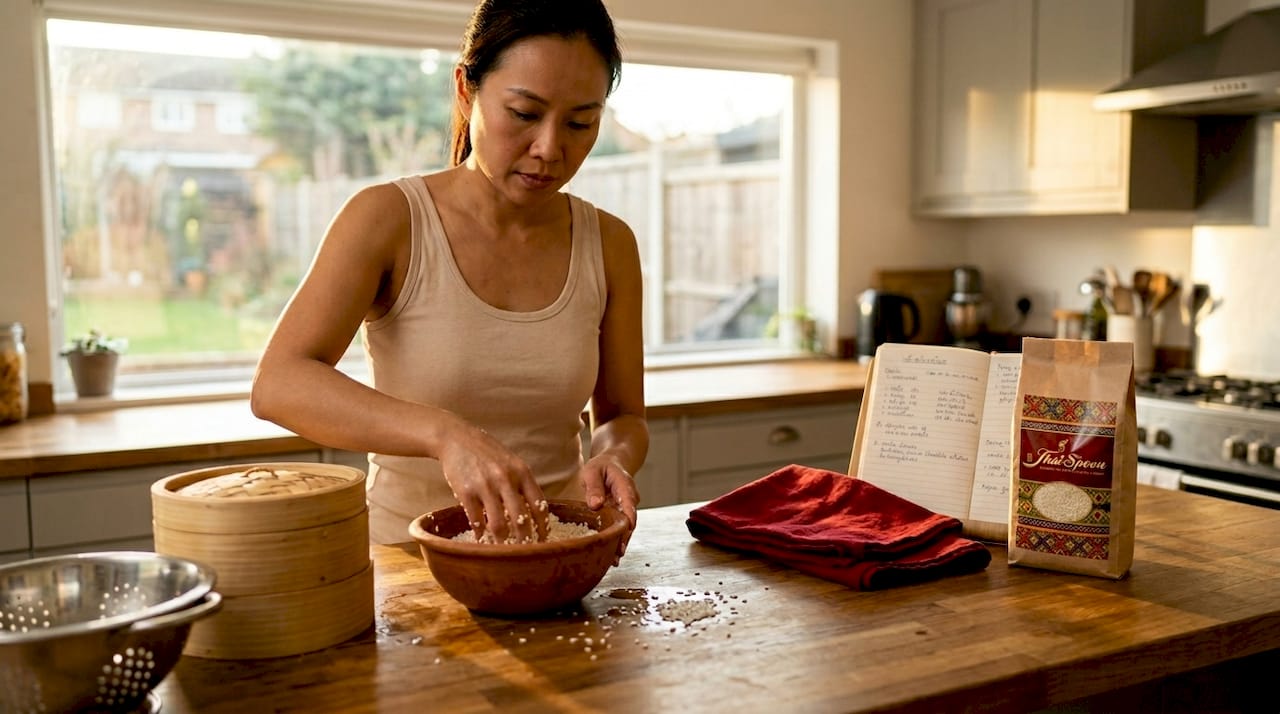
Thai sweet rice, also known as glutinous rice, is primarily valued for its high amylopectin starch content, creating a chewy, sticky texture. Proper preparation involves soaking for at least four hours and steaming to preserve its unique structure, with no substitutes capable of replicating its qualities. It is a staple in Thai cuisine, used both in everyday meals and celebratory desserts like mango sticky rice, reflecting cultural traditions of balance and community.
Thai sweet rice is one of the most misunderstood ingredients in Asian cooking. Despite the name, what is Thai sweet rice really about? It is not inherently sweet in flavor. It is a specific variety of glutinous rice with a starch structure unlike anything else in your pantry, and that difference is exactly what makes it irreplaceable in dishes like mango sticky rice, northern Thai meals, and steamed desserts. By the time you finish reading, you will know what sets it apart, how to cook it correctly, and why no substitute can replicate what it does.
Table of Contents
Key Takeaways
Point | Details |
It is not sweet by taste | Thai sweet rice earns its name from its use in desserts, not from any inherent sweetness in the grain. |
Starch structure is everything | High amylopectin content gives it that signature chewy, clingy texture no other rice can replicate. |
Soak before you steam | At least 4 hours of soaking and steaming, not boiling, are non-negotiable for the right texture. |
Cultural roots run deep | This rice is a staple of northern and northeastern Thai cuisine, eaten daily with savory dishes and celebrated in festivals. |
Substitutions always fail | Jasmine, sushi, or regular short-grain rice lack the starch profile required and will ruin any sticky rice dish. |
What is Thai sweet rice, exactly?
Thai sweet rice, known locally as khao niao, is a glutinous rice variety with an unusually high amylopectin content that creates a uniquely chewy, sticky texture when cooked. The word “glutinous” trips people up constantly. It does not mean the rice contains gluten. Glutinous rice is naturally gluten-free; the term refers entirely to its glue-like, sticky consistency after cooking.
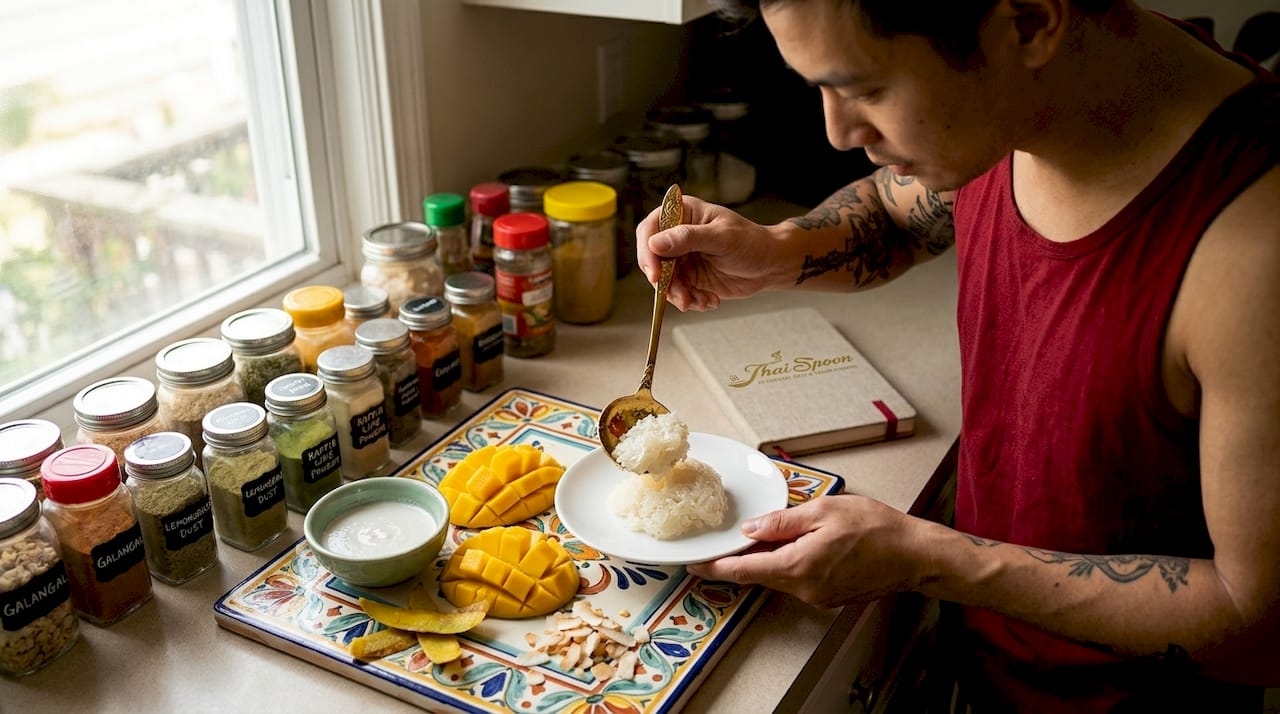
Here is where the science gets interesting without becoming a lecture. Most rice varieties, including jasmine and long-grain white rice, contain a mix of two starch molecules: amylose and amylopectin. Amylose keeps grains separate and fluffy. Amylopectin makes them stick together. Thai sweet rice’s starch consists almost entirely of amylopectin, which is why the cooked grains cling to each other in that characteristic way. Jasmine rice simply cannot mimic this, no matter how you cook it.
Key characteristics that separate Thai sweet rice from other varieties:
Grain shape: Short to medium, opaque, and chalky white when raw (not translucent like jasmine)
Starch type: Nearly 100% amylopectin, compared to roughly 80% in most other rice
Texture when cooked: Dense, chewy, and cohesive rather than fluffy and separate
Flavor profile: Mild and slightly earthy, with no inherent sweetness
Gluten status: Completely gluten-free despite its name
Understanding what is Thai sticky rice versus regular rice is not just culinary trivia. It determines whether your mango sticky rice becomes a masterpiece or a disappointment.
How to cook Thai sweet rice properly
Most home cooks who struggle with Thai sweet rice are making the same two mistakes: skipping the soak or boiling the rice. Both errors produce something you would not want to serve.
Authentic preparation requires soaking for at least 4 hours, though overnight is better. Soaking hydrates the grains evenly all the way through, so the centers cook at the same rate as the outside. Without it, you get chalky, undercooked centers even when the exterior looks done.
Steaming is non-negotiable. Steaming preserves grain structure, producing that compact but non-mushy texture that defines good sticky rice. Boiling forces too much water into each grain and breaks down the outer starch layer, leaving you with something gummy and shapeless.
Here is a reliable step-by-step process for cooking Thai sweet rice at home:
Measure and rinse. Use about 300g of glutinous rice. Rinse under cold water until the water runs mostly clear.
Soak overnight. Cover with cold water by at least 2 inches and soak for 8 to 12 hours. A minimum of 4 hours works, but overnight gives better, more consistent results.
Drain and prep your steamer. Line a bamboo steamer or colander with cheesecloth. Drain the soaked rice and transfer it to the lined steamer.
Steam over boiling water. Set the steamer over a pot of vigorously boiling water, making sure the rice sits above, not in, the water. Steam for 20 to 25 minutes, flipping the rice ball halfway through.
Check for doneness. Press a grain between your fingers. It should be fully translucent, soft, and pliable with no white, chalky core.
Prepare the coconut sauce while the rice steams. Combine 13.5 oz of full-fat coconut milk with sugar and a generous pinch of salt. Warm gently until dissolved. Do not boil.
Pour sauce over hot rice and rest. Transfer steamed rice to a bowl, pour most of the warm coconut sauce over it, and let it absorb for 10 to 15 minutes before serving.
Pro Tip: The salt in your coconut sauce is not optional. Salt balances the sweetness and prevents the dish from tasting flat or one-dimensional. Under-salted coconut sauce is one of the most common reasons home cooks feel their mango sticky rice does not taste like what they had in Thailand.
If you do not own a bamboo steamer, a metal colander set over a deep pot with a lid works well. The goal is consistent steam contact with the rice, not the specific tool you use.
Cultural significance in Thai cuisine
Thai sweet rice is far more than a dessert ingredient. In northern and northeastern Thailand, khao niao is the daily staple, eaten at nearly every meal the way Americans reach for sliced bread. Thai sweet rice is served with hands in traditional northern Thai custom, pressed into small balls and used to scoop up curries, grilled meats, and papaya salad.
“Mango sticky rice symbolizes Thailand’s celebration of balance in flavors and the bounty of seasonal produce.” Thai Mango Sticky Rice Recipe, Time.News
The flavor philosophy behind Thai food, balancing sweet, salty, sour, and spicy in a single bite, shows up perfectly in how sticky rice is served. It is mild enough to anchor bold flavors without competing with them. In the context of desserts, the rice itself provides the textural backbone while coconut milk and palm sugar carry the sweetness.
Culturally, the most celebrated use of Thai sweet rice is mango sticky rice. Peak mango season runs from April to June, and during those months, street vendors across Bangkok and Chiang Mai sell the dish from sunrise to late at night. It is tied to agricultural tradition, seasonal rhythms, and community celebration in ways that go far beyond a simple recipe.
Key cultural uses of Thai sweet rice across Thailand:
Daily staple in the north and northeast: Replaces jasmine rice as the primary carbohydrate in Isan and Lanna cuisine
Street food pairing: Served alongside grilled chicken, som tum (papaya salad), and larb
Festival food: A centerpiece of Songkran and other harvest celebrations
Sweet desserts: The foundation of khao niao mamuang (mango sticky rice) and khao niao moon (coconut milk sticky rice)
Ritual offerings: Used in Buddhist merit-making ceremonies and temple offerings
The role of rice in Thai meals is deeply woven into the culture, and sticky rice holds a specific place of honor in the regions where it originated.
Popular recipes and how to use Thai sweet rice
Mango sticky rice is the entry point for most Western cooks, and rightfully so. It showcases every quality that makes this grain special. The key to getting it right comes down to a handful of variables.
Factor | Thai sweet rice | Jasmine or other rice |
Starch type | Nearly 100% amylopectin | Mix of amylose and amylopectin |
Cooked texture | Sticky, chewy, cohesive | Fluffy, separate grains |
Absorbs coconut sauce | Yes, deeply and evenly | No, sits on top and turns soggy |
Works in sticky rice dishes | Yes | No |
Gluten content | None | None |
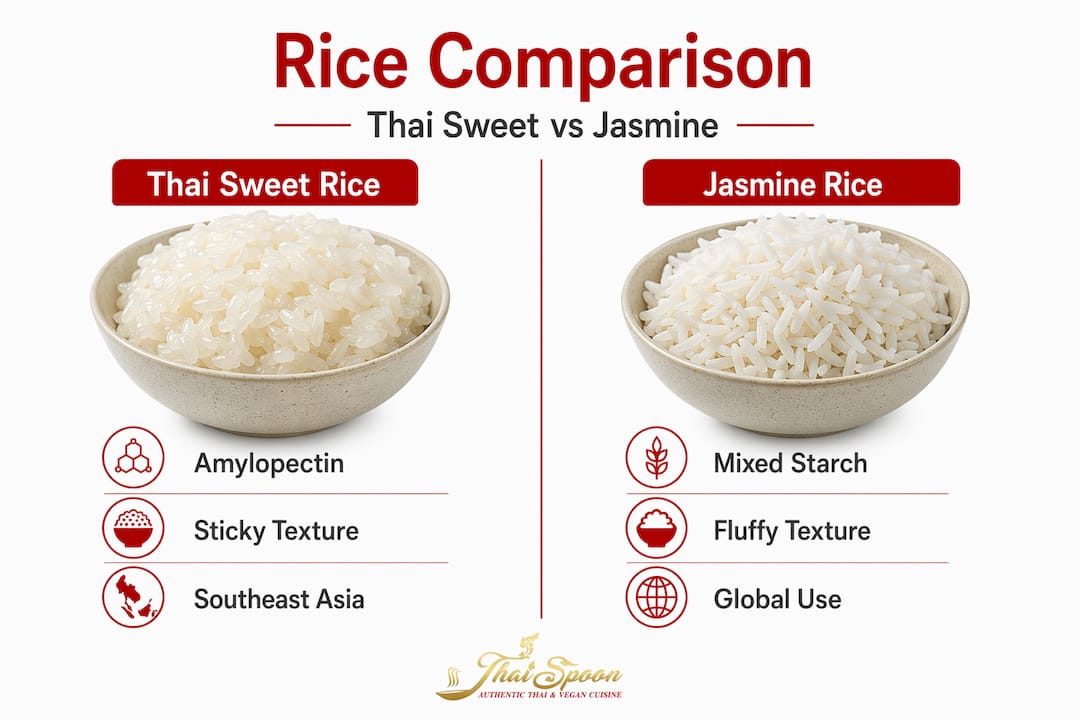
Adding coconut sauce to hot rice and letting it rest is what gives mango sticky rice its signature glossy, almost lacquered finish. The heat opens the grains so the sauce absorbs rather than just coating the surface. Skipping the rest period is why many home attempts look dull and feel dry.
Beyond mango sticky rice, Thai sweet rice applications worth trying at home include:
Khao tom mud: Sweet rice stuffed with banana and black beans, wrapped in banana leaves and steamed
Khao niao dam: Black sticky rice pudding with coconut cream and palm sugar, often topped with sliced fruit
Savory sticky rice with grilled meats: Rolled into small balls and eaten alongside Isan-style grilled pork or chicken
Sticky rice in bamboo: A northern Thai preparation where rice is packed into bamboo tubes and roasted over an open flame
When sourcing Thai sweet rice, look specifically for packages labeled “glutinous rice,” “sweet rice,” or “sticky rice” at Asian grocery stores. Substituting jasmine or sushi rice ruins the texture because neither has the starch profile to become genuinely sticky and cohesive. The difference is structural, not cosmetic. You can find Thai sweet rice recipes and guidance on sourcing the right ingredients if you want to dig deeper.
Common cooking problems and how to fix them
Even experienced cooks hit walls with Thai sweet rice. Here are the problems that come up most often, and what is actually causing them.
Chalky or hard centers almost always trace back to insufficient soaking. Skipping the soak or boiling instead of steaming are the two most reliable ways to ruin the texture. If your centers are still white and firm after steaming, the grains were not hydrated enough before cooking. The fix is simple: soak longer next time, and make sure your steam is vigorous from the start.
Gummy or mushy rice is the opposite problem, caused by boiling, over-steaming, or using the wrong variety of rice. If your rice collapses when you press it rather than holding its shape with some elasticity, it was cooked with too much direct water contact.
Use full-fat coconut milk for the sauce. Low-fat versions produce a thin, watery sauce that the rice cannot absorb properly.
Season coconut sauce with salt before tasting for sweetness. Salt first, sugar second.
Store leftover sticky rice at room temperature for up to 4 hours, or refrigerate and reheat by re-steaming for 5 to 8 minutes. Microwaving makes it rubbery.
Pro Tip: Press a small amount of cooked rice between your fingers. It should be fully translucent, elastic, and slightly sticky without falling apart or leaving a pasty residue on your skin. If it crumbles or feels chalky, return it to the steamer for another 5 minutes.
My honest take on cooking Thai sweet rice
I have watched countless home cooks try to shortcut Thai sweet rice, and the results are always the same. They swap the soaking step for a quick rinse, use a rice cooker instead of a steamer, and then wonder why the dish does not taste like what they remember eating in Thailand or at a great Thai restaurant.
The technique is not complicated. But it does require patience and respect for the process. What I have learned over years of working with this ingredient is that Thai sweet rice rewards attention in a way few other grains do. When you soak it properly, steam it correctly, and dress it while it is still hot, you get something genuinely special. Cut any of those corners and you get something forgettable.
The cultural weight of this dish matters too. Mango sticky rice is not just a dessert. It represents a Thai philosophy about balance: that a handful of simple, high-quality ingredients, treated correctly, produces something greater than the sum of its parts. That is worth slowing down for. Home cooks who approach khao niao with curiosity and patience will always get better results than those who treat it as just another starch to get through dinner.
Start with mango sticky rice. Soak overnight. Steam properly. Taste as you go. That experience alone will teach you more about Thai sweet rice than any recipe can.
— Thai
Experience authentic Thai sticky rice in Las Vegas
[
At Thaispoonlasvegas, cooking Thai sweet rice authentically is part of everything we do. Located in northwest Las Vegas and just 20 minutes from the Strip, we serve traditional Thai dishes made with the ingredients and techniques that make them genuinely taste like Thailand. Our full menu includes classic Thai desserts and dishes where sticky rice takes center stage, prepared the way it should be: soaked, steamed, and dressed with real coconut milk. If you are planning a larger gathering, our Thai catering services bring authentic flavors, including sweet rice dishes, directly to your event. Order online for pickup or delivery, or come in and taste the difference that proper technique makes.
FAQ
What makes Thai sweet rice different from regular rice?
Thai sweet rice, or khao niao, contains nearly 100% amylopectin starch, which makes it sticky and chewy when cooked. Regular rice varieties have a mix of amylose and amylopectin that produces fluffy, separate grains instead.
Is Thai sweet rice the same as Thai sticky rice?
Yes. Thai sweet rice and Thai sticky rice refer to the same grain, glutinous rice, used across Thailand. The name “sweet rice” reflects its common use in desserts, while “sticky rice” describes its texture.
Can you substitute jasmine rice for Thai sweet rice?
No. Jasmine rice has a completely different starch structure and will not become sticky or cohesive when cooked. Substituting it ruins the texture of any dish that requires authentic glutinous rice.
How long should you soak Thai sweet rice before cooking?
Soak Thai sweet rice for at least 4 hours, though overnight soaking produces the best results. Proper soaking prevents chalky centers and gives you an even, fully cooked texture after steaming.
Is Thai sweet rice gluten-free?
Yes. Despite the word “glutinous” in its description, Thai sweet rice contains no gluten. The term refers to its sticky, glue-like texture, not to any gluten protein content.
Recommended
Comments